


 Home
HomeOpenAI races to build universal AI capable of handling any task
Shortly after Hunter Lightman became a researcher at OpenAI in 2022, he witnessed the explosive launch of ChatGPT—one of tech history’s fastest-growing products. Meanwhile, Lightman’s quieter work focused on training OpenAI’s models to tackle elite high school math competitions.
Today, his team—MathGen—plays a pivotal role in OpenAI’s quest to build industry-leading AI reasoning models. These systems form the backbone of "AI agents" capable of human-like computer tasks.
"Early on, we aimed to improve mathematical reasoning—an area where models struggled," Lightman told TechCrunch about MathGen’s origins.
Despite progress, OpenAI’s models remain imperfect. Even its latest systems hallucinate facts and falter with complex tasks.
Yet mathematical reasoning has dramatically improved. One model recently clinched gold at the International Math Olympiad—a contest for the world’s brightest math students. OpenAI believes these reasoning capabilities will extend to other domains, powering its long-envisioned general-purpose AI agents.
While ChatGPT’s success was serendipitous, OpenAI’s agent development represents years of deliberate effort. "Soon, you’ll simply ask computers to handle tasks," CEO Sam Altman predicted at OpenAI’s 2023 developer conference. "We call these ‘agents’—their potential is staggering."
Tech Titans Confirmed for Disrupt 2025
Netflix, ElevenLabs, Wayve, and Sequoia Capital lead an all-star lineup for TechCrunch Disrupt’s 20th anniversary. Gain actionable insights from tech’s top minds—secure tickets today and save up to $675 before price increases.
Tech Titans Confirmed for Disrupt 2025
Netflix, ElevenLabs, Wayve, and Sequoia Capital lead an all-star lineup for TechCrunch Disrupt’s 20th anniversary. Gain actionable insights from tech’s top minds—secure tickets today and save up to $675 before price increases.
San Francisco | October 27-29, 2025 | REGISTER NOW
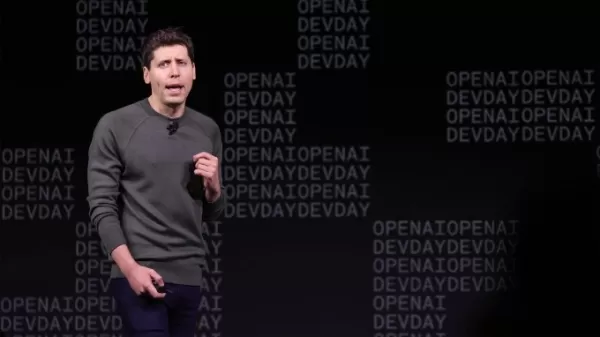
OpenAI CEO Sam Altman speaking at DevDay 2023 (Photo: Justin Sullivan/Getty Images) Though Altman’s vision remains unproven, OpenAI stunned the tech world with its "o1" reasoning model in 2024. Within months, its 21 researchers became Silicon Valley’s most coveted talent—Meta poached five, offering nine-figure compensation packages.
Reinforcement Learning’s Revival
OpenAI’s agent breakthroughs tie to reinforcement learning (RL)—where AI models learn through simulated trial-and-error. Though RL dates back to 2016’s AlphaGo milestone, OpenAI spent years adapting it for computer-use agents.
Early GPT models excelled at text but faltered at basic math. The 2023 "Strawberry" project combined RL with test-time computation—letting models verify steps before answering—and pioneered "chain-of-thought" reasoning.
"Suddenly models could backtrack and self-correct—it felt human," recalled researcher El Kishky.
Expanding Reasoning Capabilities
OpenAI identified two scaling vectors: post-training computation and response-time allocation. "We don’t just build for today—we build for scalability," Lightman noted.
A dedicated "Agents" team emerged in 2023, laying groundwork for o1. Unlike rivals constrained by product demands, OpenAI prioritized AGI research—a strategic advantage.
Defining AI Reasoning
Researchers debate whether AI truly "reasons." Some emphasize computational efficiency; others focus on human-like outputs. Critics exist, but capabilities matter most—much like airplanes achieve flight differently than birds.
The Subjective Tasks Challenge
Current agents handle coding well but struggle with nuance—like online shopping. "It’s fundamentally a data challenge," Lightman explained. New techniques allow training on less-verifiable tasks.
OpenAI’s IMO solution used multi-agent exploration—now emulated by Google and xAI. Researcher Noam Brown sees rapid progress continuing: "There’s no slowdown in sight."
With GPT-5 looming, OpenAI aims to maintain its edge against Google, Anthropic, and Meta. The ultimate goal? An agent that intuitively executes any digital task—surpassing today’s ChatGPT entirely.
Related article
 Sam Altman Sparks Debate Over AI's Deceleration
Listen onApple PodcastsListen onSpotifyOpenAI CEO Sam Altman recently suggested that it may be time to “pace the rate of AI development” to allow society to “harden around some of these new capability levels.”On the latest episode of TechCrunch’s Equ
OpenAI fights Apple trade secret lawsuit
OpenAI rebutted Apple’s trade secret allegations on Tuesday, arguing the lawsuit is unfounded.“We take these claims seriously but see no evidence supporting them,” OpenAI stated, as reported by Bloomberg’s Ed Ludlow on X. “We support fair competition
OpenAI robotics head Caitlin Kalinowski resigns over Pentagon partnership
OpenAI robotics leader Caitlin Kalinowski has stepped down following the company’s controversial partnership with the Department of Defense.“This wasn’t an easy call,” Kalinowski explained in a social media statement. “While AI plays a vital role in
Related Special Topic Recommendations
Music composition
Sam Altman Sparks Debate Over AI's Deceleration
Listen onApple PodcastsListen onSpotifyOpenAI CEO Sam Altman recently suggested that it may be time to “pace the rate of AI development” to allow society to “harden around some of these new capability levels.”On the latest episode of TechCrunch’s Equ
OpenAI fights Apple trade secret lawsuit
OpenAI rebutted Apple’s trade secret allegations on Tuesday, arguing the lawsuit is unfounded.“We take these claims seriously but see no evidence supporting them,” OpenAI stated, as reported by Bloomberg’s Ed Ludlow on X. “We support fair competition
OpenAI robotics head Caitlin Kalinowski resigns over Pentagon partnership
OpenAI robotics leader Caitlin Kalinowski has stepped down following the company’s controversial partnership with the Department of Defense.“This wasn’t an easy call,” Kalinowski explained in a social media statement. “While AI plays a vital role in
Related Special Topic Recommendations
Music composition
 AI Vocal Demo Tools for Songwriters, Hooks, Toplines, and Multilingual Draft Sessions
2026 Latest Best AI Vocal Demo Tools for Songwriters, Hook Creators, and Multi-Language Content Teams! XIX.AI has curated a top-rated list of powerful game-changing tools that go through rigorous real-world tests. You’ll find detailed free vs paid comparison data, comprehensive rankings, and must-try options to help you boost writing efficiency and unlock your creative potential. Explore now to discover your perfect tool for all your content needs!
 9 tools
 xix.ai
Business
Best AI Competitive Research Tools for Small Businesses
xix.ai
Business
Best AI Competitive Research Tools for Small Businesses
2026 Latest Best Top-rated AI Competitive Research Tools for Small Businesses! XIX.AI has curated a highly powerful game-changing collection, updated weekly with rigorous real-world tests and detailed rankings. You can find a comprehensive free vs paid comparison to help you identify the must-try tools that boost your productivity and give you a competitive edge. Explore now to discover your perfect tool!
9 tools
xix.ai
Image editing
Photoshop AI Retouch Tools for Ecommerce Apparel, Skin Cleanup, and Color Consistency
2026 Latest Best Photoshop AI retouch tools for ecommerce apparel, skin cleanup, and color consistency! This top-rated curated list features powerful game-changing solutions that help you boost writing efficiency, streamline content creation, and achieve perfect visual results effortlessly. Each tool has undergone real-world tests through weekly updated rankings, complete with free vs paid comparison details. Backed by XIX.AI, it’s the must-try guide for anyone aiming to unlock your AI edge. Explore now!
10 tools
xix.ai
Prompt
Best AI Prompt Libraries for ChatGPT Workflows
2026 Latest Best Top-Rated AI Prompt Libraries for optimizing all types of ChatGPT workflows. XIX.AI has curated a powerful, game-changing collection that goes through rigorous real-world tests to ensure top performance. You can find detailed free vs paid comparisons and expert rankings to help you choose the must-try tools that boost your productivity and unlock your AI edge. Explore now!
11 tools
xix.ai
Education and Learning
AI Quiz Builder Platforms for Teachers, Tutors, and Cohort-Based Learning Programs
2026 Latest Best AI Quiz Builder Platforms for Teachers, Tutors, and Cohort-Based Learning Programs! XIX.AI has curated a top-rated list of powerful game-changing tools that go through real-world tests to deliver accurate rankings. These must-try platforms help boost writing efficiency, streamline content creation, and simplify quiz design across all learning scenarios. Explore now to discover your perfect tool for unlocking your AI edge in teaching!
13 tools
xix.ai
code
AI Pull Request Review Tools for GitHub Teams Handling Refactors, Bugs, and Security Gaps
2026 Latest Best AI Pull Request Review Tools for GitHub Teams are here on XIX.AI! This top-rated curated list showcases powerful game-changing solutions that streamline refactoring, bug fixing, and security gap detection across all team workflows. Enjoy a free vs paid comparison along with real-world tests and detailed rankings to help you find the perfect tool that boosts productivity significantly. Explore now to unlock your AI edge!
12 tools
xix.ai

 Comments (1)
0/500
Comments (1)
0/500
![ThomasLewis]()
ChatGPTの爆発的成長を見てきた研究者の視点、興味深いですね。万能AIの実現はまだ遠いかもしれませんが、その技術革新の速度にはいつも驚かされます。倫理面の懸念も大きいですし、安全な開発が何より重要だと思います。
Shortly after Hunter Lightman became a researcher at OpenAI in 2022, he witnessed the explosive launch of ChatGPT—one of tech history’s fastest-growing products. Meanwhile, Lightman’s quieter work focused on training OpenAI’s models to tackle elite high school math competitions.
Today, his team—MathGen—plays a pivotal role in OpenAI’s quest to build industry-leading AI reasoning models. These systems form the backbone of "AI agents" capable of human-like computer tasks.
"Early on, we aimed to improve mathematical reasoning—an area where models struggled," Lightman told TechCrunch about MathGen’s origins.
Despite progress, OpenAI’s models remain imperfect. Even its latest systems hallucinate facts and falter with complex tasks.
Yet mathematical reasoning has dramatically improved. One model recently clinched gold at the International Math Olympiad—a contest for the world’s brightest math students. OpenAI believes these reasoning capabilities will extend to other domains, powering its long-envisioned general-purpose AI agents.
While ChatGPT’s success was serendipitous, OpenAI’s agent development represents years of deliberate effort. "Soon, you’ll simply ask computers to handle tasks," CEO Sam Altman predicted at OpenAI’s 2023 developer conference. "We call these ‘agents’—their potential is staggering."
Tech Titans Confirmed for Disrupt 2025
Netflix, ElevenLabs, Wayve, and Sequoia Capital lead an all-star lineup for TechCrunch Disrupt’s 20th anniversary. Gain actionable insights from tech’s top minds—secure tickets today and save up to $675 before price increases.
Tech Titans Confirmed for Disrupt 2025
Netflix, ElevenLabs, Wayve, and Sequoia Capital lead an all-star lineup for TechCrunch Disrupt’s 20th anniversary. Gain actionable insights from tech’s top minds—secure tickets today and save up to $675 before price increases.
San Francisco | October 27-29, 2025 | REGISTER NOW
Though Altman’s vision remains unproven, OpenAI stunned the tech world with its "o1" reasoning model in 2024. Within months, its 21 researchers became Silicon Valley’s most coveted talent—Meta poached five, offering nine-figure compensation packages.
Reinforcement Learning’s Revival
OpenAI’s agent breakthroughs tie to reinforcement learning (RL)—where AI models learn through simulated trial-and-error. Though RL dates back to 2016’s AlphaGo milestone, OpenAI spent years adapting it for computer-use agents.
Early GPT models excelled at text but faltered at basic math. The 2023 "Strawberry" project combined RL with test-time computation—letting models verify steps before answering—and pioneered "chain-of-thought" reasoning.
"Suddenly models could backtrack and self-correct—it felt human," recalled researcher El Kishky.
Expanding Reasoning Capabilities
OpenAI identified two scaling vectors: post-training computation and response-time allocation. "We don’t just build for today—we build for scalability," Lightman noted.
A dedicated "Agents" team emerged in 2023, laying groundwork for o1. Unlike rivals constrained by product demands, OpenAI prioritized AGI research—a strategic advantage.
Defining AI Reasoning
Researchers debate whether AI truly "reasons." Some emphasize computational efficiency; others focus on human-like outputs. Critics exist, but capabilities matter most—much like airplanes achieve flight differently than birds.
The Subjective Tasks Challenge
Current agents handle coding well but struggle with nuance—like online shopping. "It’s fundamentally a data challenge," Lightman explained. New techniques allow training on less-verifiable tasks.
OpenAI’s IMO solution used multi-agent exploration—now emulated by Google and xAI. Researcher Noam Brown sees rapid progress continuing: "There’s no slowdown in sight."
With GPT-5 looming, OpenAI aims to maintain its edge against Google, Anthropic, and Meta. The ultimate goal? An agent that intuitively executes any digital task—surpassing today’s ChatGPT entirely.








 Sam Altman Sparks Debate Over AI's Deceleration
Listen onApple PodcastsListen onSpotifyOpenAI CEO Sam Altman recently suggested that it may be time to “pace the rate of AI development” to allow society to “harden around some of these new capability levels.”On the latest episode of TechCrunch’s Equ
Sam Altman Sparks Debate Over AI's Deceleration
Listen onApple PodcastsListen onSpotifyOpenAI CEO Sam Altman recently suggested that it may be time to “pace the rate of AI development” to allow society to “harden around some of these new capability levels.”On the latest episode of TechCrunch’s Equ
 OpenAI fights Apple trade secret lawsuit
OpenAI rebutted Apple’s trade secret allegations on Tuesday, arguing the lawsuit is unfounded.“We take these claims seriously but see no evidence supporting them,” OpenAI stated, as reported by Bloomberg’s Ed Ludlow on X. “We support fair competition
OpenAI fights Apple trade secret lawsuit
OpenAI rebutted Apple’s trade secret allegations on Tuesday, arguing the lawsuit is unfounded.“We take these claims seriously but see no evidence supporting them,” OpenAI stated, as reported by Bloomberg’s Ed Ludlow on X. “We support fair competition
 OpenAI robotics head Caitlin Kalinowski resigns over Pentagon partnership
OpenAI robotics leader Caitlin Kalinowski has stepped down following the company’s controversial partnership with the Department of Defense.“This wasn’t an easy call,” Kalinowski explained in a social media statement. “While AI plays a vital role in
OpenAI robotics head Caitlin Kalinowski resigns over Pentagon partnership
OpenAI robotics leader Caitlin Kalinowski has stepped down following the company’s controversial partnership with the Department of Defense.“This wasn’t an easy call,” Kalinowski explained in a social media statement. “While AI plays a vital role in

2026 Latest Best AI Vocal Demo Tools for Songwriters, Hook Creators, and Multi-Language Content Teams! XIX.AI has curated a top-rated list of powerful game-changing tools that go through rigorous real-world tests. You’ll find detailed free vs paid comparison data, comprehensive rankings, and must-try options to help you boost writing efficiency and unlock your creative potential. Explore now to discover your perfect tool for all your content needs!
9 tools
xix.ai

2026 Latest Best Top-rated AI Competitive Research Tools for Small Businesses! XIX.AI has curated a highly powerful game-changing collection, updated weekly with rigorous real-world tests and detailed rankings. You can find a comprehensive free vs paid comparison to help you identify the must-try tools that boost your productivity and give you a competitive edge. Explore now to discover your perfect tool!
9 tools
xix.ai

2026 Latest Best Photoshop AI retouch tools for ecommerce apparel, skin cleanup, and color consistency! This top-rated curated list features powerful game-changing solutions that help you boost writing efficiency, streamline content creation, and achieve perfect visual results effortlessly. Each tool has undergone real-world tests through weekly updated rankings, complete with free vs paid comparison details. Backed by XIX.AI, it’s the must-try guide for anyone aiming to unlock your AI edge. Explore now!
10 tools
xix.ai

2026 Latest Best Top-Rated AI Prompt Libraries for optimizing all types of ChatGPT workflows. XIX.AI has curated a powerful, game-changing collection that goes through rigorous real-world tests to ensure top performance. You can find detailed free vs paid comparisons and expert rankings to help you choose the must-try tools that boost your productivity and unlock your AI edge. Explore now!
11 tools
xix.ai

2026 Latest Best AI Quiz Builder Platforms for Teachers, Tutors, and Cohort-Based Learning Programs! XIX.AI has curated a top-rated list of powerful game-changing tools that go through real-world tests to deliver accurate rankings. These must-try platforms help boost writing efficiency, streamline content creation, and simplify quiz design across all learning scenarios. Explore now to discover your perfect tool for unlocking your AI edge in teaching!
13 tools
xix.ai

2026 Latest Best AI Pull Request Review Tools for GitHub Teams are here on XIX.AI! This top-rated curated list showcases powerful game-changing solutions that streamline refactoring, bug fixing, and security gap detection across all team workflows. Enjoy a free vs paid comparison along with real-world tests and detailed rankings to help you find the perfect tool that boosts productivity significantly. Explore now to unlock your AI edge!
12 tools
xix.ai

ChatGPTの爆発的成長を見てきた研究者の視点、興味深いですね。万能AIの実現はまだ遠いかもしれませんが、その技術革新の速度にはいつも驚かされます。倫理面の懸念も大きいですし、安全な開発が何より重要だと思います。












