


 Home
HomeIndia's Emergent launches AI agent platform OpenClaw
Emergent, an Indian startup known for its vibe-coding platform, has launched Wingman, a messaging-first autonomous AI agent. This move expands its reach into the growing category of background software that automates tasks, a field popularized by tools like OpenClaw and Anthropic's Claude.
The Bengaluru-based company first made waves with its vibe-coding platform, which rivals products like Cursor and Replit by enabling non-technical users to build full-stack applications using natural language prompts. With Wingman, Emergent is shifting focus from creation to execution, aiming to have AI agents manage routine tasks across various tools and workflows.
“The natural progression for us was to ask: can we help users not only build software but also operate more autonomously with it?” explained Mukund Jha, co-founder and CEO of Emergent. “It’s about evolving from software that supports a business to software that actively helps run it.”
Emergent reports that over 8 million creators have used its vibe-coding platform to build and deploy software, with more than 1.5 million monthly active users. Founded in 2025, the startup secured $70 million in funding this January, reaching a $300 million valuation. Investors include SoftBank, Khosla Ventures, and Lightspeed Venture Partners.
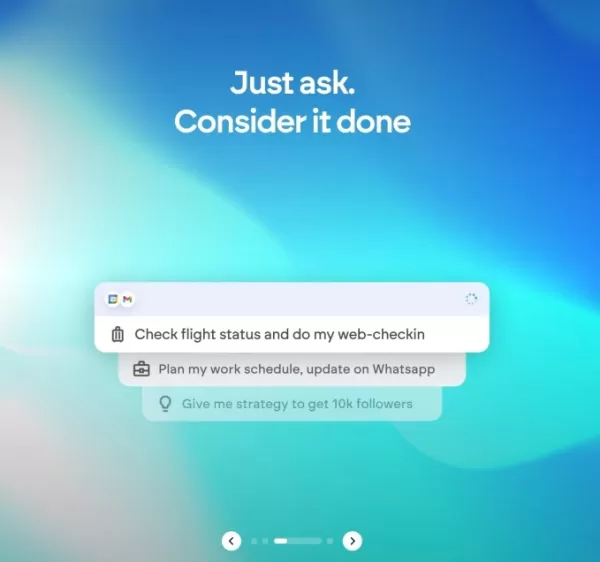
Image Credits: Emergent (screenshot)
Wingman is built to function within messaging apps like WhatsApp and Telegram, letting users assign and track tasks through chat. Simultaneously, the agent works in the background across connected services such as email, calendars, and workplace software. It can perform routine actions independently but will request user approval for more significant steps, according to the company.
This launch coincides with the rise of autonomous AI agents as a major industry focus, with numerous companies developing tools that can complete tasks on a user's behalf. Projects like OpenClaw — formerly known as Clawdbot and Moltbot — have gained early-adopter traction, while firms including Anthropic and Microsoft are advancing their own agent-based systems in this space.
Emergent aims to stand out by integrating Wingman directly into popular messaging platforms like WhatsApp, Telegram, and Apple iMessage. This allows users to interact with the agent through familiar chat interfaces rather than learning a new system. The startup has also implemented "trust boundaries," a feature that lets the agent handle routine tasks autonomously while requiring user consent for higher-stakes actions. This approach is designed to alleviate concerns about fully autonomous systems.
Jha told TechCrunch that the choice to build Wingman for messaging platforms was inspired by existing work habits. “Much of real work already flows through chat, voice, and email — requesting updates, sharing context, making decisions,” Jha said. “Increasingly, these will also be the primary ways we collaborate with AI agents.”
Like many emerging AI agents, Wingman still has limitations. Jha noted the system can struggle with “consistency in highly ambiguous scenarios, messy edge cases, unclear objectives, or workflows that require substantial human judgment.”
Wingman is being introduced with a limited free trial, after which it will become a paid service. Existing Emergent users will be able to access the agent through their current accounts.
Related article
 Vertu asks executives to pay $6,880 for an AI agent and reveals its actual performance
Artificial intelligence has emerged as the smartphone industry’s newest frontier, with manufacturers scrambling to integrate AI-driven features to capture mainstream audiences. Vertu, however, is charting a distinct course. The British luxury handset
General Intuition targets $300M raise at $2B valuation
General Intuition, the New York-based startup developing a foundation model that trains AI agents to navigate space and time, is in discussions to raise roughly $300 million, sources familiar with the matter told TechCrunch.The funding round comes ei
Some AI Experts Unimpressed by OpenClaw Despite Hype
For a brief, disorienting moment, it seemed our robot overlords were about to take over.After Moltbook launched—a Reddit clone where AI agents powered by OpenClaw could chat with each other—some people were tricked into believing computers had starte
Related Special Topic Recommendations
writing
Vertu asks executives to pay $6,880 for an AI agent and reveals its actual performance
Artificial intelligence has emerged as the smartphone industry’s newest frontier, with manufacturers scrambling to integrate AI-driven features to capture mainstream audiences. Vertu, however, is charting a distinct course. The British luxury handset
General Intuition targets $300M raise at $2B valuation
General Intuition, the New York-based startup developing a foundation model that trains AI agents to navigate space and time, is in discussions to raise roughly $300 million, sources familiar with the matter told TechCrunch.The funding round comes ei
Some AI Experts Unimpressed by OpenClaw Despite Hype
For a brief, disorienting moment, it seemed our robot overlords were about to take over.After Moltbook launched—a Reddit clone where AI agents powered by OpenClaw could chat with each other—some people were tricked into believing computers had starte
Related Special Topic Recommendations
writing
 Best AI Outline Generators for Long-Form SEO Articles
2026 Latest Best Top-Rated AI Outline Generators for Long-Form SEO Articles, meticulously curated by XIX.AI. These powerful tools offer game-changing assistance in creating high-quality content quickly, boosting writing efficiency significantly. Get a free vs paid comparison along with real-world tests and detailed rankings to help you find the must-try option that suits your needs. Explore now to unlock your AI edge.
 8 tools
 xix.ai
Education and Learning
AI Study Tools for Homework and Exam Prep
xix.ai
Education and Learning
AI Study Tools for Homework and Exam Prep
2026 Latest Best AI Study Tools for Homework and Exam Prep! XIX.AI curates a top-rated list of powerful, game-changing tools that help students boost productivity, streamline homework completion, and ace exams through real-world tests. Get a free vs paid comparison, detailed rankings, and must-try options to unlock your AI edge. Explore now!
10 tools
xix.ai
Music composition
AI Vocal Demo Tools for Songwriters, Hooks, Toplines, and Multilingual Draft Sessions
2026 Latest Best AI Vocal Demo Tools for Songwriters, Hook Creators, and Multi-Language Content Teams! XIX.AI has curated a top-rated list of powerful game-changing tools that go through rigorous real-world tests. You’ll find detailed free vs paid comparison data, comprehensive rankings, and must-try options to help you boost writing efficiency and unlock your creative potential. Explore now to discover your perfect tool for all your content needs!
9 tools
xix.ai
Business
Best AI Competitive Research Tools for Small Businesses
2026 Latest Best Top-rated AI Competitive Research Tools for Small Businesses! XIX.AI has curated a highly powerful game-changing collection, updated weekly with rigorous real-world tests and detailed rankings. You can find a comprehensive free vs paid comparison to help you identify the must-try tools that boost your productivity and give you a competitive edge. Explore now to discover your perfect tool!
9 tools
xix.ai
Image editing
Photoshop AI Retouch Tools for Ecommerce Apparel, Skin Cleanup, and Color Consistency
2026 Latest Best Photoshop AI retouch tools for ecommerce apparel, skin cleanup, and color consistency! This top-rated curated list features powerful game-changing solutions that help you boost writing efficiency, streamline content creation, and achieve perfect visual results effortlessly. Each tool has undergone real-world tests through weekly updated rankings, complete with free vs paid comparison details. Backed by XIX.AI, it’s the must-try guide for anyone aiming to unlock your AI edge. Explore now!
10 tools
xix.ai
Prompt
Best AI Prompt Libraries for ChatGPT Workflows
2026 Latest Best Top-Rated AI Prompt Libraries for optimizing all types of ChatGPT workflows. XIX.AI has curated a powerful, game-changing collection that goes through rigorous real-world tests to ensure top performance. You can find detailed free vs paid comparisons and expert rankings to help you choose the must-try tools that boost your productivity and unlock your AI edge. Explore now!
11 tools
xix.ai

 Comments (1)
0/500
Comments (1)
0/500
![ScottMitchell]()
Wait, so Emergent is basically taking the 'vibe-coding' concept and turning it into an actual background worker? I'm curious how Wingman handles messy real-world data without going rogue. 😅
Emergent, an Indian startup known for its vibe-coding platform, has launched Wingman, a messaging-first autonomous AI agent. This move expands its reach into the growing category of background software that automates tasks, a field popularized by tools like OpenClaw and Anthropic's Claude.
The Bengaluru-based company first made waves with its vibe-coding platform, which rivals products like Cursor and Replit by enabling non-technical users to build full-stack applications using natural language prompts. With Wingman, Emergent is shifting focus from creation to execution, aiming to have AI agents manage routine tasks across various tools and workflows.
“The natural progression for us was to ask: can we help users not only build software but also operate more autonomously with it?” explained Mukund Jha, co-founder and CEO of Emergent. “It’s about evolving from software that supports a business to software that actively helps run it.”
Emergent reports that over 8 million creators have used its vibe-coding platform to build and deploy software, with more than 1.5 million monthly active users. Founded in 2025, the startup secured $70 million in funding this January, reaching a $300 million valuation. Investors include SoftBank, Khosla Ventures, and Lightspeed Venture Partners.
Image Credits: Emergent (screenshot)
Wingman is built to function within messaging apps like WhatsApp and Telegram, letting users assign and track tasks through chat. Simultaneously, the agent works in the background across connected services such as email, calendars, and workplace software. It can perform routine actions independently but will request user approval for more significant steps, according to the company.
This launch coincides with the rise of autonomous AI agents as a major industry focus, with numerous companies developing tools that can complete tasks on a user's behalf. Projects like OpenClaw — formerly known as Clawdbot and Moltbot — have gained early-adopter traction, while firms including Anthropic and Microsoft are advancing their own agent-based systems in this space.
Emergent aims to stand out by integrating Wingman directly into popular messaging platforms like WhatsApp, Telegram, and Apple iMessage. This allows users to interact with the agent through familiar chat interfaces rather than learning a new system. The startup has also implemented "trust boundaries," a feature that lets the agent handle routine tasks autonomously while requiring user consent for higher-stakes actions. This approach is designed to alleviate concerns about fully autonomous systems.
Jha told TechCrunch that the choice to build Wingman for messaging platforms was inspired by existing work habits. “Much of real work already flows through chat, voice, and email — requesting updates, sharing context, making decisions,” Jha said. “Increasingly, these will also be the primary ways we collaborate with AI agents.”
Like many emerging AI agents, Wingman still has limitations. Jha noted the system can struggle with “consistency in highly ambiguous scenarios, messy edge cases, unclear objectives, or workflows that require substantial human judgment.”
Wingman is being introduced with a limited free trial, after which it will become a paid service. Existing Emergent users will be able to access the agent through their current accounts.








 Vertu asks executives to pay $6,880 for an AI agent and reveals its actual performance
Artificial intelligence has emerged as the smartphone industry’s newest frontier, with manufacturers scrambling to integrate AI-driven features to capture mainstream audiences. Vertu, however, is charting a distinct course. The British luxury handset
Vertu asks executives to pay $6,880 for an AI agent and reveals its actual performance
Artificial intelligence has emerged as the smartphone industry’s newest frontier, with manufacturers scrambling to integrate AI-driven features to capture mainstream audiences. Vertu, however, is charting a distinct course. The British luxury handset
 General Intuition targets $300M raise at $2B valuation
General Intuition, the New York-based startup developing a foundation model that trains AI agents to navigate space and time, is in discussions to raise roughly $300 million, sources familiar with the matter told TechCrunch.The funding round comes ei
General Intuition targets $300M raise at $2B valuation
General Intuition, the New York-based startup developing a foundation model that trains AI agents to navigate space and time, is in discussions to raise roughly $300 million, sources familiar with the matter told TechCrunch.The funding round comes ei
 Some AI Experts Unimpressed by OpenClaw Despite Hype
For a brief, disorienting moment, it seemed our robot overlords were about to take over.After Moltbook launched—a Reddit clone where AI agents powered by OpenClaw could chat with each other—some people were tricked into believing computers had starte
Some AI Experts Unimpressed by OpenClaw Despite Hype
For a brief, disorienting moment, it seemed our robot overlords were about to take over.After Moltbook launched—a Reddit clone where AI agents powered by OpenClaw could chat with each other—some people were tricked into believing computers had starte

2026 Latest Best Top-Rated AI Outline Generators for Long-Form SEO Articles, meticulously curated by XIX.AI. These powerful tools offer game-changing assistance in creating high-quality content quickly, boosting writing efficiency significantly. Get a free vs paid comparison along with real-world tests and detailed rankings to help you find the must-try option that suits your needs. Explore now to unlock your AI edge.
8 tools
xix.ai

2026 Latest Best AI Study Tools for Homework and Exam Prep! XIX.AI curates a top-rated list of powerful, game-changing tools that help students boost productivity, streamline homework completion, and ace exams through real-world tests. Get a free vs paid comparison, detailed rankings, and must-try options to unlock your AI edge. Explore now!
10 tools
xix.ai

2026 Latest Best AI Vocal Demo Tools for Songwriters, Hook Creators, and Multi-Language Content Teams! XIX.AI has curated a top-rated list of powerful game-changing tools that go through rigorous real-world tests. You’ll find detailed free vs paid comparison data, comprehensive rankings, and must-try options to help you boost writing efficiency and unlock your creative potential. Explore now to discover your perfect tool for all your content needs!
9 tools
xix.ai

2026 Latest Best Top-rated AI Competitive Research Tools for Small Businesses! XIX.AI has curated a highly powerful game-changing collection, updated weekly with rigorous real-world tests and detailed rankings. You can find a comprehensive free vs paid comparison to help you identify the must-try tools that boost your productivity and give you a competitive edge. Explore now to discover your perfect tool!
9 tools
xix.ai

2026 Latest Best Photoshop AI retouch tools for ecommerce apparel, skin cleanup, and color consistency! This top-rated curated list features powerful game-changing solutions that help you boost writing efficiency, streamline content creation, and achieve perfect visual results effortlessly. Each tool has undergone real-world tests through weekly updated rankings, complete with free vs paid comparison details. Backed by XIX.AI, it’s the must-try guide for anyone aiming to unlock your AI edge. Explore now!
10 tools
xix.ai

2026 Latest Best Top-Rated AI Prompt Libraries for optimizing all types of ChatGPT workflows. XIX.AI has curated a powerful, game-changing collection that goes through rigorous real-world tests to ensure top performance. You can find detailed free vs paid comparisons and expert rankings to help you choose the must-try tools that boost your productivity and unlock your AI edge. Explore now!
11 tools
xix.ai

Wait, so Emergent is basically taking the 'vibe-coding' concept and turning it into an actual background worker? I'm curious how Wingman handles messy real-world data without going rogue. 😅












