


 Home
HomeHow to Build a Robotic Snowman
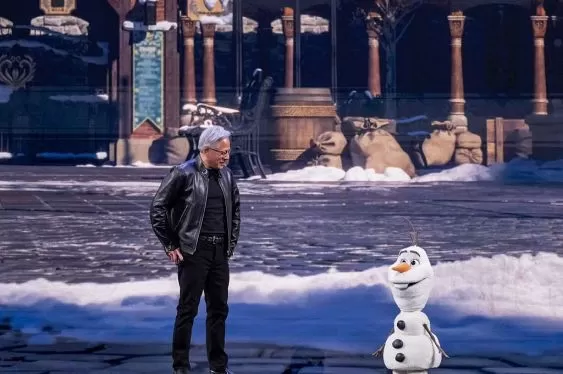
Listen on Apple PodcastsListen on SpotifyNvidia's GTC conference had it all: trillion-dollar sales forecasts, graphics tech that can transform video games, bold proclamations that every business needs an OpenClaw strategy, and even a robotic version of Olaf, the beloved snowman from Disney's "Frozen."
On the latest Equity podcast from TechCrunch, Kirsten Korosec, Sean O'Kane, and I broke down CEO Jensen Huang's keynote and discussed its implications for Nvidia's future. And yes, a significant part of our chat focused on poor Olaf, whose microphone was cut off mid-ramble.
Even if the demo had been perfect, Sean would likely have had doubts, noting these presentations always highlight "the engineering challenges" while overlooking the "messy, complex social aspects."
"But what happens when a child kicks Olaf over?" Sean asked. "What if every other kid who sees that has their entire Disney trip—and the brand's magic—ruined?"
Read an edited excerpt from our conversation below.
Anthony: [CEO Jensen Huang] essentially declared that every company now needs an OpenClaw strategy. It's a sweeping statement designed to grab headlines, and it's particularly interesting given OpenClaw's current transitional phase.
The founder has moved to OpenAI. So it's now an open-source project that could either thrive beyond its creator or fade away. If companies like Nvidia invest heavily in it, it's more likely to evolve. It will be fascinating to see in a year whether that statement seems prescient or if people are asking, "Open what?"
Kirsten: For Nvidia, launching what they call NemoClaw—an open-source project developed with OpenClaw's creator—costs them very little in the grand scheme. But inaction poses a much greater risk. So when Jensen said, "Every enterprise needs an OpenClaw strategy," I heard, "Nvidia must provide an enterprise solution. If it succeeds, it's another avenue for Nvidia to embed itself within countless other companies." The risk of doing nothing is far greater than trying something that might not pan out.
Sean: The real question is why we haven't discussed Nvidia's obvious endgame—the thing that will make it the first $100 trillion company: the Olaf robot.
Anthony: How could I forget?
Kirsten: Anthony, you just had to watch the final part of that two-and-a-half-hour presentation.
So, the Olaf robot comes out. Jensen loves these demos—some work better than others. This one was meant to showcase Nvidia's robotics technology. I'm unsure if Olaf was speaking in real time or was pre-programmed; it felt a bit scripted or keyword-triggered.
The best part was when they had to cut its microphone because it started rambling to the audience. It then moved to its little passageway and was slowly lowered. You could see on the video it was still talking, but without audio.
Sean: Now we just need to give this little robot a wheelbase. And I know the perfect founder who can provide it.
These demos are always a bit silly. I don't want to preach, as we touched on this earlier in the week, but it was an impressive demo until it fell slightly short.
It's another prime example of how robotics presents fascinating engineering, physics, and integration challenges. But this was presented as a partnership with Disney, hinting at the future of Disney parks where you could meet and take pictures with Olaf from "Frozen."
Yet these efforts never fully address—or at least don't highlight at events like this—all the other considerations involved in deploying such technology. There's an excellent, not-too-long (just four hours) video by the YouTuber Defunctland about Disney's history of trying to integrate these kinds of automatons into their parks.
The engineering history is fascinating, but it always circles back to the same question: What happens when a kid kicks Olaf over? What if that ruins the Disney experience and damages the brand for every child who witnesses it?
The social implications are immense. It might sound trivial, but it's the same question we're asking about humanoid robots. There's so much hype around the technology, but far less discussion about the messy, gray social areas and how to integrate these things into daily life. We mostly hear about the engineering challenges—which, to be clear, are genuinely impressive.
Kirsten: I have a counterpoint before we move to our next topic. This is a job creator. Olaf will probably need a human minder at Disneyland, perhaps dressed as Elsa or another character. You could argue this engineering experiment is actually creating jobs.
Loading the player…
Related article
![Nvidia CEO Jensen Huang tells Trump ‘we’re not going to let [an AI slowdown] happen’](data:image/gif;base64,R0lGODlhAQABAIAAAAAAAP///yH5BAEAAAAALAAAAAABAAEAAAIBRAA7) Nvidia CEO Jensen Huang tells Trump ‘we’re not going to let [an AI slowdown] happen’
During his appearance at the All-In Summit in Los Angeles on Monday, Nvidia CEO Jensen Huang received an unexpected call from President Donald Trump, one he couldn’t simply ignore.“I’m on stage with the besties,” Huang explained to Trump, referencing
Jensen Huang Reveals Nvidia’s ‘Brand New’ $200B Market Opportunity
Nvidia founder and CEO Jensen Huang stands out as one of the most compelling corporate visionaries, if not the greatest, in driving his company’s narrative. He may even eclipse Salesforce’s Marc Benioff in his unwavering optimism regarding the firm’s
OneRail Leverages Nvidia AI to Optimize Real-Time Last-Mile Delivery
OneRail has introduced an AI-driven delivery platform leveraging Nvidia technology to assist retailers, wholesalers, and distributors in determining the most efficient delivery methods for individual orders.Named OmniSTAR, the system assesses various
Related Special Topic Recommendations
Education and Learning
Nvidia CEO Jensen Huang tells Trump ‘we’re not going to let [an AI slowdown] happen’
During his appearance at the All-In Summit in Los Angeles on Monday, Nvidia CEO Jensen Huang received an unexpected call from President Donald Trump, one he couldn’t simply ignore.“I’m on stage with the besties,” Huang explained to Trump, referencing
Jensen Huang Reveals Nvidia’s ‘Brand New’ $200B Market Opportunity
Nvidia founder and CEO Jensen Huang stands out as one of the most compelling corporate visionaries, if not the greatest, in driving his company’s narrative. He may even eclipse Salesforce’s Marc Benioff in his unwavering optimism regarding the firm’s
OneRail Leverages Nvidia AI to Optimize Real-Time Last-Mile Delivery
OneRail has introduced an AI-driven delivery platform leveraging Nvidia technology to assist retailers, wholesalers, and distributors in determining the most efficient delivery methods for individual orders.Named OmniSTAR, the system assesses various
Related Special Topic Recommendations
Education and Learning
 AI Study Tools for Homework and Exam Prep
2026 Latest Best AI Study Tools for Homework and Exam Prep! XIX.AI curates a top-rated list of powerful, game-changing tools that help students boost productivity, streamline homework completion, and ace exams through real-world tests. Get a free vs paid comparison, detailed rankings, and must-try options to unlock your AI edge. Explore now!
 10 tools
 xix.ai
Music composition
AI Vocal Demo Tools for Songwriters, Hooks, Toplines, and Multilingual Draft Sessions
xix.ai
Music composition
AI Vocal Demo Tools for Songwriters, Hooks, Toplines, and Multilingual Draft Sessions
2026 Latest Best AI Vocal Demo Tools for Songwriters, Hook Creators, and Multi-Language Content Teams! XIX.AI has curated a top-rated list of powerful game-changing tools that go through rigorous real-world tests. You’ll find detailed free vs paid comparison data, comprehensive rankings, and must-try options to help you boost writing efficiency and unlock your creative potential. Explore now to discover your perfect tool for all your content needs!
9 tools
xix.ai
Business
Best AI Competitive Research Tools for Small Businesses
2026 Latest Best Top-rated AI Competitive Research Tools for Small Businesses! XIX.AI has curated a highly powerful game-changing collection, updated weekly with rigorous real-world tests and detailed rankings. You can find a comprehensive free vs paid comparison to help you identify the must-try tools that boost your productivity and give you a competitive edge. Explore now to discover your perfect tool!
9 tools
xix.ai
Image editing
Photoshop AI Retouch Tools for Ecommerce Apparel, Skin Cleanup, and Color Consistency
2026 Latest Best Photoshop AI retouch tools for ecommerce apparel, skin cleanup, and color consistency! This top-rated curated list features powerful game-changing solutions that help you boost writing efficiency, streamline content creation, and achieve perfect visual results effortlessly. Each tool has undergone real-world tests through weekly updated rankings, complete with free vs paid comparison details. Backed by XIX.AI, it’s the must-try guide for anyone aiming to unlock your AI edge. Explore now!
10 tools
xix.ai
Prompt
Best AI Prompt Libraries for ChatGPT Workflows
2026 Latest Best Top-Rated AI Prompt Libraries for optimizing all types of ChatGPT workflows. XIX.AI has curated a powerful, game-changing collection that goes through rigorous real-world tests to ensure top performance. You can find detailed free vs paid comparisons and expert rankings to help you choose the must-try tools that boost your productivity and unlock your AI edge. Explore now!
11 tools
xix.ai
Education and Learning
AI Quiz Builder Platforms for Teachers, Tutors, and Cohort-Based Learning Programs
2026 Latest Best AI Quiz Builder Platforms for Teachers, Tutors, and Cohort-Based Learning Programs! XIX.AI has curated a top-rated list of powerful game-changing tools that go through real-world tests to deliver accurate rankings. These must-try platforms help boost writing efficiency, streamline content creation, and simplify quiz design across all learning scenarios. Explore now to discover your perfect tool for unlocking your AI edge in teaching!
13 tools
xix.ai

 Comments (1)
0/500
Comments (1)
0/500
![PeterThomas]()
Wait, so NVIDIA's GTC had a robotic snowman? That's cool but also kinda weird. I mean, who needs a robot that builds snowmen? Maybe they should focus on actual useful AI instead of gimmicks. 😅
Nvidia's GTC conference had it all: trillion-dollar sales forecasts, graphics tech that can transform video games, bold proclamations that every business needs an OpenClaw strategy, and even a robotic version of Olaf, the beloved snowman from Disney's "Frozen."
On the latest Equity podcast from TechCrunch, Kirsten Korosec, Sean O'Kane, and I broke down CEO Jensen Huang's keynote and discussed its implications for Nvidia's future. And yes, a significant part of our chat focused on poor Olaf, whose microphone was cut off mid-ramble.
Even if the demo had been perfect, Sean would likely have had doubts, noting these presentations always highlight "the engineering challenges" while overlooking the "messy, complex social aspects."
"But what happens when a child kicks Olaf over?" Sean asked. "What if every other kid who sees that has their entire Disney trip—and the brand's magic—ruined?"
Read an edited excerpt from our conversation below.
Anthony: [CEO Jensen Huang] essentially declared that every company now needs an OpenClaw strategy. It's a sweeping statement designed to grab headlines, and it's particularly interesting given OpenClaw's current transitional phase.
The founder has moved to OpenAI. So it's now an open-source project that could either thrive beyond its creator or fade away. If companies like Nvidia invest heavily in it, it's more likely to evolve. It will be fascinating to see in a year whether that statement seems prescient or if people are asking, "Open what?"
Kirsten: For Nvidia, launching what they call NemoClaw—an open-source project developed with OpenClaw's creator—costs them very little in the grand scheme. But inaction poses a much greater risk. So when Jensen said, "Every enterprise needs an OpenClaw strategy," I heard, "Nvidia must provide an enterprise solution. If it succeeds, it's another avenue for Nvidia to embed itself within countless other companies." The risk of doing nothing is far greater than trying something that might not pan out.
Sean: The real question is why we haven't discussed Nvidia's obvious endgame—the thing that will make it the first $100 trillion company: the Olaf robot.
Anthony: How could I forget?
Kirsten: Anthony, you just had to watch the final part of that two-and-a-half-hour presentation.
So, the Olaf robot comes out. Jensen loves these demos—some work better than others. This one was meant to showcase Nvidia's robotics technology. I'm unsure if Olaf was speaking in real time or was pre-programmed; it felt a bit scripted or keyword-triggered.
The best part was when they had to cut its microphone because it started rambling to the audience. It then moved to its little passageway and was slowly lowered. You could see on the video it was still talking, but without audio.
Sean: Now we just need to give this little robot a wheelbase. And I know the perfect founder who can provide it.
These demos are always a bit silly. I don't want to preach, as we touched on this earlier in the week, but it was an impressive demo until it fell slightly short.
It's another prime example of how robotics presents fascinating engineering, physics, and integration challenges. But this was presented as a partnership with Disney, hinting at the future of Disney parks where you could meet and take pictures with Olaf from "Frozen."
Yet these efforts never fully address—or at least don't highlight at events like this—all the other considerations involved in deploying such technology. There's an excellent, not-too-long (just four hours) video by the YouTuber Defunctland about Disney's history of trying to integrate these kinds of automatons into their parks.
The engineering history is fascinating, but it always circles back to the same question: What happens when a kid kicks Olaf over? What if that ruins the Disney experience and damages the brand for every child who witnesses it?
The social implications are immense. It might sound trivial, but it's the same question we're asking about humanoid robots. There's so much hype around the technology, but far less discussion about the messy, gray social areas and how to integrate these things into daily life. We mostly hear about the engineering challenges—which, to be clear, are genuinely impressive.
Kirsten: I have a counterpoint before we move to our next topic. This is a job creator. Olaf will probably need a human minder at Disneyland, perhaps dressed as Elsa or another character. You could argue this engineering experiment is actually creating jobs.
Loading the player…








![Nvidia CEO Jensen Huang tells Trump ‘we’re not going to let [an AI slowdown] happen’](https://img.xix.ai/uploads/79/6aa87327d0e12.webp) Nvidia CEO Jensen Huang tells Trump ‘we’re not going to let [an AI slowdown] happen’
During his appearance at the All-In Summit in Los Angeles on Monday, Nvidia CEO Jensen Huang received an unexpected call from President Donald Trump, one he couldn’t simply ignore.“I’m on stage with the besties,” Huang explained to Trump, referencing
Nvidia CEO Jensen Huang tells Trump ‘we’re not going to let [an AI slowdown] happen’
During his appearance at the All-In Summit in Los Angeles on Monday, Nvidia CEO Jensen Huang received an unexpected call from President Donald Trump, one he couldn’t simply ignore.“I’m on stage with the besties,” Huang explained to Trump, referencing
 Jensen Huang Reveals Nvidia’s ‘Brand New’ $200B Market Opportunity
Nvidia founder and CEO Jensen Huang stands out as one of the most compelling corporate visionaries, if not the greatest, in driving his company’s narrative. He may even eclipse Salesforce’s Marc Benioff in his unwavering optimism regarding the firm’s
Jensen Huang Reveals Nvidia’s ‘Brand New’ $200B Market Opportunity
Nvidia founder and CEO Jensen Huang stands out as one of the most compelling corporate visionaries, if not the greatest, in driving his company’s narrative. He may even eclipse Salesforce’s Marc Benioff in his unwavering optimism regarding the firm’s
 OneRail Leverages Nvidia AI to Optimize Real-Time Last-Mile Delivery
OneRail has introduced an AI-driven delivery platform leveraging Nvidia technology to assist retailers, wholesalers, and distributors in determining the most efficient delivery methods for individual orders.Named OmniSTAR, the system assesses various
OneRail Leverages Nvidia AI to Optimize Real-Time Last-Mile Delivery
OneRail has introduced an AI-driven delivery platform leveraging Nvidia technology to assist retailers, wholesalers, and distributors in determining the most efficient delivery methods for individual orders.Named OmniSTAR, the system assesses various

2026 Latest Best AI Study Tools for Homework and Exam Prep! XIX.AI curates a top-rated list of powerful, game-changing tools that help students boost productivity, streamline homework completion, and ace exams through real-world tests. Get a free vs paid comparison, detailed rankings, and must-try options to unlock your AI edge. Explore now!
10 tools
xix.ai

2026 Latest Best AI Vocal Demo Tools for Songwriters, Hook Creators, and Multi-Language Content Teams! XIX.AI has curated a top-rated list of powerful game-changing tools that go through rigorous real-world tests. You’ll find detailed free vs paid comparison data, comprehensive rankings, and must-try options to help you boost writing efficiency and unlock your creative potential. Explore now to discover your perfect tool for all your content needs!
9 tools
xix.ai

2026 Latest Best Top-rated AI Competitive Research Tools for Small Businesses! XIX.AI has curated a highly powerful game-changing collection, updated weekly with rigorous real-world tests and detailed rankings. You can find a comprehensive free vs paid comparison to help you identify the must-try tools that boost your productivity and give you a competitive edge. Explore now to discover your perfect tool!
9 tools
xix.ai

2026 Latest Best Photoshop AI retouch tools for ecommerce apparel, skin cleanup, and color consistency! This top-rated curated list features powerful game-changing solutions that help you boost writing efficiency, streamline content creation, and achieve perfect visual results effortlessly. Each tool has undergone real-world tests through weekly updated rankings, complete with free vs paid comparison details. Backed by XIX.AI, it’s the must-try guide for anyone aiming to unlock your AI edge. Explore now!
10 tools
xix.ai

2026 Latest Best Top-Rated AI Prompt Libraries for optimizing all types of ChatGPT workflows. XIX.AI has curated a powerful, game-changing collection that goes through rigorous real-world tests to ensure top performance. You can find detailed free vs paid comparisons and expert rankings to help you choose the must-try tools that boost your productivity and unlock your AI edge. Explore now!
11 tools
xix.ai

2026 Latest Best AI Quiz Builder Platforms for Teachers, Tutors, and Cohort-Based Learning Programs! XIX.AI has curated a top-rated list of powerful game-changing tools that go through real-world tests to deliver accurate rankings. These must-try platforms help boost writing efficiency, streamline content creation, and simplify quiz design across all learning scenarios. Explore now to discover your perfect tool for unlocking your AI edge in teaching!
13 tools
xix.ai

Wait, so NVIDIA's GTC had a robotic snowman? That's cool but also kinda weird. I mean, who needs a robot that builds snowmen? Maybe they should focus on actual useful AI instead of gimmicks. 😅












