


 Home
HomeHelion Energy in Talks with OpenAI for Fusion Power Partnership
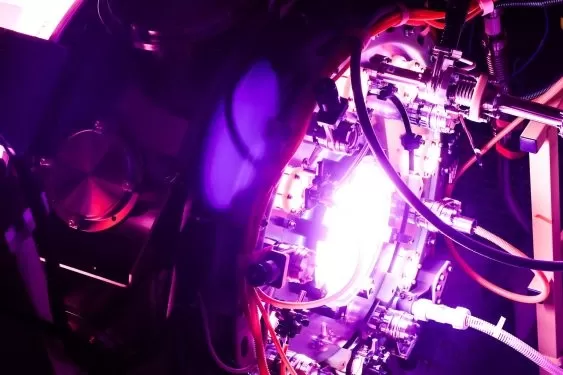
Fusion energy startup Helion is reportedly in discussions to supply power to OpenAI. Both companies share a common backer in Sam Altman.
According to a report from Axios, the deal is in its preliminary stages. It could potentially secure OpenAI 12.5% of Helion's projected output—five gigawatts by 2030 and 50 gigawatts by 2035. This follows a similar agreement Helion signed with OpenAI partner Microsoft in 2023 for power supply commencing in 2028.
If the figures cited in the report are accurate, they indicate Helion's confidence in rapidly scaling its fusion power plant production. The company states each reactor generates 50 megawatts, implying a need to deploy 800 reactors by 2030 and an additional 7,200 by 2035.
Helion did not provide an immediate response to TechCrunch's request for comment.
The startup is working to complete its first commercial-scale reactor by that timeframe. Success would position it years ahead of most competitors, who are targeting the early 2030s for commercial operation.
Last year, Helion secured $425 million in funding from investors including Sam Altman, as well as Mithril, Lightspeed, and SoftBank.
While most fusion startups focus on one of two main approaches—using heat from reactions to drive steam turbines—Helion is pursuing a distinct method. Its reactor design employs magnets to directly convert fusion energy into electricity.
Within its hourglass-shaped reactor, fusion fuel is first converted into plasma at each end. Magnetic fields then propel these plasmas toward a central collision point. A separate set of magnets compresses the merged plasma until fusion occurs. The resulting reaction pushes against the magnets, enabling direct energy conversion.
Helion is currently testing its Polaris prototype ahead of its commercial power push. In February, the reactor achieved plasmas reaching 150 million degrees Celsius, nearing the 200 million degrees Celsius threshold the company believes is necessary for commercial operations.
Although Altman has reportedly resigned as chair of Helion's board and recused himself from the negotiations, his influence is evident in facilitating this potential partnership.
Last year, Altman also stepped down as board chair of Oklo, a small modular reactor startup that merged with his acquisition company, AltC. Oklo's co-founder stated the move was intended to allow the company to explore strategic partnerships with leading AI firms, potentially including OpenAI.
Related article
 Sam Altman Sparks Debate Over AI's Deceleration
Listen onApple PodcastsListen onSpotifyOpenAI CEO Sam Altman recently suggested that it may be time to “pace the rate of AI development” to allow society to “harden around some of these new capability levels.”On the latest episode of TechCrunch’s Equ
OpenAI fights Apple trade secret lawsuit
OpenAI rebutted Apple’s trade secret allegations on Tuesday, arguing the lawsuit is unfounded.“We take these claims seriously but see no evidence supporting them,” OpenAI stated, as reported by Bloomberg’s Ed Ludlow on X. “We support fair competition
OpenAI robotics head Caitlin Kalinowski resigns over Pentagon partnership
OpenAI robotics leader Caitlin Kalinowski has stepped down following the company’s controversial partnership with the Department of Defense.“This wasn’t an easy call,” Kalinowski explained in a social media statement. “While AI plays a vital role in
Related Special Topic Recommendations
SEO
Sam Altman Sparks Debate Over AI's Deceleration
Listen onApple PodcastsListen onSpotifyOpenAI CEO Sam Altman recently suggested that it may be time to “pace the rate of AI development” to allow society to “harden around some of these new capability levels.”On the latest episode of TechCrunch’s Equ
OpenAI fights Apple trade secret lawsuit
OpenAI rebutted Apple’s trade secret allegations on Tuesday, arguing the lawsuit is unfounded.“We take these claims seriously but see no evidence supporting them,” OpenAI stated, as reported by Bloomberg’s Ed Ludlow on X. “We support fair competition
OpenAI robotics head Caitlin Kalinowski resigns over Pentagon partnership
OpenAI robotics leader Caitlin Kalinowski has stepped down following the company’s controversial partnership with the Department of Defense.“This wasn’t an easy call,” Kalinowski explained in a social media statement. “While AI plays a vital role in
Related Special Topic Recommendations
SEO
 Best AI SERP Analysis Tools for Search Strategy
2026 Latest Best Top-rated AI SERP Analysis Tools for Search Strategy are curated by XIX.AI through rigorous real-world tests and weekly updated rankings. These powerful tools help you unlock hidden optimization opportunities, boost content performance, and gain a competitive edge in search. Discover your perfect tool to elevate your search strategy today. Explore now!
 13 tools
 xix.ai
Data Analysis
Best AI Anomaly Detection Tools for KPI Monitoring across SaaS and Ecommerce Teams
xix.ai
Data Analysis
Best AI Anomaly Detection Tools for KPI Monitoring across SaaS and Ecommerce Teams
2026 Latest Best Top-rated AI Anomaly Detection Tools for KPI Monitoring in SaaS and Ecommerce teams! XIX.AI has curated a powerful, game-changing collection based on rigorous real-world tests and weekly updated rankings. You’ll find detailed free vs paid comparison insights to help you identify the must-try solution that boosts productivity and unlocks your AI edge. Explore now!
10 tools
xix.ai
writing
Best AI Outline Generators for Long-Form SEO Articles
2026 Latest Best Top-Rated AI Outline Generators for Long-Form SEO Articles, meticulously curated by XIX.AI. These powerful tools offer game-changing assistance in creating high-quality content quickly, boosting writing efficiency significantly. Get a free vs paid comparison along with real-world tests and detailed rankings to help you find the must-try option that suits your needs. Explore now to unlock your AI edge.
8 tools
xix.ai
Education and Learning
AI Study Tools for Homework and Exam Prep
2026 Latest Best AI Study Tools for Homework and Exam Prep! XIX.AI curates a top-rated list of powerful, game-changing tools that help students boost productivity, streamline homework completion, and ace exams through real-world tests. Get a free vs paid comparison, detailed rankings, and must-try options to unlock your AI edge. Explore now!
10 tools
xix.ai
Music composition
AI Vocal Demo Tools for Songwriters, Hooks, Toplines, and Multilingual Draft Sessions
2026 Latest Best AI Vocal Demo Tools for Songwriters, Hook Creators, and Multi-Language Content Teams! XIX.AI has curated a top-rated list of powerful game-changing tools that go through rigorous real-world tests. You’ll find detailed free vs paid comparison data, comprehensive rankings, and must-try options to help you boost writing efficiency and unlock your creative potential. Explore now to discover your perfect tool for all your content needs!
9 tools
xix.ai
Business
Best AI Competitive Research Tools for Small Businesses
2026 Latest Best Top-rated AI Competitive Research Tools for Small Businesses! XIX.AI has curated a highly powerful game-changing collection, updated weekly with rigorous real-world tests and detailed rankings. You can find a comprehensive free vs paid comparison to help you identify the must-try tools that boost your productivity and give you a competitive edge. Explore now to discover your perfect tool!
9 tools
xix.ai

 Comments (0)
0/500
Comments (0)
0/500
Fusion energy startup Helion is reportedly in discussions to supply power to OpenAI. Both companies share a common backer in Sam Altman.
According to a report from Axios, the deal is in its preliminary stages. It could potentially secure OpenAI 12.5% of Helion's projected output—five gigawatts by 2030 and 50 gigawatts by 2035. This follows a similar agreement Helion signed with OpenAI partner Microsoft in 2023 for power supply commencing in 2028.
If the figures cited in the report are accurate, they indicate Helion's confidence in rapidly scaling its fusion power plant production. The company states each reactor generates 50 megawatts, implying a need to deploy 800 reactors by 2030 and an additional 7,200 by 2035.
Helion did not provide an immediate response to TechCrunch's request for comment.
The startup is working to complete its first commercial-scale reactor by that timeframe. Success would position it years ahead of most competitors, who are targeting the early 2030s for commercial operation.
Last year, Helion secured $425 million in funding from investors including Sam Altman, as well as Mithril, Lightspeed, and SoftBank.
While most fusion startups focus on one of two main approaches—using heat from reactions to drive steam turbines—Helion is pursuing a distinct method. Its reactor design employs magnets to directly convert fusion energy into electricity.
Within its hourglass-shaped reactor, fusion fuel is first converted into plasma at each end. Magnetic fields then propel these plasmas toward a central collision point. A separate set of magnets compresses the merged plasma until fusion occurs. The resulting reaction pushes against the magnets, enabling direct energy conversion.
Helion is currently testing its Polaris prototype ahead of its commercial power push. In February, the reactor achieved plasmas reaching 150 million degrees Celsius, nearing the 200 million degrees Celsius threshold the company believes is necessary for commercial operations.
Although Altman has reportedly resigned as chair of Helion's board and recused himself from the negotiations, his influence is evident in facilitating this potential partnership.
Last year, Altman also stepped down as board chair of Oklo, a small modular reactor startup that merged with his acquisition company, AltC. Oklo's co-founder stated the move was intended to allow the company to explore strategic partnerships with leading AI firms, potentially including OpenAI.








 Sam Altman Sparks Debate Over AI's Deceleration
Listen onApple PodcastsListen onSpotifyOpenAI CEO Sam Altman recently suggested that it may be time to “pace the rate of AI development” to allow society to “harden around some of these new capability levels.”On the latest episode of TechCrunch’s Equ
Sam Altman Sparks Debate Over AI's Deceleration
Listen onApple PodcastsListen onSpotifyOpenAI CEO Sam Altman recently suggested that it may be time to “pace the rate of AI development” to allow society to “harden around some of these new capability levels.”On the latest episode of TechCrunch’s Equ
 OpenAI fights Apple trade secret lawsuit
OpenAI rebutted Apple’s trade secret allegations on Tuesday, arguing the lawsuit is unfounded.“We take these claims seriously but see no evidence supporting them,” OpenAI stated, as reported by Bloomberg’s Ed Ludlow on X. “We support fair competition
OpenAI fights Apple trade secret lawsuit
OpenAI rebutted Apple’s trade secret allegations on Tuesday, arguing the lawsuit is unfounded.“We take these claims seriously but see no evidence supporting them,” OpenAI stated, as reported by Bloomberg’s Ed Ludlow on X. “We support fair competition
 OpenAI robotics head Caitlin Kalinowski resigns over Pentagon partnership
OpenAI robotics leader Caitlin Kalinowski has stepped down following the company’s controversial partnership with the Department of Defense.“This wasn’t an easy call,” Kalinowski explained in a social media statement. “While AI plays a vital role in
OpenAI robotics head Caitlin Kalinowski resigns over Pentagon partnership
OpenAI robotics leader Caitlin Kalinowski has stepped down following the company’s controversial partnership with the Department of Defense.“This wasn’t an easy call,” Kalinowski explained in a social media statement. “While AI plays a vital role in

2026 Latest Best Top-rated AI SERP Analysis Tools for Search Strategy are curated by XIX.AI through rigorous real-world tests and weekly updated rankings. These powerful tools help you unlock hidden optimization opportunities, boost content performance, and gain a competitive edge in search. Discover your perfect tool to elevate your search strategy today. Explore now!
13 tools
xix.ai

2026 Latest Best Top-rated AI Anomaly Detection Tools for KPI Monitoring in SaaS and Ecommerce teams! XIX.AI has curated a powerful, game-changing collection based on rigorous real-world tests and weekly updated rankings. You’ll find detailed free vs paid comparison insights to help you identify the must-try solution that boosts productivity and unlocks your AI edge. Explore now!
10 tools
xix.ai

2026 Latest Best Top-Rated AI Outline Generators for Long-Form SEO Articles, meticulously curated by XIX.AI. These powerful tools offer game-changing assistance in creating high-quality content quickly, boosting writing efficiency significantly. Get a free vs paid comparison along with real-world tests and detailed rankings to help you find the must-try option that suits your needs. Explore now to unlock your AI edge.
8 tools
xix.ai

2026 Latest Best AI Study Tools for Homework and Exam Prep! XIX.AI curates a top-rated list of powerful, game-changing tools that help students boost productivity, streamline homework completion, and ace exams through real-world tests. Get a free vs paid comparison, detailed rankings, and must-try options to unlock your AI edge. Explore now!
10 tools
xix.ai

2026 Latest Best AI Vocal Demo Tools for Songwriters, Hook Creators, and Multi-Language Content Teams! XIX.AI has curated a top-rated list of powerful game-changing tools that go through rigorous real-world tests. You’ll find detailed free vs paid comparison data, comprehensive rankings, and must-try options to help you boost writing efficiency and unlock your creative potential. Explore now to discover your perfect tool for all your content needs!
9 tools
xix.ai

2026 Latest Best Top-rated AI Competitive Research Tools for Small Businesses! XIX.AI has curated a highly powerful game-changing collection, updated weekly with rigorous real-world tests and detailed rankings. You can find a comprehensive free vs paid comparison to help you identify the must-try tools that boost your productivity and give you a competitive edge. Explore now to discover your perfect tool!
9 tools
xix.ai












