


 Home
HomeGraph AI Transforms Business Intelligence Using Knowledge Graphs
Key Points
Graph AI harnesses knowledge graphs revealing hidden connections within complex datasets.
Knowledge graphs visualize information as interconnected nodes and relationships.
Identifies irregular patterns through sophisticated anomaly detection capabilities.
Tracks complete data history maintaining transparency in information flow.
Validates expert insights ensuring reliable decision-making foundations.
Integrates NLP to analyze and structure unstructured textual information.
Solutions like Neo4j and Bloom enable effective graph construction and visualization.
Machine learning combined with graph algorithms unlocks advanced analytical potential.
Understanding Graph AI and Knowledge Graphs
What is Graph AI and Why is it Important?
Graph AI represents an evolutionary leap from conventional AI approaches by focusing on contextual relationships rather than isolated data points. This relationship-centric paradigm proves indispensable across data-rich industries like finance, healthcare, and logistics where interconnectivity drives value.
Three transformative benefits of Graph AI:
- Discovers latent relationships invisible to traditional analysis
- Enhances analytical precision through contextual understanding
- Empowers evidence-based strategic decision making
Unlike constrained traditional models, Graph AI delivers comprehensive, real-time comprehension essential for modern enterprises.
The Architecture of Knowledge Graphs: Nodes and Edges
The knowledge graph framework revolves around two core elements:
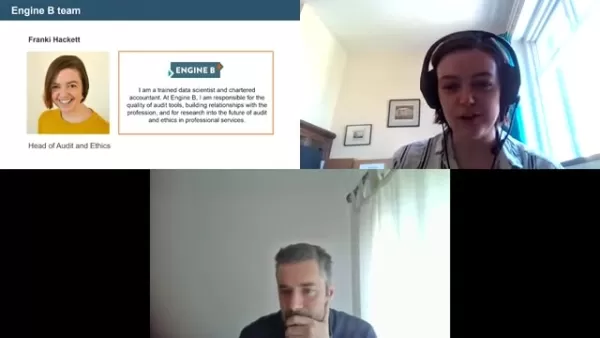
- Nodes: Represent critical entities with defining attributes
- Edges: Define meaningful relationships between nodes
This structure mirrors human cognition processes, enabling intuitive data exploration and insight discovery.
The Advantages of Graph AI in Professional Services
Addressing Key Challenges in the Professional World
Professional services confront unique analytical hurdles that Graph AI effectively resolves.
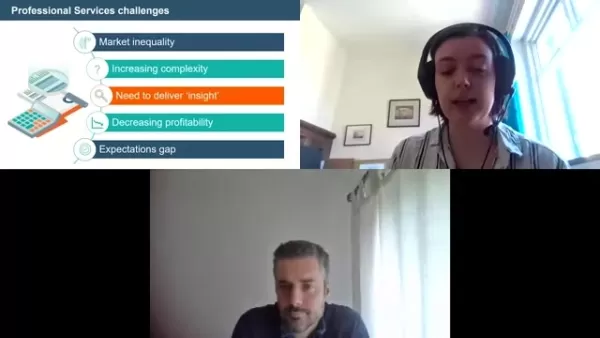
Five critical solutions Graph AI provides:
- Democratizes data access balancing competitive landscapes
- Simplifies complex relationship visualization
- Transforms raw data into actionable intelligence
- Automates analysis preserving profitability
- Elevates service quality meeting heightened expectations
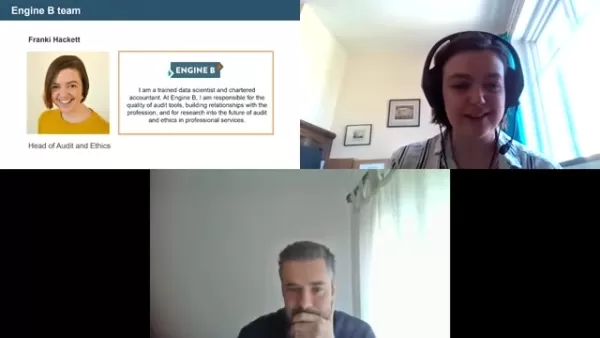
Engine B: A Deep Dive
Engine B specializes in AI-powered transformation for professional services organizations.
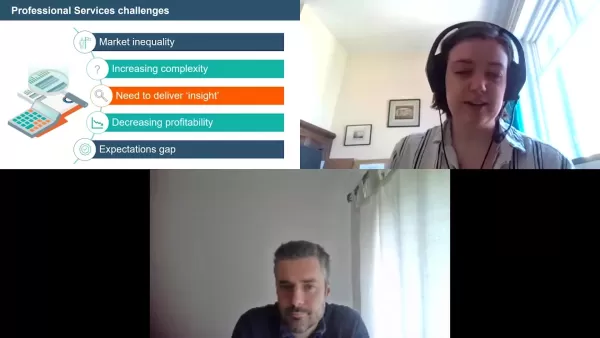
Their comprehensive approach involves:
- Standardized data extraction from client systems
- Conversion into shared data models
- Advanced analysis via knowledge graphs
Serving audit, legal and tax sectors, Engine B combines:
- Knowledge graph technology
- Document classification
- Natural language processing
Delivering tangible benefits:
- Seamless cross-service data integration
- Enhanced expert collaboration
- Distributed workforce optimization
- Improved decision confidence
How to Use Graph AI
Utilizing NLP to Enhance Knowledge Graphs
Natural Language Processing serves as the bridge between unstructured data and actionable insights.
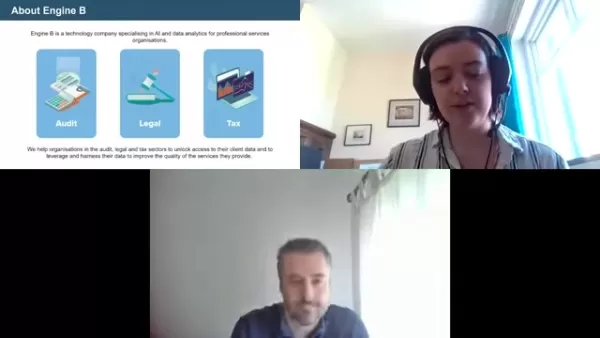
NLP enables:
- Automated extraction from legal and financial documents
- Accurate node and relationship creation
- Comprehensive knowledge graph population
Real-World Examples: Anomaly Detection
Fraud detection demonstrates Graph AI's practical application.
The detection methodology:
- Define relationship patterns
- Establish baseline metrics
- Identify statistical deviations
Pros and Cons of Knowledge Graph Technology
Pros
- Provides contextual awareness
- Incorporates domain expertise
- Robust analytical foundation
- Enables topological examination
Cons
- Requires specialized implementation knowledge
- Demands proper foundational database setup
- Needs cross-disciplinary teams
Frequently Asked Questions
What specific tasks can Graph AI accomplish?
Applications span anomaly detection, fraud identification, risk evaluation, legal impact modeling, and comprehensive data lineage tracking.
What are the primary obstacles or challenges in the professional services industry?
Key hurdles include resource disparities favoring large firms, escalating analytical complexity, rising insight expectations, and profitability pressures.
How can one stay up to date with Graph Algorithms and AI?
Continuous learning through workshops, educational programs, and research publications maintains professional currency.
Related Questions
How can Graph AI be implemented into my company's audit processes?
Implementation begins with evaluating existing data infrastructure before deploying NLP extraction and relationship mapping to construct audit-specific knowledge graphs.
Can you compare your solution to industry data models? What steps are taken to make data models consistent?
We employ open-source audit data models ensuring standardization while maintaining customization flexibility.
What kind of graph platforms do you use for Graph AI?
While Neo4j forms our technical foundation, success equally depends on combining technical expertise with domain knowledge.
Related article
 Suno to Watermark Songs Amid Legal Battles
Suno, the platform enabling users to generate AI-created music, has unveiled new features to label platform-produced tracks, restrict downloads, and update community standards to curb unauthorized replicas. These updates arrive as Suno confronts mult
Musk Admits Grok Build Leaked User Code, Promises to Erase All Historical Data
Elon Musk directly addressed the privacy controversy surrounding Grok Build, beginning with a simple "True" to confirm the incident's validity. He pledged that all user data previously uploaded to SpaceXAI would be permanently erased, stating, "not a
U.S. Stocks Hit Historic Milestone as AI and Aerospace Giants Prepare for Trillion-Dollar Debut
Elon Musk, Sam Altman, and Dario Amodei, three titans of the technology sector, are advancing toward initial public offerings for their respective ventures. With SpaceX, OpenAI, and Anthropic—three industry behemoths nearing trillion-dollar valuation
Related Special Topic Recommendations
SEO
Suno to Watermark Songs Amid Legal Battles
Suno, the platform enabling users to generate AI-created music, has unveiled new features to label platform-produced tracks, restrict downloads, and update community standards to curb unauthorized replicas. These updates arrive as Suno confronts mult
Musk Admits Grok Build Leaked User Code, Promises to Erase All Historical Data
Elon Musk directly addressed the privacy controversy surrounding Grok Build, beginning with a simple "True" to confirm the incident's validity. He pledged that all user data previously uploaded to SpaceXAI would be permanently erased, stating, "not a
U.S. Stocks Hit Historic Milestone as AI and Aerospace Giants Prepare for Trillion-Dollar Debut
Elon Musk, Sam Altman, and Dario Amodei, three titans of the technology sector, are advancing toward initial public offerings for their respective ventures. With SpaceX, OpenAI, and Anthropic—three industry behemoths nearing trillion-dollar valuation
Related Special Topic Recommendations
SEO
 Best AI SERP Analysis Tools for Search Strategy
2026 Latest Best Top-rated AI SERP Analysis Tools for Search Strategy are curated by XIX.AI through rigorous real-world tests and weekly updated rankings. These powerful tools help you unlock hidden optimization opportunities, boost content performance, and gain a competitive edge in search. Discover your perfect tool to elevate your search strategy today. Explore now!
 13 tools
 xix.ai
Data Analysis
Best AI Anomaly Detection Tools for KPI Monitoring across SaaS and Ecommerce Teams
xix.ai
Data Analysis
Best AI Anomaly Detection Tools for KPI Monitoring across SaaS and Ecommerce Teams
2026 Latest Best Top-rated AI Anomaly Detection Tools for KPI Monitoring in SaaS and Ecommerce teams! XIX.AI has curated a powerful, game-changing collection based on rigorous real-world tests and weekly updated rankings. You’ll find detailed free vs paid comparison insights to help you identify the must-try solution that boosts productivity and unlocks your AI edge. Explore now!
10 tools
xix.ai
writing
Best AI Outline Generators for Long-Form SEO Articles
2026 Latest Best Top-Rated AI Outline Generators for Long-Form SEO Articles, meticulously curated by XIX.AI. These powerful tools offer game-changing assistance in creating high-quality content quickly, boosting writing efficiency significantly. Get a free vs paid comparison along with real-world tests and detailed rankings to help you find the must-try option that suits your needs. Explore now to unlock your AI edge.
8 tools
xix.ai
Education and Learning
AI Study Tools for Homework and Exam Prep
2026 Latest Best AI Study Tools for Homework and Exam Prep! XIX.AI curates a top-rated list of powerful, game-changing tools that help students boost productivity, streamline homework completion, and ace exams through real-world tests. Get a free vs paid comparison, detailed rankings, and must-try options to unlock your AI edge. Explore now!
10 tools
xix.ai
Music composition
AI Vocal Demo Tools for Songwriters, Hooks, Toplines, and Multilingual Draft Sessions
2026 Latest Best AI Vocal Demo Tools for Songwriters, Hook Creators, and Multi-Language Content Teams! XIX.AI has curated a top-rated list of powerful game-changing tools that go through rigorous real-world tests. You’ll find detailed free vs paid comparison data, comprehensive rankings, and must-try options to help you boost writing efficiency and unlock your creative potential. Explore now to discover your perfect tool for all your content needs!
9 tools
xix.ai
Business
Best AI Competitive Research Tools for Small Businesses
2026 Latest Best Top-rated AI Competitive Research Tools for Small Businesses! XIX.AI has curated a highly powerful game-changing collection, updated weekly with rigorous real-world tests and detailed rankings. You can find a comprehensive free vs paid comparison to help you identify the must-try tools that boost your productivity and give you a competitive edge. Explore now to discover your perfect tool!
9 tools
xix.ai

 Comments (2)
0/500
Comments (2)
0/500
![GregoryJones]()
グラフAIがビジネスインテリジェンスに革命を起こすなんて…🤯 知識グラフでデータの隠れた関係性を可視化できる技術に感動!でも異常検知が高度すぎて、将来的に人間の判断が不要になる日が来るのかちょっと不安。関連企業の株価が気になるなぁ
![GeorgeMartinez]()
知識グラフでビジネスデータを可視化するAIって、まるで探偵みたいに隠れた関係性を暴くんだね🔍。でも異常検知が高度化すると、人間の判断がどこまで必要になるのか少し不安…
Key Points
Graph AI harnesses knowledge graphs revealing hidden connections within complex datasets.
Knowledge graphs visualize information as interconnected nodes and relationships.
Identifies irregular patterns through sophisticated anomaly detection capabilities.
Tracks complete data history maintaining transparency in information flow.
Validates expert insights ensuring reliable decision-making foundations.
Integrates NLP to analyze and structure unstructured textual information.
Solutions like Neo4j and Bloom enable effective graph construction and visualization.
Machine learning combined with graph algorithms unlocks advanced analytical potential.
Understanding Graph AI and Knowledge Graphs
What is Graph AI and Why is it Important?
Graph AI represents an evolutionary leap from conventional AI approaches by focusing on contextual relationships rather than isolated data points. This relationship-centric paradigm proves indispensable across data-rich industries like finance, healthcare, and logistics where interconnectivity drives value.
Three transformative benefits of Graph AI:
- Discovers latent relationships invisible to traditional analysis
- Enhances analytical precision through contextual understanding
- Empowers evidence-based strategic decision making
Unlike constrained traditional models, Graph AI delivers comprehensive, real-time comprehension essential for modern enterprises.
The Architecture of Knowledge Graphs: Nodes and Edges
The knowledge graph framework revolves around two core elements:
- Nodes: Represent critical entities with defining attributes
- Edges: Define meaningful relationships between nodes
This structure mirrors human cognition processes, enabling intuitive data exploration and insight discovery.
The Advantages of Graph AI in Professional Services
Addressing Key Challenges in the Professional World
Professional services confront unique analytical hurdles that Graph AI effectively resolves.
Five critical solutions Graph AI provides:
- Democratizes data access balancing competitive landscapes
- Simplifies complex relationship visualization
- Transforms raw data into actionable intelligence
- Automates analysis preserving profitability
- Elevates service quality meeting heightened expectations
Engine B: A Deep Dive
Engine B specializes in AI-powered transformation for professional services organizations.
Their comprehensive approach involves:
- Standardized data extraction from client systems
- Conversion into shared data models
- Advanced analysis via knowledge graphs
Serving audit, legal and tax sectors, Engine B combines:
- Knowledge graph technology
- Document classification
- Natural language processing
Delivering tangible benefits:
- Seamless cross-service data integration
- Enhanced expert collaboration
- Distributed workforce optimization
- Improved decision confidence
How to Use Graph AI
Utilizing NLP to Enhance Knowledge Graphs
Natural Language Processing serves as the bridge between unstructured data and actionable insights.
NLP enables:
- Automated extraction from legal and financial documents
- Accurate node and relationship creation
- Comprehensive knowledge graph population
Real-World Examples: Anomaly Detection
Fraud detection demonstrates Graph AI's practical application.
The detection methodology:
- Define relationship patterns
- Establish baseline metrics
- Identify statistical deviations
Pros and Cons of Knowledge Graph Technology
Pros
- Provides contextual awareness
- Incorporates domain expertise
- Robust analytical foundation
- Enables topological examination
Cons
- Requires specialized implementation knowledge
- Demands proper foundational database setup
- Needs cross-disciplinary teams
Frequently Asked Questions
What specific tasks can Graph AI accomplish?
Applications span anomaly detection, fraud identification, risk evaluation, legal impact modeling, and comprehensive data lineage tracking.
What are the primary obstacles or challenges in the professional services industry?
Key hurdles include resource disparities favoring large firms, escalating analytical complexity, rising insight expectations, and profitability pressures.
How can one stay up to date with Graph Algorithms and AI?
Continuous learning through workshops, educational programs, and research publications maintains professional currency.
Related Questions
How can Graph AI be implemented into my company's audit processes?
Implementation begins with evaluating existing data infrastructure before deploying NLP extraction and relationship mapping to construct audit-specific knowledge graphs.
Can you compare your solution to industry data models? What steps are taken to make data models consistent?
We employ open-source audit data models ensuring standardization while maintaining customization flexibility.
What kind of graph platforms do you use for Graph AI?
While Neo4j forms our technical foundation, success equally depends on combining technical expertise with domain knowledge.








 Suno to Watermark Songs Amid Legal Battles
Suno, the platform enabling users to generate AI-created music, has unveiled new features to label platform-produced tracks, restrict downloads, and update community standards to curb unauthorized replicas. These updates arrive as Suno confronts mult
Suno to Watermark Songs Amid Legal Battles
Suno, the platform enabling users to generate AI-created music, has unveiled new features to label platform-produced tracks, restrict downloads, and update community standards to curb unauthorized replicas. These updates arrive as Suno confronts mult
 Musk Admits Grok Build Leaked User Code, Promises to Erase All Historical Data
Elon Musk directly addressed the privacy controversy surrounding Grok Build, beginning with a simple "True" to confirm the incident's validity. He pledged that all user data previously uploaded to SpaceXAI would be permanently erased, stating, "not a
Musk Admits Grok Build Leaked User Code, Promises to Erase All Historical Data
Elon Musk directly addressed the privacy controversy surrounding Grok Build, beginning with a simple "True" to confirm the incident's validity. He pledged that all user data previously uploaded to SpaceXAI would be permanently erased, stating, "not a
 U.S. Stocks Hit Historic Milestone as AI and Aerospace Giants Prepare for Trillion-Dollar Debut
Elon Musk, Sam Altman, and Dario Amodei, three titans of the technology sector, are advancing toward initial public offerings for their respective ventures. With SpaceX, OpenAI, and Anthropic—three industry behemoths nearing trillion-dollar valuation
U.S. Stocks Hit Historic Milestone as AI and Aerospace Giants Prepare for Trillion-Dollar Debut
Elon Musk, Sam Altman, and Dario Amodei, three titans of the technology sector, are advancing toward initial public offerings for their respective ventures. With SpaceX, OpenAI, and Anthropic—three industry behemoths nearing trillion-dollar valuation

2026 Latest Best Top-rated AI SERP Analysis Tools for Search Strategy are curated by XIX.AI through rigorous real-world tests and weekly updated rankings. These powerful tools help you unlock hidden optimization opportunities, boost content performance, and gain a competitive edge in search. Discover your perfect tool to elevate your search strategy today. Explore now!
13 tools
xix.ai
2026 Latest Best Top-rated AI Anomaly Detection Tools for KPI Monitoring in SaaS and Ecommerce teams! XIX.AI has curated a powerful, game-changing collection based on rigorous real-world tests and weekly updated rankings. You’ll find detailed free vs paid comparison insights to help you identify the must-try solution that boosts productivity and unlocks your AI edge. Explore now!
10 tools
xix.ai

2026 Latest Best Top-Rated AI Outline Generators for Long-Form SEO Articles, meticulously curated by XIX.AI. These powerful tools offer game-changing assistance in creating high-quality content quickly, boosting writing efficiency significantly. Get a free vs paid comparison along with real-world tests and detailed rankings to help you find the must-try option that suits your needs. Explore now to unlock your AI edge.
8 tools
xix.ai

2026 Latest Best AI Study Tools for Homework and Exam Prep! XIX.AI curates a top-rated list of powerful, game-changing tools that help students boost productivity, streamline homework completion, and ace exams through real-world tests. Get a free vs paid comparison, detailed rankings, and must-try options to unlock your AI edge. Explore now!
10 tools
xix.ai

2026 Latest Best AI Vocal Demo Tools for Songwriters, Hook Creators, and Multi-Language Content Teams! XIX.AI has curated a top-rated list of powerful game-changing tools that go through rigorous real-world tests. You’ll find detailed free vs paid comparison data, comprehensive rankings, and must-try options to help you boost writing efficiency and unlock your creative potential. Explore now to discover your perfect tool for all your content needs!
9 tools
xix.ai

2026 Latest Best Top-rated AI Competitive Research Tools for Small Businesses! XIX.AI has curated a highly powerful game-changing collection, updated weekly with rigorous real-world tests and detailed rankings. You can find a comprehensive free vs paid comparison to help you identify the must-try tools that boost your productivity and give you a competitive edge. Explore now to discover your perfect tool!
9 tools
xix.ai

グラフAIがビジネスインテリジェンスに革命を起こすなんて…🤯 知識グラフでデータの隠れた関係性を可視化できる技術に感動!でも異常検知が高度すぎて、将来的に人間の判断が不要になる日が来るのかちょっと不安。関連企業の株価が気になるなぁ
知識グラフでビジネスデータを可視化するAIって、まるで探偵みたいに隠れた関係性を暴くんだね🔍。でも異常検知が高度化すると、人間の判断がどこまで必要になるのか少し不安…












