


 Home
HomeGoogle Provides Free SAT Prep Tools Using Gemini AI

At the BETT 2026 education technology conference in London, Google unveiled free SAT practice exams driven by its Gemini AI. This initiative has the potential to transform the $24 billion test preparation sector by removing financial obstacles that have historically benefited affluent students.
This feature, now available worldwide within the Gemini app, provides full-length SAT practice tests with immediate AI-generated feedback. Students can ask Gemini for detailed explanations on questions they answered incorrectly, transforming a standard exam into a dynamic learning experience. Google collaborated with Princeton Review to guarantee that all practice materials align with College Board standards.
Free AI Tutoring Meets a $24 Billion Industry
The test preparation industry has long followed a straightforward model: students with the means to pay for high-priced courses and tutors tend to achieve better scores. For instance, Kaplan’s comprehensive SAT programs can cost as much as $2,499, while Princeton Review’s premier course is priced at $1,499. In major urban areas, private tutors often charge between $200 and $500 per hour.
Google has now introduced a viable free alternative.
This strategic move highlights Gemini’s evolution from a general consumer chatbot to specialized applications. As GM incorporates Gemini into its vehicles and businesses adopt it for efficiency, Google views education as a key area to showcase the technology’s real-world benefits—and to cultivate brand loyalty among younger users.
The SAT feature builds on Google’s broader development of AI tutoring tools. Gemini can clarify why a particular answer is incorrect, propose alternative strategies for reading comprehension sections, and guide students through math problems step by step. Rather than relying on static answer keys, learners can engage in interactive conversations to better grasp challenging concepts.
For established test prep companies, this represents a fundamental challenge. Their business models depend on students paying premium prices for structured content and expert support. When an AI can deliver tailored explanations at no cost, the rationale for a $1,500 course becomes less compelling. In response, firms like Kaplan and Princeton Review may emphasize the value of human accountability, fixed study schedules, and the motivational effect of financial commitment—though these advantages may diminish as AI continues to advance.
The Equity Question Gets Complicated
For years, education researchers have observed a clear link between standardized test results and family income. On average, students from households earning more than $200,000 per year score about 400 points higher on the SAT than those from families earning under $20,000. Unequal access to test preparation resources has been a significant factor in this disparity.
Google’s free offering could help reduce this resource gap. A student in rural Mississippi can now use the same AI-enhanced practice tests as a peer at an elite Manhattan prep school. While the College Board has provided free practice materials via Khan Academy since 2015, Gemini’s conversational approach brings it closer to the individualized support that costly tutors offer.
However, the situation is not entirely straightforward. To benefit from Gemini, students need a reliable internet connection, a suitable device, and the skills to use AI tools effectively. It also assumes that learners will proactively seek out this resource—something that students from more college-oriented backgrounds, with supportive families and counselors, may be more inclined to do.
Another consideration is whether free AI tutoring genuinely helps close the gap or simply redefines which students hold the advantage. If all students gain access to AI-powered test prep, will overall scores rise uniformly, preserving existing rankings? Or will those who already have strong educational foundations—and who learn to leverage AI most effectively—see the greatest benefit?
These concerns go beyond SAT preparation and reflect Google’s wider AI strategy in education. The company has marketed Gemini as a versatile learning aid for various subjects, not just test prep. How schools and families incorporate these tools will determine whether AI tutoring serves as an equalizing force or becomes another factor in educational inequality.
The future of the SAT itself remains uncertain. A rising number of colleges have adopted test-optional policies, doubting whether these exams truly predict college success or merely reflect test-taking skill and preparation access. Google’s free practice tests arrive at a time when the SAT’s role in college admissions may be fading.
For now, millions of students continue to take the SAT each year, and their scores still affect admissions outcomes at selective institutions. Google has given them a powerful new resource. Whether this tool evens the playing field or simply raises the bar depends on who uses it—and how.
Related article
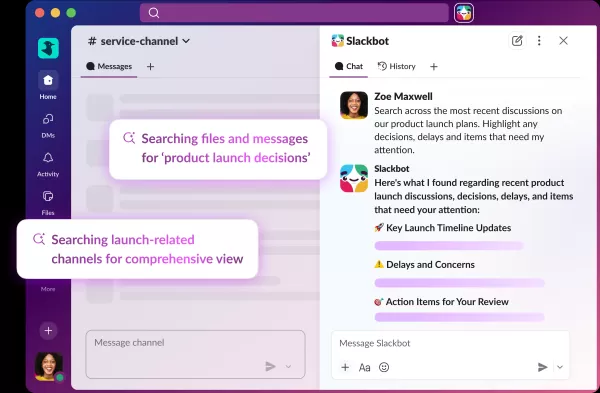
 Slackbot Becomes an AI Agent
Slackbot, the automated assistant embedded in Salesforce’s corporate messaging platform Slack, is evolving into an AI agent. Salesforce CTO Parker Harris envisions it achieving viral status comparable to OpenAI’s ChatGPT.The cloud software giant laun
ByteDance Boosts Core AI Incentives as Doubao Surges 14.6%
ByteDance recently convened a DouBao equity briefing to unveil fresh incentive policies for staff involved in the DouBao division. The strike price for DouBao shares has been lifted from $14.85 in June 2026 to $17.02, marking an approximate 14.6% inc
MiniMax Unveils 10x Team Program to Incentivize Global AI Experts
MiniMax (Xiyu Technology), the General Artificial Intelligence Lab, has officially launched "10x Team," a global talent collaboration initiative. This program aims to recruit top experts across industries to explore the deep application of large mode
Related Special Topic Recommendations
Education and Learning
Slackbot Becomes an AI Agent
Slackbot, the automated assistant embedded in Salesforce’s corporate messaging platform Slack, is evolving into an AI agent. Salesforce CTO Parker Harris envisions it achieving viral status comparable to OpenAI’s ChatGPT.The cloud software giant laun
ByteDance Boosts Core AI Incentives as Doubao Surges 14.6%
ByteDance recently convened a DouBao equity briefing to unveil fresh incentive policies for staff involved in the DouBao division. The strike price for DouBao shares has been lifted from $14.85 in June 2026 to $17.02, marking an approximate 14.6% inc
MiniMax Unveils 10x Team Program to Incentivize Global AI Experts
MiniMax (Xiyu Technology), the General Artificial Intelligence Lab, has officially launched "10x Team," a global talent collaboration initiative. This program aims to recruit top experts across industries to explore the deep application of large mode
Related Special Topic Recommendations
Education and Learning
 AI Study Tools for Homework and Exam Prep
2026 Latest Best AI Study Tools for Homework and Exam Prep! XIX.AI curates a top-rated list of powerful, game-changing tools that help students boost productivity, streamline homework completion, and ace exams through real-world tests. Get a free vs paid comparison, detailed rankings, and must-try options to unlock your AI edge. Explore now!
 10 tools
 xix.ai
Music composition
AI Vocal Demo Tools for Songwriters, Hooks, Toplines, and Multilingual Draft Sessions
xix.ai
Music composition
AI Vocal Demo Tools for Songwriters, Hooks, Toplines, and Multilingual Draft Sessions
2026 Latest Best AI Vocal Demo Tools for Songwriters, Hook Creators, and Multi-Language Content Teams! XIX.AI has curated a top-rated list of powerful game-changing tools that go through rigorous real-world tests. You’ll find detailed free vs paid comparison data, comprehensive rankings, and must-try options to help you boost writing efficiency and unlock your creative potential. Explore now to discover your perfect tool for all your content needs!
9 tools
xix.ai
Business
Best AI Competitive Research Tools for Small Businesses
2026 Latest Best Top-rated AI Competitive Research Tools for Small Businesses! XIX.AI has curated a highly powerful game-changing collection, updated weekly with rigorous real-world tests and detailed rankings. You can find a comprehensive free vs paid comparison to help you identify the must-try tools that boost your productivity and give you a competitive edge. Explore now to discover your perfect tool!
9 tools
xix.ai
Image editing
Photoshop AI Retouch Tools for Ecommerce Apparel, Skin Cleanup, and Color Consistency
2026 Latest Best Photoshop AI retouch tools for ecommerce apparel, skin cleanup, and color consistency! This top-rated curated list features powerful game-changing solutions that help you boost writing efficiency, streamline content creation, and achieve perfect visual results effortlessly. Each tool has undergone real-world tests through weekly updated rankings, complete with free vs paid comparison details. Backed by XIX.AI, it’s the must-try guide for anyone aiming to unlock your AI edge. Explore now!
10 tools
xix.ai
Prompt
Best AI Prompt Libraries for ChatGPT Workflows
2026 Latest Best Top-Rated AI Prompt Libraries for optimizing all types of ChatGPT workflows. XIX.AI has curated a powerful, game-changing collection that goes through rigorous real-world tests to ensure top performance. You can find detailed free vs paid comparisons and expert rankings to help you choose the must-try tools that boost your productivity and unlock your AI edge. Explore now!
11 tools
xix.ai
Education and Learning
AI Quiz Builder Platforms for Teachers, Tutors, and Cohort-Based Learning Programs
2026 Latest Best AI Quiz Builder Platforms for Teachers, Tutors, and Cohort-Based Learning Programs! XIX.AI has curated a top-rated list of powerful game-changing tools that go through real-world tests to deliver accurate rankings. These must-try platforms help boost writing efficiency, streamline content creation, and simplify quiz design across all learning scenarios. Explore now to discover your perfect tool for unlocking your AI edge in teaching!
13 tools
xix.ai

 Comments (1)
0/500
Comments (1)
0/500
![ThomasLewis]()
SATがAIで無料って、本当に時代が変わった感があるけど...競争の激しい塾業界は大打撃かも。一方でデジタル格差が広がるリスクも。でも、こういう流れは歓迎。何より受験生が喜ぶ姿が目に浮かぶ!👍 将来的にはTOEFLや国家試験にも広がるのかな。
At the BETT 2026 education technology conference in London, Google unveiled free SAT practice exams driven by its Gemini AI. This initiative has the potential to transform the $24 billion test preparation sector by removing financial obstacles that have historically benefited affluent students.
This feature, now available worldwide within the Gemini app, provides full-length SAT practice tests with immediate AI-generated feedback. Students can ask Gemini for detailed explanations on questions they answered incorrectly, transforming a standard exam into a dynamic learning experience. Google collaborated with Princeton Review to guarantee that all practice materials align with College Board standards.
Free AI Tutoring Meets a $24 Billion Industry
The test preparation industry has long followed a straightforward model: students with the means to pay for high-priced courses and tutors tend to achieve better scores. For instance, Kaplan’s comprehensive SAT programs can cost as much as $2,499, while Princeton Review’s premier course is priced at $1,499. In major urban areas, private tutors often charge between $200 and $500 per hour.
Google has now introduced a viable free alternative.
This strategic move highlights Gemini’s evolution from a general consumer chatbot to specialized applications. As GM incorporates Gemini into its vehicles and businesses adopt it for efficiency, Google views education as a key area to showcase the technology’s real-world benefits—and to cultivate brand loyalty among younger users.
The SAT feature builds on Google’s broader development of AI tutoring tools. Gemini can clarify why a particular answer is incorrect, propose alternative strategies for reading comprehension sections, and guide students through math problems step by step. Rather than relying on static answer keys, learners can engage in interactive conversations to better grasp challenging concepts.
For established test prep companies, this represents a fundamental challenge. Their business models depend on students paying premium prices for structured content and expert support. When an AI can deliver tailored explanations at no cost, the rationale for a $1,500 course becomes less compelling. In response, firms like Kaplan and Princeton Review may emphasize the value of human accountability, fixed study schedules, and the motivational effect of financial commitment—though these advantages may diminish as AI continues to advance.
The Equity Question Gets Complicated
For years, education researchers have observed a clear link between standardized test results and family income. On average, students from households earning more than $200,000 per year score about 400 points higher on the SAT than those from families earning under $20,000. Unequal access to test preparation resources has been a significant factor in this disparity.
Google’s free offering could help reduce this resource gap. A student in rural Mississippi can now use the same AI-enhanced practice tests as a peer at an elite Manhattan prep school. While the College Board has provided free practice materials via Khan Academy since 2015, Gemini’s conversational approach brings it closer to the individualized support that costly tutors offer.
However, the situation is not entirely straightforward. To benefit from Gemini, students need a reliable internet connection, a suitable device, and the skills to use AI tools effectively. It also assumes that learners will proactively seek out this resource—something that students from more college-oriented backgrounds, with supportive families and counselors, may be more inclined to do.
Another consideration is whether free AI tutoring genuinely helps close the gap or simply redefines which students hold the advantage. If all students gain access to AI-powered test prep, will overall scores rise uniformly, preserving existing rankings? Or will those who already have strong educational foundations—and who learn to leverage AI most effectively—see the greatest benefit?
These concerns go beyond SAT preparation and reflect Google’s wider AI strategy in education. The company has marketed Gemini as a versatile learning aid for various subjects, not just test prep. How schools and families incorporate these tools will determine whether AI tutoring serves as an equalizing force or becomes another factor in educational inequality.
The future of the SAT itself remains uncertain. A rising number of colleges have adopted test-optional policies, doubting whether these exams truly predict college success or merely reflect test-taking skill and preparation access. Google’s free practice tests arrive at a time when the SAT’s role in college admissions may be fading.
For now, millions of students continue to take the SAT each year, and their scores still affect admissions outcomes at selective institutions. Google has given them a powerful new resource. Whether this tool evens the playing field or simply raises the bar depends on who uses it—and how.








 Slackbot Becomes an AI Agent
Slackbot, the automated assistant embedded in Salesforce’s corporate messaging platform Slack, is evolving into an AI agent. Salesforce CTO Parker Harris envisions it achieving viral status comparable to OpenAI’s ChatGPT.The cloud software giant laun
Slackbot Becomes an AI Agent
Slackbot, the automated assistant embedded in Salesforce’s corporate messaging platform Slack, is evolving into an AI agent. Salesforce CTO Parker Harris envisions it achieving viral status comparable to OpenAI’s ChatGPT.The cloud software giant laun
 ByteDance Boosts Core AI Incentives as Doubao Surges 14.6%
ByteDance recently convened a DouBao equity briefing to unveil fresh incentive policies for staff involved in the DouBao division. The strike price for DouBao shares has been lifted from $14.85 in June 2026 to $17.02, marking an approximate 14.6% inc
ByteDance Boosts Core AI Incentives as Doubao Surges 14.6%
ByteDance recently convened a DouBao equity briefing to unveil fresh incentive policies for staff involved in the DouBao division. The strike price for DouBao shares has been lifted from $14.85 in June 2026 to $17.02, marking an approximate 14.6% inc
 MiniMax Unveils 10x Team Program to Incentivize Global AI Experts
MiniMax (Xiyu Technology), the General Artificial Intelligence Lab, has officially launched "10x Team," a global talent collaboration initiative. This program aims to recruit top experts across industries to explore the deep application of large mode
MiniMax Unveils 10x Team Program to Incentivize Global AI Experts
MiniMax (Xiyu Technology), the General Artificial Intelligence Lab, has officially launched "10x Team," a global talent collaboration initiative. This program aims to recruit top experts across industries to explore the deep application of large mode

2026 Latest Best AI Study Tools for Homework and Exam Prep! XIX.AI curates a top-rated list of powerful, game-changing tools that help students boost productivity, streamline homework completion, and ace exams through real-world tests. Get a free vs paid comparison, detailed rankings, and must-try options to unlock your AI edge. Explore now!
10 tools
xix.ai

2026 Latest Best AI Vocal Demo Tools for Songwriters, Hook Creators, and Multi-Language Content Teams! XIX.AI has curated a top-rated list of powerful game-changing tools that go through rigorous real-world tests. You’ll find detailed free vs paid comparison data, comprehensive rankings, and must-try options to help you boost writing efficiency and unlock your creative potential. Explore now to discover your perfect tool for all your content needs!
9 tools
xix.ai

2026 Latest Best Top-rated AI Competitive Research Tools for Small Businesses! XIX.AI has curated a highly powerful game-changing collection, updated weekly with rigorous real-world tests and detailed rankings. You can find a comprehensive free vs paid comparison to help you identify the must-try tools that boost your productivity and give you a competitive edge. Explore now to discover your perfect tool!
9 tools
xix.ai

2026 Latest Best Photoshop AI retouch tools for ecommerce apparel, skin cleanup, and color consistency! This top-rated curated list features powerful game-changing solutions that help you boost writing efficiency, streamline content creation, and achieve perfect visual results effortlessly. Each tool has undergone real-world tests through weekly updated rankings, complete with free vs paid comparison details. Backed by XIX.AI, it’s the must-try guide for anyone aiming to unlock your AI edge. Explore now!
10 tools
xix.ai

2026 Latest Best Top-Rated AI Prompt Libraries for optimizing all types of ChatGPT workflows. XIX.AI has curated a powerful, game-changing collection that goes through rigorous real-world tests to ensure top performance. You can find detailed free vs paid comparisons and expert rankings to help you choose the must-try tools that boost your productivity and unlock your AI edge. Explore now!
11 tools
xix.ai
2026 Latest Best AI Quiz Builder Platforms for Teachers, Tutors, and Cohort-Based Learning Programs! XIX.AI has curated a top-rated list of powerful game-changing tools that go through real-world tests to deliver accurate rankings. These must-try platforms help boost writing efficiency, streamline content creation, and simplify quiz design across all learning scenarios. Explore now to discover your perfect tool for unlocking your AI edge in teaching!
13 tools
xix.ai

SATがAIで無料って、本当に時代が変わった感があるけど...競争の激しい塾業界は大打撃かも。一方でデジタル格差が広がるリスクも。でも、こういう流れは歓迎。何より受験生が喜ぶ姿が目に浮かぶ!👍 将来的にはTOEFLや国家試験にも広がるのかな。












