


 Home
HomeDeepMind CEO Expresses Surprise Over OpenAI's Swift ChatGPT Ad Integration
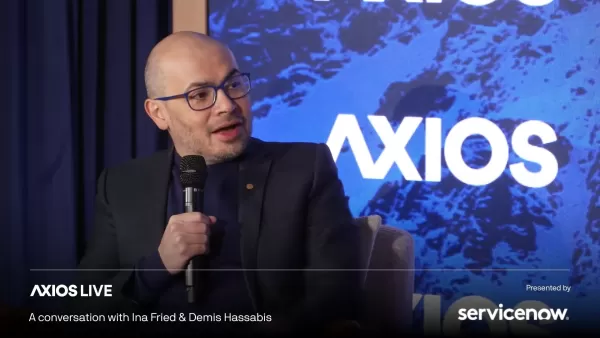
Google DeepMind CEO Demis Hassabis expressed his surprise at OpenAI's early adoption of advertising within its AI chatbot. Speaking with Axios at Davos, the AI leader addressed the topic of monetizing AI services through ads, noting that his team at Google is evaluating the approach with considerable caution.
Hassabis added that his team is not under pressure from the tech giant to make a hasty decision regarding advertising, even though ads are central to Google's core business.
These comments from the DeepMind co-founder came after Friday's announcement that OpenAI will begin testing ads to generate additional revenue from its 800 million weekly active users who are not paid subscribers.
Although OpenAI may be considering ads due to rising infrastructure and energy costs, its decision could reshape user perception of the service.
"I'm a bit surprised they moved so quickly in that direction," Hassabis remarked, referring to OpenAI’s ad integration. "Ads aren’t inherently bad—they've supported much of the consumer internet. When executed well, they can be helpful," he explained.
"But when it comes to AI assistants—tools designed to be genuinely helpful and, ideally, to work for you as an individual—there’s a question of how ads fit into that model. Trust in your assistant is essential, so how does advertising align with that?" he continued.
Reiterating earlier remarks from another Davos interview, Hassabis confirmed that Google currently has no plans to introduce ads in its AI chatbot. Instead, the company will observe user reactions before making any decisions.
Techcrunch event Disrupt 2026 Tickets: One-time offer
Tickets are available now! Save up to $680 with these limited-time rates, and be among the first 500 registrants to receive 50% off a +1 pass. TechCrunch Disrupt brings together top executives from Google Cloud, Netflix, Microsoft, Box, a16z, Hugging Face, and more for 250+ sessions aimed at accelerating growth and sharpening your competitive edge. Engage with hundreds of innovative startups and participate in curated networking opportunities that drive deals, insights, and inspiration.
Disrupt 2026 Tickets: One-time offer
Tickets are available now! Save up to $680 with these limited-time rates, and be among the first 500 registrants to receive 50% off a +1 pass. TechCrunch Disrupt brings together top executives from Google Cloud, Netflix, Microsoft, Box, a16z, Hugging Face, and more for 250+ sessions aimed at accelerating growth and sharpening your competitive edge. Engage with hundreds of innovative startups and participate in curated networking opportunities that drive deals, insights, and inspiration.
San Francisco | October 13-15, 2026 REGISTER NOW We've already seen user backlash against the idea of ads appearing in conversations with AI assistants. For example, when OpenAI recently tested a feature that recommended apps during user chats, the response was negative—many felt the suggestions were intrusive ads. OpenAI soon disabled the feature, clarifying that the recommendations were not ads because they had "no financial component."
However, user frustration wasn't about whether money changed hands, but rather how the app suggestions diminished the user experience.
This is also a concern for Hassabis, as his comments indicate.
He explained that interacting with a chatbot differs significantly from using Google Search. With Search, user intent is clear, making relevant ads useful. In contrast, chatbots are evolving into personalized digital assistants that understand users and assist with various aspects of their lives.
"That’s very different from the search use case, so it requires careful consideration," he added.
Enhancing Gemini's usefulness for individual users is also the goal of new personalization features introduced today for Google’s AI Mode. Users can now opt in to allow Gemini’s AI to access their Gmail and Photos for tailored responses in Search’s AI Mode, similar to the recently added Personal Intelligence feature in the Gemini app, which references users’ Gmail, Photos, Search, and YouTube history.
While personalized ad targeting sustains much of the free web, introducing ads during conversations with an AI assistant can feel disruptive. This is why customers rejected Amazon's earlier attempts to include ads in its Alexa experience—they wanted an assistant, not a personal shopper promoting products.
Hassabis stated that he is not under pressure to incorporate ads into the AI product, though he acknowledged that there might be a suitable way to do so in the future.
"We don’t feel any immediate pressure to make rushed decisions—that has always been our approach at DeepMind. We take a scientific, rigorous, and thoughtful approach to every step, whether in technology development or product design," he noted.
Related article
 Suno to Watermark Songs Amid Legal Battles
Suno, the platform enabling users to generate AI-created music, has unveiled new features to label platform-produced tracks, restrict downloads, and update community standards to curb unauthorized replicas. These updates arrive as Suno confronts mult
Musk Admits Grok Build Leaked User Code, Promises to Erase All Historical Data
Elon Musk directly addressed the privacy controversy surrounding Grok Build, beginning with a simple "True" to confirm the incident's validity. He pledged that all user data previously uploaded to SpaceXAI would be permanently erased, stating, "not a
U.S. Stocks Hit Historic Milestone as AI and Aerospace Giants Prepare for Trillion-Dollar Debut
Elon Musk, Sam Altman, and Dario Amodei, three titans of the technology sector, are advancing toward initial public offerings for their respective ventures. With SpaceX, OpenAI, and Anthropic—three industry behemoths nearing trillion-dollar valuation
Related Special Topic Recommendations
SEO
Suno to Watermark Songs Amid Legal Battles
Suno, the platform enabling users to generate AI-created music, has unveiled new features to label platform-produced tracks, restrict downloads, and update community standards to curb unauthorized replicas. These updates arrive as Suno confronts mult
Musk Admits Grok Build Leaked User Code, Promises to Erase All Historical Data
Elon Musk directly addressed the privacy controversy surrounding Grok Build, beginning with a simple "True" to confirm the incident's validity. He pledged that all user data previously uploaded to SpaceXAI would be permanently erased, stating, "not a
U.S. Stocks Hit Historic Milestone as AI and Aerospace Giants Prepare for Trillion-Dollar Debut
Elon Musk, Sam Altman, and Dario Amodei, three titans of the technology sector, are advancing toward initial public offerings for their respective ventures. With SpaceX, OpenAI, and Anthropic—three industry behemoths nearing trillion-dollar valuation
Related Special Topic Recommendations
SEO
 Best AI SERP Analysis Tools for Search Strategy
2026 Latest Best Top-rated AI SERP Analysis Tools for Search Strategy are curated by XIX.AI through rigorous real-world tests and weekly updated rankings. These powerful tools help you unlock hidden optimization opportunities, boost content performance, and gain a competitive edge in search. Discover your perfect tool to elevate your search strategy today. Explore now!
 13 tools
 xix.ai
Data Analysis
Best AI Anomaly Detection Tools for KPI Monitoring across SaaS and Ecommerce Teams
xix.ai
Data Analysis
Best AI Anomaly Detection Tools for KPI Monitoring across SaaS and Ecommerce Teams
2026 Latest Best Top-rated AI Anomaly Detection Tools for KPI Monitoring in SaaS and Ecommerce teams! XIX.AI has curated a powerful, game-changing collection based on rigorous real-world tests and weekly updated rankings. You’ll find detailed free vs paid comparison insights to help you identify the must-try solution that boosts productivity and unlocks your AI edge. Explore now!
10 tools
xix.ai
writing
Best AI Outline Generators for Long-Form SEO Articles
2026 Latest Best Top-Rated AI Outline Generators for Long-Form SEO Articles, meticulously curated by XIX.AI. These powerful tools offer game-changing assistance in creating high-quality content quickly, boosting writing efficiency significantly. Get a free vs paid comparison along with real-world tests and detailed rankings to help you find the must-try option that suits your needs. Explore now to unlock your AI edge.
8 tools
xix.ai
Education and Learning
AI Study Tools for Homework and Exam Prep
2026 Latest Best AI Study Tools for Homework and Exam Prep! XIX.AI curates a top-rated list of powerful, game-changing tools that help students boost productivity, streamline homework completion, and ace exams through real-world tests. Get a free vs paid comparison, detailed rankings, and must-try options to unlock your AI edge. Explore now!
10 tools
xix.ai
Music composition
AI Vocal Demo Tools for Songwriters, Hooks, Toplines, and Multilingual Draft Sessions
2026 Latest Best AI Vocal Demo Tools for Songwriters, Hook Creators, and Multi-Language Content Teams! XIX.AI has curated a top-rated list of powerful game-changing tools that go through rigorous real-world tests. You’ll find detailed free vs paid comparison data, comprehensive rankings, and must-try options to help you boost writing efficiency and unlock your creative potential. Explore now to discover your perfect tool for all your content needs!
9 tools
xix.ai
Business
Best AI Competitive Research Tools for Small Businesses
2026 Latest Best Top-rated AI Competitive Research Tools for Small Businesses! XIX.AI has curated a highly powerful game-changing collection, updated weekly with rigorous real-world tests and detailed rankings. You can find a comprehensive free vs paid comparison to help you identify the must-try tools that boost your productivity and give you a competitive edge. Explore now to discover your perfect tool!
9 tools
xix.ai

 Comments (1)
0/500
Comments (1)
0/500
![SamuelRamirez]()
Interesting move by OpenAI, but honestly not too surprising? 🤔 Feels like the whole AI space is racing to find sustainable revenue models. I just hope the ads don't ruin the user experience—ChatGPT is too useful to get cluttered with sponsored content.
Google DeepMind CEO Demis Hassabis expressed his surprise at OpenAI's early adoption of advertising within its AI chatbot. Speaking with Axios at Davos, the AI leader addressed the topic of monetizing AI services through ads, noting that his team at Google is evaluating the approach with considerable caution.
Hassabis added that his team is not under pressure from the tech giant to make a hasty decision regarding advertising, even though ads are central to Google's core business.
These comments from the DeepMind co-founder came after Friday's announcement that OpenAI will begin testing ads to generate additional revenue from its 800 million weekly active users who are not paid subscribers.
Although OpenAI may be considering ads due to rising infrastructure and energy costs, its decision could reshape user perception of the service.
"I'm a bit surprised they moved so quickly in that direction," Hassabis remarked, referring to OpenAI’s ad integration. "Ads aren’t inherently bad—they've supported much of the consumer internet. When executed well, they can be helpful," he explained.
"But when it comes to AI assistants—tools designed to be genuinely helpful and, ideally, to work for you as an individual—there’s a question of how ads fit into that model. Trust in your assistant is essential, so how does advertising align with that?" he continued.
Reiterating earlier remarks from another Davos interview, Hassabis confirmed that Google currently has no plans to introduce ads in its AI chatbot. Instead, the company will observe user reactions before making any decisions.
Techcrunch eventDisrupt 2026 Tickets: One-time offer
Tickets are available now! Save up to $680 with these limited-time rates, and be among the first 500 registrants to receive 50% off a +1 pass. TechCrunch Disrupt brings together top executives from Google Cloud, Netflix, Microsoft, Box, a16z, Hugging Face, and more for 250+ sessions aimed at accelerating growth and sharpening your competitive edge. Engage with hundreds of innovative startups and participate in curated networking opportunities that drive deals, insights, and inspiration.
Disrupt 2026 Tickets: One-time offer
Tickets are available now! Save up to $680 with these limited-time rates, and be among the first 500 registrants to receive 50% off a +1 pass. TechCrunch Disrupt brings together top executives from Google Cloud, Netflix, Microsoft, Box, a16z, Hugging Face, and more for 250+ sessions aimed at accelerating growth and sharpening your competitive edge. Engage with hundreds of innovative startups and participate in curated networking opportunities that drive deals, insights, and inspiration.
San Francisco | October 13-15, 2026 REGISTER NOWWe've already seen user backlash against the idea of ads appearing in conversations with AI assistants. For example, when OpenAI recently tested a feature that recommended apps during user chats, the response was negative—many felt the suggestions were intrusive ads. OpenAI soon disabled the feature, clarifying that the recommendations were not ads because they had "no financial component."
However, user frustration wasn't about whether money changed hands, but rather how the app suggestions diminished the user experience.
This is also a concern for Hassabis, as his comments indicate.
He explained that interacting with a chatbot differs significantly from using Google Search. With Search, user intent is clear, making relevant ads useful. In contrast, chatbots are evolving into personalized digital assistants that understand users and assist with various aspects of their lives.
"That’s very different from the search use case, so it requires careful consideration," he added.
Enhancing Gemini's usefulness for individual users is also the goal of new personalization features introduced today for Google’s AI Mode. Users can now opt in to allow Gemini’s AI to access their Gmail and Photos for tailored responses in Search’s AI Mode, similar to the recently added Personal Intelligence feature in the Gemini app, which references users’ Gmail, Photos, Search, and YouTube history.
While personalized ad targeting sustains much of the free web, introducing ads during conversations with an AI assistant can feel disruptive. This is why customers rejected Amazon's earlier attempts to include ads in its Alexa experience—they wanted an assistant, not a personal shopper promoting products.
Hassabis stated that he is not under pressure to incorporate ads into the AI product, though he acknowledged that there might be a suitable way to do so in the future.
"We don’t feel any immediate pressure to make rushed decisions—that has always been our approach at DeepMind. We take a scientific, rigorous, and thoughtful approach to every step, whether in technology development or product design," he noted.








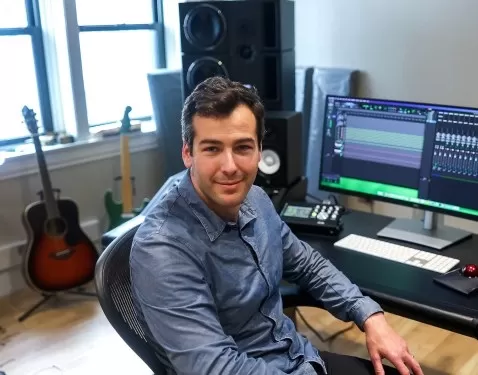 Suno to Watermark Songs Amid Legal Battles
Suno, the platform enabling users to generate AI-created music, has unveiled new features to label platform-produced tracks, restrict downloads, and update community standards to curb unauthorized replicas. These updates arrive as Suno confronts mult
Suno to Watermark Songs Amid Legal Battles
Suno, the platform enabling users to generate AI-created music, has unveiled new features to label platform-produced tracks, restrict downloads, and update community standards to curb unauthorized replicas. These updates arrive as Suno confronts mult
 Musk Admits Grok Build Leaked User Code, Promises to Erase All Historical Data
Elon Musk directly addressed the privacy controversy surrounding Grok Build, beginning with a simple "True" to confirm the incident's validity. He pledged that all user data previously uploaded to SpaceXAI would be permanently erased, stating, "not a
Musk Admits Grok Build Leaked User Code, Promises to Erase All Historical Data
Elon Musk directly addressed the privacy controversy surrounding Grok Build, beginning with a simple "True" to confirm the incident's validity. He pledged that all user data previously uploaded to SpaceXAI would be permanently erased, stating, "not a
 U.S. Stocks Hit Historic Milestone as AI and Aerospace Giants Prepare for Trillion-Dollar Debut
Elon Musk, Sam Altman, and Dario Amodei, three titans of the technology sector, are advancing toward initial public offerings for their respective ventures. With SpaceX, OpenAI, and Anthropic—three industry behemoths nearing trillion-dollar valuation
U.S. Stocks Hit Historic Milestone as AI and Aerospace Giants Prepare for Trillion-Dollar Debut
Elon Musk, Sam Altman, and Dario Amodei, three titans of the technology sector, are advancing toward initial public offerings for their respective ventures. With SpaceX, OpenAI, and Anthropic—three industry behemoths nearing trillion-dollar valuation

2026 Latest Best Top-rated AI SERP Analysis Tools for Search Strategy are curated by XIX.AI through rigorous real-world tests and weekly updated rankings. These powerful tools help you unlock hidden optimization opportunities, boost content performance, and gain a competitive edge in search. Discover your perfect tool to elevate your search strategy today. Explore now!
13 tools
xix.ai
2026 Latest Best Top-rated AI Anomaly Detection Tools for KPI Monitoring in SaaS and Ecommerce teams! XIX.AI has curated a powerful, game-changing collection based on rigorous real-world tests and weekly updated rankings. You’ll find detailed free vs paid comparison insights to help you identify the must-try solution that boosts productivity and unlocks your AI edge. Explore now!
10 tools
xix.ai

2026 Latest Best Top-Rated AI Outline Generators for Long-Form SEO Articles, meticulously curated by XIX.AI. These powerful tools offer game-changing assistance in creating high-quality content quickly, boosting writing efficiency significantly. Get a free vs paid comparison along with real-world tests and detailed rankings to help you find the must-try option that suits your needs. Explore now to unlock your AI edge.
8 tools
xix.ai

2026 Latest Best AI Study Tools for Homework and Exam Prep! XIX.AI curates a top-rated list of powerful, game-changing tools that help students boost productivity, streamline homework completion, and ace exams through real-world tests. Get a free vs paid comparison, detailed rankings, and must-try options to unlock your AI edge. Explore now!
10 tools
xix.ai

2026 Latest Best AI Vocal Demo Tools for Songwriters, Hook Creators, and Multi-Language Content Teams! XIX.AI has curated a top-rated list of powerful game-changing tools that go through rigorous real-world tests. You’ll find detailed free vs paid comparison data, comprehensive rankings, and must-try options to help you boost writing efficiency and unlock your creative potential. Explore now to discover your perfect tool for all your content needs!
9 tools
xix.ai

2026 Latest Best Top-rated AI Competitive Research Tools for Small Businesses! XIX.AI has curated a highly powerful game-changing collection, updated weekly with rigorous real-world tests and detailed rankings. You can find a comprehensive free vs paid comparison to help you identify the must-try tools that boost your productivity and give you a competitive edge. Explore now to discover your perfect tool!
9 tools
xix.ai

Interesting move by OpenAI, but honestly not too surprising? 🤔 Feels like the whole AI space is racing to find sustainable revenue models. I just hope the ads don't ruin the user experience—ChatGPT is too useful to get cluttered with sponsored content.












