


 Home
HomeGoogle Cloud unveils two AI chips to rival Nvidia
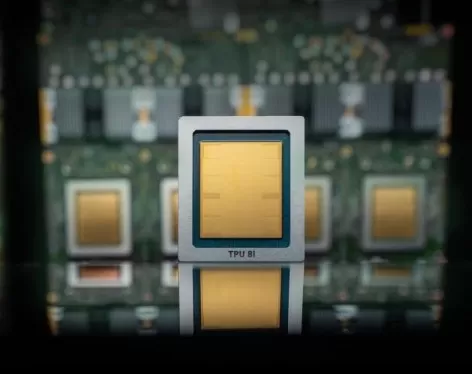
On Wednesday, Google Cloud announced that its eighth generation of custom AI chips, known as tensor processing units (TPUs), would be divided into two types. One chip, the TPU 8t, is designed for model training, while the other, the TPU 8i, targets inference.
Inference refers to the ongoing use of models—essentially what happens after users submit prompts.
Unsurprisingly, Google touts impressive performance improvements for these new TPUs compared to earlier generations: up to 3 times faster AI model training, 80% better performance per dollar, and the ability to connect over one million TPUs in a single cluster. The result should be significantly more computing power with much less energy—and lower costs for customers—than previous versions. These chips are called TPUs rather than GPUs because Google's custom low-power chips were originally named Tensor.
However, Google’s chips are not a full-scale challenge to Nvidia’s future, at least not yet. Like other major cloud providers such as Microsoft and Amazon, Google uses these chips to complement, not completely replace, the Nvidia-based systems it offers in its infrastructure. In fact, Google promises that its cloud will feature Nvidia’s latest chip, Vera Rubin, later this year.
At some point, the hyperscalers building their own AI chips—including Amazon, Microsoft, and Google—may rely less on Nvidia as enterprises migrate their AI workloads to their clouds and adapt their applications to these chips.
Still, betting against Nvidia today is not a profitable strategy. As notable chip market analyst Patrick Moore joked on X, he predicted back in 2016 that Google’s TPU could spell trouble for Nvidia (and Intel) when the search giant launched its first TPU. Nvidia now has a market cap of nearly $5 trillion, meaning that prediction hasn’t exactly stood the test of time.
If Nvidia’s plan holds, Google’s growth as an AI cloud provider could actually generate more business for the chip maker, not less—even if many workloads run on Google’s own chips.
In fact, Google also announced that it has agreed to work with Nvidia on designing computer networking to make Nvidia-based systems even more efficient in its cloud. Specifically, the two tech giants are collaborating to enhance the software-based networking technology called Falcon, which Google created and open-sourced in 2023 under the Open Compute Project, the umbrella organization for open source data center hardware.
Related article
![Nvidia CEO Jensen Huang tells Trump ‘we’re not going to let [an AI slowdown] happen’](data:image/gif;base64,R0lGODlhAQABAIAAAAAAAP///yH5BAEAAAAALAAAAAABAAEAAAIBRAA7) Nvidia CEO Jensen Huang tells Trump ‘we’re not going to let [an AI slowdown] happen’
During his appearance at the All-In Summit in Los Angeles on Monday, Nvidia CEO Jensen Huang received an unexpected call from President Donald Trump, one he couldn’t simply ignore.“I’m on stage with the besties,” Huang explained to Trump, referencing
Jensen Huang Reveals Nvidia’s ‘Brand New’ $200B Market Opportunity
Nvidia founder and CEO Jensen Huang stands out as one of the most compelling corporate visionaries, if not the greatest, in driving his company’s narrative. He may even eclipse Salesforce’s Marc Benioff in his unwavering optimism regarding the firm’s
Google rolls out fake call detection to protect against AI deepfake impersonation scams
Google announced on Tuesday that Android is launching fake call detection to protect against AI deepfake impersonation scams. The feature is rolling out globally in Phone by Google to Android 12+ devices this month, starting with Pixel devices.As peo
Related Special Topic Recommendations
Text-to-speech
Nvidia CEO Jensen Huang tells Trump ‘we’re not going to let [an AI slowdown] happen’
During his appearance at the All-In Summit in Los Angeles on Monday, Nvidia CEO Jensen Huang received an unexpected call from President Donald Trump, one he couldn’t simply ignore.“I’m on stage with the besties,” Huang explained to Trump, referencing
Jensen Huang Reveals Nvidia’s ‘Brand New’ $200B Market Opportunity
Nvidia founder and CEO Jensen Huang stands out as one of the most compelling corporate visionaries, if not the greatest, in driving his company’s narrative. He may even eclipse Salesforce’s Marc Benioff in his unwavering optimism regarding the firm’s
Google rolls out fake call detection to protect against AI deepfake impersonation scams
Google announced on Tuesday that Android is launching fake call detection to protect against AI deepfake impersonation scams. The feature is rolling out globally in Phone by Google to Android 12+ devices this month, starting with Pixel devices.As peo
Related Special Topic Recommendations
Text-to-speech
 Best AI Text to Speech Tools for Online Courses
2026 Latest Best Top-rated AI Text to Speech Tools for Online Courses are curated by XIX.AI based on rigorous real-world tests and weekly updated rankings. These powerful tools help creators deliver crystal-clear audio content effortlessly, boosting writing efficiency and streamlining course production. Check out the free vs paid comparison to find your perfect fit. Explore now to unlock your AI edge in online education.
 10 tools
 xix.ai
writing
AI Blog Title Tools for Higher Click Through Rates
xix.ai
writing
AI Blog Title Tools for Higher Click Through Rates
2026 Latest Best Top-Rated AI Blog Title Tools for Higher Click Through Rates! XIX.AI has carefully curated a powerful, game-changing collection of top tools that go through rigorous real-world tests. You’ll find a free vs paid comparison, weekly updated rankings, and detailed insights to help you boost your blog’s traffic efficiently. Must-try options are highlighted to help you unlock your AI edge. Explore now!
10 tools
xix.ai
automation
Best AI Task Routing Tools for Support Workflows
2026 Latest Best Top-rated AI Task Routing Tools for Support Workflows! XIX.AI has curated a highly powerful game-changing collection of must-try solutions, all undergoing rigorous real-world tests and updated weekly. These tools streamline workflows, boost productivity, and help teams deliver faster, more efficient support. Explore now to discover your perfect tool and unlock your AI edge!
17 tools
xix.ai
Academic Research
AI Citation and Paper Summary Tools
2026 Latest Best Top-Rated AI Citation and Paper Summary Tools Curated by XIX.AI. Get powerful game-changing solutions for quick content creation, improved writing efficiency, and boosting productivity. We offer a free vs paid comparison along with real-world tests and weekly updated rankings to help you find the must-try tool that fits your needs perfectly. Explore now to Unlock your AI edge.
10 tools
xix.ai
Productivity
Best AI Productivity Tools for Daily Work
2026 Latest Best Top-Rated AI Productivity Tools for Daily Work! XIX.AI has curated a powerful, game-changing selection based on rigorous weekly updated rankings and real-world tests. You’ll find must-try options that boost writing efficiency, streamline content creation, and help you overcome daily work challenges. Get a free vs paid comparison to find the perfect fit for your needs. Explore now to unlock your AI edge!
9 tools
xix.ai
Academic Research
AI Systematic Review Tools for Research Screening
2026 Latest Best Top-Rated AI Systematic Review Tools for Research Screening are here on XIX.AI! This curated collection includes powerful, game-changing solutions that go through rigorous real-world tests to deliver accurate results. We also offer a free vs paid comparison along with weekly updated rankings to help you find the must-try option that boosts your research efficiency significantly. Explore now to unlock your AI edge in academic work!
11 tools
xix.ai

 Comments (0)
0/500
Comments (0)
0/500
On Wednesday, Google Cloud announced that its eighth generation of custom AI chips, known as tensor processing units (TPUs), would be divided into two types. One chip, the TPU 8t, is designed for model training, while the other, the TPU 8i, targets inference.
Inference refers to the ongoing use of models—essentially what happens after users submit prompts.
Unsurprisingly, Google touts impressive performance improvements for these new TPUs compared to earlier generations: up to 3 times faster AI model training, 80% better performance per dollar, and the ability to connect over one million TPUs in a single cluster. The result should be significantly more computing power with much less energy—and lower costs for customers—than previous versions. These chips are called TPUs rather than GPUs because Google's custom low-power chips were originally named Tensor.
However, Google’s chips are not a full-scale challenge to Nvidia’s future, at least not yet. Like other major cloud providers such as Microsoft and Amazon, Google uses these chips to complement, not completely replace, the Nvidia-based systems it offers in its infrastructure. In fact, Google promises that its cloud will feature Nvidia’s latest chip, Vera Rubin, later this year.
At some point, the hyperscalers building their own AI chips—including Amazon, Microsoft, and Google—may rely less on Nvidia as enterprises migrate their AI workloads to their clouds and adapt their applications to these chips.
Still, betting against Nvidia today is not a profitable strategy. As notable chip market analyst Patrick Moore joked on X, he predicted back in 2016 that Google’s TPU could spell trouble for Nvidia (and Intel) when the search giant launched its first TPU. Nvidia now has a market cap of nearly $5 trillion, meaning that prediction hasn’t exactly stood the test of time.
If Nvidia’s plan holds, Google’s growth as an AI cloud provider could actually generate more business for the chip maker, not less—even if many workloads run on Google’s own chips.
In fact, Google also announced that it has agreed to work with Nvidia on designing computer networking to make Nvidia-based systems even more efficient in its cloud. Specifically, the two tech giants are collaborating to enhance the software-based networking technology called Falcon, which Google created and open-sourced in 2023 under the Open Compute Project, the umbrella organization for open source data center hardware.








![Nvidia CEO Jensen Huang tells Trump ‘we’re not going to let [an AI slowdown] happen’](https://img.xix.ai/uploads/79/6aa87327d0e12.webp) Nvidia CEO Jensen Huang tells Trump ‘we’re not going to let [an AI slowdown] happen’
During his appearance at the All-In Summit in Los Angeles on Monday, Nvidia CEO Jensen Huang received an unexpected call from President Donald Trump, one he couldn’t simply ignore.“I’m on stage with the besties,” Huang explained to Trump, referencing
Nvidia CEO Jensen Huang tells Trump ‘we’re not going to let [an AI slowdown] happen’
During his appearance at the All-In Summit in Los Angeles on Monday, Nvidia CEO Jensen Huang received an unexpected call from President Donald Trump, one he couldn’t simply ignore.“I’m on stage with the besties,” Huang explained to Trump, referencing
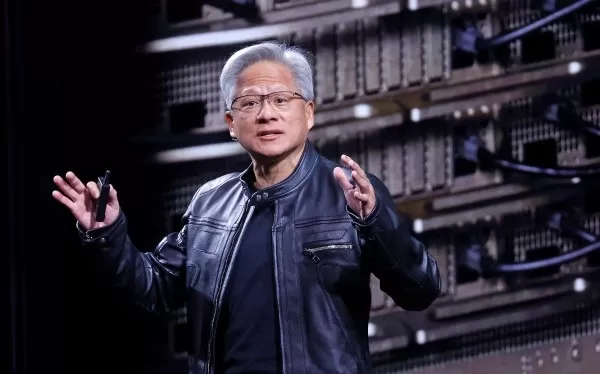 Jensen Huang Reveals Nvidia’s ‘Brand New’ $200B Market Opportunity
Nvidia founder and CEO Jensen Huang stands out as one of the most compelling corporate visionaries, if not the greatest, in driving his company’s narrative. He may even eclipse Salesforce’s Marc Benioff in his unwavering optimism regarding the firm’s
Jensen Huang Reveals Nvidia’s ‘Brand New’ $200B Market Opportunity
Nvidia founder and CEO Jensen Huang stands out as one of the most compelling corporate visionaries, if not the greatest, in driving his company’s narrative. He may even eclipse Salesforce’s Marc Benioff in his unwavering optimism regarding the firm’s
 Google rolls out fake call detection to protect against AI deepfake impersonation scams
Google announced on Tuesday that Android is launching fake call detection to protect against AI deepfake impersonation scams. The feature is rolling out globally in Phone by Google to Android 12+ devices this month, starting with Pixel devices.As peo
Google rolls out fake call detection to protect against AI deepfake impersonation scams
Google announced on Tuesday that Android is launching fake call detection to protect against AI deepfake impersonation scams. The feature is rolling out globally in Phone by Google to Android 12+ devices this month, starting with Pixel devices.As peo

2026 Latest Best Top-rated AI Text to Speech Tools for Online Courses are curated by XIX.AI based on rigorous real-world tests and weekly updated rankings. These powerful tools help creators deliver crystal-clear audio content effortlessly, boosting writing efficiency and streamlining course production. Check out the free vs paid comparison to find your perfect fit. Explore now to unlock your AI edge in online education.
10 tools
xix.ai

2026 Latest Best Top-Rated AI Blog Title Tools for Higher Click Through Rates! XIX.AI has carefully curated a powerful, game-changing collection of top tools that go through rigorous real-world tests. You’ll find a free vs paid comparison, weekly updated rankings, and detailed insights to help you boost your blog’s traffic efficiently. Must-try options are highlighted to help you unlock your AI edge. Explore now!
10 tools
xix.ai

2026 Latest Best Top-rated AI Task Routing Tools for Support Workflows! XIX.AI has curated a highly powerful game-changing collection of must-try solutions, all undergoing rigorous real-world tests and updated weekly. These tools streamline workflows, boost productivity, and help teams deliver faster, more efficient support. Explore now to discover your perfect tool and unlock your AI edge!
17 tools
xix.ai
2026 Latest Best Top-Rated AI Citation and Paper Summary Tools Curated by XIX.AI. Get powerful game-changing solutions for quick content creation, improved writing efficiency, and boosting productivity. We offer a free vs paid comparison along with real-world tests and weekly updated rankings to help you find the must-try tool that fits your needs perfectly. Explore now to Unlock your AI edge.
10 tools
xix.ai

2026 Latest Best Top-Rated AI Productivity Tools for Daily Work! XIX.AI has curated a powerful, game-changing selection based on rigorous weekly updated rankings and real-world tests. You’ll find must-try options that boost writing efficiency, streamline content creation, and help you overcome daily work challenges. Get a free vs paid comparison to find the perfect fit for your needs. Explore now to unlock your AI edge!
9 tools
xix.ai

2026 Latest Best Top-Rated AI Systematic Review Tools for Research Screening are here on XIX.AI! This curated collection includes powerful, game-changing solutions that go through rigorous real-world tests to deliver accurate results. We also offer a free vs paid comparison along with weekly updated rankings to help you find the must-try option that boosts your research efficiency significantly. Explore now to unlock your AI edge in academic work!
11 tools
xix.ai












