


 Home
HomeFigure AI Issues Cease-and-Desist to Secondary Market Brokers
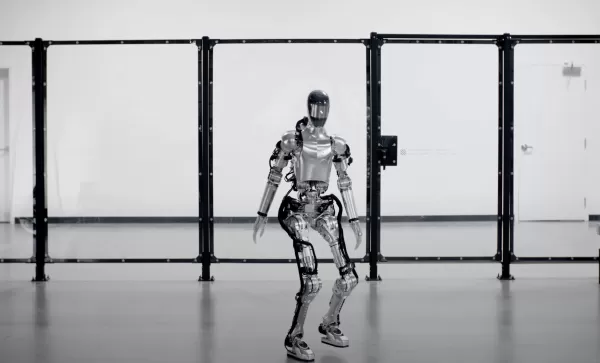
Last month, Brett Adcock, the founder of robotics company Figure AI, announced on X that his firm's stock had become "the most sought-after private share in the secondary market."
However, the company has issued cease-and-desist letters to at least two brokers operating in the secondary market, according to those brokers who spoke with TechCrunch. These individuals stated that Figure AI's legal notices demanded an immediate halt to the marketing of its shares.
Both brokers indicated they received the letters shortly after Bloomberg reported in mid-February that Figure was pursuing a $1.5 billion funding round at a valuation of $39.5 billion—a dramatic fifteen-fold increase from its $2.6 billion valuation in February 2024.
A Figure AI spokesperson told TechCrunch that the company sends such letters when brokers market its stock without authorization, indicating that this is a standard practice.
“This year, upon discovering an unauthorized third-party broker promoting Figure shares without board approval, the company issued a cease and desist order, as it has done previously in similar situations,” the spokesperson said in a written statement. “We prohibit secondary trading of our shares without board authorization and will continue to safeguard the company against unauthorized brokers.”
Because Figure is a private rather than public company, its investors cannot freely sell their shares without company-approved arrangements. This limitation is precisely why secondary markets have emerged, offering investors alternative liquidity options—such as loans secured by their shares—ahead of an IPO.
Brokers who received Figure’s letters shared alternative explanations with TechCrunch regarding why some CEOs disapprove of secondary share sales.
According to these brokers, existing shareholders attempted to sell their stock at prices below the targeted $39.5 billion valuation. Both brokers noted that some companies resist the idea of lower-priced secondary shares competing with a new funding round.
Sim Desai, founder and CEO of the secondary marketplace Hiive, commented to TechCrunch—without referencing Figure specifically—that companies sometimes block secondary sales because they view it as a "zero-sum game."
Desai, however, argues the opposite may be true: an active secondary market could generate more interest in primary share offerings during a new round.
But if secondary trading fails to stimulate primary round interest, the problem may be valuation-related. “If a product is difficult to sell, it often comes down to pricing and valuation rather than a lack of available capital,” Desai noted.
Figure has also recently been featured in several news reports detailing its progress with key customer BMW. In at least one instance, the company responded by claiming the article contained significant inaccuracies and is considering legal action.
The amount Figure AI raises in its next round—and at what valuation—remains uncertain. It is also unclear whether current investors will have early liquidity options through secondary transactions.
Related article
 Suno to Watermark Songs Amid Legal Battles
Suno, the platform enabling users to generate AI-created music, has unveiled new features to label platform-produced tracks, restrict downloads, and update community standards to curb unauthorized replicas. These updates arrive as Suno confronts mult
Musk Admits Grok Build Leaked User Code, Promises to Erase All Historical Data
Elon Musk directly addressed the privacy controversy surrounding Grok Build, beginning with a simple "True" to confirm the incident's validity. He pledged that all user data previously uploaded to SpaceXAI would be permanently erased, stating, "not a
U.S. Stocks Hit Historic Milestone as AI and Aerospace Giants Prepare for Trillion-Dollar Debut
Elon Musk, Sam Altman, and Dario Amodei, three titans of the technology sector, are advancing toward initial public offerings for their respective ventures. With SpaceX, OpenAI, and Anthropic—three industry behemoths nearing trillion-dollar valuation
Related Special Topic Recommendations
SEO
Suno to Watermark Songs Amid Legal Battles
Suno, the platform enabling users to generate AI-created music, has unveiled new features to label platform-produced tracks, restrict downloads, and update community standards to curb unauthorized replicas. These updates arrive as Suno confronts mult
Musk Admits Grok Build Leaked User Code, Promises to Erase All Historical Data
Elon Musk directly addressed the privacy controversy surrounding Grok Build, beginning with a simple "True" to confirm the incident's validity. He pledged that all user data previously uploaded to SpaceXAI would be permanently erased, stating, "not a
U.S. Stocks Hit Historic Milestone as AI and Aerospace Giants Prepare for Trillion-Dollar Debut
Elon Musk, Sam Altman, and Dario Amodei, three titans of the technology sector, are advancing toward initial public offerings for their respective ventures. With SpaceX, OpenAI, and Anthropic—three industry behemoths nearing trillion-dollar valuation
Related Special Topic Recommendations
SEO
 Best AI SERP Analysis Tools for Search Strategy
2026 Latest Best Top-rated AI SERP Analysis Tools for Search Strategy are curated by XIX.AI through rigorous real-world tests and weekly updated rankings. These powerful tools help you unlock hidden optimization opportunities, boost content performance, and gain a competitive edge in search. Discover your perfect tool to elevate your search strategy today. Explore now!
 13 tools
 xix.ai
Data Analysis
Best AI Anomaly Detection Tools for KPI Monitoring across SaaS and Ecommerce Teams
xix.ai
Data Analysis
Best AI Anomaly Detection Tools for KPI Monitoring across SaaS and Ecommerce Teams
2026 Latest Best Top-rated AI Anomaly Detection Tools for KPI Monitoring in SaaS and Ecommerce teams! XIX.AI has curated a powerful, game-changing collection based on rigorous real-world tests and weekly updated rankings. You’ll find detailed free vs paid comparison insights to help you identify the must-try solution that boosts productivity and unlocks your AI edge. Explore now!
10 tools
xix.ai
writing
Best AI Outline Generators for Long-Form SEO Articles
2026 Latest Best Top-Rated AI Outline Generators for Long-Form SEO Articles, meticulously curated by XIX.AI. These powerful tools offer game-changing assistance in creating high-quality content quickly, boosting writing efficiency significantly. Get a free vs paid comparison along with real-world tests and detailed rankings to help you find the must-try option that suits your needs. Explore now to unlock your AI edge.
8 tools
xix.ai
Education and Learning
AI Study Tools for Homework and Exam Prep
2026 Latest Best AI Study Tools for Homework and Exam Prep! XIX.AI curates a top-rated list of powerful, game-changing tools that help students boost productivity, streamline homework completion, and ace exams through real-world tests. Get a free vs paid comparison, detailed rankings, and must-try options to unlock your AI edge. Explore now!
10 tools
xix.ai
Music composition
AI Vocal Demo Tools for Songwriters, Hooks, Toplines, and Multilingual Draft Sessions
2026 Latest Best AI Vocal Demo Tools for Songwriters, Hook Creators, and Multi-Language Content Teams! XIX.AI has curated a top-rated list of powerful game-changing tools that go through rigorous real-world tests. You’ll find detailed free vs paid comparison data, comprehensive rankings, and must-try options to help you boost writing efficiency and unlock your creative potential. Explore now to discover your perfect tool for all your content needs!
9 tools
xix.ai
Business
Best AI Competitive Research Tools for Small Businesses
2026 Latest Best Top-rated AI Competitive Research Tools for Small Businesses! XIX.AI has curated a highly powerful game-changing collection, updated weekly with rigorous real-world tests and detailed rankings. You can find a comprehensive free vs paid comparison to help you identify the must-try tools that boost your productivity and give you a competitive edge. Explore now to discover your perfect tool!
9 tools
xix.ai

 Comments (0)
0/500
Comments (0)
0/500
Last month, Brett Adcock, the founder of robotics company Figure AI, announced on X that his firm's stock had become "the most sought-after private share in the secondary market."
However, the company has issued cease-and-desist letters to at least two brokers operating in the secondary market, according to those brokers who spoke with TechCrunch. These individuals stated that Figure AI's legal notices demanded an immediate halt to the marketing of its shares.
Both brokers indicated they received the letters shortly after Bloomberg reported in mid-February that Figure was pursuing a $1.5 billion funding round at a valuation of $39.5 billion—a dramatic fifteen-fold increase from its $2.6 billion valuation in February 2024.
A Figure AI spokesperson told TechCrunch that the company sends such letters when brokers market its stock without authorization, indicating that this is a standard practice.
“This year, upon discovering an unauthorized third-party broker promoting Figure shares without board approval, the company issued a cease and desist order, as it has done previously in similar situations,” the spokesperson said in a written statement. “We prohibit secondary trading of our shares without board authorization and will continue to safeguard the company against unauthorized brokers.”
Because Figure is a private rather than public company, its investors cannot freely sell their shares without company-approved arrangements. This limitation is precisely why secondary markets have emerged, offering investors alternative liquidity options—such as loans secured by their shares—ahead of an IPO.
Brokers who received Figure’s letters shared alternative explanations with TechCrunch regarding why some CEOs disapprove of secondary share sales.
According to these brokers, existing shareholders attempted to sell their stock at prices below the targeted $39.5 billion valuation. Both brokers noted that some companies resist the idea of lower-priced secondary shares competing with a new funding round.
Sim Desai, founder and CEO of the secondary marketplace Hiive, commented to TechCrunch—without referencing Figure specifically—that companies sometimes block secondary sales because they view it as a "zero-sum game."
Desai, however, argues the opposite may be true: an active secondary market could generate more interest in primary share offerings during a new round.
But if secondary trading fails to stimulate primary round interest, the problem may be valuation-related. “If a product is difficult to sell, it often comes down to pricing and valuation rather than a lack of available capital,” Desai noted.
Figure has also recently been featured in several news reports detailing its progress with key customer BMW. In at least one instance, the company responded by claiming the article contained significant inaccuracies and is considering legal action.
The amount Figure AI raises in its next round—and at what valuation—remains uncertain. It is also unclear whether current investors will have early liquidity options through secondary transactions.








 Suno to Watermark Songs Amid Legal Battles
Suno, the platform enabling users to generate AI-created music, has unveiled new features to label platform-produced tracks, restrict downloads, and update community standards to curb unauthorized replicas. These updates arrive as Suno confronts mult
Suno to Watermark Songs Amid Legal Battles
Suno, the platform enabling users to generate AI-created music, has unveiled new features to label platform-produced tracks, restrict downloads, and update community standards to curb unauthorized replicas. These updates arrive as Suno confronts mult
 Musk Admits Grok Build Leaked User Code, Promises to Erase All Historical Data
Elon Musk directly addressed the privacy controversy surrounding Grok Build, beginning with a simple "True" to confirm the incident's validity. He pledged that all user data previously uploaded to SpaceXAI would be permanently erased, stating, "not a
Musk Admits Grok Build Leaked User Code, Promises to Erase All Historical Data
Elon Musk directly addressed the privacy controversy surrounding Grok Build, beginning with a simple "True" to confirm the incident's validity. He pledged that all user data previously uploaded to SpaceXAI would be permanently erased, stating, "not a
 U.S. Stocks Hit Historic Milestone as AI and Aerospace Giants Prepare for Trillion-Dollar Debut
Elon Musk, Sam Altman, and Dario Amodei, three titans of the technology sector, are advancing toward initial public offerings for their respective ventures. With SpaceX, OpenAI, and Anthropic—three industry behemoths nearing trillion-dollar valuation
U.S. Stocks Hit Historic Milestone as AI and Aerospace Giants Prepare for Trillion-Dollar Debut
Elon Musk, Sam Altman, and Dario Amodei, three titans of the technology sector, are advancing toward initial public offerings for their respective ventures. With SpaceX, OpenAI, and Anthropic—three industry behemoths nearing trillion-dollar valuation

2026 Latest Best Top-rated AI SERP Analysis Tools for Search Strategy are curated by XIX.AI through rigorous real-world tests and weekly updated rankings. These powerful tools help you unlock hidden optimization opportunities, boost content performance, and gain a competitive edge in search. Discover your perfect tool to elevate your search strategy today. Explore now!
13 tools
xix.ai

2026 Latest Best Top-rated AI Anomaly Detection Tools for KPI Monitoring in SaaS and Ecommerce teams! XIX.AI has curated a powerful, game-changing collection based on rigorous real-world tests and weekly updated rankings. You’ll find detailed free vs paid comparison insights to help you identify the must-try solution that boosts productivity and unlocks your AI edge. Explore now!
10 tools
xix.ai

2026 Latest Best Top-Rated AI Outline Generators for Long-Form SEO Articles, meticulously curated by XIX.AI. These powerful tools offer game-changing assistance in creating high-quality content quickly, boosting writing efficiency significantly. Get a free vs paid comparison along with real-world tests and detailed rankings to help you find the must-try option that suits your needs. Explore now to unlock your AI edge.
8 tools
xix.ai

2026 Latest Best AI Study Tools for Homework and Exam Prep! XIX.AI curates a top-rated list of powerful, game-changing tools that help students boost productivity, streamline homework completion, and ace exams through real-world tests. Get a free vs paid comparison, detailed rankings, and must-try options to unlock your AI edge. Explore now!
10 tools
xix.ai

2026 Latest Best AI Vocal Demo Tools for Songwriters, Hook Creators, and Multi-Language Content Teams! XIX.AI has curated a top-rated list of powerful game-changing tools that go through rigorous real-world tests. You’ll find detailed free vs paid comparison data, comprehensive rankings, and must-try options to help you boost writing efficiency and unlock your creative potential. Explore now to discover your perfect tool for all your content needs!
9 tools
xix.ai

2026 Latest Best Top-rated AI Competitive Research Tools for Small Businesses! XIX.AI has curated a highly powerful game-changing collection, updated weekly with rigorous real-world tests and detailed rankings. You can find a comprehensive free vs paid comparison to help you identify the must-try tools that boost your productivity and give you a competitive edge. Explore now to discover your perfect tool!
9 tools
xix.ai












