


 Home
HomeDatabricks’ ex AI chief aims to slash energy costs by 1,000x
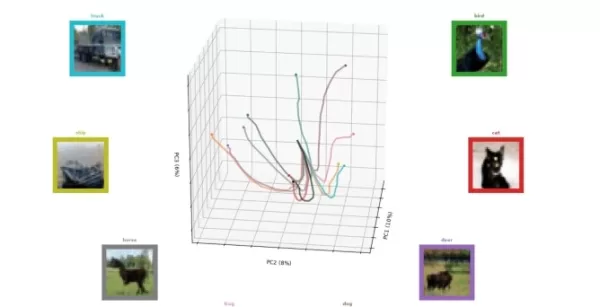
The relentless pursuit of the next breakthrough in AI has funded numerous ambitious initiatives, yet one startup is seizing this opportunity to reconstruct computing architecture from scratch.
Under the leadership of Naveen Rao, former head of AI at Databricks, Unconventional AI aims to drastically improve the energy efficiency of inference processing. Their key innovation: a novel oscillator-based computer architecture.
On Thursday, the company unveiled its inaugural AI model, Un0, an image-generation tool that demonstrates for the first time how their technology can mirror conventional AI systems. In a companion research paper, the team explains how they developed a fully functional image generation model using a software simulation of this new architecture, achieving performance comparable to state-of-the-art diffusion models.
“This represents the ‘hello world’ of a new computing paradigm,” Rao told TechCrunch. “Expect some compelling developments in this space over the next year.”
While the output from Un0 resembles that of models like Stable Diffusion or OpenAI’s GPT Image 1, the distinction lies in its underlying mechanism. The model relies on an oscillator-based architecture, fundamentally different from the chips powering traditional computing and large language models. Although the benefits of this approach are intricate, Rao predicts it could reduce power consumption by up to 1,000 times.
However, much of the necessary infrastructure remains under development. The current Un0 version operates on a software simulation of Unconventional’s oscillator chips, with plans to release schematics for actual hardware soon. The long-term vision involves constructing a complete inference stack from the ground up, allowing Unconventional AI to provide compute capacity akin to other cloud providers.
“We are building a new system architecture centered on our proprietary chips,” Rao explains. “AI models will run on this infrastructure, with a network interface handling incoming prompts and outgoing inferences, all while consuming just 1/1000th of the power.”
This is an exceptionally ambitious objective for a company with fewer than 50 employees. Nevertheless, given the massive scale of AI expansion and the rising costs associated with meeting inference demands, this approach may be among the few capable of addressing the problem’s magnitude. Rao identifies power availability as a critical bottleneck for future AI growth, positioning Unconventional as one of the few projects equipped to tackle this constraint.
“Scaling AI is difficult due to energy constraints, which will likely become the fundamental limit in the coming years. We simply cannot bypass it; ultimately, this will be an energy-limited challenge,” he notes.
Related article
 Suno to Watermark Songs Amid Legal Battles
Suno, the platform enabling users to generate AI-created music, has unveiled new features to label platform-produced tracks, restrict downloads, and update community standards to curb unauthorized replicas. These updates arrive as Suno confronts mult
Musk Admits Grok Build Leaked User Code, Promises to Erase All Historical Data
Elon Musk directly addressed the privacy controversy surrounding Grok Build, beginning with a simple "True" to confirm the incident's validity. He pledged that all user data previously uploaded to SpaceXAI would be permanently erased, stating, "not a
U.S. Stocks Hit Historic Milestone as AI and Aerospace Giants Prepare for Trillion-Dollar Debut
Elon Musk, Sam Altman, and Dario Amodei, three titans of the technology sector, are advancing toward initial public offerings for their respective ventures. With SpaceX, OpenAI, and Anthropic—three industry behemoths nearing trillion-dollar valuation
Related Special Topic Recommendations
SEO
Suno to Watermark Songs Amid Legal Battles
Suno, the platform enabling users to generate AI-created music, has unveiled new features to label platform-produced tracks, restrict downloads, and update community standards to curb unauthorized replicas. These updates arrive as Suno confronts mult
Musk Admits Grok Build Leaked User Code, Promises to Erase All Historical Data
Elon Musk directly addressed the privacy controversy surrounding Grok Build, beginning with a simple "True" to confirm the incident's validity. He pledged that all user data previously uploaded to SpaceXAI would be permanently erased, stating, "not a
U.S. Stocks Hit Historic Milestone as AI and Aerospace Giants Prepare for Trillion-Dollar Debut
Elon Musk, Sam Altman, and Dario Amodei, three titans of the technology sector, are advancing toward initial public offerings for their respective ventures. With SpaceX, OpenAI, and Anthropic—three industry behemoths nearing trillion-dollar valuation
Related Special Topic Recommendations
SEO
 Best AI SERP Analysis Tools for Search Strategy
2026 Latest Best Top-rated AI SERP Analysis Tools for Search Strategy are curated by XIX.AI through rigorous real-world tests and weekly updated rankings. These powerful tools help you unlock hidden optimization opportunities, boost content performance, and gain a competitive edge in search. Discover your perfect tool to elevate your search strategy today. Explore now!
 13 tools
 xix.ai
Data Analysis
Best AI Anomaly Detection Tools for KPI Monitoring across SaaS and Ecommerce Teams
xix.ai
Data Analysis
Best AI Anomaly Detection Tools for KPI Monitoring across SaaS and Ecommerce Teams
2026 Latest Best Top-rated AI Anomaly Detection Tools for KPI Monitoring in SaaS and Ecommerce teams! XIX.AI has curated a powerful, game-changing collection based on rigorous real-world tests and weekly updated rankings. You’ll find detailed free vs paid comparison insights to help you identify the must-try solution that boosts productivity and unlocks your AI edge. Explore now!
10 tools
xix.ai
writing
Best AI Outline Generators for Long-Form SEO Articles
2026 Latest Best Top-Rated AI Outline Generators for Long-Form SEO Articles, meticulously curated by XIX.AI. These powerful tools offer game-changing assistance in creating high-quality content quickly, boosting writing efficiency significantly. Get a free vs paid comparison along with real-world tests and detailed rankings to help you find the must-try option that suits your needs. Explore now to unlock your AI edge.
8 tools
xix.ai
Education and Learning
AI Study Tools for Homework and Exam Prep
2026 Latest Best AI Study Tools for Homework and Exam Prep! XIX.AI curates a top-rated list of powerful, game-changing tools that help students boost productivity, streamline homework completion, and ace exams through real-world tests. Get a free vs paid comparison, detailed rankings, and must-try options to unlock your AI edge. Explore now!
10 tools
xix.ai
Music composition
AI Vocal Demo Tools for Songwriters, Hooks, Toplines, and Multilingual Draft Sessions
2026 Latest Best AI Vocal Demo Tools for Songwriters, Hook Creators, and Multi-Language Content Teams! XIX.AI has curated a top-rated list of powerful game-changing tools that go through rigorous real-world tests. You’ll find detailed free vs paid comparison data, comprehensive rankings, and must-try options to help you boost writing efficiency and unlock your creative potential. Explore now to discover your perfect tool for all your content needs!
9 tools
xix.ai
Business
Best AI Competitive Research Tools for Small Businesses
2026 Latest Best Top-rated AI Competitive Research Tools for Small Businesses! XIX.AI has curated a highly powerful game-changing collection, updated weekly with rigorous real-world tests and detailed rankings. You can find a comprehensive free vs paid comparison to help you identify the must-try tools that boost your productivity and give you a competitive edge. Explore now to discover your perfect tool!
9 tools
xix.ai

 Comments (0)
0/500
Comments (0)
0/500
The relentless pursuit of the next breakthrough in AI has funded numerous ambitious initiatives, yet one startup is seizing this opportunity to reconstruct computing architecture from scratch.
Under the leadership of Naveen Rao, former head of AI at Databricks, Unconventional AI aims to drastically improve the energy efficiency of inference processing. Their key innovation: a novel oscillator-based computer architecture.
On Thursday, the company unveiled its inaugural AI model, Un0, an image-generation tool that demonstrates for the first time how their technology can mirror conventional AI systems. In a companion research paper, the team explains how they developed a fully functional image generation model using a software simulation of this new architecture, achieving performance comparable to state-of-the-art diffusion models.
“This represents the ‘hello world’ of a new computing paradigm,” Rao told TechCrunch. “Expect some compelling developments in this space over the next year.”
While the output from Un0 resembles that of models like Stable Diffusion or OpenAI’s GPT Image 1, the distinction lies in its underlying mechanism. The model relies on an oscillator-based architecture, fundamentally different from the chips powering traditional computing and large language models. Although the benefits of this approach are intricate, Rao predicts it could reduce power consumption by up to 1,000 times.
However, much of the necessary infrastructure remains under development. The current Un0 version operates on a software simulation of Unconventional’s oscillator chips, with plans to release schematics for actual hardware soon. The long-term vision involves constructing a complete inference stack from the ground up, allowing Unconventional AI to provide compute capacity akin to other cloud providers.
“We are building a new system architecture centered on our proprietary chips,” Rao explains. “AI models will run on this infrastructure, with a network interface handling incoming prompts and outgoing inferences, all while consuming just 1/1000th of the power.”
This is an exceptionally ambitious objective for a company with fewer than 50 employees. Nevertheless, given the massive scale of AI expansion and the rising costs associated with meeting inference demands, this approach may be among the few capable of addressing the problem’s magnitude. Rao identifies power availability as a critical bottleneck for future AI growth, positioning Unconventional as one of the few projects equipped to tackle this constraint.
“Scaling AI is difficult due to energy constraints, which will likely become the fundamental limit in the coming years. We simply cannot bypass it; ultimately, this will be an energy-limited challenge,” he notes.








 Suno to Watermark Songs Amid Legal Battles
Suno, the platform enabling users to generate AI-created music, has unveiled new features to label platform-produced tracks, restrict downloads, and update community standards to curb unauthorized replicas. These updates arrive as Suno confronts mult
Suno to Watermark Songs Amid Legal Battles
Suno, the platform enabling users to generate AI-created music, has unveiled new features to label platform-produced tracks, restrict downloads, and update community standards to curb unauthorized replicas. These updates arrive as Suno confronts mult
 Musk Admits Grok Build Leaked User Code, Promises to Erase All Historical Data
Elon Musk directly addressed the privacy controversy surrounding Grok Build, beginning with a simple "True" to confirm the incident's validity. He pledged that all user data previously uploaded to SpaceXAI would be permanently erased, stating, "not a
Musk Admits Grok Build Leaked User Code, Promises to Erase All Historical Data
Elon Musk directly addressed the privacy controversy surrounding Grok Build, beginning with a simple "True" to confirm the incident's validity. He pledged that all user data previously uploaded to SpaceXAI would be permanently erased, stating, "not a
 U.S. Stocks Hit Historic Milestone as AI and Aerospace Giants Prepare for Trillion-Dollar Debut
Elon Musk, Sam Altman, and Dario Amodei, three titans of the technology sector, are advancing toward initial public offerings for their respective ventures. With SpaceX, OpenAI, and Anthropic—three industry behemoths nearing trillion-dollar valuation
U.S. Stocks Hit Historic Milestone as AI and Aerospace Giants Prepare for Trillion-Dollar Debut
Elon Musk, Sam Altman, and Dario Amodei, three titans of the technology sector, are advancing toward initial public offerings for their respective ventures. With SpaceX, OpenAI, and Anthropic—three industry behemoths nearing trillion-dollar valuation

2026 Latest Best Top-rated AI SERP Analysis Tools for Search Strategy are curated by XIX.AI through rigorous real-world tests and weekly updated rankings. These powerful tools help you unlock hidden optimization opportunities, boost content performance, and gain a competitive edge in search. Discover your perfect tool to elevate your search strategy today. Explore now!
13 tools
xix.ai

2026 Latest Best Top-rated AI Anomaly Detection Tools for KPI Monitoring in SaaS and Ecommerce teams! XIX.AI has curated a powerful, game-changing collection based on rigorous real-world tests and weekly updated rankings. You’ll find detailed free vs paid comparison insights to help you identify the must-try solution that boosts productivity and unlocks your AI edge. Explore now!
10 tools
xix.ai

2026 Latest Best Top-Rated AI Outline Generators for Long-Form SEO Articles, meticulously curated by XIX.AI. These powerful tools offer game-changing assistance in creating high-quality content quickly, boosting writing efficiency significantly. Get a free vs paid comparison along with real-world tests and detailed rankings to help you find the must-try option that suits your needs. Explore now to unlock your AI edge.
8 tools
xix.ai

2026 Latest Best AI Study Tools for Homework and Exam Prep! XIX.AI curates a top-rated list of powerful, game-changing tools that help students boost productivity, streamline homework completion, and ace exams through real-world tests. Get a free vs paid comparison, detailed rankings, and must-try options to unlock your AI edge. Explore now!
10 tools
xix.ai

2026 Latest Best AI Vocal Demo Tools for Songwriters, Hook Creators, and Multi-Language Content Teams! XIX.AI has curated a top-rated list of powerful game-changing tools that go through rigorous real-world tests. You’ll find detailed free vs paid comparison data, comprehensive rankings, and must-try options to help you boost writing efficiency and unlock your creative potential. Explore now to discover your perfect tool for all your content needs!
9 tools
xix.ai

2026 Latest Best Top-rated AI Competitive Research Tools for Small Businesses! XIX.AI has curated a highly powerful game-changing collection, updated weekly with rigorous real-world tests and detailed rankings. You can find a comprehensive free vs paid comparison to help you identify the must-try tools that boost your productivity and give you a competitive edge. Explore now to discover your perfect tool!
9 tools
xix.ai












