


 Home
HomeY Combinator's Geoff Ralston Launches New AI Safety Fund
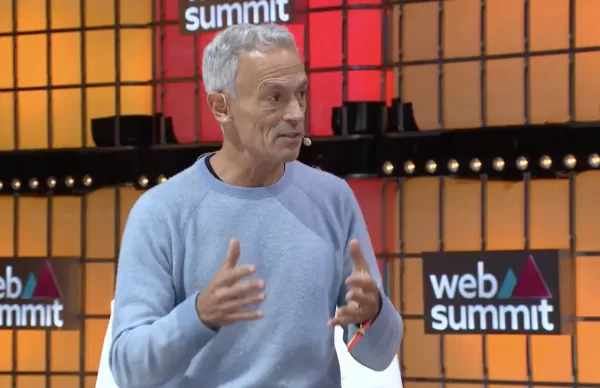
Geoff Ralston, a prominent figure in the startup world through his long association with Y Combinator, has officially returned to active investing, as he announced on Thursday.
His new fund, named the Safe Artificial Intelligence Fund (SAIF), reflects its core mission while also serving as a clever acronym.
According to the fund's website, Ralston is targeting startups dedicated to "enhancing AI safety, security, and responsible deployment." He intends to issue $100,000 checks using a SAFE agreement—"pun intended," he notes—with a valuation cap of $10 million. A SAFE, famously developed by Y Combinator, is a simple agreement for future equity that defers valuation until a later funding round.
While venture capital interest in AI startups is widespread, Ralston’s approach is distinctly centered on safe AI, a focus he acknowledges is intentionally broad.
"Most AI projects today are designed to solve problems, boost efficiency, or create new capabilities. While not inherently unsafe, safety isn't their main priority," Ralston explained to TechCrunch. "My goal is to fund startups where safe AI is the primary objective, as I've defined it in very broad terms."
His investment scope includes companies focused on making AI safer, such as those improving transparency in AI decision-making or establishing safety benchmarks. It also covers tools that protect intellectual property, ensure regulatory compliance, combat disinformation, and detect AI-driven attacks. Additionally, he is interested in functional AI tools designed with built-in safety, like advanced AI forecasting systems or AI-powered negotiation platforms that safeguard corporate secrets.
Although this may resemble the investment thesis of other AI-focused VCs, Ralston is excluding certain areas. One clear example is fully autonomous weapons systems.
"There are undeniably unsafe applications of AI, such as designing bioweapons or managing conventional weapons without human oversight," he stated.
In fact, he aims to back "weapon safety systems" that can identify or prevent attacks from AI-controlled weapons.
This stance presents a contrasting perspective to many current defense tech founders and investors. As TechCrunch has covered, some developers of AI weapons are increasingly advocating for systems that operate independently of human control.
Despite the crowded AI investment landscape, Ralston believes his Y Combinator ties can provide an edge. He left YC in 2022 after a three-year term as president—succeeded by Garry Tan—and more than ten years as an advisor.
Ralston plans to offer the same kind of mentorship he provided at the renowned startup accelerator, including guidance on applying to Y Combinator. He also promises to help portfolio companies access his extensive network of investors.
Ralston has not disclosed the fund's size, the number of startups he plans to support, or the identities of his limited partners.
Related article
 U.S. Stocks Hit Historic Milestone as AI and Aerospace Giants Prepare for Trillion-Dollar Debut
Elon Musk, Sam Altman, and Dario Amodei, three titans of the technology sector, are advancing toward initial public offerings for their respective ventures. With SpaceX, OpenAI, and Anthropic—three industry behemoths nearing trillion-dollar valuation
Swedish AI Startup Lovable Eyes $13.2 Billion Valuation After Major Funding Round
As AI-driven coding tools gain traction, Swedish startup Lovable has secured a major funding round. The company aims to raise $3 billion, potentially boosting its valuation to $13.2 billion—double the $6.6 billion recorded last December. Menlo Ventur
Google Tests Remy AI Agent for Gemini as Focus Shifts to User Control
According to Business Insider, Google is testing Remy, a new AI personal agent for Gemini. This tool aims to execute tasks on behalf of users, streamlining both professional workflows and daily routines.Currently, Remy is undergoing testing in an int
Related Special Topic Recommendations
writing
U.S. Stocks Hit Historic Milestone as AI and Aerospace Giants Prepare for Trillion-Dollar Debut
Elon Musk, Sam Altman, and Dario Amodei, three titans of the technology sector, are advancing toward initial public offerings for their respective ventures. With SpaceX, OpenAI, and Anthropic—three industry behemoths nearing trillion-dollar valuation
Swedish AI Startup Lovable Eyes $13.2 Billion Valuation After Major Funding Round
As AI-driven coding tools gain traction, Swedish startup Lovable has secured a major funding round. The company aims to raise $3 billion, potentially boosting its valuation to $13.2 billion—double the $6.6 billion recorded last December. Menlo Ventur
Google Tests Remy AI Agent for Gemini as Focus Shifts to User Control
According to Business Insider, Google is testing Remy, a new AI personal agent for Gemini. This tool aims to execute tasks on behalf of users, streamlining both professional workflows and daily routines.Currently, Remy is undergoing testing in an int
Related Special Topic Recommendations
writing
 Best AI Outline Generators for Long-Form SEO Articles
2026 Latest Best Top-Rated AI Outline Generators for Long-Form SEO Articles, meticulously curated by XIX.AI. These powerful tools offer game-changing assistance in creating high-quality content quickly, boosting writing efficiency significantly. Get a free vs paid comparison along with real-world tests and detailed rankings to help you find the must-try option that suits your needs. Explore now to unlock your AI edge.
 8 tools
 xix.ai
Education and Learning
AI Study Tools for Homework and Exam Prep
xix.ai
Education and Learning
AI Study Tools for Homework and Exam Prep
2026 Latest Best AI Study Tools for Homework and Exam Prep! XIX.AI curates a top-rated list of powerful, game-changing tools that help students boost productivity, streamline homework completion, and ace exams through real-world tests. Get a free vs paid comparison, detailed rankings, and must-try options to unlock your AI edge. Explore now!
10 tools
xix.ai
Music composition
AI Vocal Demo Tools for Songwriters, Hooks, Toplines, and Multilingual Draft Sessions
2026 Latest Best AI Vocal Demo Tools for Songwriters, Hook Creators, and Multi-Language Content Teams! XIX.AI has curated a top-rated list of powerful game-changing tools that go through rigorous real-world tests. You’ll find detailed free vs paid comparison data, comprehensive rankings, and must-try options to help you boost writing efficiency and unlock your creative potential. Explore now to discover your perfect tool for all your content needs!
9 tools
xix.ai
Business
Best AI Competitive Research Tools for Small Businesses
2026 Latest Best Top-rated AI Competitive Research Tools for Small Businesses! XIX.AI has curated a highly powerful game-changing collection, updated weekly with rigorous real-world tests and detailed rankings. You can find a comprehensive free vs paid comparison to help you identify the must-try tools that boost your productivity and give you a competitive edge. Explore now to discover your perfect tool!
9 tools
xix.ai
Image editing
Photoshop AI Retouch Tools for Ecommerce Apparel, Skin Cleanup, and Color Consistency
2026 Latest Best Photoshop AI retouch tools for ecommerce apparel, skin cleanup, and color consistency! This top-rated curated list features powerful game-changing solutions that help you boost writing efficiency, streamline content creation, and achieve perfect visual results effortlessly. Each tool has undergone real-world tests through weekly updated rankings, complete with free vs paid comparison details. Backed by XIX.AI, it’s the must-try guide for anyone aiming to unlock your AI edge. Explore now!
10 tools
xix.ai
Prompt
Best AI Prompt Libraries for ChatGPT Workflows
2026 Latest Best Top-Rated AI Prompt Libraries for optimizing all types of ChatGPT workflows. XIX.AI has curated a powerful, game-changing collection that goes through rigorous real-world tests to ensure top performance. You can find detailed free vs paid comparisons and expert rankings to help you choose the must-try tools that boost your productivity and unlock your AI edge. Explore now!
11 tools
xix.ai

 Comments (3)
0/500
Comments (3)
0/500
![BenHernández]()
Y CombinatorのGeoff RalstonがAI安全基金を設立か。最近のAI開発のスピードを考えると、安全性への投資は必須だね。🤖 技術の進歩だけでなく、倫理面でのガードレールがしっかりしているか気になるところ。投資家としての目利きも期待したい! #AI #Safety
![JasonKing]()
Great to see someone with Ralston's track record focusing on AI safety. But is a dedicated fund enough to actually steer the industry away from potential dangers? 🤔 Curious how they'll vet startups – just another buzzword or real accountability?
![DonaldSanchez]()
AI 안전성에 집중하는 펀드가 생기는 건 흥미롭네요! 요즘 유니콘 육성에만 목메고 있는 실리콘밸리 풍토에서 돈이 윤리적 관심사로 흐를 수 있다는 점도 놀랍고요. 😮 그런데 올드스쿨 VC가 새로운 펀드를 런칭하면서 AI 안전에 대한 우려를 표명한 건 꽤 이례적이네요...
Geoff Ralston, a prominent figure in the startup world through his long association with Y Combinator, has officially returned to active investing, as he announced on Thursday.
His new fund, named the Safe Artificial Intelligence Fund (SAIF), reflects its core mission while also serving as a clever acronym.
According to the fund's website, Ralston is targeting startups dedicated to "enhancing AI safety, security, and responsible deployment." He intends to issue $100,000 checks using a SAFE agreement—"pun intended," he notes—with a valuation cap of $10 million. A SAFE, famously developed by Y Combinator, is a simple agreement for future equity that defers valuation until a later funding round.
While venture capital interest in AI startups is widespread, Ralston’s approach is distinctly centered on safe AI, a focus he acknowledges is intentionally broad.
"Most AI projects today are designed to solve problems, boost efficiency, or create new capabilities. While not inherently unsafe, safety isn't their main priority," Ralston explained to TechCrunch. "My goal is to fund startups where safe AI is the primary objective, as I've defined it in very broad terms."
His investment scope includes companies focused on making AI safer, such as those improving transparency in AI decision-making or establishing safety benchmarks. It also covers tools that protect intellectual property, ensure regulatory compliance, combat disinformation, and detect AI-driven attacks. Additionally, he is interested in functional AI tools designed with built-in safety, like advanced AI forecasting systems or AI-powered negotiation platforms that safeguard corporate secrets.
Although this may resemble the investment thesis of other AI-focused VCs, Ralston is excluding certain areas. One clear example is fully autonomous weapons systems.
"There are undeniably unsafe applications of AI, such as designing bioweapons or managing conventional weapons without human oversight," he stated.
In fact, he aims to back "weapon safety systems" that can identify or prevent attacks from AI-controlled weapons.
This stance presents a contrasting perspective to many current defense tech founders and investors. As TechCrunch has covered, some developers of AI weapons are increasingly advocating for systems that operate independently of human control.
Despite the crowded AI investment landscape, Ralston believes his Y Combinator ties can provide an edge. He left YC in 2022 after a three-year term as president—succeeded by Garry Tan—and more than ten years as an advisor.
Ralston plans to offer the same kind of mentorship he provided at the renowned startup accelerator, including guidance on applying to Y Combinator. He also promises to help portfolio companies access his extensive network of investors.
Ralston has not disclosed the fund's size, the number of startups he plans to support, or the identities of his limited partners.








 U.S. Stocks Hit Historic Milestone as AI and Aerospace Giants Prepare for Trillion-Dollar Debut
Elon Musk, Sam Altman, and Dario Amodei, three titans of the technology sector, are advancing toward initial public offerings for their respective ventures. With SpaceX, OpenAI, and Anthropic—three industry behemoths nearing trillion-dollar valuation
U.S. Stocks Hit Historic Milestone as AI and Aerospace Giants Prepare for Trillion-Dollar Debut
Elon Musk, Sam Altman, and Dario Amodei, three titans of the technology sector, are advancing toward initial public offerings for their respective ventures. With SpaceX, OpenAI, and Anthropic—three industry behemoths nearing trillion-dollar valuation
 Swedish AI Startup Lovable Eyes $13.2 Billion Valuation After Major Funding Round
As AI-driven coding tools gain traction, Swedish startup Lovable has secured a major funding round. The company aims to raise $3 billion, potentially boosting its valuation to $13.2 billion—double the $6.6 billion recorded last December. Menlo Ventur
Google Tests Remy AI Agent for Gemini as Focus Shifts to User Control
According to Business Insider, Google is testing Remy, a new AI personal agent for Gemini. This tool aims to execute tasks on behalf of users, streamlining both professional workflows and daily routines.Currently, Remy is undergoing testing in an int
Swedish AI Startup Lovable Eyes $13.2 Billion Valuation After Major Funding Round
As AI-driven coding tools gain traction, Swedish startup Lovable has secured a major funding round. The company aims to raise $3 billion, potentially boosting its valuation to $13.2 billion—double the $6.6 billion recorded last December. Menlo Ventur
Google Tests Remy AI Agent for Gemini as Focus Shifts to User Control
According to Business Insider, Google is testing Remy, a new AI personal agent for Gemini. This tool aims to execute tasks on behalf of users, streamlining both professional workflows and daily routines.Currently, Remy is undergoing testing in an int

2026 Latest Best Top-Rated AI Outline Generators for Long-Form SEO Articles, meticulously curated by XIX.AI. These powerful tools offer game-changing assistance in creating high-quality content quickly, boosting writing efficiency significantly. Get a free vs paid comparison along with real-world tests and detailed rankings to help you find the must-try option that suits your needs. Explore now to unlock your AI edge.
8 tools
xix.ai

2026 Latest Best AI Study Tools for Homework and Exam Prep! XIX.AI curates a top-rated list of powerful, game-changing tools that help students boost productivity, streamline homework completion, and ace exams through real-world tests. Get a free vs paid comparison, detailed rankings, and must-try options to unlock your AI edge. Explore now!
10 tools
xix.ai
2026 Latest Best AI Vocal Demo Tools for Songwriters, Hook Creators, and Multi-Language Content Teams! XIX.AI has curated a top-rated list of powerful game-changing tools that go through rigorous real-world tests. You’ll find detailed free vs paid comparison data, comprehensive rankings, and must-try options to help you boost writing efficiency and unlock your creative potential. Explore now to discover your perfect tool for all your content needs!
9 tools
xix.ai

2026 Latest Best Top-rated AI Competitive Research Tools for Small Businesses! XIX.AI has curated a highly powerful game-changing collection, updated weekly with rigorous real-world tests and detailed rankings. You can find a comprehensive free vs paid comparison to help you identify the must-try tools that boost your productivity and give you a competitive edge. Explore now to discover your perfect tool!
9 tools
xix.ai

2026 Latest Best Photoshop AI retouch tools for ecommerce apparel, skin cleanup, and color consistency! This top-rated curated list features powerful game-changing solutions that help you boost writing efficiency, streamline content creation, and achieve perfect visual results effortlessly. Each tool has undergone real-world tests through weekly updated rankings, complete with free vs paid comparison details. Backed by XIX.AI, it’s the must-try guide for anyone aiming to unlock your AI edge. Explore now!
10 tools
xix.ai
2026 Latest Best Top-Rated AI Prompt Libraries for optimizing all types of ChatGPT workflows. XIX.AI has curated a powerful, game-changing collection that goes through rigorous real-world tests to ensure top performance. You can find detailed free vs paid comparisons and expert rankings to help you choose the must-try tools that boost your productivity and unlock your AI edge. Explore now!
11 tools
xix.ai

Y CombinatorのGeoff RalstonがAI安全基金を設立か。最近のAI開発のスピードを考えると、安全性への投資は必須だね。🤖 技術の進歩だけでなく、倫理面でのガードレールがしっかりしているか気になるところ。投資家としての目利きも期待したい! #AI #Safety
Great to see someone with Ralston's track record focusing on AI safety. But is a dedicated fund enough to actually steer the industry away from potential dangers? 🤔 Curious how they'll vet startups – just another buzzword or real accountability?
AI 안전성에 집중하는 펀드가 생기는 건 흥미롭네요! 요즘 유니콘 육성에만 목메고 있는 실리콘밸리 풍토에서 돈이 윤리적 관심사로 흐를 수 있다는 점도 놀랍고요. 😮 그런데 올드스쿨 VC가 새로운 펀드를 런칭하면서 AI 안전에 대한 우려를 표명한 건 꽤 이례적이네요...












