


 Home
HomeChina's Kimi K2.6-Code AI Model Launches as Programming Rival to Sonnet 4.6
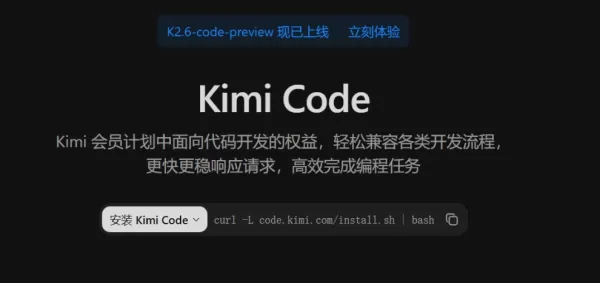
Reports indicate that following GLM-5.1 and MiniMax2.7, Moonshot has officially launched a trillion-parameter large language model optimized for AI programming: Kimi K2.6-code-preview. The model is now accessible within Kimi Code, signifying the formal entry of domestic programming AI into the trillion-parameter era.
Core Evolution: Enhanced Reasoning and Reliability
Compared to its predecessors, K2.6-code-preview has undergone deep engineering optimization based on the trillion-parameter foundation (K2.5), with key advancements in three areas:
Reasoning Depth: It demonstrates stronger chain-of-thought capabilities, described by internal testers as having an "Opus-like" quality, with more rigorous logical reasoning.
Agent Planning: The model shows improved quality in global planning for AI agents handling complex projects.
Tool Calling: Reliability in multi-step tool calling is significantly enhanced, reducing error rates in long-chain tasks.
Benchmark Performance: A Top-Tier Rival to Sonnet4.6
Despite a relatively low-key official launch, community testing and ranking data place its performance firmly among the global elite:
Score Improvement: In developer evaluations, its score rose from 83 points for K2.5 to 89 points.
Leaderboard Standing: While K2.5 scored 76.8% on SWE-Bench Verified and 85% on LiveCodeBench, the new version is considered to match the practical performance level of Sonnet4.6.
Cost-Effectiveness: Compared to the expensive API costs of leading overseas models, Kimi has introduced a Kimi Code membership plan priced at 39 yuan per month, offering a highly cost-effective option for domestic developers.
Industry View: The "Pragmatic Turn" in Domestic Programming AI
Moonshot 's decision to serve subscription users directly via Kimi Code reflects an evolution in the commercialization strategy for domestic large models:
Scenario Focus: The focus shifts from merely showcasing parameter scale to deeply engaging with high-value programming scenarios through the specialized K2.6-code model.
Ecosystem Development: The low-barrier monthly subscription model aims to rapidly attract developer communities, fostering a closed-loop for AI-native application development within the Kimi ecosystem.
Conclusion: A Subtle Shift in the Programming Paradigm
With the introduction of Kimi K2.6-code, domestic AI programming tools now possess the capability to compete with global top-tier standards. For developers, this represents more than just another coding assistant; it is a "trillion-parameter intellectual partner" capable of understanding complex architectures and aiding in strategic decision-making.
Related article
 How to fix Core Web Vitals for better SEO rankings
Streamline Report Card Comments with AI ToolsIntroductionAI Tools for Generating Report Card CommentsMagic SchoolAlmanac AIChat GPTUsing Magic School to Generate Report Card CommentsLogging into Magic SchoolSelecting the Report Card Comments ToolCust
Slackbot Becomes an AI Agent
Slackbot, the automated assistant embedded in Salesforce’s corporate messaging platform Slack, is evolving into an AI agent. Salesforce CTO Parker Harris envisions it achieving viral status comparable to OpenAI’s ChatGPT.The cloud software giant laun
ByteDance Boosts Core AI Incentives as Doubao Surges 14.6%
ByteDance recently convened a DouBao equity briefing to unveil fresh incentive policies for staff involved in the DouBao division. The strike price for DouBao shares has been lifted from $14.85 in June 2026 to $17.02, marking an approximate 14.6% inc
Related Special Topic Recommendations
writing
How to fix Core Web Vitals for better SEO rankings
Streamline Report Card Comments with AI ToolsIntroductionAI Tools for Generating Report Card CommentsMagic SchoolAlmanac AIChat GPTUsing Magic School to Generate Report Card CommentsLogging into Magic SchoolSelecting the Report Card Comments ToolCust
Slackbot Becomes an AI Agent
Slackbot, the automated assistant embedded in Salesforce’s corporate messaging platform Slack, is evolving into an AI agent. Salesforce CTO Parker Harris envisions it achieving viral status comparable to OpenAI’s ChatGPT.The cloud software giant laun
ByteDance Boosts Core AI Incentives as Doubao Surges 14.6%
ByteDance recently convened a DouBao equity briefing to unveil fresh incentive policies for staff involved in the DouBao division. The strike price for DouBao shares has been lifted from $14.85 in June 2026 to $17.02, marking an approximate 14.6% inc
Related Special Topic Recommendations
writing
 Best AI Outline Generators for Long-Form SEO Articles
2026 Latest Best Top-Rated AI Outline Generators for Long-Form SEO Articles, meticulously curated by XIX.AI. These powerful tools offer game-changing assistance in creating high-quality content quickly, boosting writing efficiency significantly. Get a free vs paid comparison along with real-world tests and detailed rankings to help you find the must-try option that suits your needs. Explore now to unlock your AI edge.
 8 tools
 xix.ai
Education and Learning
AI Study Tools for Homework and Exam Prep
xix.ai
Education and Learning
AI Study Tools for Homework and Exam Prep
2026 Latest Best AI Study Tools for Homework and Exam Prep! XIX.AI curates a top-rated list of powerful, game-changing tools that help students boost productivity, streamline homework completion, and ace exams through real-world tests. Get a free vs paid comparison, detailed rankings, and must-try options to unlock your AI edge. Explore now!
10 tools
xix.ai
Music composition
AI Vocal Demo Tools for Songwriters, Hooks, Toplines, and Multilingual Draft Sessions
2026 Latest Best AI Vocal Demo Tools for Songwriters, Hook Creators, and Multi-Language Content Teams! XIX.AI has curated a top-rated list of powerful game-changing tools that go through rigorous real-world tests. You’ll find detailed free vs paid comparison data, comprehensive rankings, and must-try options to help you boost writing efficiency and unlock your creative potential. Explore now to discover your perfect tool for all your content needs!
9 tools
xix.ai
Business
Best AI Competitive Research Tools for Small Businesses
2026 Latest Best Top-rated AI Competitive Research Tools for Small Businesses! XIX.AI has curated a highly powerful game-changing collection, updated weekly with rigorous real-world tests and detailed rankings. You can find a comprehensive free vs paid comparison to help you identify the must-try tools that boost your productivity and give you a competitive edge. Explore now to discover your perfect tool!
9 tools
xix.ai
Image editing
Photoshop AI Retouch Tools for Ecommerce Apparel, Skin Cleanup, and Color Consistency
2026 Latest Best Photoshop AI retouch tools for ecommerce apparel, skin cleanup, and color consistency! This top-rated curated list features powerful game-changing solutions that help you boost writing efficiency, streamline content creation, and achieve perfect visual results effortlessly. Each tool has undergone real-world tests through weekly updated rankings, complete with free vs paid comparison details. Backed by XIX.AI, it’s the must-try guide for anyone aiming to unlock your AI edge. Explore now!
10 tools
xix.ai
Prompt
Best AI Prompt Libraries for ChatGPT Workflows
2026 Latest Best Top-Rated AI Prompt Libraries for optimizing all types of ChatGPT workflows. XIX.AI has curated a powerful, game-changing collection that goes through rigorous real-world tests to ensure top performance. You can find detailed free vs paid comparisons and expert rankings to help you choose the must-try tools that boost your productivity and unlock your AI edge. Explore now!
11 tools
xix.ai

 Comments (1)
0/500
Comments (1)
0/500
![KevinSanchez]()
So Kimi finally dropped their trillion-parameter coding model? Honestly, the AI programming race is getting ridiculous—every week a new 'SOTA' pops up. I'm curious if K2.6 can actually handle real-world spaghetti code without hallucinating half the functions, or if it's just another benchmark overfit. Also, calling it a 'rival to Sonnet 4.6' feels like clickbait until I see third-party evals. 🤷♂️
Reports indicate that following GLM-5.1 and MiniMax2.7, Moonshot has officially launched a trillion-parameter large language model optimized for AI programming: Kimi K2.6-code-preview. The model is now accessible within Kimi Code, signifying the formal entry of domestic programming AI into the trillion-parameter era.
Core Evolution: Enhanced Reasoning and Reliability
Compared to its predecessors, K2.6-code-preview has undergone deep engineering optimization based on the trillion-parameter foundation (K2.5), with key advancements in three areas:
Reasoning Depth: It demonstrates stronger chain-of-thought capabilities, described by internal testers as having an "Opus-like" quality, with more rigorous logical reasoning.
Agent Planning: The model shows improved quality in global planning for AI agents handling complex projects.
Tool Calling: Reliability in multi-step tool calling is significantly enhanced, reducing error rates in long-chain tasks.
Benchmark Performance: A Top-Tier Rival to Sonnet4.6
Despite a relatively low-key official launch, community testing and ranking data place its performance firmly among the global elite:
Score Improvement: In developer evaluations, its score rose from 83 points for K2.5 to 89 points.
Leaderboard Standing: While K2.5 scored 76.8% on SWE-Bench Verified and 85% on LiveCodeBench, the new version is considered to match the practical performance level of Sonnet4.6.
Cost-Effectiveness: Compared to the expensive API costs of leading overseas models, Kimi has introduced a Kimi Code membership plan priced at 39 yuan per month, offering a highly cost-effective option for domestic developers.
Industry View: The "Pragmatic Turn" in Domestic Programming AI
Scenario Focus: The focus shifts from merely showcasing parameter scale to deeply engaging with high-value programming scenarios through the specialized K2.6-code model.
Ecosystem Development: The low-barrier monthly subscription model aims to rapidly attract developer communities, fostering a closed-loop for AI-native application development within the Kimi ecosystem.
Conclusion: A Subtle Shift in the Programming Paradigm
With the introduction of Kimi K2.6-code, domestic AI programming tools now possess the capability to compete with global top-tier standards. For developers, this represents more than just another coding assistant; it is a "trillion-parameter intellectual partner" capable of understanding complex architectures and aiding in strategic decision-making.








 How to fix Core Web Vitals for better SEO rankings
Streamline Report Card Comments with AI ToolsIntroductionAI Tools for Generating Report Card CommentsMagic SchoolAlmanac AIChat GPTUsing Magic School to Generate Report Card CommentsLogging into Magic SchoolSelecting the Report Card Comments ToolCust
How to fix Core Web Vitals for better SEO rankings
Streamline Report Card Comments with AI ToolsIntroductionAI Tools for Generating Report Card CommentsMagic SchoolAlmanac AIChat GPTUsing Magic School to Generate Report Card CommentsLogging into Magic SchoolSelecting the Report Card Comments ToolCust
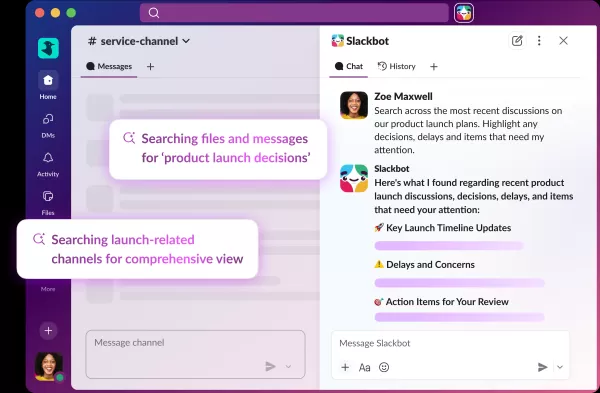 Slackbot Becomes an AI Agent
Slackbot, the automated assistant embedded in Salesforce’s corporate messaging platform Slack, is evolving into an AI agent. Salesforce CTO Parker Harris envisions it achieving viral status comparable to OpenAI’s ChatGPT.The cloud software giant laun
Slackbot Becomes an AI Agent
Slackbot, the automated assistant embedded in Salesforce’s corporate messaging platform Slack, is evolving into an AI agent. Salesforce CTO Parker Harris envisions it achieving viral status comparable to OpenAI’s ChatGPT.The cloud software giant laun
 ByteDance Boosts Core AI Incentives as Doubao Surges 14.6%
ByteDance recently convened a DouBao equity briefing to unveil fresh incentive policies for staff involved in the DouBao division. The strike price for DouBao shares has been lifted from $14.85 in June 2026 to $17.02, marking an approximate 14.6% inc
ByteDance Boosts Core AI Incentives as Doubao Surges 14.6%
ByteDance recently convened a DouBao equity briefing to unveil fresh incentive policies for staff involved in the DouBao division. The strike price for DouBao shares has been lifted from $14.85 in June 2026 to $17.02, marking an approximate 14.6% inc

2026 Latest Best Top-Rated AI Outline Generators for Long-Form SEO Articles, meticulously curated by XIX.AI. These powerful tools offer game-changing assistance in creating high-quality content quickly, boosting writing efficiency significantly. Get a free vs paid comparison along with real-world tests and detailed rankings to help you find the must-try option that suits your needs. Explore now to unlock your AI edge.
8 tools
xix.ai

2026 Latest Best AI Study Tools for Homework and Exam Prep! XIX.AI curates a top-rated list of powerful, game-changing tools that help students boost productivity, streamline homework completion, and ace exams through real-world tests. Get a free vs paid comparison, detailed rankings, and must-try options to unlock your AI edge. Explore now!
10 tools
xix.ai

2026 Latest Best AI Vocal Demo Tools for Songwriters, Hook Creators, and Multi-Language Content Teams! XIX.AI has curated a top-rated list of powerful game-changing tools that go through rigorous real-world tests. You’ll find detailed free vs paid comparison data, comprehensive rankings, and must-try options to help you boost writing efficiency and unlock your creative potential. Explore now to discover your perfect tool for all your content needs!
9 tools
xix.ai

2026 Latest Best Top-rated AI Competitive Research Tools for Small Businesses! XIX.AI has curated a highly powerful game-changing collection, updated weekly with rigorous real-world tests and detailed rankings. You can find a comprehensive free vs paid comparison to help you identify the must-try tools that boost your productivity and give you a competitive edge. Explore now to discover your perfect tool!
9 tools
xix.ai

2026 Latest Best Photoshop AI retouch tools for ecommerce apparel, skin cleanup, and color consistency! This top-rated curated list features powerful game-changing solutions that help you boost writing efficiency, streamline content creation, and achieve perfect visual results effortlessly. Each tool has undergone real-world tests through weekly updated rankings, complete with free vs paid comparison details. Backed by XIX.AI, it’s the must-try guide for anyone aiming to unlock your AI edge. Explore now!
10 tools
xix.ai

2026 Latest Best Top-Rated AI Prompt Libraries for optimizing all types of ChatGPT workflows. XIX.AI has curated a powerful, game-changing collection that goes through rigorous real-world tests to ensure top performance. You can find detailed free vs paid comparisons and expert rankings to help you choose the must-try tools that boost your productivity and unlock your AI edge. Explore now!
11 tools
xix.ai

So Kimi finally dropped their trillion-parameter coding model? Honestly, the AI programming race is getting ridiculous—every week a new 'SOTA' pops up. I'm curious if K2.6 can actually handle real-world spaghetti code without hallucinating half the functions, or if it's just another benchmark overfit. Also, calling it a 'rival to Sonnet 4.6' feels like clickbait until I see third-party evals. 🤷♂️












