


 Home
HomeChatGPT's Images 2.0 Model Excels at Text Generation
Just a couple of years ago, telling human-made images apart from AI-generated ones was relatively straightforward. Back then, asking an image model to create a menu for a Mexican restaurant would often result in bizarre, invented dishes like "enchuita," "churiros," "burrto," or "margartas."
Today, when I request a Mexican food menu from the brand-new ChatGPT Images 2.0 model, it produces something that could be used in a real restaurant immediately, with customers unlikely to spot anything amiss. (Although, a $13.50 ceviche might still raise some questions about the fish quality).
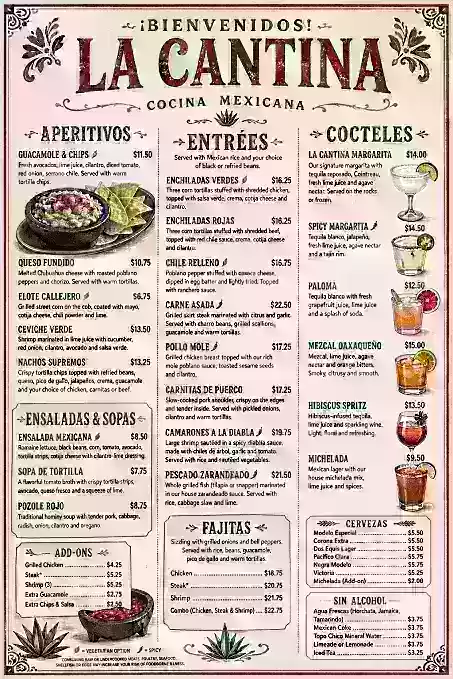
Image Credits: ChatGPT Images 2.0
For comparison, here is the result I received from DALL-E 3 two years ago. (At that time, ChatGPT did not have image generation capabilities):
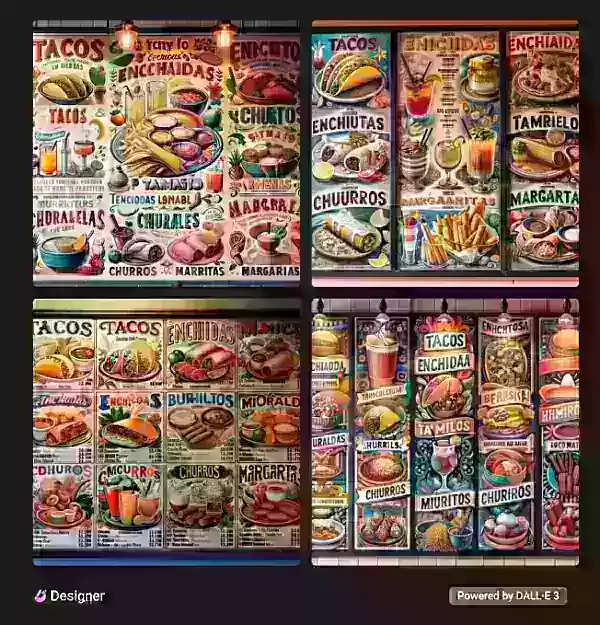
Image Credits: Microsoft Designer (DALL-E 3)
Historically, AI image generators have had significant difficulty with spelling. This is largely because they typically relied on diffusion models, which reconstruct images from random noise.
"The diffusion models [...] are reconstructing a given input," explained Asmelash Teka Hadgu, founder and CEO of Lesan AI, to TechCrunch in 2024. "We can consider text on an image to be a very minor component, so the image generator prioritizes learning the visual patterns that occupy more pixels."
Since then, researchers have investigated other approaches to image generation, such as autoregressive models. These models predict what an image should look like step-by-step, functioning more similarly to large language models (LLMs).
Unfortunately, OpenAI declined to answer a question during a press briefing this week regarding the specific model architecture powering ChatGPT Images 2.0.
The company did clarify, however, that the new model possesses "thinking capabilities." This allows it to search the web, create multiple images from a single prompt, and review its own outputs. These features enable Images 2.0 to produce marketing materials in various dimensions, as well as multi-panel comic strips.
OpenAI also states that Images 2.0 has a better grasp of rendering non-Latin scripts, including Japanese, Korean, Hindi, and Bengali. The model's knowledge is current up to December 2025, which may affect its accuracy when generating images related to very recent events.
"Images 2.0 delivers an unprecedented level of detail and accuracy in image creation. It can not only conceptualize more complex scenes but also execute that vision effectively. It follows instructions precisely, maintains requested details, and renders fine-grained elements that often challenge other image models—such as small text, icons, UI components, intricate compositions, and subtle stylistic nuances—all at resolutions up to 2K," OpenAI noted in a press release.
These advanced capabilities mean image generation isn't as instantaneous as asking ChatGPT a text question. However, creating something complex, like a multi-panel comic, still takes only a few minutes.
All ChatGPT and Codex users will gain access to Images 2.0 starting Tuesday, with paid subscribers able to generate more advanced outputs. The company will also release the gpt-image-2 API, with pricing based on the desired output quality and resolution.
Related article
 Sam Altman Sparks Debate Over AI's Deceleration
Listen onApple PodcastsListen onSpotifyOpenAI CEO Sam Altman recently suggested that it may be time to “pace the rate of AI development” to allow society to “harden around some of these new capability levels.”On the latest episode of TechCrunch’s Equ
OpenAI fights Apple trade secret lawsuit
OpenAI rebutted Apple’s trade secret allegations on Tuesday, arguing the lawsuit is unfounded.“We take these claims seriously but see no evidence supporting them,” OpenAI stated, as reported by Bloomberg’s Ed Ludlow on X. “We support fair competition
OpenAI robotics head Caitlin Kalinowski resigns over Pentagon partnership
OpenAI robotics leader Caitlin Kalinowski has stepped down following the company’s controversial partnership with the Department of Defense.“This wasn’t an easy call,” Kalinowski explained in a social media statement. “While AI plays a vital role in
Related Special Topic Recommendations
writing
Sam Altman Sparks Debate Over AI's Deceleration
Listen onApple PodcastsListen onSpotifyOpenAI CEO Sam Altman recently suggested that it may be time to “pace the rate of AI development” to allow society to “harden around some of these new capability levels.”On the latest episode of TechCrunch’s Equ
OpenAI fights Apple trade secret lawsuit
OpenAI rebutted Apple’s trade secret allegations on Tuesday, arguing the lawsuit is unfounded.“We take these claims seriously but see no evidence supporting them,” OpenAI stated, as reported by Bloomberg’s Ed Ludlow on X. “We support fair competition
OpenAI robotics head Caitlin Kalinowski resigns over Pentagon partnership
OpenAI robotics leader Caitlin Kalinowski has stepped down following the company’s controversial partnership with the Department of Defense.“This wasn’t an easy call,” Kalinowski explained in a social media statement. “While AI plays a vital role in
Related Special Topic Recommendations
writing
 Best AI Outline Generators for Long-Form SEO Articles
2026 Latest Best Top-Rated AI Outline Generators for Long-Form SEO Articles, meticulously curated by XIX.AI. These powerful tools offer game-changing assistance in creating high-quality content quickly, boosting writing efficiency significantly. Get a free vs paid comparison along with real-world tests and detailed rankings to help you find the must-try option that suits your needs. Explore now to unlock your AI edge.
 8 tools
 xix.ai
Education and Learning
AI Study Tools for Homework and Exam Prep
xix.ai
Education and Learning
AI Study Tools for Homework and Exam Prep
2026 Latest Best AI Study Tools for Homework and Exam Prep! XIX.AI curates a top-rated list of powerful, game-changing tools that help students boost productivity, streamline homework completion, and ace exams through real-world tests. Get a free vs paid comparison, detailed rankings, and must-try options to unlock your AI edge. Explore now!
10 tools
xix.ai
Music composition
AI Vocal Demo Tools for Songwriters, Hooks, Toplines, and Multilingual Draft Sessions
2026 Latest Best AI Vocal Demo Tools for Songwriters, Hook Creators, and Multi-Language Content Teams! XIX.AI has curated a top-rated list of powerful game-changing tools that go through rigorous real-world tests. You’ll find detailed free vs paid comparison data, comprehensive rankings, and must-try options to help you boost writing efficiency and unlock your creative potential. Explore now to discover your perfect tool for all your content needs!
9 tools
xix.ai
Business
Best AI Competitive Research Tools for Small Businesses
2026 Latest Best Top-rated AI Competitive Research Tools for Small Businesses! XIX.AI has curated a highly powerful game-changing collection, updated weekly with rigorous real-world tests and detailed rankings. You can find a comprehensive free vs paid comparison to help you identify the must-try tools that boost your productivity and give you a competitive edge. Explore now to discover your perfect tool!
9 tools
xix.ai
Image editing
Photoshop AI Retouch Tools for Ecommerce Apparel, Skin Cleanup, and Color Consistency
2026 Latest Best Photoshop AI retouch tools for ecommerce apparel, skin cleanup, and color consistency! This top-rated curated list features powerful game-changing solutions that help you boost writing efficiency, streamline content creation, and achieve perfect visual results effortlessly. Each tool has undergone real-world tests through weekly updated rankings, complete with free vs paid comparison details. Backed by XIX.AI, it’s the must-try guide for anyone aiming to unlock your AI edge. Explore now!
10 tools
xix.ai
Prompt
Best AI Prompt Libraries for ChatGPT Workflows
2026 Latest Best Top-Rated AI Prompt Libraries for optimizing all types of ChatGPT workflows. XIX.AI has curated a powerful, game-changing collection that goes through rigorous real-world tests to ensure top performance. You can find detailed free vs paid comparisons and expert rankings to help you choose the must-try tools that boost your productivity and unlock your AI edge. Explore now!
11 tools
xix.ai

 Comments (0)
0/500
Comments (0)
0/500
Just a couple of years ago, telling human-made images apart from AI-generated ones was relatively straightforward. Back then, asking an image model to create a menu for a Mexican restaurant would often result in bizarre, invented dishes like "enchuita," "churiros," "burrto," or "margartas."
Today, when I request a Mexican food menu from the brand-new ChatGPT Images 2.0 model, it produces something that could be used in a real restaurant immediately, with customers unlikely to spot anything amiss. (Although, a $13.50 ceviche might still raise some questions about the fish quality).
Image Credits: ChatGPT Images 2.0
For comparison, here is the result I received from DALL-E 3 two years ago. (At that time, ChatGPT did not have image generation capabilities):
Image Credits: Microsoft Designer (DALL-E 3)
Historically, AI image generators have had significant difficulty with spelling. This is largely because they typically relied on diffusion models, which reconstruct images from random noise.
"The diffusion models [...] are reconstructing a given input," explained Asmelash Teka Hadgu, founder and CEO of Lesan AI, to TechCrunch in 2024. "We can consider text on an image to be a very minor component, so the image generator prioritizes learning the visual patterns that occupy more pixels."
Since then, researchers have investigated other approaches to image generation, such as autoregressive models. These models predict what an image should look like step-by-step, functioning more similarly to large language models (LLMs).
Unfortunately, OpenAI declined to answer a question during a press briefing this week regarding the specific model architecture powering ChatGPT Images 2.0.
The company did clarify, however, that the new model possesses "thinking capabilities." This allows it to search the web, create multiple images from a single prompt, and review its own outputs. These features enable Images 2.0 to produce marketing materials in various dimensions, as well as multi-panel comic strips.
OpenAI also states that Images 2.0 has a better grasp of rendering non-Latin scripts, including Japanese, Korean, Hindi, and Bengali. The model's knowledge is current up to December 2025, which may affect its accuracy when generating images related to very recent events.
"Images 2.0 delivers an unprecedented level of detail and accuracy in image creation. It can not only conceptualize more complex scenes but also execute that vision effectively. It follows instructions precisely, maintains requested details, and renders fine-grained elements that often challenge other image models—such as small text, icons, UI components, intricate compositions, and subtle stylistic nuances—all at resolutions up to 2K," OpenAI noted in a press release.
These advanced capabilities mean image generation isn't as instantaneous as asking ChatGPT a text question. However, creating something complex, like a multi-panel comic, still takes only a few minutes.
All ChatGPT and Codex users will gain access to Images 2.0 starting Tuesday, with paid subscribers able to generate more advanced outputs. The company will also release the gpt-image-2 API, with pricing based on the desired output quality and resolution.








 Sam Altman Sparks Debate Over AI's Deceleration
Listen onApple PodcastsListen onSpotifyOpenAI CEO Sam Altman recently suggested that it may be time to “pace the rate of AI development” to allow society to “harden around some of these new capability levels.”On the latest episode of TechCrunch’s Equ
Sam Altman Sparks Debate Over AI's Deceleration
Listen onApple PodcastsListen onSpotifyOpenAI CEO Sam Altman recently suggested that it may be time to “pace the rate of AI development” to allow society to “harden around some of these new capability levels.”On the latest episode of TechCrunch’s Equ
 OpenAI fights Apple trade secret lawsuit
OpenAI rebutted Apple’s trade secret allegations on Tuesday, arguing the lawsuit is unfounded.“We take these claims seriously but see no evidence supporting them,” OpenAI stated, as reported by Bloomberg’s Ed Ludlow on X. “We support fair competition
OpenAI fights Apple trade secret lawsuit
OpenAI rebutted Apple’s trade secret allegations on Tuesday, arguing the lawsuit is unfounded.“We take these claims seriously but see no evidence supporting them,” OpenAI stated, as reported by Bloomberg’s Ed Ludlow on X. “We support fair competition
 OpenAI robotics head Caitlin Kalinowski resigns over Pentagon partnership
OpenAI robotics leader Caitlin Kalinowski has stepped down following the company’s controversial partnership with the Department of Defense.“This wasn’t an easy call,” Kalinowski explained in a social media statement. “While AI plays a vital role in
OpenAI robotics head Caitlin Kalinowski resigns over Pentagon partnership
OpenAI robotics leader Caitlin Kalinowski has stepped down following the company’s controversial partnership with the Department of Defense.“This wasn’t an easy call,” Kalinowski explained in a social media statement. “While AI plays a vital role in

2026 Latest Best Top-Rated AI Outline Generators for Long-Form SEO Articles, meticulously curated by XIX.AI. These powerful tools offer game-changing assistance in creating high-quality content quickly, boosting writing efficiency significantly. Get a free vs paid comparison along with real-world tests and detailed rankings to help you find the must-try option that suits your needs. Explore now to unlock your AI edge.
8 tools
xix.ai

2026 Latest Best AI Study Tools for Homework and Exam Prep! XIX.AI curates a top-rated list of powerful, game-changing tools that help students boost productivity, streamline homework completion, and ace exams through real-world tests. Get a free vs paid comparison, detailed rankings, and must-try options to unlock your AI edge. Explore now!
10 tools
xix.ai

2026 Latest Best AI Vocal Demo Tools for Songwriters, Hook Creators, and Multi-Language Content Teams! XIX.AI has curated a top-rated list of powerful game-changing tools that go through rigorous real-world tests. You’ll find detailed free vs paid comparison data, comprehensive rankings, and must-try options to help you boost writing efficiency and unlock your creative potential. Explore now to discover your perfect tool for all your content needs!
9 tools
xix.ai

2026 Latest Best Top-rated AI Competitive Research Tools for Small Businesses! XIX.AI has curated a highly powerful game-changing collection, updated weekly with rigorous real-world tests and detailed rankings. You can find a comprehensive free vs paid comparison to help you identify the must-try tools that boost your productivity and give you a competitive edge. Explore now to discover your perfect tool!
9 tools
xix.ai

2026 Latest Best Photoshop AI retouch tools for ecommerce apparel, skin cleanup, and color consistency! This top-rated curated list features powerful game-changing solutions that help you boost writing efficiency, streamline content creation, and achieve perfect visual results effortlessly. Each tool has undergone real-world tests through weekly updated rankings, complete with free vs paid comparison details. Backed by XIX.AI, it’s the must-try guide for anyone aiming to unlock your AI edge. Explore now!
10 tools
xix.ai

2026 Latest Best Top-Rated AI Prompt Libraries for optimizing all types of ChatGPT workflows. XIX.AI has curated a powerful, game-changing collection that goes through rigorous real-world tests to ensure top performance. You can find detailed free vs paid comparisons and expert rankings to help you choose the must-try tools that boost your productivity and unlock your AI edge. Explore now!
11 tools
xix.ai












