


 Home
HomeChatGPT Images 2.0 Gains Traction in India Amid Global Slow Start
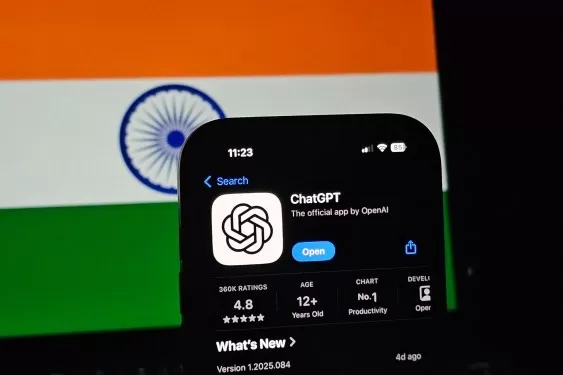
Since its launch last week, India has become the largest user base for ChatGPT Images 2.0, OpenAI announced on Thursday. However, third-party data analyzed by TechCrunch reveals a more nuanced global picture, showing modest overall growth alongside significant surges in specific emerging markets.
ChatGPT Images 2.0, OpenAI's latest upgrade for image generation, is built to process intricate prompts and create detailed visuals, featuring accurate text in multiple languages. Initial data from the company indicates that users, particularly in its largest market of India, are leveraging it to craft personal imagery like avatars, stylized portraits, and fantasy-themed pictures.
Information shared by Sensor Tower and Similarweb with TechCrunch suggests the global reception has been mixed. According to Sensor Tower, ChatGPT app downloads increased by 11% week-over-week after the launch, but overall engagement saw only slight gains, with daily active users and sessions rising by approximately 1%. Similarweb data also indicates a limited rise in ChatGPT's global web traffic, up about 1.6% week-over-week during the same timeframe.
Nevertheless, Sensor Tower data highlights that several emerging markets—including Pakistan, Vietnam, and Indonesia—experienced more pronounced spikes in ChatGPT app downloads, with increases of up to 79% week-over-week during the rollout period.
India continued to be a major hub of activity throughout the launch. Sensor Tower estimates show ChatGPT was downloaded around 5 million times in India during the launch week, compared to about 2 million in the U.S., though week-over-week growth remained moderate. Similarweb data also reflects a limited increase in engagement, with daily active users in India growing roughly 3.4% week-over-week in the same period.
In India, early trends suggest ChatGPT Images 2.0 is primarily being used for self-expression. OpenAI notes that instead of purely functional creations, users are generating studio-quality portraits from casual photos, images tailored for social media, and imaginative visuals that feature themselves prominently.
These early patterns also underscore the varied adoption of AI image tools across different regions. While India's substantial user base contributes significantly to overall scale, the sharper upticks in countries like Pakistan and Indonesia signal stronger demand from new users in emerging markets following the launch.
OpenAI's rollout of Images 2.0 arrives as competition in AI image generation heats up. Google's earlier image-centric model, the original Nano Banana, also gained strong early momentum in India, highlighting the country's role as a key market for image-generation technology.
With the new ChatGPT Images release, OpenAI is advancing further with enhancements like improved rendering of non-Latin scripts—including Hindi and Bengali—and new "thinking" capabilities that allow the model to refine outputs and produce multiple variations from a single prompt.
Beyond stylized portraits and avatars, OpenAI reports that early Images 2.0 users in India are exploring a broader array of formats, from fantasy newspaper covers to tarot-inspired visuals and fashion mood boards. The company adds that users are also employing the AI tool to restore old photographs and create cinematic portrait collages, pointing to initial trends of more personalized application.
Related article
 Sam Altman Sparks Debate Over AI's Deceleration
Listen onApple PodcastsListen onSpotifyOpenAI CEO Sam Altman recently suggested that it may be time to “pace the rate of AI development” to allow society to “harden around some of these new capability levels.”On the latest episode of TechCrunch’s Equ
OpenAI fights Apple trade secret lawsuit
OpenAI rebutted Apple’s trade secret allegations on Tuesday, arguing the lawsuit is unfounded.“We take these claims seriously but see no evidence supporting them,” OpenAI stated, as reported by Bloomberg’s Ed Ludlow on X. “We support fair competition
OpenAI robotics head Caitlin Kalinowski resigns over Pentagon partnership
OpenAI robotics leader Caitlin Kalinowski has stepped down following the company’s controversial partnership with the Department of Defense.“This wasn’t an easy call,” Kalinowski explained in a social media statement. “While AI plays a vital role in
Related Special Topic Recommendations
writing
Sam Altman Sparks Debate Over AI's Deceleration
Listen onApple PodcastsListen onSpotifyOpenAI CEO Sam Altman recently suggested that it may be time to “pace the rate of AI development” to allow society to “harden around some of these new capability levels.”On the latest episode of TechCrunch’s Equ
OpenAI fights Apple trade secret lawsuit
OpenAI rebutted Apple’s trade secret allegations on Tuesday, arguing the lawsuit is unfounded.“We take these claims seriously but see no evidence supporting them,” OpenAI stated, as reported by Bloomberg’s Ed Ludlow on X. “We support fair competition
OpenAI robotics head Caitlin Kalinowski resigns over Pentagon partnership
OpenAI robotics leader Caitlin Kalinowski has stepped down following the company’s controversial partnership with the Department of Defense.“This wasn’t an easy call,” Kalinowski explained in a social media statement. “While AI plays a vital role in
Related Special Topic Recommendations
writing
 Best AI Outline Generators for Long-Form SEO Articles
2026 Latest Best Top-Rated AI Outline Generators for Long-Form SEO Articles, meticulously curated by XIX.AI. These powerful tools offer game-changing assistance in creating high-quality content quickly, boosting writing efficiency significantly. Get a free vs paid comparison along with real-world tests and detailed rankings to help you find the must-try option that suits your needs. Explore now to unlock your AI edge.
 8 tools
 xix.ai
Education and Learning
AI Study Tools for Homework and Exam Prep
xix.ai
Education and Learning
AI Study Tools for Homework and Exam Prep
2026 Latest Best AI Study Tools for Homework and Exam Prep! XIX.AI curates a top-rated list of powerful, game-changing tools that help students boost productivity, streamline homework completion, and ace exams through real-world tests. Get a free vs paid comparison, detailed rankings, and must-try options to unlock your AI edge. Explore now!
10 tools
xix.ai
Music composition
AI Vocal Demo Tools for Songwriters, Hooks, Toplines, and Multilingual Draft Sessions
2026 Latest Best AI Vocal Demo Tools for Songwriters, Hook Creators, and Multi-Language Content Teams! XIX.AI has curated a top-rated list of powerful game-changing tools that go through rigorous real-world tests. You’ll find detailed free vs paid comparison data, comprehensive rankings, and must-try options to help you boost writing efficiency and unlock your creative potential. Explore now to discover your perfect tool for all your content needs!
9 tools
xix.ai
Business
Best AI Competitive Research Tools for Small Businesses
2026 Latest Best Top-rated AI Competitive Research Tools for Small Businesses! XIX.AI has curated a highly powerful game-changing collection, updated weekly with rigorous real-world tests and detailed rankings. You can find a comprehensive free vs paid comparison to help you identify the must-try tools that boost your productivity and give you a competitive edge. Explore now to discover your perfect tool!
9 tools
xix.ai
Image editing
Photoshop AI Retouch Tools for Ecommerce Apparel, Skin Cleanup, and Color Consistency
2026 Latest Best Photoshop AI retouch tools for ecommerce apparel, skin cleanup, and color consistency! This top-rated curated list features powerful game-changing solutions that help you boost writing efficiency, streamline content creation, and achieve perfect visual results effortlessly. Each tool has undergone real-world tests through weekly updated rankings, complete with free vs paid comparison details. Backed by XIX.AI, it’s the must-try guide for anyone aiming to unlock your AI edge. Explore now!
10 tools
xix.ai
Prompt
Best AI Prompt Libraries for ChatGPT Workflows
2026 Latest Best Top-Rated AI Prompt Libraries for optimizing all types of ChatGPT workflows. XIX.AI has curated a powerful, game-changing collection that goes through rigorous real-world tests to ensure top performance. You can find detailed free vs paid comparisons and expert rankings to help you choose the must-try tools that boost your productivity and unlock your AI edge. Explore now!
11 tools
xix.ai

 Comments (0)
0/500
Comments (0)
0/500
Since its launch last week, India has become the largest user base for ChatGPT Images 2.0, OpenAI announced on Thursday. However, third-party data analyzed by TechCrunch reveals a more nuanced global picture, showing modest overall growth alongside significant surges in specific emerging markets.
ChatGPT Images 2.0, OpenAI's latest upgrade for image generation, is built to process intricate prompts and create detailed visuals, featuring accurate text in multiple languages. Initial data from the company indicates that users, particularly in its largest market of India, are leveraging it to craft personal imagery like avatars, stylized portraits, and fantasy-themed pictures.
Information shared by Sensor Tower and Similarweb with TechCrunch suggests the global reception has been mixed. According to Sensor Tower, ChatGPT app downloads increased by 11% week-over-week after the launch, but overall engagement saw only slight gains, with daily active users and sessions rising by approximately 1%. Similarweb data also indicates a limited rise in ChatGPT's global web traffic, up about 1.6% week-over-week during the same timeframe.
Nevertheless, Sensor Tower data highlights that several emerging markets—including Pakistan, Vietnam, and Indonesia—experienced more pronounced spikes in ChatGPT app downloads, with increases of up to 79% week-over-week during the rollout period.
India continued to be a major hub of activity throughout the launch. Sensor Tower estimates show ChatGPT was downloaded around 5 million times in India during the launch week, compared to about 2 million in the U.S., though week-over-week growth remained moderate. Similarweb data also reflects a limited increase in engagement, with daily active users in India growing roughly 3.4% week-over-week in the same period.
In India, early trends suggest ChatGPT Images 2.0 is primarily being used for self-expression. OpenAI notes that instead of purely functional creations, users are generating studio-quality portraits from casual photos, images tailored for social media, and imaginative visuals that feature themselves prominently.
These early patterns also underscore the varied adoption of AI image tools across different regions. While India's substantial user base contributes significantly to overall scale, the sharper upticks in countries like Pakistan and Indonesia signal stronger demand from new users in emerging markets following the launch.
OpenAI's rollout of Images 2.0 arrives as competition in AI image generation heats up. Google's earlier image-centric model, the original Nano Banana, also gained strong early momentum in India, highlighting the country's role as a key market for image-generation technology.
With the new ChatGPT Images release, OpenAI is advancing further with enhancements like improved rendering of non-Latin scripts—including Hindi and Bengali—and new "thinking" capabilities that allow the model to refine outputs and produce multiple variations from a single prompt.
Beyond stylized portraits and avatars, OpenAI reports that early Images 2.0 users in India are exploring a broader array of formats, from fantasy newspaper covers to tarot-inspired visuals and fashion mood boards. The company adds that users are also employing the AI tool to restore old photographs and create cinematic portrait collages, pointing to initial trends of more personalized application.








 Sam Altman Sparks Debate Over AI's Deceleration
Listen onApple PodcastsListen onSpotifyOpenAI CEO Sam Altman recently suggested that it may be time to “pace the rate of AI development” to allow society to “harden around some of these new capability levels.”On the latest episode of TechCrunch’s Equ
Sam Altman Sparks Debate Over AI's Deceleration
Listen onApple PodcastsListen onSpotifyOpenAI CEO Sam Altman recently suggested that it may be time to “pace the rate of AI development” to allow society to “harden around some of these new capability levels.”On the latest episode of TechCrunch’s Equ
 OpenAI fights Apple trade secret lawsuit
OpenAI rebutted Apple’s trade secret allegations on Tuesday, arguing the lawsuit is unfounded.“We take these claims seriously but see no evidence supporting them,” OpenAI stated, as reported by Bloomberg’s Ed Ludlow on X. “We support fair competition
OpenAI fights Apple trade secret lawsuit
OpenAI rebutted Apple’s trade secret allegations on Tuesday, arguing the lawsuit is unfounded.“We take these claims seriously but see no evidence supporting them,” OpenAI stated, as reported by Bloomberg’s Ed Ludlow on X. “We support fair competition
 OpenAI robotics head Caitlin Kalinowski resigns over Pentagon partnership
OpenAI robotics leader Caitlin Kalinowski has stepped down following the company’s controversial partnership with the Department of Defense.“This wasn’t an easy call,” Kalinowski explained in a social media statement. “While AI plays a vital role in
OpenAI robotics head Caitlin Kalinowski resigns over Pentagon partnership
OpenAI robotics leader Caitlin Kalinowski has stepped down following the company’s controversial partnership with the Department of Defense.“This wasn’t an easy call,” Kalinowski explained in a social media statement. “While AI plays a vital role in

2026 Latest Best Top-Rated AI Outline Generators for Long-Form SEO Articles, meticulously curated by XIX.AI. These powerful tools offer game-changing assistance in creating high-quality content quickly, boosting writing efficiency significantly. Get a free vs paid comparison along with real-world tests and detailed rankings to help you find the must-try option that suits your needs. Explore now to unlock your AI edge.
8 tools
xix.ai

2026 Latest Best AI Study Tools for Homework and Exam Prep! XIX.AI curates a top-rated list of powerful, game-changing tools that help students boost productivity, streamline homework completion, and ace exams through real-world tests. Get a free vs paid comparison, detailed rankings, and must-try options to unlock your AI edge. Explore now!
10 tools
xix.ai

2026 Latest Best AI Vocal Demo Tools for Songwriters, Hook Creators, and Multi-Language Content Teams! XIX.AI has curated a top-rated list of powerful game-changing tools that go through rigorous real-world tests. You’ll find detailed free vs paid comparison data, comprehensive rankings, and must-try options to help you boost writing efficiency and unlock your creative potential. Explore now to discover your perfect tool for all your content needs!
9 tools
xix.ai

2026 Latest Best Top-rated AI Competitive Research Tools for Small Businesses! XIX.AI has curated a highly powerful game-changing collection, updated weekly with rigorous real-world tests and detailed rankings. You can find a comprehensive free vs paid comparison to help you identify the must-try tools that boost your productivity and give you a competitive edge. Explore now to discover your perfect tool!
9 tools
xix.ai

2026 Latest Best Photoshop AI retouch tools for ecommerce apparel, skin cleanup, and color consistency! This top-rated curated list features powerful game-changing solutions that help you boost writing efficiency, streamline content creation, and achieve perfect visual results effortlessly. Each tool has undergone real-world tests through weekly updated rankings, complete with free vs paid comparison details. Backed by XIX.AI, it’s the must-try guide for anyone aiming to unlock your AI edge. Explore now!
10 tools
xix.ai
2026 Latest Best Top-Rated AI Prompt Libraries for optimizing all types of ChatGPT workflows. XIX.AI has curated a powerful, game-changing collection that goes through rigorous real-world tests to ensure top performance. You can find detailed free vs paid comparisons and expert rankings to help you choose the must-try tools that boost your productivity and unlock your AI edge. Explore now!
11 tools
xix.ai












