


 Home
Home
ChatGPT for Mac Launches: Say Goodbye to Screenshot Records and Build Work Memory with System Events
On August 13, OpenAI published a blog post announcing the Computer History feature as an optional update, superseding the earlier Chronicle research preview. This update introduces activity memory and timeline support to the Mac version of the ChatGPT desktop application. In contrast to Chronicle, which depended on screenshots to construct a memory library, this new feature leverages macOS accessibility tools to log interaction events—including clicks, inputs, keyboard shortcuts, and app switching—transforming user activities on Mac into structured memories.
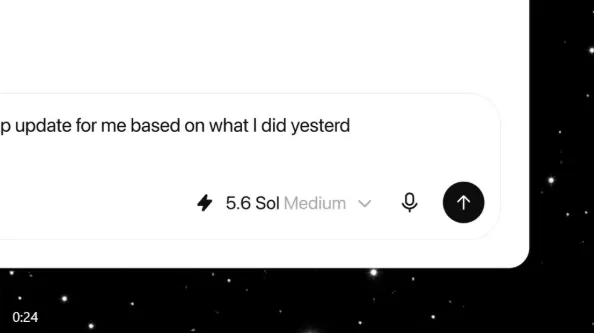
This mechanism enables ChatGPT and Codex to rapidly generate work summaries or assist users in locating recently viewed files without requiring them to restate context each time. Essentially, OpenAI is shifting the concept of "context" from manual user input to automatic system accumulation—understanding your actions by analyzing real behavioral traces at the operating system level rather than relying on screenshots.
Privacy Design: Local Storage for 48 Hours, Then Erased
Regarding privacy measures, Computer History automatically excludes private browsing activities. Interaction events are stored locally for a maximum of 48 hours and are deleted after the server generates memories from them. Pure text memories remain on the device until the user manually deletes them. This "event cloud upload, original content destruction" approach aims to balance enhanced capabilities with data minimization, addressing concerns about the previous screenshot method's excessive collection of screen content.
Currently, OpenAI has invited only ChatGPT Pro, Business, and Enterprise subscribers to test this feature. For Business and Enterprise subscriptions, administrators must enable it first, allowing workspace members to use it. The feature is initially unavailable in the European Economic Area, Switzerland, and the UK, likely due to stricter local data protection regulations. As AI assistants evolve from "conversational tools" to "understanding work partners," system-level memory features like Computer History may become a key focus in the next phase of competition—but user acceptance of "being recorded all the time" will determine whether it becomes a useful standard feature or another privacy pitfall.
Related article
 ByteDance's Wang Changhu Raises $1.35B in 6 Months, Unlocking Billion-Dollar Valuation
In the rapidly evolving landscape of AI video generation, Wang Changhu stands out as a key figure to watch. As the former head of visual technology at ByteDance and the founder and CEO of Aishitech, he has demonstrated exceptional team execution and
BYD Unveils Xuanji A3, Its First Automotive-Grade 4nm AI Chip
The global race for the foundational computing power of intelligent vehicles has reached a pivotal moment. On May 29, BYD unveiled the "Xuanji A3," China’s first fully self-developed, designed, and supply-chain-tested 4nm vehicle-grade intelligent dr
OpenAI Launches Astra for Law, Indexing 230M URLs and Outperforming General Models in Legal Q&A
On September 17, OpenAI released a blog post detailing Astra for Law, an AI foundation platform tailored for legal applications. Its robustness stems from its extensive data scale: the legal search index encompasses over 230 million URLs and integrat
Related Special Topic Recommendations
Design & Art
ByteDance's Wang Changhu Raises $1.35B in 6 Months, Unlocking Billion-Dollar Valuation
In the rapidly evolving landscape of AI video generation, Wang Changhu stands out as a key figure to watch. As the former head of visual technology at ByteDance and the founder and CEO of Aishitech, he has demonstrated exceptional team execution and
BYD Unveils Xuanji A3, Its First Automotive-Grade 4nm AI Chip
The global race for the foundational computing power of intelligent vehicles has reached a pivotal moment. On May 29, BYD unveiled the "Xuanji A3," China’s first fully self-developed, designed, and supply-chain-tested 4nm vehicle-grade intelligent dr
OpenAI Launches Astra for Law, Indexing 230M URLs and Outperforming General Models in Legal Q&A
On September 17, OpenAI released a blog post detailing Astra for Law, an AI foundation platform tailored for legal applications. Its robustness stems from its extensive data scale: the legal search index encompasses over 230 million URLs and integrat
Related Special Topic Recommendations
Design & Art
 Top AI Illustration Tools: Create Editorial Scenes and Cover Art Faster
2026 Latest Top-rated AI Illustration Tools: Our curated list features the best powerfully designed tools for creating stunning editorial scenes and eye-catching cover art quickly. Each option has gone through rigorous real-world tests, offering a free vs paid comparison to help you find the perfect match for your workflow. Try these must-try solutions today to unlock your AI edge and boost your creative productivity. Explore now at XIX.AI.
 10 tools
 xix.ai
Education and Learning
Top AI Tutors for Exam Prep: Practice Math, Science, and English
xix.ai
Education and Learning
Top AI Tutors for Exam Prep: Practice Math, Science, and English
2026 Latest Top-Rated Best AI Tutors for Exam Prep are here on XIX.AI! Our curated list features powerful game-changing tools that offer free vs paid comparison, real-world tests, and weekly updated rankings. They help boost your writing efficiency, simplify complex topic learning, and unlock your academic potential. Explore now to Discover your perfect exam prep tool and Start creating today to Unlock your AI edge!
10 tools
xix.ai
Finance
AI Budget Planning Tools for Personal Money Management
2026 Latest Best Top-Rated AI Budget Planning Tools for Personal Money Management are here on XIX.AI! This curated collection features powerful, game-changing solutions that help you conduct real-world tests, understand spending habits, and create personalized plans to boost productivity. Enjoy a free vs paid comparison along with detailed rankings. Must-try tools designed to simplify money management and unlock your AI edge. Explore now!
11 tools
xix.ai
Health & Wellness
AI Sleep Tracking Assistants: Improve Recovery with Better Bedtime Habits
2026 Latest Best Top-Rated AI Sleep Tracking Assistants curated for ultimate recovery. This fully updated weekly guide features powerful tools that deliver real-world tests, free vs paid comparison, and detailed rankings to help you find the must-try solution that boosts sleep quality and supports better bedtime habits. Explore now at XIX.AI to Unlock your AI edge.
10 tools
xix.ai
Data Analysis
AI SQL Copilots for Product and Revenue Analytics
2026 Latest Best Top-Rated AI SQL Copilots for Product and Revenue Analytics! XIX.AI has curated a powerful, game-changing collection of must-try tools that undergo real-world tests through weekly updated rankings. These tools help users boost productivity significantly by accelerating data analysis, streamlining complex queries, and generating accurate insights to drive smarter business decisions. Explore now to Discover your perfect tool for unlocking your AI edge!
14 tools
xix.ai
Education and Learning
Best AI Homework Helpers That Teach: Learn Concepts, Not Just Answers
2026 Latest Best Top-Rated AI Homework Helpers That Teach Core Concepts Not Just Answers Powerful Tools for Students Must-Try Curated List Weekly Updated Free vs Paid Comparison Real-World Tests Accurate Rankings to Help You Unlock Your Full Learning Potential Explore now to Discover your perfect tool for smarter studying.
10 tools
xix.ai

 Comments (0)
0/500
Comments (0)
0/500
On August 13, OpenAI published a blog post announcing the Computer History feature as an optional update, superseding the earlier Chronicle research preview. This update introduces activity memory and timeline support to the Mac version of the ChatGPT desktop application. In contrast to Chronicle, which depended on screenshots to construct a memory library, this new feature leverages macOS accessibility tools to log interaction events—including clicks, inputs, keyboard shortcuts, and app switching—transforming user activities on Mac into structured memories.
This mechanism enables ChatGPT and Codex to rapidly generate work summaries or assist users in locating recently viewed files without requiring them to restate context each time. Essentially, OpenAI is shifting the concept of "context" from manual user input to automatic system accumulation—understanding your actions by analyzing real behavioral traces at the operating system level rather than relying on screenshots.
Privacy Design: Local Storage for 48 Hours, Then Erased
Regarding privacy measures, Computer History automatically excludes private browsing activities. Interaction events are stored locally for a maximum of 48 hours and are deleted after the server generates memories from them. Pure text memories remain on the device until the user manually deletes them. This "event cloud upload, original content destruction" approach aims to balance enhanced capabilities with data minimization, addressing concerns about the previous screenshot method's excessive collection of screen content.
Currently, OpenAI has invited only ChatGPT Pro, Business, and Enterprise subscribers to test this feature. For Business and Enterprise subscriptions, administrators must enable it first, allowing workspace members to use it. The feature is initially unavailable in the European Economic Area, Switzerland, and the UK, likely due to stricter local data protection regulations. As AI assistants evolve from "conversational tools" to "understanding work partners," system-level memory features like Computer History may become a key focus in the next phase of competition—but user acceptance of "being recorded all the time" will determine whether it becomes a useful standard feature or another privacy pitfall.








 ByteDance's Wang Changhu Raises $1.35B in 6 Months, Unlocking Billion-Dollar Valuation
In the rapidly evolving landscape of AI video generation, Wang Changhu stands out as a key figure to watch. As the former head of visual technology at ByteDance and the founder and CEO of Aishitech, he has demonstrated exceptional team execution and
ByteDance's Wang Changhu Raises $1.35B in 6 Months, Unlocking Billion-Dollar Valuation
In the rapidly evolving landscape of AI video generation, Wang Changhu stands out as a key figure to watch. As the former head of visual technology at ByteDance and the founder and CEO of Aishitech, he has demonstrated exceptional team execution and
 BYD Unveils Xuanji A3, Its First Automotive-Grade 4nm AI Chip
The global race for the foundational computing power of intelligent vehicles has reached a pivotal moment. On May 29, BYD unveiled the "Xuanji A3," China’s first fully self-developed, designed, and supply-chain-tested 4nm vehicle-grade intelligent dr
BYD Unveils Xuanji A3, Its First Automotive-Grade 4nm AI Chip
The global race for the foundational computing power of intelligent vehicles has reached a pivotal moment. On May 29, BYD unveiled the "Xuanji A3," China’s first fully self-developed, designed, and supply-chain-tested 4nm vehicle-grade intelligent dr
 OpenAI Launches Astra for Law, Indexing 230M URLs and Outperforming General Models in Legal Q&A
On September 17, OpenAI released a blog post detailing Astra for Law, an AI foundation platform tailored for legal applications. Its robustness stems from its extensive data scale: the legal search index encompasses over 230 million URLs and integrat
OpenAI Launches Astra for Law, Indexing 230M URLs and Outperforming General Models in Legal Q&A
On September 17, OpenAI released a blog post detailing Astra for Law, an AI foundation platform tailored for legal applications. Its robustness stems from its extensive data scale: the legal search index encompasses over 230 million URLs and integrat

2026 Latest Top-rated AI Illustration Tools: Our curated list features the best powerfully designed tools for creating stunning editorial scenes and eye-catching cover art quickly. Each option has gone through rigorous real-world tests, offering a free vs paid comparison to help you find the perfect match for your workflow. Try these must-try solutions today to unlock your AI edge and boost your creative productivity. Explore now at XIX.AI.
10 tools
xix.ai

2026 Latest Top-Rated Best AI Tutors for Exam Prep are here on XIX.AI! Our curated list features powerful game-changing tools that offer free vs paid comparison, real-world tests, and weekly updated rankings. They help boost your writing efficiency, simplify complex topic learning, and unlock your academic potential. Explore now to Discover your perfect exam prep tool and Start creating today to Unlock your AI edge!
10 tools
xix.ai

2026 Latest Best Top-Rated AI Budget Planning Tools for Personal Money Management are here on XIX.AI! This curated collection features powerful, game-changing solutions that help you conduct real-world tests, understand spending habits, and create personalized plans to boost productivity. Enjoy a free vs paid comparison along with detailed rankings. Must-try tools designed to simplify money management and unlock your AI edge. Explore now!
11 tools
xix.ai

2026 Latest Best Top-Rated AI Sleep Tracking Assistants curated for ultimate recovery. This fully updated weekly guide features powerful tools that deliver real-world tests, free vs paid comparison, and detailed rankings to help you find the must-try solution that boosts sleep quality and supports better bedtime habits. Explore now at XIX.AI to Unlock your AI edge.
10 tools
xix.ai

2026 Latest Best Top-Rated AI SQL Copilots for Product and Revenue Analytics! XIX.AI has curated a powerful, game-changing collection of must-try tools that undergo real-world tests through weekly updated rankings. These tools help users boost productivity significantly by accelerating data analysis, streamlining complex queries, and generating accurate insights to drive smarter business decisions. Explore now to Discover your perfect tool for unlocking your AI edge!
14 tools
xix.ai

2026 Latest Best Top-Rated AI Homework Helpers That Teach Core Concepts Not Just Answers Powerful Tools for Students Must-Try Curated List Weekly Updated Free vs Paid Comparison Real-World Tests Accurate Rankings to Help You Unlock Your Full Learning Potential Explore now to Discover your perfect tool for smarter studying.
10 tools
xix.ai












