


 Home
HomeApple Nears $1 Billion Yearly Deal With Google to Upgrade Siri
Apple is reportedly finalizing a multi-billion dollar agreement with Google to license a custom Gemini AI model, valued at around $1 billion annually, intended to power a significantly upgraded Siri voice assistant, according to Bloomberg's Mark Gurman. The tailored Gemini model, featuring 1.2 trillion parameters, is designed to operate on Apple's Private Cloud Compute servers, with a planned launch in spring 2026.
This strategic licensing deal is Apple's largest to date in the AI space. After comparing offerings from OpenAI, Anthropic, and Google, Apple opted for Google's Gemini primarily due to favorable pricing rather than performance metrics alone, as detailed by Bloomberg. The 1.2 trillion parameters in this custom model represent an eightfold increase over the 150 billion parameters in Apple’s current cloud-based Intelligence systems.
Apple will retain full control over its infrastructure by deploying Google's model exclusively on its own Private Cloud Compute servers, preserving its privacy-centric architecture. These servers utilize custom Apple silicon and employ end-to-end encryption, ensuring all user data remains secure during processing. Additionally, Apple will continue using its proprietary models for certain Siri functions, establishing a hybrid framework that prevents complete reliance on Google.
Neither Apple nor Google has publicly confirmed the partnership. Bloomberg notes that both companies intend to keep the arrangement confidential, with Apple marketing the enhanced Siri as its own proprietary advancement without highlighting Google's role. This strategy is similar to Samsung’s approach of integrating Google Gemini features into its Galaxy AI while presenting them under its own brand.
Strategic Shift Following Talent Losses
The potential agreement emerges as Apple confronts increased pressure from the departure of key AI talent, including Ke Yang, who previously led Siri’s AI search efforts before joining Meta in October. These departures have fueled concerns about Apple's ability to meet its ambitious March 2026 deadline for the Siri overhaul using only internal resources.
Apple's Private Cloud Compute infrastructure was introduced as a key component of its strategy to manage computationally demanding AI tasks while upholding strong privacy standards. The system relies on custom server nodes equipped with Apple silicon, operating a specialized OS derived from iOS and macOS. Each node’s Secure Enclave contains unique, non-replicable decryption keys, and the platform uses stateless processing to guarantee that no user data is retained after a request is completed.
The custom Gemini model is expected to manage advanced functions such as summarization and intricate planning that go beyond the scope of Apple's on-device models. Currently, Apple Intelligence processes personal data locally on iPhones and Macs using smaller foundation models, while more resource-intensive tasks are routed to cloud-based infrastructure.
Launch Timeline and Market Impact
According to Bloomberg, the redesigned Siri is scheduled for release in spring 2026 as part of iOS 26.4, although these plans remain subject to change. This collaboration positions Apple to better compete against advanced AI assistants from rivals like OpenAI and Anthropic, which have shown stronger capabilities in handling complex reasoning tasks.
The reported $1 billion annual investment underscores the strategic value of AI to Apple's ecosystem. In a related development, General Motors recently announced its intention to integrate Google’s Gemini across its vehicle lineup beginning in 2026, signaling broader adoption of Google's AI technology in consumer platforms.
Apple's move to integrate a third-party model for core Siri functionality represents a shift from its traditional in-house development of critical technologies. The hybrid architecture is designed to combine advanced AI performance with Apple's ongoing commitment to user privacy and data security.
Related article
 OpenAI fights Apple trade secret lawsuit
OpenAI rebutted Apple’s trade secret allegations on Tuesday, arguing the lawsuit is unfounded.“We take these claims seriously but see no evidence supporting them,” OpenAI stated, as reported by Bloomberg’s Ed Ludlow on X. “We support fair competition
Gemini Spark now manages Google Photos library
Google is expanding its AI integration by enabling Gemini Spark to manage Google Photos libraries. Users can now instruct the agent to edit images, organize albums, generate shared collections from favorite shots, convert concert flyers into calendar
Apple's New Hardware Chief John Ternus Steers Vision for Future Products
Loading the player…The Ternus era at Apple has officially begun.Tim Cook stepped down as CEO this week, handing leadership to former hardware chief John Ternus. Ternus’s first memo promised a “huge launch next week,” meaning the next iPhone event lan
Related Special Topic Recommendations
SEO
OpenAI fights Apple trade secret lawsuit
OpenAI rebutted Apple’s trade secret allegations on Tuesday, arguing the lawsuit is unfounded.“We take these claims seriously but see no evidence supporting them,” OpenAI stated, as reported by Bloomberg’s Ed Ludlow on X. “We support fair competition
Gemini Spark now manages Google Photos library
Google is expanding its AI integration by enabling Gemini Spark to manage Google Photos libraries. Users can now instruct the agent to edit images, organize albums, generate shared collections from favorite shots, convert concert flyers into calendar
Apple's New Hardware Chief John Ternus Steers Vision for Future Products
Loading the player…The Ternus era at Apple has officially begun.Tim Cook stepped down as CEO this week, handing leadership to former hardware chief John Ternus. Ternus’s first memo promised a “huge launch next week,” meaning the next iPhone event lan
Related Special Topic Recommendations
SEO
 Best AI SERP Analysis Tools for Search Strategy
2026 Latest Best Top-rated AI SERP Analysis Tools for Search Strategy are curated by XIX.AI through rigorous real-world tests and weekly updated rankings. These powerful tools help you unlock hidden optimization opportunities, boost content performance, and gain a competitive edge in search. Discover your perfect tool to elevate your search strategy today. Explore now!
 13 tools
 xix.ai
Data Analysis
Best AI Anomaly Detection Tools for KPI Monitoring across SaaS and Ecommerce Teams
xix.ai
Data Analysis
Best AI Anomaly Detection Tools for KPI Monitoring across SaaS and Ecommerce Teams
2026 Latest Best Top-rated AI Anomaly Detection Tools for KPI Monitoring in SaaS and Ecommerce teams! XIX.AI has curated a powerful, game-changing collection based on rigorous real-world tests and weekly updated rankings. You’ll find detailed free vs paid comparison insights to help you identify the must-try solution that boosts productivity and unlocks your AI edge. Explore now!
10 tools
xix.ai
writing
Best AI Outline Generators for Long-Form SEO Articles
2026 Latest Best Top-Rated AI Outline Generators for Long-Form SEO Articles, meticulously curated by XIX.AI. These powerful tools offer game-changing assistance in creating high-quality content quickly, boosting writing efficiency significantly. Get a free vs paid comparison along with real-world tests and detailed rankings to help you find the must-try option that suits your needs. Explore now to unlock your AI edge.
8 tools
xix.ai
Education and Learning
AI Study Tools for Homework and Exam Prep
2026 Latest Best AI Study Tools for Homework and Exam Prep! XIX.AI curates a top-rated list of powerful, game-changing tools that help students boost productivity, streamline homework completion, and ace exams through real-world tests. Get a free vs paid comparison, detailed rankings, and must-try options to unlock your AI edge. Explore now!
10 tools
xix.ai
Music composition
AI Vocal Demo Tools for Songwriters, Hooks, Toplines, and Multilingual Draft Sessions
2026 Latest Best AI Vocal Demo Tools for Songwriters, Hook Creators, and Multi-Language Content Teams! XIX.AI has curated a top-rated list of powerful game-changing tools that go through rigorous real-world tests. You’ll find detailed free vs paid comparison data, comprehensive rankings, and must-try options to help you boost writing efficiency and unlock your creative potential. Explore now to discover your perfect tool for all your content needs!
9 tools
xix.ai
Business
Best AI Competitive Research Tools for Small Businesses
2026 Latest Best Top-rated AI Competitive Research Tools for Small Businesses! XIX.AI has curated a highly powerful game-changing collection, updated weekly with rigorous real-world tests and detailed rankings. You can find a comprehensive free vs paid comparison to help you identify the must-try tools that boost your productivity and give you a competitive edge. Explore now to discover your perfect tool!
9 tools
xix.ai

 Comments (2)
0/500
Comments (2)
0/500
![NicholasLewis]()
Spannend, dass Apple nicht selbst entwickelt, sondern bei Google einkauft! 🤔 Ich frage mich, ob Siri dann wirklich schlauer wird oder nur Googles Antworten wiedergibt. Das wird die Marktpositionen vielleicht noch mehr verwischen... aber hey, Hauptsache, die Sprachassistentin funktioniert endlich mal so, wie ich es mir vorstelle! Hoffen wir mal, der Preis für uns Nutzer bleibt stabil.
![WilliamMiller]()
R$ 1 bilhão por ano só pra licença?🤯 A Apple tem dinheiro pra queimar, mas isso mostra que o Siri ficou pra trás mesmo. Preocupante ver essa centralização de poder nas Big Tech para IA, será que vamos ter escolha real no futuro? Gostaria de ver mais concorrentes pequenos na jogada.
Apple is reportedly finalizing a multi-billion dollar agreement with Google to license a custom Gemini AI model, valued at around $1 billion annually, intended to power a significantly upgraded Siri voice assistant, according to Bloomberg's Mark Gurman. The tailored Gemini model, featuring 1.2 trillion parameters, is designed to operate on Apple's Private Cloud Compute servers, with a planned launch in spring 2026.
This strategic licensing deal is Apple's largest to date in the AI space. After comparing offerings from OpenAI, Anthropic, and Google, Apple opted for Google's Gemini primarily due to favorable pricing rather than performance metrics alone, as detailed by Bloomberg. The 1.2 trillion parameters in this custom model represent an eightfold increase over the 150 billion parameters in Apple’s current cloud-based Intelligence systems.
Apple will retain full control over its infrastructure by deploying Google's model exclusively on its own Private Cloud Compute servers, preserving its privacy-centric architecture. These servers utilize custom Apple silicon and employ end-to-end encryption, ensuring all user data remains secure during processing. Additionally, Apple will continue using its proprietary models for certain Siri functions, establishing a hybrid framework that prevents complete reliance on Google.
Neither Apple nor Google has publicly confirmed the partnership. Bloomberg notes that both companies intend to keep the arrangement confidential, with Apple marketing the enhanced Siri as its own proprietary advancement without highlighting Google's role. This strategy is similar to Samsung’s approach of integrating Google Gemini features into its Galaxy AI while presenting them under its own brand.
Strategic Shift Following Talent Losses
The potential agreement emerges as Apple confronts increased pressure from the departure of key AI talent, including Ke Yang, who previously led Siri’s AI search efforts before joining Meta in October. These departures have fueled concerns about Apple's ability to meet its ambitious March 2026 deadline for the Siri overhaul using only internal resources.
Apple's Private Cloud Compute infrastructure was introduced as a key component of its strategy to manage computationally demanding AI tasks while upholding strong privacy standards. The system relies on custom server nodes equipped with Apple silicon, operating a specialized OS derived from iOS and macOS. Each node’s Secure Enclave contains unique, non-replicable decryption keys, and the platform uses stateless processing to guarantee that no user data is retained after a request is completed.
The custom Gemini model is expected to manage advanced functions such as summarization and intricate planning that go beyond the scope of Apple's on-device models. Currently, Apple Intelligence processes personal data locally on iPhones and Macs using smaller foundation models, while more resource-intensive tasks are routed to cloud-based infrastructure.
Launch Timeline and Market Impact
According to Bloomberg, the redesigned Siri is scheduled for release in spring 2026 as part of iOS 26.4, although these plans remain subject to change. This collaboration positions Apple to better compete against advanced AI assistants from rivals like OpenAI and Anthropic, which have shown stronger capabilities in handling complex reasoning tasks.
The reported $1 billion annual investment underscores the strategic value of AI to Apple's ecosystem. In a related development, General Motors recently announced its intention to integrate Google’s Gemini across its vehicle lineup beginning in 2026, signaling broader adoption of Google's AI technology in consumer platforms.
Apple's move to integrate a third-party model for core Siri functionality represents a shift from its traditional in-house development of critical technologies. The hybrid architecture is designed to combine advanced AI performance with Apple's ongoing commitment to user privacy and data security.








 OpenAI fights Apple trade secret lawsuit
OpenAI rebutted Apple’s trade secret allegations on Tuesday, arguing the lawsuit is unfounded.“We take these claims seriously but see no evidence supporting them,” OpenAI stated, as reported by Bloomberg’s Ed Ludlow on X. “We support fair competition
OpenAI fights Apple trade secret lawsuit
OpenAI rebutted Apple’s trade secret allegations on Tuesday, arguing the lawsuit is unfounded.“We take these claims seriously but see no evidence supporting them,” OpenAI stated, as reported by Bloomberg’s Ed Ludlow on X. “We support fair competition
 Gemini Spark now manages Google Photos library
Google is expanding its AI integration by enabling Gemini Spark to manage Google Photos libraries. Users can now instruct the agent to edit images, organize albums, generate shared collections from favorite shots, convert concert flyers into calendar
Gemini Spark now manages Google Photos library
Google is expanding its AI integration by enabling Gemini Spark to manage Google Photos libraries. Users can now instruct the agent to edit images, organize albums, generate shared collections from favorite shots, convert concert flyers into calendar
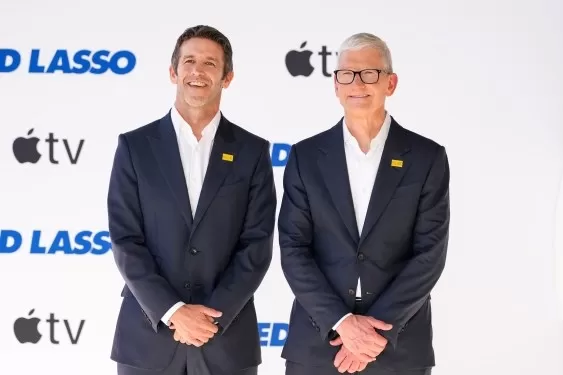 Apple's New Hardware Chief John Ternus Steers Vision for Future Products
Loading the player…The Ternus era at Apple has officially begun.Tim Cook stepped down as CEO this week, handing leadership to former hardware chief John Ternus. Ternus’s first memo promised a “huge launch next week,” meaning the next iPhone event lan
Apple's New Hardware Chief John Ternus Steers Vision for Future Products
Loading the player…The Ternus era at Apple has officially begun.Tim Cook stepped down as CEO this week, handing leadership to former hardware chief John Ternus. Ternus’s first memo promised a “huge launch next week,” meaning the next iPhone event lan

2026 Latest Best Top-rated AI SERP Analysis Tools for Search Strategy are curated by XIX.AI through rigorous real-world tests and weekly updated rankings. These powerful tools help you unlock hidden optimization opportunities, boost content performance, and gain a competitive edge in search. Discover your perfect tool to elevate your search strategy today. Explore now!
13 tools
xix.ai

2026 Latest Best Top-rated AI Anomaly Detection Tools for KPI Monitoring in SaaS and Ecommerce teams! XIX.AI has curated a powerful, game-changing collection based on rigorous real-world tests and weekly updated rankings. You’ll find detailed free vs paid comparison insights to help you identify the must-try solution that boosts productivity and unlocks your AI edge. Explore now!
10 tools
xix.ai

2026 Latest Best Top-Rated AI Outline Generators for Long-Form SEO Articles, meticulously curated by XIX.AI. These powerful tools offer game-changing assistance in creating high-quality content quickly, boosting writing efficiency significantly. Get a free vs paid comparison along with real-world tests and detailed rankings to help you find the must-try option that suits your needs. Explore now to unlock your AI edge.
8 tools
xix.ai

2026 Latest Best AI Study Tools for Homework and Exam Prep! XIX.AI curates a top-rated list of powerful, game-changing tools that help students boost productivity, streamline homework completion, and ace exams through real-world tests. Get a free vs paid comparison, detailed rankings, and must-try options to unlock your AI edge. Explore now!
10 tools
xix.ai

2026 Latest Best AI Vocal Demo Tools for Songwriters, Hook Creators, and Multi-Language Content Teams! XIX.AI has curated a top-rated list of powerful game-changing tools that go through rigorous real-world tests. You’ll find detailed free vs paid comparison data, comprehensive rankings, and must-try options to help you boost writing efficiency and unlock your creative potential. Explore now to discover your perfect tool for all your content needs!
9 tools
xix.ai

2026 Latest Best Top-rated AI Competitive Research Tools for Small Businesses! XIX.AI has curated a highly powerful game-changing collection, updated weekly with rigorous real-world tests and detailed rankings. You can find a comprehensive free vs paid comparison to help you identify the must-try tools that boost your productivity and give you a competitive edge. Explore now to discover your perfect tool!
9 tools
xix.ai

Spannend, dass Apple nicht selbst entwickelt, sondern bei Google einkauft! 🤔 Ich frage mich, ob Siri dann wirklich schlauer wird oder nur Googles Antworten wiedergibt. Das wird die Marktpositionen vielleicht noch mehr verwischen... aber hey, Hauptsache, die Sprachassistentin funktioniert endlich mal so, wie ich es mir vorstelle! Hoffen wir mal, der Preis für uns Nutzer bleibt stabil.
R$ 1 bilhão por ano só pra licença?🤯 A Apple tem dinheiro pra queimar, mas isso mostra que o Siri ficou pra trás mesmo. Preocupante ver essa centralização de poder nas Big Tech para IA, será que vamos ter escolha real no futuro? Gostaria de ver mais concorrentes pequenos na jogada.












