


 Home
HomeAI-Powered Animal Voice Translator Aims to Close Human-Pet Communication Divide
Have you ever wondered what your furry friend is really communicating? For generations, humanity has longed to decode the language of animals. Today, AI and machine learning technologies are turning this aspiration into reality. Picture being able to genuinely comprehend your pet's needs, feelings, and intentions. This article examines how artificial intelligence enables animal translation systems that bridge interspecies communication barriers - from interpreting canine barks to analyzing marine mammal songs, the possibilities are groundbreaking.
Key Points
Artificial intelligence drives breakthroughs in animal communication technology.
Machine learning plays a vital role in decoding intricate animal vocal patterns.
This innovation has significant implications for veterinary science, conservation, and animal welfare.
AI-powered emotional recognition fosters deeper human-animal connections.
Continued technological progress will yield increasingly sophisticated translation tools.
Understanding the Animal Communication Challenge
The Complexity of Animal Languages
Animal communication extends far beyond simple sounds. Creatures employ sophisticated combinations of vocal signals, body positions, and chemical cues to convey information. Deciphering these subtle distinctions presents challenges even for specialists. Each species possesses unique communicative characteristics, and individuals may even develop personal variations.
Conventional animal communication studies rely heavily on observational techniques that can be subjective and labor-intensive. AI introduces objective, data-driven methodologies for analyzing enormous quantities of animal interaction data. Machine learning algorithms detect patterns imperceptible to human researchers, unlocking new dimensions of understanding.

The intricate nature of these communication systems makes developing reliable translators extraordinarily complex.
Essential components of animal communication include:
- Vocal expressions: Barks, meows, chirps and other audible signals
- Physical cues: Posture, facial movements, tail positioning
- Scent markers: Pheromones and odor-based messages
- Visual displays: Color changes and patterned signals
Limitations of Human Understanding
Humans face multiple obstacles when interpreting animal communication. First, our sensory capabilities differ significantly from other species. Many animals perceive sounds beyond human hearing ranges.
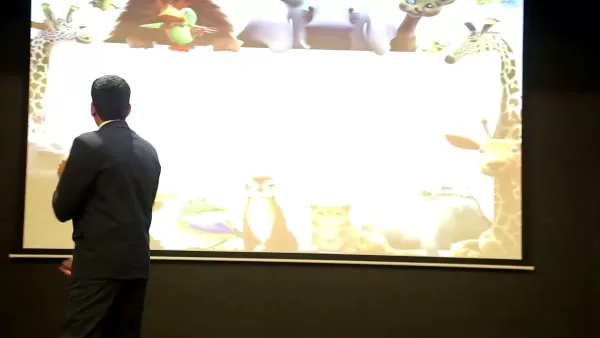
Others detect visual spectrums invisible to our eyes, creating substantial comprehension gaps.
Second, we frequently project human characteristics onto animals, leading to misinterpretations. A wagging tail might indicate various emotional states beyond happiness. AI provides objective analysis that mitigates these biases.
Finally, the sheer volume of animal interaction data overwhelms manual analysis capabilities. AI automates this process, enabling researchers to process information exponentially faster.
How AI is Transforming Animal Communication
The Role of AI in Animal Voice Translation
Machine learning and deep learning algorithms prove revolutionary for analyzing animal communication. These technologies process unprecedented data quantities, identifying patterns human researchers would likely miss. By training AI models on categorized animal vocal and behavioral datasets, scientists develop systems capable of accurately classifying communicative signals.
Machine learning models excel at recognizing species-specific sounds. Through acoustic analysis, these algorithms distinguish between emotional states. For instance, AI can differentiate playful barks from aggressive warnings.
Advanced deep learning models analyze multimodal data - combining audio, visual, and behavioral inputs to generate comprehensive emotional profiles.
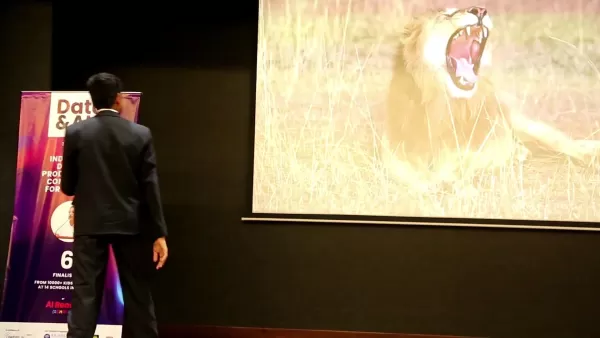
Decoding Animal Sounds with AI: A Multi-Faceted Approach
AI-powered communication analysis integrates multiple methodologies:
Emotion Recognition Technology: Adapted voice recognition algorithms analyze vocal characteristics to determine emotional states.
Species-Specific Models: Custom AI frameworks analyze communication patterns unique to particular animals.
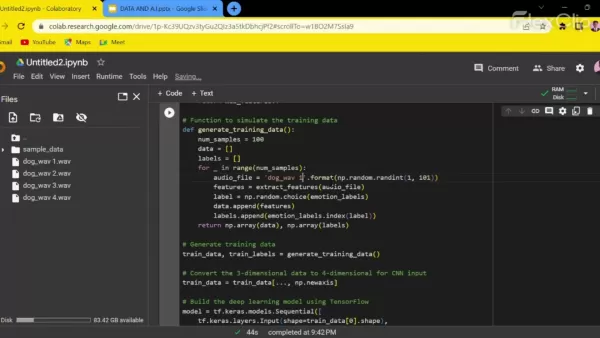
These models incorporate contextual factors to build nuanced understanding.
Integrated Analysis: Cutting-edge systems combine auditory, visual and physiological data for comprehensive insights.
Pros and Cons of using AI in Animal Translation
Pros
Enhanced comprehension of animal requirements and feelings
Improved veterinary diagnostics and treatment
Advanced wildlife conservation techniques
Deeper behavioral understanding
Stronger interspecies relationships
Cons
Potential for misattributing human traits
Possible translation inaccuracies
Limited data availability challenges
Ethical considerations regarding application
Technical constraints capturing subtle nuances
Real-World Applications of AI in Animal Communication
Veterinary Medicine
AI assists veterinarians in detecting pain indicators and distress signals through behavioral analysis.
Animal Welfare
Monitoring systems identify welfare concerns in captive environments through behavioral pattern recognition.
Conservation
Wildlife researchers analyze communication patterns to inform preservation strategies.
Frequently Asked Questions
How accurate are AI-powered animal voice translators?
Current models demonstrate improving accuracy in recognizing emotional states rather than interpreting complex thoughts.
Can AI be used to communicate with all types of animals?
Theoretical applicability exists for all species, though effectiveness depends on available research data.
What are the ethical considerations surrounding AI-powered animal communication?
Applications should prioritize animal wellbeing and avoid potentially exploitative uses.
Related article
 Swedish AI Startup Lovable Eyes $13.2 Billion Valuation After Major Funding Round
As AI-driven coding tools gain traction, Swedish startup Lovable has secured a major funding round. The company aims to raise $3 billion, potentially boosting its valuation to $13.2 billion—double the $6.6 billion recorded last December. Menlo Ventur
Google Tests Remy AI Agent for Gemini as Focus Shifts to User Control
According to Business Insider, Google is testing Remy, a new AI personal agent for Gemini. This tool aims to execute tasks on behalf of users, streamlining both professional workflows and daily routines.Currently, Remy is undergoing testing in an int
How to fix Core Web Vitals for better SEO rankings
Streamline Report Card Comments with AI ToolsIntroductionAI Tools for Generating Report Card CommentsMagic SchoolAlmanac AIChat GPTUsing Magic School to Generate Report Card CommentsLogging into Magic SchoolSelecting the Report Card Comments ToolCust
Related Special Topic Recommendations
writing
Swedish AI Startup Lovable Eyes $13.2 Billion Valuation After Major Funding Round
As AI-driven coding tools gain traction, Swedish startup Lovable has secured a major funding round. The company aims to raise $3 billion, potentially boosting its valuation to $13.2 billion—double the $6.6 billion recorded last December. Menlo Ventur
Google Tests Remy AI Agent for Gemini as Focus Shifts to User Control
According to Business Insider, Google is testing Remy, a new AI personal agent for Gemini. This tool aims to execute tasks on behalf of users, streamlining both professional workflows and daily routines.Currently, Remy is undergoing testing in an int
How to fix Core Web Vitals for better SEO rankings
Streamline Report Card Comments with AI ToolsIntroductionAI Tools for Generating Report Card CommentsMagic SchoolAlmanac AIChat GPTUsing Magic School to Generate Report Card CommentsLogging into Magic SchoolSelecting the Report Card Comments ToolCust
Related Special Topic Recommendations
writing
 Best AI Outline Generators for Long-Form SEO Articles
2026 Latest Best Top-Rated AI Outline Generators for Long-Form SEO Articles, meticulously curated by XIX.AI. These powerful tools offer game-changing assistance in creating high-quality content quickly, boosting writing efficiency significantly. Get a free vs paid comparison along with real-world tests and detailed rankings to help you find the must-try option that suits your needs. Explore now to unlock your AI edge.
 8 tools
 xix.ai
Education and Learning
AI Study Tools for Homework and Exam Prep
xix.ai
Education and Learning
AI Study Tools for Homework and Exam Prep
2026 Latest Best AI Study Tools for Homework and Exam Prep! XIX.AI curates a top-rated list of powerful, game-changing tools that help students boost productivity, streamline homework completion, and ace exams through real-world tests. Get a free vs paid comparison, detailed rankings, and must-try options to unlock your AI edge. Explore now!
10 tools
xix.ai
Music composition
AI Vocal Demo Tools for Songwriters, Hooks, Toplines, and Multilingual Draft Sessions
2026 Latest Best AI Vocal Demo Tools for Songwriters, Hook Creators, and Multi-Language Content Teams! XIX.AI has curated a top-rated list of powerful game-changing tools that go through rigorous real-world tests. You’ll find detailed free vs paid comparison data, comprehensive rankings, and must-try options to help you boost writing efficiency and unlock your creative potential. Explore now to discover your perfect tool for all your content needs!
9 tools
xix.ai
Business
Best AI Competitive Research Tools for Small Businesses
2026 Latest Best Top-rated AI Competitive Research Tools for Small Businesses! XIX.AI has curated a highly powerful game-changing collection, updated weekly with rigorous real-world tests and detailed rankings. You can find a comprehensive free vs paid comparison to help you identify the must-try tools that boost your productivity and give you a competitive edge. Explore now to discover your perfect tool!
9 tools
xix.ai
Image editing
Photoshop AI Retouch Tools for Ecommerce Apparel, Skin Cleanup, and Color Consistency
2026 Latest Best Photoshop AI retouch tools for ecommerce apparel, skin cleanup, and color consistency! This top-rated curated list features powerful game-changing solutions that help you boost writing efficiency, streamline content creation, and achieve perfect visual results effortlessly. Each tool has undergone real-world tests through weekly updated rankings, complete with free vs paid comparison details. Backed by XIX.AI, it’s the must-try guide for anyone aiming to unlock your AI edge. Explore now!
10 tools
xix.ai
Prompt
Best AI Prompt Libraries for ChatGPT Workflows
2026 Latest Best Top-Rated AI Prompt Libraries for optimizing all types of ChatGPT workflows. XIX.AI has curated a powerful, game-changing collection that goes through rigorous real-world tests to ensure top performance. You can find detailed free vs paid comparisons and expert rankings to help you choose the must-try tools that boost your productivity and unlock your AI edge. Explore now!
11 tools
xix.ai

 Comments (1)
0/500
Comments (1)
0/500
![RobertMartin]()
このAI翻訳機、本当に犬の気持ちがわかるの?🐶 うちのチワワが「ご飯ちょうだい」って言ってるのは分かるけど、もっと複雑な感情も伝わるのかな。技術はすごいけど、ちょっと怖いかも…
Have you ever wondered what your furry friend is really communicating? For generations, humanity has longed to decode the language of animals. Today, AI and machine learning technologies are turning this aspiration into reality. Picture being able to genuinely comprehend your pet's needs, feelings, and intentions. This article examines how artificial intelligence enables animal translation systems that bridge interspecies communication barriers - from interpreting canine barks to analyzing marine mammal songs, the possibilities are groundbreaking.
Key Points
Artificial intelligence drives breakthroughs in animal communication technology.
Machine learning plays a vital role in decoding intricate animal vocal patterns.
This innovation has significant implications for veterinary science, conservation, and animal welfare.
AI-powered emotional recognition fosters deeper human-animal connections.
Continued technological progress will yield increasingly sophisticated translation tools.
Understanding the Animal Communication Challenge
The Complexity of Animal Languages
Animal communication extends far beyond simple sounds. Creatures employ sophisticated combinations of vocal signals, body positions, and chemical cues to convey information. Deciphering these subtle distinctions presents challenges even for specialists. Each species possesses unique communicative characteristics, and individuals may even develop personal variations.
Conventional animal communication studies rely heavily on observational techniques that can be subjective and labor-intensive. AI introduces objective, data-driven methodologies for analyzing enormous quantities of animal interaction data. Machine learning algorithms detect patterns imperceptible to human researchers, unlocking new dimensions of understanding.
The intricate nature of these communication systems makes developing reliable translators extraordinarily complex.
Essential components of animal communication include:
- Vocal expressions: Barks, meows, chirps and other audible signals
- Physical cues: Posture, facial movements, tail positioning
- Scent markers: Pheromones and odor-based messages
- Visual displays: Color changes and patterned signals
Limitations of Human Understanding
Humans face multiple obstacles when interpreting animal communication. First, our sensory capabilities differ significantly from other species. Many animals perceive sounds beyond human hearing ranges.
Others detect visual spectrums invisible to our eyes, creating substantial comprehension gaps.
Second, we frequently project human characteristics onto animals, leading to misinterpretations. A wagging tail might indicate various emotional states beyond happiness. AI provides objective analysis that mitigates these biases.
Finally, the sheer volume of animal interaction data overwhelms manual analysis capabilities. AI automates this process, enabling researchers to process information exponentially faster.
How AI is Transforming Animal Communication
The Role of AI in Animal Voice Translation
Machine learning and deep learning algorithms prove revolutionary for analyzing animal communication. These technologies process unprecedented data quantities, identifying patterns human researchers would likely miss. By training AI models on categorized animal vocal and behavioral datasets, scientists develop systems capable of accurately classifying communicative signals.
Machine learning models excel at recognizing species-specific sounds. Through acoustic analysis, these algorithms distinguish between emotional states. For instance, AI can differentiate playful barks from aggressive warnings.
Advanced deep learning models analyze multimodal data - combining audio, visual, and behavioral inputs to generate comprehensive emotional profiles.
Decoding Animal Sounds with AI: A Multi-Faceted Approach
AI-powered communication analysis integrates multiple methodologies:
Emotion Recognition Technology: Adapted voice recognition algorithms analyze vocal characteristics to determine emotional states.
Species-Specific Models: Custom AI frameworks analyze communication patterns unique to particular animals.
These models incorporate contextual factors to build nuanced understanding.
Integrated Analysis: Cutting-edge systems combine auditory, visual and physiological data for comprehensive insights.
Pros and Cons of using AI in Animal Translation
Pros
Enhanced comprehension of animal requirements and feelings
Improved veterinary diagnostics and treatment
Advanced wildlife conservation techniques
Deeper behavioral understanding
Stronger interspecies relationships
Cons
Potential for misattributing human traits
Possible translation inaccuracies
Limited data availability challenges
Ethical considerations regarding application
Technical constraints capturing subtle nuances
Real-World Applications of AI in Animal Communication
Veterinary Medicine
AI assists veterinarians in detecting pain indicators and distress signals through behavioral analysis.
Animal Welfare
Monitoring systems identify welfare concerns in captive environments through behavioral pattern recognition.
Conservation
Wildlife researchers analyze communication patterns to inform preservation strategies.
Frequently Asked Questions
How accurate are AI-powered animal voice translators?
Current models demonstrate improving accuracy in recognizing emotional states rather than interpreting complex thoughts.
Can AI be used to communicate with all types of animals?
Theoretical applicability exists for all species, though effectiveness depends on available research data.
What are the ethical considerations surrounding AI-powered animal communication?
Applications should prioritize animal wellbeing and avoid potentially exploitative uses.








 Swedish AI Startup Lovable Eyes $13.2 Billion Valuation After Major Funding Round
As AI-driven coding tools gain traction, Swedish startup Lovable has secured a major funding round. The company aims to raise $3 billion, potentially boosting its valuation to $13.2 billion—double the $6.6 billion recorded last December. Menlo Ventur
Google Tests Remy AI Agent for Gemini as Focus Shifts to User Control
According to Business Insider, Google is testing Remy, a new AI personal agent for Gemini. This tool aims to execute tasks on behalf of users, streamlining both professional workflows and daily routines.Currently, Remy is undergoing testing in an int
Swedish AI Startup Lovable Eyes $13.2 Billion Valuation After Major Funding Round
As AI-driven coding tools gain traction, Swedish startup Lovable has secured a major funding round. The company aims to raise $3 billion, potentially boosting its valuation to $13.2 billion—double the $6.6 billion recorded last December. Menlo Ventur
Google Tests Remy AI Agent for Gemini as Focus Shifts to User Control
According to Business Insider, Google is testing Remy, a new AI personal agent for Gemini. This tool aims to execute tasks on behalf of users, streamlining both professional workflows and daily routines.Currently, Remy is undergoing testing in an int
 How to fix Core Web Vitals for better SEO rankings
Streamline Report Card Comments with AI ToolsIntroductionAI Tools for Generating Report Card CommentsMagic SchoolAlmanac AIChat GPTUsing Magic School to Generate Report Card CommentsLogging into Magic SchoolSelecting the Report Card Comments ToolCust
How to fix Core Web Vitals for better SEO rankings
Streamline Report Card Comments with AI ToolsIntroductionAI Tools for Generating Report Card CommentsMagic SchoolAlmanac AIChat GPTUsing Magic School to Generate Report Card CommentsLogging into Magic SchoolSelecting the Report Card Comments ToolCust

2026 Latest Best Top-Rated AI Outline Generators for Long-Form SEO Articles, meticulously curated by XIX.AI. These powerful tools offer game-changing assistance in creating high-quality content quickly, boosting writing efficiency significantly. Get a free vs paid comparison along with real-world tests and detailed rankings to help you find the must-try option that suits your needs. Explore now to unlock your AI edge.
8 tools
xix.ai

2026 Latest Best AI Study Tools for Homework and Exam Prep! XIX.AI curates a top-rated list of powerful, game-changing tools that help students boost productivity, streamline homework completion, and ace exams through real-world tests. Get a free vs paid comparison, detailed rankings, and must-try options to unlock your AI edge. Explore now!
10 tools
xix.ai

2026 Latest Best AI Vocal Demo Tools for Songwriters, Hook Creators, and Multi-Language Content Teams! XIX.AI has curated a top-rated list of powerful game-changing tools that go through rigorous real-world tests. You’ll find detailed free vs paid comparison data, comprehensive rankings, and must-try options to help you boost writing efficiency and unlock your creative potential. Explore now to discover your perfect tool for all your content needs!
9 tools
xix.ai

2026 Latest Best Top-rated AI Competitive Research Tools for Small Businesses! XIX.AI has curated a highly powerful game-changing collection, updated weekly with rigorous real-world tests and detailed rankings. You can find a comprehensive free vs paid comparison to help you identify the must-try tools that boost your productivity and give you a competitive edge. Explore now to discover your perfect tool!
9 tools
xix.ai

2026 Latest Best Photoshop AI retouch tools for ecommerce apparel, skin cleanup, and color consistency! This top-rated curated list features powerful game-changing solutions that help you boost writing efficiency, streamline content creation, and achieve perfect visual results effortlessly. Each tool has undergone real-world tests through weekly updated rankings, complete with free vs paid comparison details. Backed by XIX.AI, it’s the must-try guide for anyone aiming to unlock your AI edge. Explore now!
10 tools
xix.ai
2026 Latest Best Top-Rated AI Prompt Libraries for optimizing all types of ChatGPT workflows. XIX.AI has curated a powerful, game-changing collection that goes through rigorous real-world tests to ensure top performance. You can find detailed free vs paid comparisons and expert rankings to help you choose the must-try tools that boost your productivity and unlock your AI edge. Explore now!
11 tools
xix.ai

このAI翻訳機、本当に犬の気持ちがわかるの?🐶 うちのチワワが「ご飯ちょうだい」って言ってるのは分かるけど、もっと複雑な感情も伝わるのかな。技術はすごいけど、ちょっと怖いかも…












