


 Home
HomeAlibaba Launches Qwen3-Coder Open-Source AI for Self-Guided Code Creation
Artificial Intelligence (AI) has expanded beyond basic functions like conversation and text generation, now taking on advanced roles in specialized fields. It is evolving into autonomous coding assistants that can plan, write, and test software independently.
On July 23, 2025, Alibaba launched Qwen3-Coder, an open-source model designed for autonomous code generation. The project is hosted on GitHub under QwenLM/Qwen3-Coder, allowing developers worldwide to freely access and utilize it.
This launch represents a significant advancement in applying open-source AI to software development. Models like Qwen3-Coder are now competing with proprietary commercial systems. Developers increasingly demand tools that offer speed, accuracy, and transparency, which Qwen3-Coder is built to provide, introducing agentic AI capabilities to tackle complex programming tasks.
What is Qwen3-Coder?
Qwen3-Coder is part of the Qwen series developed by Alibaba. Its predecessor, Qwen2.5, released in 2024, demonstrated strong performance in both language and coding tasks. Qwen3-Coder builds on this foundation with a sharper focus on programming.
The model comes in several sizes, with the largest version containing 480 billion parameters, of which only 35 billion are active during inference. This architecture captures complex coding patterns while maintaining resource efficiency, balancing accuracy and speed.
Alibaba trained Qwen3-Coder on a diverse set of programming languages, supporting mainstream options like Python, Java, and C++, as well as languages for specialized domains. This versatility makes it suitable for web developers, embedded systems engineers, data pipeline experts, and enterprise software teams.
Qwen3-Coder Technical Capabilities and Architecture
Qwen3-Coder supports the full software development lifecycle. It can design application modules, write unit tests, and explain its reasoning step by step, making it ideal for complex programming tasks that require precision and clarity.
The model is built on a Mixture-of-Experts (MoE) architecture. During inference, only a subset of parameters is activated, enhancing efficiency without compromising performance.
Qwen3-Coder also supports extended context windows. By default, it handles up to 256,000 tokens, and with extrapolation techniques, this can stretch to 1 million tokens. This allows the model to process extensive codebases and track dependencies across multiple files—making it suitable for enterprise-level systems with interconnected modules.
Reinforcement learning enhances the model’s instruction-following ability and reduces errors in generated code. Qwen3-Coder also enables multi-agent workflows, where one agent generates code, another tests it, and a third prepares documentation, forming an integrated coding ecosystem.
Furthermore, Qwen3-Coder integrates seamlessly with popular developer environments like Visual Studio Code. Developers can generate, test, and debug code without leaving their workspace. It supports a wide range of programming languages, including Python, JavaScript, Java, C++, Go, and Rust, adding value for web development, enterprise applications, and embedded systems.
In summary, Qwen3-Coder blends efficiency, adaptability, and broad functionality, supporting individual developers and teams working on real-world projects.
Benchmarks and Performance
Benchmark results place Qwen3‑Coder among the top-performing open-source models. On SWE‑Bench Verified, the flagship Qwen3‑Coder‑480B‑A35B‑Instruct achieved a 55.40% resolution rate. This benchmark evaluates a model's ability to fix bugs in real open‑source projects.
While certain closed commercial models, such as Claude 4 Opus at 67.60% and GPT‑5 at 65.00%, scored higher, Qwen3‑Coder stands out as one of the best-performing open-source coding models available—critical for developers seeking transparent, modifiable AI tools.
Performance isn’t just about accuracy; efficiency also matters. Alibaba designed Qwen3-Coder for improved inference speed, cutting down the time needed to complete coding tasks. This saves hours on large-scale projects.
Compared to alternatives, Qwen3-Coder offers a strong blend of accuracy, openness, and efficiency. OpenAI's GPT-4o delivers high accuracy but is closed-source and paid. Anthropic's Claude 3.5 performs well but is not open. DeepSeek Coder is fast but less flexible. Qwen3-Coder gives developers competitive performance while remaining freely accessible.
Alibaba's internal tests also found that Qwen3-Coder often resolved legacy bugs with fewer retries than competing models—valuable in professional settings where quick fixes prevent project delays.
Real-World Applications
Qwen3-Coder has practical applications across software development, moving beyond research and testing.
Web Development
It generates both front-end and back-end code. Developers describe features in plain language, and the model produces functional components using frameworks like React, Node.js, or HTML/CSS, speeding up prototyping and reducing repetitive work.
Debugging and Legacy Code
It scans large codebases to identify logic errors. Legacy systems, often slow and hard to fix manually, can be updated faster and more reliably with Qwen3-Coder.
DevOps and Automation
It writes deployment, monitoring, and configuration scripts. Automating these tasks reduces manual effort and boosts reliability. Integration with GitHub and VS Code makes it a natural fit for modern DevOps workflows.
Education and Learning
Qwen3-Coder explains programming concepts step by step, guiding students through small projects or illustrating algorithms. It serves as an effective teaching assistant in coding education.
Security and Code Review
It assists with basic security testing by reviewing code for vulnerabilities, suggesting fixes, and simulating attack patterns. While still evolving, this functionality supports secure development practices.
Table 1: Qwen3‑Coder vs GPT‑4o vs Claude 3.5 vs DeepSeek‑Coder
Use Case Qwen3‑Coder GPT‑4o Claude 3.5 Sonnet DeepSeek‑Coder Web Development Yes – supports React, Node.js, HTML/CSS generation Yes – strong code generation, but closed-source Yes – good with multi-step reasoning Yes – fast but limited framework support Debugging Legacy Code Yes – scans large codebases, tracks dependencies Yes – accurate but slower on large files Yes – good reasoning, slower on legacy systems Limited – faster but less accurate DevOps Automation Yes – writes deployment scripts, supports CLI tools Yes – via API, not local Limited – lacks full CLI integration Yes – fast scripting, limited tool use Education & Teaching Yes – explains concepts step-by-step, supports project walkthroughs Yes – good explanations, not customizable Yes – strong in logic and clarity Limited – fast but not detailed Security Testing Emerging – reviews code, simulates attack patterns No, not designed for security tasks No – lacks security-focused features No – not suitable for security testing Tool Integration Yes – works with VS Code, GitHub, Qwen CLI No – API only No – limited external tool support Yes – basic CLI support Open Source Fully open under Apache 2.0 license Closed Closed Partially open, limited weights Can Run Locally Yes – via Hugging Face or custom hosting No No Limited local support Commercial Use Free for commercial use Paid API Restricted Mixed licensing
Market Trends and Strategic Positioning in 2025
The AI coding assistant market remains highly competitive in 2025. Major players have released advanced models including OpenAI’s GPT-4o, Meta’s Code Llama, and Anthropic’s Claude 3.5 Sonnet. Other companies, such as DeepSeek, focus on specialized coding solutions, each offering distinct advantages.
Recent developer surveys, including the 2025 Stack Overflow Developer Survey, reveal a clear shift toward open-source tools. Developers prefer open models for their transparency, cost-effectiveness, and customization potential. While commercial systems still lead in some benchmarks, open-source alternatives are gaining wider trust and adoption.
As an open-source model under the Apache 2.0 license, Qwen3-Coder strengthens Alibaba's position in the global and domestic markets while meeting the demand for flexible, transparent AI tools.
Qwen3-Coder integrates smoothly into existing development workflows, delivering strong performance, compatibility with standard tools, and full developer control. This makes it a practical choice for teams wanting dependable AI coding assistance without vendor restrictions.
The Bottom Line
Qwen3-Coder demonstrates the rising importance of open-source AI in software development. It combines robust coding performance with efficiency, tool integration, and wide language support. Its open availability under the Apache 2.0 license distinguishes it from many closed commercial systems, offering developers flexibility and control. Benchmarks confirm its competitive performance, alongside practical benefits like faster debugging, automation, and educational assistance.
Its ability to handle extensive codebases and support multi-agent workflows opens up new possibilities for collaborative programming. In a market that values trust, transparency, and adaptability alongside accuracy, Qwen3-Coder delivers a well-rounded solution. For developers, educators, and organizations, it marks a meaningful step toward integrating AI as a productive coding partner.
Related article
 How to fix Core Web Vitals for better SEO rankings
Streamline Report Card Comments with AI ToolsIntroductionAI Tools for Generating Report Card CommentsMagic SchoolAlmanac AIChat GPTUsing Magic School to Generate Report Card CommentsLogging into Magic SchoolSelecting the Report Card Comments ToolCust
Slackbot Becomes an AI Agent
Slackbot, the automated assistant embedded in Salesforce’s corporate messaging platform Slack, is evolving into an AI agent. Salesforce CTO Parker Harris envisions it achieving viral status comparable to OpenAI’s ChatGPT.The cloud software giant laun
ByteDance Boosts Core AI Incentives as Doubao Surges 14.6%
ByteDance recently convened a DouBao equity briefing to unveil fresh incentive policies for staff involved in the DouBao division. The strike price for DouBao shares has been lifted from $14.85 in June 2026 to $17.02, marking an approximate 14.6% inc
Related Special Topic Recommendations
Education and Learning
How to fix Core Web Vitals for better SEO rankings
Streamline Report Card Comments with AI ToolsIntroductionAI Tools for Generating Report Card CommentsMagic SchoolAlmanac AIChat GPTUsing Magic School to Generate Report Card CommentsLogging into Magic SchoolSelecting the Report Card Comments ToolCust
Slackbot Becomes an AI Agent
Slackbot, the automated assistant embedded in Salesforce’s corporate messaging platform Slack, is evolving into an AI agent. Salesforce CTO Parker Harris envisions it achieving viral status comparable to OpenAI’s ChatGPT.The cloud software giant laun
ByteDance Boosts Core AI Incentives as Doubao Surges 14.6%
ByteDance recently convened a DouBao equity briefing to unveil fresh incentive policies for staff involved in the DouBao division. The strike price for DouBao shares has been lifted from $14.85 in June 2026 to $17.02, marking an approximate 14.6% inc
Related Special Topic Recommendations
Education and Learning
 AI Study Tools for Homework and Exam Prep
2026 Latest Best AI Study Tools for Homework and Exam Prep! XIX.AI curates a top-rated list of powerful, game-changing tools that help students boost productivity, streamline homework completion, and ace exams through real-world tests. Get a free vs paid comparison, detailed rankings, and must-try options to unlock your AI edge. Explore now!
 10 tools
 xix.ai
Music composition
AI Vocal Demo Tools for Songwriters, Hooks, Toplines, and Multilingual Draft Sessions
xix.ai
Music composition
AI Vocal Demo Tools for Songwriters, Hooks, Toplines, and Multilingual Draft Sessions
2026 Latest Best AI Vocal Demo Tools for Songwriters, Hook Creators, and Multi-Language Content Teams! XIX.AI has curated a top-rated list of powerful game-changing tools that go through rigorous real-world tests. You’ll find detailed free vs paid comparison data, comprehensive rankings, and must-try options to help you boost writing efficiency and unlock your creative potential. Explore now to discover your perfect tool for all your content needs!
9 tools
xix.ai
Business
Best AI Competitive Research Tools for Small Businesses
2026 Latest Best Top-rated AI Competitive Research Tools for Small Businesses! XIX.AI has curated a highly powerful game-changing collection, updated weekly with rigorous real-world tests and detailed rankings. You can find a comprehensive free vs paid comparison to help you identify the must-try tools that boost your productivity and give you a competitive edge. Explore now to discover your perfect tool!
9 tools
xix.ai
Image editing
Photoshop AI Retouch Tools for Ecommerce Apparel, Skin Cleanup, and Color Consistency
2026 Latest Best Photoshop AI retouch tools for ecommerce apparel, skin cleanup, and color consistency! This top-rated curated list features powerful game-changing solutions that help you boost writing efficiency, streamline content creation, and achieve perfect visual results effortlessly. Each tool has undergone real-world tests through weekly updated rankings, complete with free vs paid comparison details. Backed by XIX.AI, it’s the must-try guide for anyone aiming to unlock your AI edge. Explore now!
10 tools
xix.ai
Prompt
Best AI Prompt Libraries for ChatGPT Workflows
2026 Latest Best Top-Rated AI Prompt Libraries for optimizing all types of ChatGPT workflows. XIX.AI has curated a powerful, game-changing collection that goes through rigorous real-world tests to ensure top performance. You can find detailed free vs paid comparisons and expert rankings to help you choose the must-try tools that boost your productivity and unlock your AI edge. Explore now!
11 tools
xix.ai
Education and Learning
AI Quiz Builder Platforms for Teachers, Tutors, and Cohort-Based Learning Programs
2026 Latest Best AI Quiz Builder Platforms for Teachers, Tutors, and Cohort-Based Learning Programs! XIX.AI has curated a top-rated list of powerful game-changing tools that go through real-world tests to deliver accurate rankings. These must-try platforms help boost writing efficiency, streamline content creation, and simplify quiz design across all learning scenarios. Explore now to discover your perfect tool for unlocking your AI edge in teaching!
13 tools
xix.ai

 Comments (1)
0/500
Comments (1)
0/500
![ThomasLewis]()
これはすごい革新ですね!プログラマーの日常業務が大きく変わりそう。オープンソースなので、中小企業や学生でも最先端のAI技術を利用できるのは素晴らしい。将来的にはAIが単純なコーディングを担当し、人間はより創造的な作業に集中できるようになるのかな?でも、コードの品質管理やセキュリティ面での課題も気になります。期待と少しの不安が混ざった気分です😅
Artificial Intelligence (AI) has expanded beyond basic functions like conversation and text generation, now taking on advanced roles in specialized fields. It is evolving into autonomous coding assistants that can plan, write, and test software independently.
On July 23, 2025, Alibaba launched Qwen3-Coder, an open-source model designed for autonomous code generation. The project is hosted on GitHub under QwenLM/Qwen3-Coder, allowing developers worldwide to freely access and utilize it.
This launch represents a significant advancement in applying open-source AI to software development. Models like Qwen3-Coder are now competing with proprietary commercial systems. Developers increasingly demand tools that offer speed, accuracy, and transparency, which Qwen3-Coder is built to provide, introducing agentic AI capabilities to tackle complex programming tasks.
What is Qwen3-Coder?
Qwen3-Coder is part of the Qwen series developed by Alibaba. Its predecessor, Qwen2.5, released in 2024, demonstrated strong performance in both language and coding tasks. Qwen3-Coder builds on this foundation with a sharper focus on programming.
The model comes in several sizes, with the largest version containing 480 billion parameters, of which only 35 billion are active during inference. This architecture captures complex coding patterns while maintaining resource efficiency, balancing accuracy and speed.
Alibaba trained Qwen3-Coder on a diverse set of programming languages, supporting mainstream options like Python, Java, and C++, as well as languages for specialized domains. This versatility makes it suitable for web developers, embedded systems engineers, data pipeline experts, and enterprise software teams.
Qwen3-Coder Technical Capabilities and Architecture
Qwen3-Coder supports the full software development lifecycle. It can design application modules, write unit tests, and explain its reasoning step by step, making it ideal for complex programming tasks that require precision and clarity.
The model is built on a Mixture-of-Experts (MoE) architecture. During inference, only a subset of parameters is activated, enhancing efficiency without compromising performance.
Qwen3-Coder also supports extended context windows. By default, it handles up to 256,000 tokens, and with extrapolation techniques, this can stretch to 1 million tokens. This allows the model to process extensive codebases and track dependencies across multiple files—making it suitable for enterprise-level systems with interconnected modules.
Reinforcement learning enhances the model’s instruction-following ability and reduces errors in generated code. Qwen3-Coder also enables multi-agent workflows, where one agent generates code, another tests it, and a third prepares documentation, forming an integrated coding ecosystem.
Furthermore, Qwen3-Coder integrates seamlessly with popular developer environments like Visual Studio Code. Developers can generate, test, and debug code without leaving their workspace. It supports a wide range of programming languages, including Python, JavaScript, Java, C++, Go, and Rust, adding value for web development, enterprise applications, and embedded systems.
In summary, Qwen3-Coder blends efficiency, adaptability, and broad functionality, supporting individual developers and teams working on real-world projects.
Benchmarks and Performance
Benchmark results place Qwen3‑Coder among the top-performing open-source models. On SWE‑Bench Verified, the flagship Qwen3‑Coder‑480B‑A35B‑Instruct achieved a 55.40% resolution rate. This benchmark evaluates a model's ability to fix bugs in real open‑source projects.
While certain closed commercial models, such as Claude 4 Opus at 67.60% and GPT‑5 at 65.00%, scored higher, Qwen3‑Coder stands out as one of the best-performing open-source coding models available—critical for developers seeking transparent, modifiable AI tools.
Performance isn’t just about accuracy; efficiency also matters. Alibaba designed Qwen3-Coder for improved inference speed, cutting down the time needed to complete coding tasks. This saves hours on large-scale projects.
Compared to alternatives, Qwen3-Coder offers a strong blend of accuracy, openness, and efficiency. OpenAI's GPT-4o delivers high accuracy but is closed-source and paid. Anthropic's Claude 3.5 performs well but is not open. DeepSeek Coder is fast but less flexible. Qwen3-Coder gives developers competitive performance while remaining freely accessible.
Alibaba's internal tests also found that Qwen3-Coder often resolved legacy bugs with fewer retries than competing models—valuable in professional settings where quick fixes prevent project delays.
Real-World Applications
Qwen3-Coder has practical applications across software development, moving beyond research and testing.
Web Development
It generates both front-end and back-end code. Developers describe features in plain language, and the model produces functional components using frameworks like React, Node.js, or HTML/CSS, speeding up prototyping and reducing repetitive work.
Debugging and Legacy Code
It scans large codebases to identify logic errors. Legacy systems, often slow and hard to fix manually, can be updated faster and more reliably with Qwen3-Coder.
DevOps and Automation
It writes deployment, monitoring, and configuration scripts. Automating these tasks reduces manual effort and boosts reliability. Integration with GitHub and VS Code makes it a natural fit for modern DevOps workflows.
Education and Learning
Qwen3-Coder explains programming concepts step by step, guiding students through small projects or illustrating algorithms. It serves as an effective teaching assistant in coding education.
Security and Code Review
It assists with basic security testing by reviewing code for vulnerabilities, suggesting fixes, and simulating attack patterns. While still evolving, this functionality supports secure development practices.
Table 1: Qwen3‑Coder vs GPT‑4o vs Claude 3.5 vs DeepSeek‑Coder
| Use Case | Qwen3‑Coder | GPT‑4o | Claude 3.5 Sonnet | DeepSeek‑Coder |
| Web Development | Yes – supports React, Node.js, HTML/CSS generation | Yes – strong code generation, but closed-source | Yes – good with multi-step reasoning | Yes – fast but limited framework support |
| Debugging Legacy Code | Yes – scans large codebases, tracks dependencies | Yes – accurate but slower on large files | Yes – good reasoning, slower on legacy systems | Limited – faster but less accurate |
| DevOps Automation | Yes – writes deployment scripts, supports CLI tools | Yes – via API, not local | Limited – lacks full CLI integration | Yes – fast scripting, limited tool use |
| Education & Teaching | Yes – explains concepts step-by-step, supports project walkthroughs | Yes – good explanations, not customizable | Yes – strong in logic and clarity | Limited – fast but not detailed |
| Security Testing | Emerging – reviews code, simulates attack patterns | No, not designed for security tasks | No – lacks security-focused features | No – not suitable for security testing |
| Tool Integration | Yes – works with VS Code, GitHub, Qwen CLI | No – API only | No – limited external tool support | Yes – basic CLI support |
| Open Source | Fully open under Apache 2.0 license | Closed | Closed | Partially open, limited weights |
| Can Run Locally | Yes – via Hugging Face or custom hosting | No | No | Limited local support |
| Commercial Use | Free for commercial use | Paid API | Restricted | Mixed licensing |
Market Trends and Strategic Positioning in 2025
The AI coding assistant market remains highly competitive in 2025. Major players have released advanced models including OpenAI’s GPT-4o, Meta’s Code Llama, and Anthropic’s Claude 3.5 Sonnet. Other companies, such as DeepSeek, focus on specialized coding solutions, each offering distinct advantages.
Recent developer surveys, including the 2025 Stack Overflow Developer Survey, reveal a clear shift toward open-source tools. Developers prefer open models for their transparency, cost-effectiveness, and customization potential. While commercial systems still lead in some benchmarks, open-source alternatives are gaining wider trust and adoption.
As an open-source model under the Apache 2.0 license, Qwen3-Coder strengthens Alibaba's position in the global and domestic markets while meeting the demand for flexible, transparent AI tools.
Qwen3-Coder integrates smoothly into existing development workflows, delivering strong performance, compatibility with standard tools, and full developer control. This makes it a practical choice for teams wanting dependable AI coding assistance without vendor restrictions.
The Bottom Line
Qwen3-Coder demonstrates the rising importance of open-source AI in software development. It combines robust coding performance with efficiency, tool integration, and wide language support. Its open availability under the Apache 2.0 license distinguishes it from many closed commercial systems, offering developers flexibility and control. Benchmarks confirm its competitive performance, alongside practical benefits like faster debugging, automation, and educational assistance.
Its ability to handle extensive codebases and support multi-agent workflows opens up new possibilities for collaborative programming. In a market that values trust, transparency, and adaptability alongside accuracy, Qwen3-Coder delivers a well-rounded solution. For developers, educators, and organizations, it marks a meaningful step toward integrating AI as a productive coding partner.








 How to fix Core Web Vitals for better SEO rankings
Streamline Report Card Comments with AI ToolsIntroductionAI Tools for Generating Report Card CommentsMagic SchoolAlmanac AIChat GPTUsing Magic School to Generate Report Card CommentsLogging into Magic SchoolSelecting the Report Card Comments ToolCust
How to fix Core Web Vitals for better SEO rankings
Streamline Report Card Comments with AI ToolsIntroductionAI Tools for Generating Report Card CommentsMagic SchoolAlmanac AIChat GPTUsing Magic School to Generate Report Card CommentsLogging into Magic SchoolSelecting the Report Card Comments ToolCust
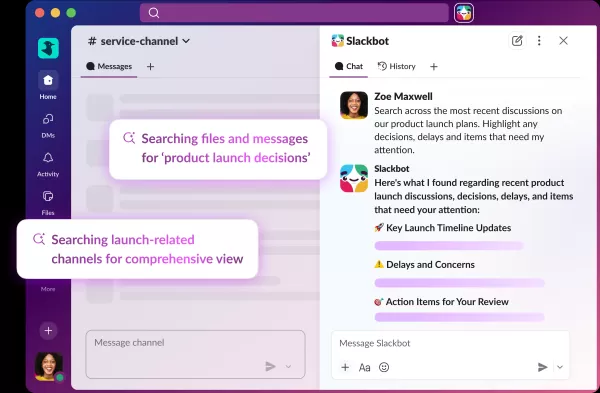 Slackbot Becomes an AI Agent
Slackbot, the automated assistant embedded in Salesforce’s corporate messaging platform Slack, is evolving into an AI agent. Salesforce CTO Parker Harris envisions it achieving viral status comparable to OpenAI’s ChatGPT.The cloud software giant laun
Slackbot Becomes an AI Agent
Slackbot, the automated assistant embedded in Salesforce’s corporate messaging platform Slack, is evolving into an AI agent. Salesforce CTO Parker Harris envisions it achieving viral status comparable to OpenAI’s ChatGPT.The cloud software giant laun
 ByteDance Boosts Core AI Incentives as Doubao Surges 14.6%
ByteDance recently convened a DouBao equity briefing to unveil fresh incentive policies for staff involved in the DouBao division. The strike price for DouBao shares has been lifted from $14.85 in June 2026 to $17.02, marking an approximate 14.6% inc
ByteDance Boosts Core AI Incentives as Doubao Surges 14.6%
ByteDance recently convened a DouBao equity briefing to unveil fresh incentive policies for staff involved in the DouBao division. The strike price for DouBao shares has been lifted from $14.85 in June 2026 to $17.02, marking an approximate 14.6% inc

2026 Latest Best AI Study Tools for Homework and Exam Prep! XIX.AI curates a top-rated list of powerful, game-changing tools that help students boost productivity, streamline homework completion, and ace exams through real-world tests. Get a free vs paid comparison, detailed rankings, and must-try options to unlock your AI edge. Explore now!
10 tools
xix.ai

2026 Latest Best AI Vocal Demo Tools for Songwriters, Hook Creators, and Multi-Language Content Teams! XIX.AI has curated a top-rated list of powerful game-changing tools that go through rigorous real-world tests. You’ll find detailed free vs paid comparison data, comprehensive rankings, and must-try options to help you boost writing efficiency and unlock your creative potential. Explore now to discover your perfect tool for all your content needs!
9 tools
xix.ai

2026 Latest Best Top-rated AI Competitive Research Tools for Small Businesses! XIX.AI has curated a highly powerful game-changing collection, updated weekly with rigorous real-world tests and detailed rankings. You can find a comprehensive free vs paid comparison to help you identify the must-try tools that boost your productivity and give you a competitive edge. Explore now to discover your perfect tool!
9 tools
xix.ai

2026 Latest Best Photoshop AI retouch tools for ecommerce apparel, skin cleanup, and color consistency! This top-rated curated list features powerful game-changing solutions that help you boost writing efficiency, streamline content creation, and achieve perfect visual results effortlessly. Each tool has undergone real-world tests through weekly updated rankings, complete with free vs paid comparison details. Backed by XIX.AI, it’s the must-try guide for anyone aiming to unlock your AI edge. Explore now!
10 tools
xix.ai
2026 Latest Best Top-Rated AI Prompt Libraries for optimizing all types of ChatGPT workflows. XIX.AI has curated a powerful, game-changing collection that goes through rigorous real-world tests to ensure top performance. You can find detailed free vs paid comparisons and expert rankings to help you choose the must-try tools that boost your productivity and unlock your AI edge. Explore now!
11 tools
xix.ai

2026 Latest Best AI Quiz Builder Platforms for Teachers, Tutors, and Cohort-Based Learning Programs! XIX.AI has curated a top-rated list of powerful game-changing tools that go through real-world tests to deliver accurate rankings. These must-try platforms help boost writing efficiency, streamline content creation, and simplify quiz design across all learning scenarios. Explore now to discover your perfect tool for unlocking your AI edge in teaching!
13 tools
xix.ai

これはすごい革新ですね!プログラマーの日常業務が大きく変わりそう。オープンソースなので、中小企業や学生でも最先端のAI技術を利用できるのは素晴らしい。将来的にはAIが単純なコーディングを担当し、人間はより創造的な作業に集中できるようになるのかな?でも、コードの品質管理やセキュリティ面での課題も気になります。期待と少しの不安が混ざった気分です😅












