


 Home
HomeAI in Project Management: A Guide for Modern Scheduling and Planning
In today's fast-paced business world, effective project management is crucial for organizations in every sector. As projects grow more complex and deadlines become tighter, managers face significant challenges in delivering results on schedule, within budget, and to the required standards. Artificial intelligence is emerging as a transformative tool in this field, offering innovative ways to streamline workflows, enhance decision-making, and boost overall project success. This article examines how AI is revolutionizing project scheduling and planning, showing managers how to leverage this technology to navigate the evolving demands of modern business.
Key Points
AI is reshaping project management by automating routine tasks, improving decision quality, and strengthening risk control.
Traditional scheduling methods frequently fail to handle real-world changes, resulting in delays and budget issues.
AI-powered scheduling creates flexible timelines that evolve using live data and changing project circumstances.
AI applications can evaluate project information to optimize resource distribution, forecast possible problems, and suggest preventive measures.
The construction sector demonstrates how AI can effectively coordinate intricate projects with interconnected activities and variable factors.
Beyond timeline adjustments, AI focuses on maximizing the effective use of resources.
By examining team output and project information, AI helps managers match tasks with the most appropriate team members, increasing productivity.
AI systems can learn from past project records to detect trends and anticipate potential hazards, allowing for early intervention.
The AI Revolution in Project Scheduling and Planning
The Core Challenge of Traditional Project Management
Conventional Project Management typically depends on structured approaches such as Gantt charts, Critical Path analysis, and Agile frameworks. While these methods help outline tasks, allocate resources, and estimate timelines, they often prove inadequate when actual conditions differ from the plan
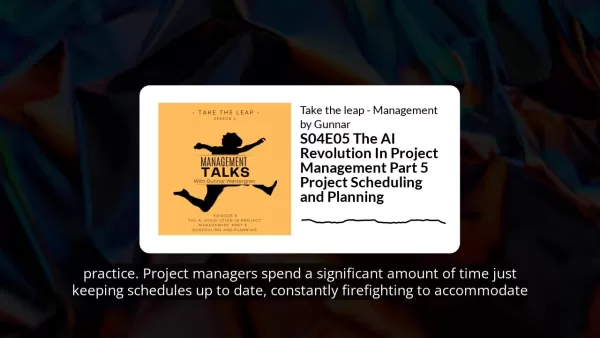
. Schedules slip, relationships between tasks change, and carefully developed plans begin to unravel. This happens because traditional systems lack the flexibility to respond to live updates and unexpected developments.
Project managers frequently devote substantial time to maintaining current schedules, constantly adapting to new changes. This responsive method can be both time-consuming and demanding. The rigidity of these plans leads to expensive modifications and recalibrations, affecting both efficiency and resource distribution.
How AI is Reshaping Project Scheduling
AI-enhanced Scheduling provides a more intelligent approach to developing and maintaining project plans
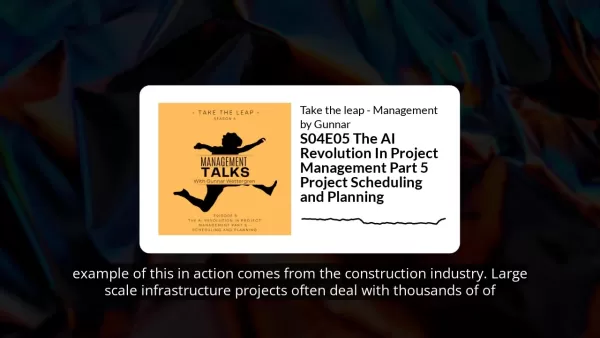
. Advanced Tools for project scheduling move beyond fixed timelines. Rather than just arranging tasks on a calendar, these systems apply machine learning and forecasting techniques to create dynamic schedules. Flexible schedules constantly update projections using current information. They learn from previous projects, track ongoing progress, and foresee upcoming obstacles.
What does this mean in practice? It means AI doesn't simply indicate when tasks might finish; it continuously updates those forecasts using live data. By assessing team capability and project information, AI helps managers delegate work to the best-suited personnel, enhancing total output. AI systems can be educated using historical project records to recognize Trends and forecast possible dangers, enabling early preventive actions.
This forward-looking method reduces interruptions and maintains project momentum.
AI in Action: Real-World Examples
Construction Industry
A compelling illustration of this technology appears in construction management. Major infrastructure developments typically involve thousands of connected tasks, creating extremely complicated scheduling demands . AI-enhanced scheduling systems can process current site situations, weather forecasts, and staff readiness to recommend daily modifications. If severe rainfall is expected for several days, the AI platform can reschedule external work for later dates while emphasizing indoor activities, maintaining project progress without manual input. This degree of flexibility is beyond the capability of conventional scheduling approaches.
AI Optimizing Resources
Intelligent Scheduling extends beyond timeline modifications to include resource optimization. One of the most difficult aspects of project planning involves resource distribution . Conventional approaches depend on fixed approximations of task durations and personnel assignments. However, as every project manager understands, these estimates are frequently inaccurate. AI can assist by evaluating team capabilities, availability, and historical performance to allocate tasks more efficiently.
For instance, if a team member regularly finishes specific work faster than projected, AI can detect this tendency and assign comparable tasks to that person, increasing overall effectiveness. AI can also detect possible resource constraints and propose alternatives, such as redistributing assets or bringing in additional staff.
AI-Powered Risk Mitigation
Risk control is a vital component of project management, and AI can contribute substantially to identifying and addressing potential hazards. By examining project information and historical patterns, AI systems can forecast possible risks and their effect on project outcomes. For example, AI can identify activities that are likely to be delayed based on historical performance, weather factors, or resource constraints.
When potential risks are detected, AI can recommend preventive control strategies. This might involve reassigning work, modifying timelines, or obtaining extra resources. By addressing possible issues in advance, AI helps project managers reduce disruptions and maintain project schedules.
How to Integrate AI into Your Project Management Workflow
Step 1: Assess Your Current Project Management Processes
Before implementing AI into your project management system, evaluate your existing procedures and pinpoint areas where AI could deliver the greatest benefit. Consider the difficulties you currently encounter in project scheduling, resource distribution, and risk control.
Step 2: Identify Suitable AI Tools
Research and select AI-enhanced project management solutions that Match your particular requirements. Look for platforms that provide capabilities like dynamic scheduling, resource optimization, and risk forecasting. Evaluate aspects such as user experience, compatibility with current systems, and cost structure.
Step 3: Train the AI Algorithms
AI systems need training information to learn and generate precise forecasts. Supply the AI platform with historical project records, including timelines, resource assignments, and risk evaluations. The more information you supply, the more reliable the AI forecasts will become.
Step 4: Monitor and Refine the AI Predictions
After the AI Tool becomes part of your workflow, track its forecasts and adjust them as necessary. Provide input to the AI system to enhance its precision and ensure it matches your project management objectives.
Step 5: Embrace Change and Continuous Improvement
Implementing AI in project management requires adapting perspectives and readiness to accept new approaches. Encourage your team to test AI tools and consistently improve your methods to maximize AI benefits.
Understanding AI Project Management Software Pricing
Pricing Models and Considerations
AI Project Management software costs can differ considerably depending on elements such as user count, included features, and supplier terms. Common pricing structures include:
- Subscription-based: Regular payments (monthly or yearly) that provide software access and functionality.
- Per-user pricing: Charges applied for each individual accessing the platform.
- Tiered pricing: Various price levels based on features and usage allowances.
- Custom pricing: Personalized payment arrangements for major organizations with specific needs.
When comparing costs, consider these factors:
- Scalability: Can the payment plan support your expanding team and project requirements?
- Features: Does the package include the AI capabilities you need for scheduling, resource distribution, and risk control?
- Support: Does the supplier provide sufficient customer service and training resources?
Comparing Costs and Benefits
While AI project management platforms might involve higher initial investment than conventional tools, it's crucial to weigh the long-term advantages and cost reductions. AI can automate processes, minimize errors, and enhance decision quality, resulting in:
- Lower project expenses: Through optimized resource distribution and reduced delays.
- Higher productivity: By automating repetitive tasks and enhancing Team Cooperation.
- Superior risk management: Through early detection and control of potential hazards.
By thoroughly evaluating the pricing models, capabilities, and potential advantages, you can select an AI project management solution that provides solid value for money.
Pros and Cons of AI-Driven Project Management
Pros
Greater efficiency and output
Enhanced decision-making
Improved risk control
More effective resource distribution
Lower project costs
Cons
Possible workforce reduction
Data security issues
Algorithmic prejudice
Overreliance on technology
Initial implementation expenses
Key Features of AI-Powered Project Management Tools
Adaptive Scheduling
Automatically modifies timelines using current data, environmental factors, and resource availability.
Resource Optimization
Evaluates team competencies and historical performance to allocate tasks efficiently.
Risk Prediction
Detects potential hazards and suggests preventive control methods.
Automated Task Management
Simplifies work assignments, progress monitoring, and reporting procedures.
Predictive Analytics
Forecasts project results and identifies potential concerns using historical information.
Use Cases: How AI is Transforming Project Management
Construction Project Management
AI assists in managing complicated construction projects by evaluating site conditions, weather trends, and workforce readiness to optimize scheduling and resource distribution.
Software Development
AI enhances software development projects by automating work assignments, detecting potential code issues, and improving team cooperation.
Marketing Campaign Management
AI improves marketing initiatives by analyzing consumer information, forecasting campaign results, and automating promotional activities.
Healthcare Project Management
AI advances Healthcare project management by optimizing resource distribution, predicting patient results, and automating administrative duties.
Financial Services
AI strengthens financial services projects by predicting market movements, identifying fraudulent activity, and automating regulatory compliance tasks.
Frequently Asked Questions (FAQ)
How does AI improve project scheduling?
AI enhances project scheduling by processing current information, weather trends, and resource availability to automatically adjust timelines. This produces more accurate and flexible schedules.
Can AI help with resource allocation in project management?
Absolutely, AI supports resource distribution by analyzing team capabilities, availability, and historical performance to allocate work efficiently, maximizing resource effectiveness.
What are the key features of AI-powered project management tools?
Essential features include dynamic scheduling, resource optimization, risk forecasting, automated work management, and predictive analysis.
How can AI mitigate risks in project management?
AI can anticipate possible hazards by evaluating project information and historical patterns and recommend preventive control strategies, reducing interruptions.
Related Questions
What is the future of AI in project management?
The outlook for AI in project management appears promising, with ongoing developments in automation, predictive analysis, and collaboration platforms. AI is anticipated to become a fundamental component of project management, enabling more efficient and successful project deliveries. AI is progressively utilized to automate repetitive duties, allowing project managers to concentrate on more strategic work. For instance, AI can automate work assignments, progress tracking, and reporting, freeing managers to focus on communication, problem resolution, and decision-making. Predictive analysis represents another domain where AI is creating substantial impact. By examining historical project information, AI can anticipate possible risks and challenges, enabling managers to implement preventive measures to address these concerns. This can help decrease the probability of project delays, budget excesses, and quality problems. AI is also enhancing cooperation among project team members. AI-driven collaboration tools can facilitate communication, knowledge exchange, and activity coordination. This can result in improved team performance and project results. As AI technology continues to progress, it is expected to assume an even more prominent position in project management. AI will likely become an essential instrument for project managers, allowing them to coordinate projects more efficiently and effectively.
What are the ethical considerations of using AI in project management?
As AI becomes more widespread in project management, it's crucial to address the ethical dimensions of its application. Concerns including data security, prejudice, and openness demand careful consideration to guarantee responsible and equitable AI implementation. Data protection represents a primary concern. AI systems need substantial information volumes to learn and generate precise forecasts. It's essential to verify that this information is gathered and applied in ways that respect individual privacy. Project managers should obtain approval from team members before gathering their data and should ensure secure data storage. Prejudice constitutes another significant ethical factor. AI systems can develop biases if their training information contains biases. This might produce unjust or prejudicial results. Project managers should meticulously review the data used to educate AI systems to guarantee it accurately represents the project team and project environment. Transparency remains equally important. Project managers should be open about how AI functions within the project and should clarify the reasoning behind AI-driven choices. This can help establish confidence among team members and stakeholders.
Related article
 How to fix Core Web Vitals for better SEO rankings
Streamline Report Card Comments with AI ToolsIntroductionAI Tools for Generating Report Card CommentsMagic SchoolAlmanac AIChat GPTUsing Magic School to Generate Report Card CommentsLogging into Magic SchoolSelecting the Report Card Comments ToolCust
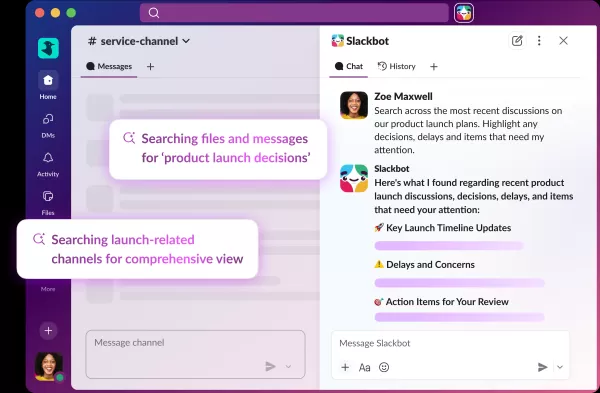
Slackbot Becomes an AI Agent
Slackbot, the automated assistant embedded in Salesforce’s corporate messaging platform Slack, is evolving into an AI agent. Salesforce CTO Parker Harris envisions it achieving viral status comparable to OpenAI’s ChatGPT.The cloud software giant laun
ByteDance Boosts Core AI Incentives as Doubao Surges 14.6%
ByteDance recently convened a DouBao equity briefing to unveil fresh incentive policies for staff involved in the DouBao division. The strike price for DouBao shares has been lifted from $14.85 in June 2026 to $17.02, marking an approximate 14.6% inc
Related Special Topic Recommendations
Education and Learning
How to fix Core Web Vitals for better SEO rankings
Streamline Report Card Comments with AI ToolsIntroductionAI Tools for Generating Report Card CommentsMagic SchoolAlmanac AIChat GPTUsing Magic School to Generate Report Card CommentsLogging into Magic SchoolSelecting the Report Card Comments ToolCust
Slackbot Becomes an AI Agent
Slackbot, the automated assistant embedded in Salesforce’s corporate messaging platform Slack, is evolving into an AI agent. Salesforce CTO Parker Harris envisions it achieving viral status comparable to OpenAI’s ChatGPT.The cloud software giant laun
ByteDance Boosts Core AI Incentives as Doubao Surges 14.6%
ByteDance recently convened a DouBao equity briefing to unveil fresh incentive policies for staff involved in the DouBao division. The strike price for DouBao shares has been lifted from $14.85 in June 2026 to $17.02, marking an approximate 14.6% inc
Related Special Topic Recommendations
Education and Learning
 AI Study Tools for Homework and Exam Prep
2026 Latest Best AI Study Tools for Homework and Exam Prep! XIX.AI curates a top-rated list of powerful, game-changing tools that help students boost productivity, streamline homework completion, and ace exams through real-world tests. Get a free vs paid comparison, detailed rankings, and must-try options to unlock your AI edge. Explore now!
 10 tools
 xix.ai
Music composition
AI Vocal Demo Tools for Songwriters, Hooks, Toplines, and Multilingual Draft Sessions
xix.ai
Music composition
AI Vocal Demo Tools for Songwriters, Hooks, Toplines, and Multilingual Draft Sessions
2026 Latest Best AI Vocal Demo Tools for Songwriters, Hook Creators, and Multi-Language Content Teams! XIX.AI has curated a top-rated list of powerful game-changing tools that go through rigorous real-world tests. You’ll find detailed free vs paid comparison data, comprehensive rankings, and must-try options to help you boost writing efficiency and unlock your creative potential. Explore now to discover your perfect tool for all your content needs!
9 tools
xix.ai
Business
Best AI Competitive Research Tools for Small Businesses
2026 Latest Best Top-rated AI Competitive Research Tools for Small Businesses! XIX.AI has curated a highly powerful game-changing collection, updated weekly with rigorous real-world tests and detailed rankings. You can find a comprehensive free vs paid comparison to help you identify the must-try tools that boost your productivity and give you a competitive edge. Explore now to discover your perfect tool!
9 tools
xix.ai
Image editing
Photoshop AI Retouch Tools for Ecommerce Apparel, Skin Cleanup, and Color Consistency
2026 Latest Best Photoshop AI retouch tools for ecommerce apparel, skin cleanup, and color consistency! This top-rated curated list features powerful game-changing solutions that help you boost writing efficiency, streamline content creation, and achieve perfect visual results effortlessly. Each tool has undergone real-world tests through weekly updated rankings, complete with free vs paid comparison details. Backed by XIX.AI, it’s the must-try guide for anyone aiming to unlock your AI edge. Explore now!
10 tools
xix.ai
Prompt
Best AI Prompt Libraries for ChatGPT Workflows
2026 Latest Best Top-Rated AI Prompt Libraries for optimizing all types of ChatGPT workflows. XIX.AI has curated a powerful, game-changing collection that goes through rigorous real-world tests to ensure top performance. You can find detailed free vs paid comparisons and expert rankings to help you choose the must-try tools that boost your productivity and unlock your AI edge. Explore now!
11 tools
xix.ai
Education and Learning
AI Quiz Builder Platforms for Teachers, Tutors, and Cohort-Based Learning Programs
2026 Latest Best AI Quiz Builder Platforms for Teachers, Tutors, and Cohort-Based Learning Programs! XIX.AI has curated a top-rated list of powerful game-changing tools that go through real-world tests to deliver accurate rankings. These must-try platforms help boost writing efficiency, streamline content creation, and simplify quiz design across all learning scenarios. Explore now to discover your perfect tool for unlocking your AI edge in teaching!
13 tools
xix.ai

 Comments (2)
0/500
Comments (2)
0/500
![JasonMartinez]()
這篇文章的標題讓我想到最近公司導入的AI排程工具,確實節省了不少會議時間,但偶爾還是會出現奇怪的優先級建議😂 不過比起以前手動調度已經進步太多了,只是不知道哪天會不會連PM都被取代?
![KevinHarris]()
Не думал, что ИИ может так сильно изменить управление проектами. В нашем стартапе постоянно проблемы с дедлайнами - интересно, можно ли внедрить такое без полной перестройки процессов? Может, стоит попробовать на небольшом тестовом проекте сначала... 🤔
In today's fast-paced business world, effective project management is crucial for organizations in every sector. As projects grow more complex and deadlines become tighter, managers face significant challenges in delivering results on schedule, within budget, and to the required standards. Artificial intelligence is emerging as a transformative tool in this field, offering innovative ways to streamline workflows, enhance decision-making, and boost overall project success. This article examines how AI is revolutionizing project scheduling and planning, showing managers how to leverage this technology to navigate the evolving demands of modern business.
Key Points
AI is reshaping project management by automating routine tasks, improving decision quality, and strengthening risk control.
Traditional scheduling methods frequently fail to handle real-world changes, resulting in delays and budget issues.
AI-powered scheduling creates flexible timelines that evolve using live data and changing project circumstances.
AI applications can evaluate project information to optimize resource distribution, forecast possible problems, and suggest preventive measures.
The construction sector demonstrates how AI can effectively coordinate intricate projects with interconnected activities and variable factors.
Beyond timeline adjustments, AI focuses on maximizing the effective use of resources.
By examining team output and project information, AI helps managers match tasks with the most appropriate team members, increasing productivity.
AI systems can learn from past project records to detect trends and anticipate potential hazards, allowing for early intervention.
The AI Revolution in Project Scheduling and Planning
The Core Challenge of Traditional Project Management
Conventional Project Management typically depends on structured approaches such as Gantt charts, Critical Path analysis, and Agile frameworks. While these methods help outline tasks, allocate resources, and estimate timelines, they often prove inadequate when actual conditions differ from the plan
. Schedules slip, relationships between tasks change, and carefully developed plans begin to unravel. This happens because traditional systems lack the flexibility to respond to live updates and unexpected developments.
Project managers frequently devote substantial time to maintaining current schedules, constantly adapting to new changes. This responsive method can be both time-consuming and demanding. The rigidity of these plans leads to expensive modifications and recalibrations, affecting both efficiency and resource distribution.
How AI is Reshaping Project Scheduling
AI-enhanced Scheduling provides a more intelligent approach to developing and maintaining project plans
. Advanced Tools for project scheduling move beyond fixed timelines. Rather than just arranging tasks on a calendar, these systems apply machine learning and forecasting techniques to create dynamic schedules. Flexible schedules constantly update projections using current information. They learn from previous projects, track ongoing progress, and foresee upcoming obstacles.
What does this mean in practice? It means AI doesn't simply indicate when tasks might finish; it continuously updates those forecasts using live data. By assessing team capability and project information, AI helps managers delegate work to the best-suited personnel, enhancing total output. AI systems can be educated using historical project records to recognize Trends and forecast possible dangers, enabling early preventive actions.
This forward-looking method reduces interruptions and maintains project momentum.
AI in Action: Real-World Examples
Construction Industry
A compelling illustration of this technology appears in construction management. Major infrastructure developments typically involve thousands of connected tasks, creating extremely complicated scheduling demands . AI-enhanced scheduling systems can process current site situations, weather forecasts, and staff readiness to recommend daily modifications. If severe rainfall is expected for several days, the AI platform can reschedule external work for later dates while emphasizing indoor activities, maintaining project progress without manual input. This degree of flexibility is beyond the capability of conventional scheduling approaches.
AI Optimizing Resources
Intelligent Scheduling extends beyond timeline modifications to include resource optimization. One of the most difficult aspects of project planning involves resource distribution . Conventional approaches depend on fixed approximations of task durations and personnel assignments. However, as every project manager understands, these estimates are frequently inaccurate. AI can assist by evaluating team capabilities, availability, and historical performance to allocate tasks more efficiently.
For instance, if a team member regularly finishes specific work faster than projected, AI can detect this tendency and assign comparable tasks to that person, increasing overall effectiveness. AI can also detect possible resource constraints and propose alternatives, such as redistributing assets or bringing in additional staff.
AI-Powered Risk Mitigation
Risk control is a vital component of project management, and AI can contribute substantially to identifying and addressing potential hazards. By examining project information and historical patterns, AI systems can forecast possible risks and their effect on project outcomes. For example, AI can identify activities that are likely to be delayed based on historical performance, weather factors, or resource constraints.
When potential risks are detected, AI can recommend preventive control strategies. This might involve reassigning work, modifying timelines, or obtaining extra resources. By addressing possible issues in advance, AI helps project managers reduce disruptions and maintain project schedules.
How to Integrate AI into Your Project Management Workflow
Step 1: Assess Your Current Project Management Processes
Before implementing AI into your project management system, evaluate your existing procedures and pinpoint areas where AI could deliver the greatest benefit. Consider the difficulties you currently encounter in project scheduling, resource distribution, and risk control.
Step 2: Identify Suitable AI Tools
Research and select AI-enhanced project management solutions that Match your particular requirements. Look for platforms that provide capabilities like dynamic scheduling, resource optimization, and risk forecasting. Evaluate aspects such as user experience, compatibility with current systems, and cost structure.
Step 3: Train the AI Algorithms
AI systems need training information to learn and generate precise forecasts. Supply the AI platform with historical project records, including timelines, resource assignments, and risk evaluations. The more information you supply, the more reliable the AI forecasts will become.
Step 4: Monitor and Refine the AI Predictions
After the AI Tool becomes part of your workflow, track its forecasts and adjust them as necessary. Provide input to the AI system to enhance its precision and ensure it matches your project management objectives.
Step 5: Embrace Change and Continuous Improvement
Implementing AI in project management requires adapting perspectives and readiness to accept new approaches. Encourage your team to test AI tools and consistently improve your methods to maximize AI benefits.
Understanding AI Project Management Software Pricing
Pricing Models and Considerations
AI Project Management software costs can differ considerably depending on elements such as user count, included features, and supplier terms. Common pricing structures include:
- Subscription-based: Regular payments (monthly or yearly) that provide software access and functionality.
- Per-user pricing: Charges applied for each individual accessing the platform.
- Tiered pricing: Various price levels based on features and usage allowances.
- Custom pricing: Personalized payment arrangements for major organizations with specific needs.
When comparing costs, consider these factors:
- Scalability: Can the payment plan support your expanding team and project requirements?
- Features: Does the package include the AI capabilities you need for scheduling, resource distribution, and risk control?
- Support: Does the supplier provide sufficient customer service and training resources?
Comparing Costs and Benefits
While AI project management platforms might involve higher initial investment than conventional tools, it's crucial to weigh the long-term advantages and cost reductions. AI can automate processes, minimize errors, and enhance decision quality, resulting in:
- Lower project expenses: Through optimized resource distribution and reduced delays.
- Higher productivity: By automating repetitive tasks and enhancing Team Cooperation.
- Superior risk management: Through early detection and control of potential hazards.
By thoroughly evaluating the pricing models, capabilities, and potential advantages, you can select an AI project management solution that provides solid value for money.
Pros and Cons of AI-Driven Project Management
Pros
Greater efficiency and output
Enhanced decision-making
Improved risk control
More effective resource distribution
Lower project costs
Cons
Possible workforce reduction
Data security issues
Algorithmic prejudice
Overreliance on technology
Initial implementation expenses
Key Features of AI-Powered Project Management Tools
Adaptive Scheduling
Automatically modifies timelines using current data, environmental factors, and resource availability.
Resource Optimization
Evaluates team competencies and historical performance to allocate tasks efficiently.
Risk Prediction
Detects potential hazards and suggests preventive control methods.
Automated Task Management
Simplifies work assignments, progress monitoring, and reporting procedures.
Predictive Analytics
Forecasts project results and identifies potential concerns using historical information.
Use Cases: How AI is Transforming Project Management
Construction Project Management
AI assists in managing complicated construction projects by evaluating site conditions, weather trends, and workforce readiness to optimize scheduling and resource distribution.
Software Development
AI enhances software development projects by automating work assignments, detecting potential code issues, and improving team cooperation.
Marketing Campaign Management
AI improves marketing initiatives by analyzing consumer information, forecasting campaign results, and automating promotional activities.
Healthcare Project Management
AI advances Healthcare project management by optimizing resource distribution, predicting patient results, and automating administrative duties.
Financial Services
AI strengthens financial services projects by predicting market movements, identifying fraudulent activity, and automating regulatory compliance tasks.
Frequently Asked Questions (FAQ)
How does AI improve project scheduling?
AI enhances project scheduling by processing current information, weather trends, and resource availability to automatically adjust timelines. This produces more accurate and flexible schedules.
Can AI help with resource allocation in project management?
Absolutely, AI supports resource distribution by analyzing team capabilities, availability, and historical performance to allocate work efficiently, maximizing resource effectiveness.
What are the key features of AI-powered project management tools?
Essential features include dynamic scheduling, resource optimization, risk forecasting, automated work management, and predictive analysis.
How can AI mitigate risks in project management?
AI can anticipate possible hazards by evaluating project information and historical patterns and recommend preventive control strategies, reducing interruptions.
Related Questions
What is the future of AI in project management?
The outlook for AI in project management appears promising, with ongoing developments in automation, predictive analysis, and collaboration platforms. AI is anticipated to become a fundamental component of project management, enabling more efficient and successful project deliveries. AI is progressively utilized to automate repetitive duties, allowing project managers to concentrate on more strategic work. For instance, AI can automate work assignments, progress tracking, and reporting, freeing managers to focus on communication, problem resolution, and decision-making. Predictive analysis represents another domain where AI is creating substantial impact. By examining historical project information, AI can anticipate possible risks and challenges, enabling managers to implement preventive measures to address these concerns. This can help decrease the probability of project delays, budget excesses, and quality problems. AI is also enhancing cooperation among project team members. AI-driven collaboration tools can facilitate communication, knowledge exchange, and activity coordination. This can result in improved team performance and project results. As AI technology continues to progress, it is expected to assume an even more prominent position in project management. AI will likely become an essential instrument for project managers, allowing them to coordinate projects more efficiently and effectively.
What are the ethical considerations of using AI in project management?
As AI becomes more widespread in project management, it's crucial to address the ethical dimensions of its application. Concerns including data security, prejudice, and openness demand careful consideration to guarantee responsible and equitable AI implementation. Data protection represents a primary concern. AI systems need substantial information volumes to learn and generate precise forecasts. It's essential to verify that this information is gathered and applied in ways that respect individual privacy. Project managers should obtain approval from team members before gathering their data and should ensure secure data storage. Prejudice constitutes another significant ethical factor. AI systems can develop biases if their training information contains biases. This might produce unjust or prejudicial results. Project managers should meticulously review the data used to educate AI systems to guarantee it accurately represents the project team and project environment. Transparency remains equally important. Project managers should be open about how AI functions within the project and should clarify the reasoning behind AI-driven choices. This can help establish confidence among team members and stakeholders.








 How to fix Core Web Vitals for better SEO rankings
Streamline Report Card Comments with AI ToolsIntroductionAI Tools for Generating Report Card CommentsMagic SchoolAlmanac AIChat GPTUsing Magic School to Generate Report Card CommentsLogging into Magic SchoolSelecting the Report Card Comments ToolCust
How to fix Core Web Vitals for better SEO rankings
Streamline Report Card Comments with AI ToolsIntroductionAI Tools for Generating Report Card CommentsMagic SchoolAlmanac AIChat GPTUsing Magic School to Generate Report Card CommentsLogging into Magic SchoolSelecting the Report Card Comments ToolCust
 Slackbot Becomes an AI Agent
Slackbot, the automated assistant embedded in Salesforce’s corporate messaging platform Slack, is evolving into an AI agent. Salesforce CTO Parker Harris envisions it achieving viral status comparable to OpenAI’s ChatGPT.The cloud software giant laun
Slackbot Becomes an AI Agent
Slackbot, the automated assistant embedded in Salesforce’s corporate messaging platform Slack, is evolving into an AI agent. Salesforce CTO Parker Harris envisions it achieving viral status comparable to OpenAI’s ChatGPT.The cloud software giant laun
 ByteDance Boosts Core AI Incentives as Doubao Surges 14.6%
ByteDance recently convened a DouBao equity briefing to unveil fresh incentive policies for staff involved in the DouBao division. The strike price for DouBao shares has been lifted from $14.85 in June 2026 to $17.02, marking an approximate 14.6% inc
ByteDance Boosts Core AI Incentives as Doubao Surges 14.6%
ByteDance recently convened a DouBao equity briefing to unveil fresh incentive policies for staff involved in the DouBao division. The strike price for DouBao shares has been lifted from $14.85 in June 2026 to $17.02, marking an approximate 14.6% inc

2026 Latest Best AI Study Tools for Homework and Exam Prep! XIX.AI curates a top-rated list of powerful, game-changing tools that help students boost productivity, streamline homework completion, and ace exams through real-world tests. Get a free vs paid comparison, detailed rankings, and must-try options to unlock your AI edge. Explore now!
10 tools
xix.ai

2026 Latest Best AI Vocal Demo Tools for Songwriters, Hook Creators, and Multi-Language Content Teams! XIX.AI has curated a top-rated list of powerful game-changing tools that go through rigorous real-world tests. You’ll find detailed free vs paid comparison data, comprehensive rankings, and must-try options to help you boost writing efficiency and unlock your creative potential. Explore now to discover your perfect tool for all your content needs!
9 tools
xix.ai

2026 Latest Best Top-rated AI Competitive Research Tools for Small Businesses! XIX.AI has curated a highly powerful game-changing collection, updated weekly with rigorous real-world tests and detailed rankings. You can find a comprehensive free vs paid comparison to help you identify the must-try tools that boost your productivity and give you a competitive edge. Explore now to discover your perfect tool!
9 tools
xix.ai

2026 Latest Best Photoshop AI retouch tools for ecommerce apparel, skin cleanup, and color consistency! This top-rated curated list features powerful game-changing solutions that help you boost writing efficiency, streamline content creation, and achieve perfect visual results effortlessly. Each tool has undergone real-world tests through weekly updated rankings, complete with free vs paid comparison details. Backed by XIX.AI, it’s the must-try guide for anyone aiming to unlock your AI edge. Explore now!
10 tools
xix.ai
2026 Latest Best Top-Rated AI Prompt Libraries for optimizing all types of ChatGPT workflows. XIX.AI has curated a powerful, game-changing collection that goes through rigorous real-world tests to ensure top performance. You can find detailed free vs paid comparisons and expert rankings to help you choose the must-try tools that boost your productivity and unlock your AI edge. Explore now!
11 tools
xix.ai

2026 Latest Best AI Quiz Builder Platforms for Teachers, Tutors, and Cohort-Based Learning Programs! XIX.AI has curated a top-rated list of powerful game-changing tools that go through real-world tests to deliver accurate rankings. These must-try platforms help boost writing efficiency, streamline content creation, and simplify quiz design across all learning scenarios. Explore now to discover your perfect tool for unlocking your AI edge in teaching!
13 tools
xix.ai

這篇文章的標題讓我想到最近公司導入的AI排程工具,確實節省了不少會議時間,但偶爾還是會出現奇怪的優先級建議😂 不過比起以前手動調度已經進步太多了,只是不知道哪天會不會連PM都被取代?
Не думал, что ИИ может так сильно изменить управление проектами. В нашем стартапе постоянно проблемы с дедлайнами - интересно, можно ли внедрить такое без полной перестройки процессов? Может, стоит попробовать на небольшом тестовом проекте сначала... 🤔












