


 Home
HomeAI pioneer Fei-Fei Li warns policymakers not to let sci-fi sensationalism shape AI rules
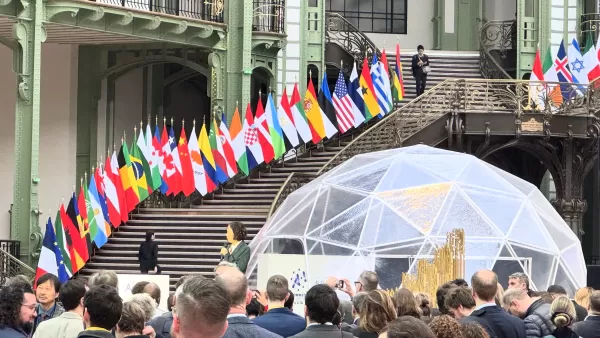
On Monday, Fei-Fei Li, a prominent researcher from Stanford and the founder of World Labs, took the stage at the Grand Palais in Paris to deliver the opening speech at the Artificial Intelligence Action Summit. This week-long event has drawn attention from around the globe, and Li's insights into AI regulation and the broader AI ecosystem were particularly thought-provoking.
Over the weekend, Li hinted at some of her key points, but it was her balanced perspective on AI that really stood out. She skillfully navigated a position that was supportive of business interests while also critical of the dominance of Big Tech and major AI labs.
Advocating for a Diverse AI Ecosystem
Li emphasized the need for a more inclusive and dynamic AI ecosystem. "We need to invest in far healthier and more vibrant AI ecosystems where academia and the community can produce," she told the audience. She stressed the importance of open source communities and the public sector playing significant roles alongside big companies in advancing AI technology. "If AI is going to change the world, we need everyone from all walks of life to have a role in shaping this change," she added.
She warned that if resources remain concentrated in just a few companies, the AI ecosystem could suffer. "The lack of curiosity-driven research, top educational talents, open source efforts, and multidisciplinary explorations would be detrimental," Fei-Fei noted.
Calling for Pragmatic AI Regulation
Li also expressed concerns about the current state of AI regulation worldwide. While she didn't target specific governments or legislation, she advocated for a more pragmatic approach. "For starters, it's essential that we govern on the basis of science, not science fiction," she said. She criticized the sensationalism that often surrounds AI discussions, which can lead to misguided policies. Instead, she called for a scientific method to assess and measure AI's capabilities and limitations, leading to more precise and actionable policies.
She also cautioned against overly restrictive regulations on AI research. "AI is poised to be a powerful technology that can help us to live and work better if used well," Li remarked. She urged a focus on practical applications to ensure AI's beneficial use and guard against negative outcomes.
The Historical Significance of AI
Li highlighted the historical significance of the current period, suggesting that historians might view it as the first true era of AI with "civilizational consequences." While acknowledging the potential impact of AI on jobs, she remained optimistic about its potential to "augment and empower us," provided that policymakers, AI companies, and the research community make the right decisions.
The AI Action Summit is set to conclude on Tuesday, with government leaders and tech CEOs expected to sign and share a statement on AI's future.
Read our full coverage of the Artificial Intelligence Action Summit in Paris.
Related article
 U.S. Stocks Hit Historic Milestone as AI and Aerospace Giants Prepare for Trillion-Dollar Debut
Elon Musk, Sam Altman, and Dario Amodei, three titans of the technology sector, are advancing toward initial public offerings for their respective ventures. With SpaceX, OpenAI, and Anthropic—three industry behemoths nearing trillion-dollar valuation
Swedish AI Startup Lovable Eyes $13.2 Billion Valuation After Major Funding Round
As AI-driven coding tools gain traction, Swedish startup Lovable has secured a major funding round. The company aims to raise $3 billion, potentially boosting its valuation to $13.2 billion—double the $6.6 billion recorded last December. Menlo Ventur
Google Tests Remy AI Agent for Gemini as Focus Shifts to User Control
According to Business Insider, Google is testing Remy, a new AI personal agent for Gemini. This tool aims to execute tasks on behalf of users, streamlining both professional workflows and daily routines.Currently, Remy is undergoing testing in an int
Related Special Topic Recommendations
Data Analysis
U.S. Stocks Hit Historic Milestone as AI and Aerospace Giants Prepare for Trillion-Dollar Debut
Elon Musk, Sam Altman, and Dario Amodei, three titans of the technology sector, are advancing toward initial public offerings for their respective ventures. With SpaceX, OpenAI, and Anthropic—three industry behemoths nearing trillion-dollar valuation
Swedish AI Startup Lovable Eyes $13.2 Billion Valuation After Major Funding Round
As AI-driven coding tools gain traction, Swedish startup Lovable has secured a major funding round. The company aims to raise $3 billion, potentially boosting its valuation to $13.2 billion—double the $6.6 billion recorded last December. Menlo Ventur
Google Tests Remy AI Agent for Gemini as Focus Shifts to User Control
According to Business Insider, Google is testing Remy, a new AI personal agent for Gemini. This tool aims to execute tasks on behalf of users, streamlining both professional workflows and daily routines.Currently, Remy is undergoing testing in an int
Related Special Topic Recommendations
Data Analysis
 Best AI Anomaly Detection Tools for KPI Monitoring across SaaS and Ecommerce Teams
2026 Latest Best Top-rated AI Anomaly Detection Tools for KPI Monitoring in SaaS and Ecommerce teams! XIX.AI has curated a powerful, game-changing collection based on rigorous real-world tests and weekly updated rankings. You’ll find detailed free vs paid comparison insights to help you identify the must-try solution that boosts productivity and unlocks your AI edge. Explore now!
 10 tools
 xix.ai
writing
Best AI Outline Generators for Long-Form SEO Articles
xix.ai
writing
Best AI Outline Generators for Long-Form SEO Articles
2026 Latest Best Top-Rated AI Outline Generators for Long-Form SEO Articles, meticulously curated by XIX.AI. These powerful tools offer game-changing assistance in creating high-quality content quickly, boosting writing efficiency significantly. Get a free vs paid comparison along with real-world tests and detailed rankings to help you find the must-try option that suits your needs. Explore now to unlock your AI edge.
8 tools
xix.ai
Education and Learning
AI Study Tools for Homework and Exam Prep
2026 Latest Best AI Study Tools for Homework and Exam Prep! XIX.AI curates a top-rated list of powerful, game-changing tools that help students boost productivity, streamline homework completion, and ace exams through real-world tests. Get a free vs paid comparison, detailed rankings, and must-try options to unlock your AI edge. Explore now!
10 tools
xix.ai
Music composition
AI Vocal Demo Tools for Songwriters, Hooks, Toplines, and Multilingual Draft Sessions
2026 Latest Best AI Vocal Demo Tools for Songwriters, Hook Creators, and Multi-Language Content Teams! XIX.AI has curated a top-rated list of powerful game-changing tools that go through rigorous real-world tests. You’ll find detailed free vs paid comparison data, comprehensive rankings, and must-try options to help you boost writing efficiency and unlock your creative potential. Explore now to discover your perfect tool for all your content needs!
9 tools
xix.ai
Business
Best AI Competitive Research Tools for Small Businesses
2026 Latest Best Top-rated AI Competitive Research Tools for Small Businesses! XIX.AI has curated a highly powerful game-changing collection, updated weekly with rigorous real-world tests and detailed rankings. You can find a comprehensive free vs paid comparison to help you identify the must-try tools that boost your productivity and give you a competitive edge. Explore now to discover your perfect tool!
9 tools
xix.ai
Image editing
Photoshop AI Retouch Tools for Ecommerce Apparel, Skin Cleanup, and Color Consistency
2026 Latest Best Photoshop AI retouch tools for ecommerce apparel, skin cleanup, and color consistency! This top-rated curated list features powerful game-changing solutions that help you boost writing efficiency, streamline content creation, and achieve perfect visual results effortlessly. Each tool has undergone real-world tests through weekly updated rankings, complete with free vs paid comparison details. Backed by XIX.AI, it’s the must-try guide for anyone aiming to unlock your AI edge. Explore now!
10 tools
xix.ai

 Comments (13)
0/500
Comments (13)
0/500
![AnthonyMartinez]()
Fei-Fei Li’s warning is spot on. We’re drowning in sci-fi tropes instead of practical policy. 🚫🎬 Let’s focus on real-world impact, not movie monsters.
![JerryGonzalez]()
I was really shocked by Fei-Fei Li’s warning—she compared AI regulation to building a house without blueprints, saying sensationalist hype will mess up everything. It made me think about all the fake AI news we see online these days, hope policymakers actually listen to experts like her.
![EricMiller]()
Fei-Fei Li always brings such a grounded perspective. It's refreshing to hear a leading researcher push back against sci-fi panic in policy discussions. We really need more of this practical focus on current AI capabilities and risks, rather than hypothetical doomsday scenarios. Hope policymakers are actually listening! 😅
![ArthurYoung]()
Finally a voice of reason between the hype and the doomsday scenarios. So tired of regulations being drafted based on Terminator plotlines instead of actual research. Listen to the people building this tech! 🙌
![GregoryWilson]()
AI規制ってホントにSFみたいな話で決めちゃうの?もっと現場の声を聞くべきだと思うんだけど…🤔 李飛飛教授の指摘は核心を突いてるな。実際に研究してる人たちの意見を無視して、恐怖ばかり煽ってたら、せっかくの技術が台無しになりそう。
![ArthurThomas]()
It's refreshing to hear a leading researcher focus on evidence-based policy rather than sci-fi hype. Wish more tech leaders would push back against sensationalism that's distorting public understanding. 🤔 The regulatory focus should be on actual risks like bias and transparency, not imaginary Terminators!
On Monday, Fei-Fei Li, a prominent researcher from Stanford and the founder of World Labs, took the stage at the Grand Palais in Paris to deliver the opening speech at the Artificial Intelligence Action Summit. This week-long event has drawn attention from around the globe, and Li's insights into AI regulation and the broader AI ecosystem were particularly thought-provoking.
Over the weekend, Li hinted at some of her key points, but it was her balanced perspective on AI that really stood out. She skillfully navigated a position that was supportive of business interests while also critical of the dominance of Big Tech and major AI labs.
Advocating for a Diverse AI Ecosystem
Li emphasized the need for a more inclusive and dynamic AI ecosystem. "We need to invest in far healthier and more vibrant AI ecosystems where academia and the community can produce," she told the audience. She stressed the importance of open source communities and the public sector playing significant roles alongside big companies in advancing AI technology. "If AI is going to change the world, we need everyone from all walks of life to have a role in shaping this change," she added.
She warned that if resources remain concentrated in just a few companies, the AI ecosystem could suffer. "The lack of curiosity-driven research, top educational talents, open source efforts, and multidisciplinary explorations would be detrimental," Fei-Fei noted.
Calling for Pragmatic AI Regulation
Li also expressed concerns about the current state of AI regulation worldwide. While she didn't target specific governments or legislation, she advocated for a more pragmatic approach. "For starters, it's essential that we govern on the basis of science, not science fiction," she said. She criticized the sensationalism that often surrounds AI discussions, which can lead to misguided policies. Instead, she called for a scientific method to assess and measure AI's capabilities and limitations, leading to more precise and actionable policies.
She also cautioned against overly restrictive regulations on AI research. "AI is poised to be a powerful technology that can help us to live and work better if used well," Li remarked. She urged a focus on practical applications to ensure AI's beneficial use and guard against negative outcomes.
The Historical Significance of AI
Li highlighted the historical significance of the current period, suggesting that historians might view it as the first true era of AI with "civilizational consequences." While acknowledging the potential impact of AI on jobs, she remained optimistic about its potential to "augment and empower us," provided that policymakers, AI companies, and the research community make the right decisions.
The AI Action Summit is set to conclude on Tuesday, with government leaders and tech CEOs expected to sign and share a statement on AI's future.
Read our full coverage of the Artificial Intelligence Action Summit in Paris.








 U.S. Stocks Hit Historic Milestone as AI and Aerospace Giants Prepare for Trillion-Dollar Debut
Elon Musk, Sam Altman, and Dario Amodei, three titans of the technology sector, are advancing toward initial public offerings for their respective ventures. With SpaceX, OpenAI, and Anthropic—three industry behemoths nearing trillion-dollar valuation
U.S. Stocks Hit Historic Milestone as AI and Aerospace Giants Prepare for Trillion-Dollar Debut
Elon Musk, Sam Altman, and Dario Amodei, three titans of the technology sector, are advancing toward initial public offerings for their respective ventures. With SpaceX, OpenAI, and Anthropic—three industry behemoths nearing trillion-dollar valuation
 Swedish AI Startup Lovable Eyes $13.2 Billion Valuation After Major Funding Round
As AI-driven coding tools gain traction, Swedish startup Lovable has secured a major funding round. The company aims to raise $3 billion, potentially boosting its valuation to $13.2 billion—double the $6.6 billion recorded last December. Menlo Ventur
Google Tests Remy AI Agent for Gemini as Focus Shifts to User Control
According to Business Insider, Google is testing Remy, a new AI personal agent for Gemini. This tool aims to execute tasks on behalf of users, streamlining both professional workflows and daily routines.Currently, Remy is undergoing testing in an int
Swedish AI Startup Lovable Eyes $13.2 Billion Valuation After Major Funding Round
As AI-driven coding tools gain traction, Swedish startup Lovable has secured a major funding round. The company aims to raise $3 billion, potentially boosting its valuation to $13.2 billion—double the $6.6 billion recorded last December. Menlo Ventur
Google Tests Remy AI Agent for Gemini as Focus Shifts to User Control
According to Business Insider, Google is testing Remy, a new AI personal agent for Gemini. This tool aims to execute tasks on behalf of users, streamlining both professional workflows and daily routines.Currently, Remy is undergoing testing in an int

2026 Latest Best Top-rated AI Anomaly Detection Tools for KPI Monitoring in SaaS and Ecommerce teams! XIX.AI has curated a powerful, game-changing collection based on rigorous real-world tests and weekly updated rankings. You’ll find detailed free vs paid comparison insights to help you identify the must-try solution that boosts productivity and unlocks your AI edge. Explore now!
10 tools
xix.ai

2026 Latest Best Top-Rated AI Outline Generators for Long-Form SEO Articles, meticulously curated by XIX.AI. These powerful tools offer game-changing assistance in creating high-quality content quickly, boosting writing efficiency significantly. Get a free vs paid comparison along with real-world tests and detailed rankings to help you find the must-try option that suits your needs. Explore now to unlock your AI edge.
8 tools
xix.ai

2026 Latest Best AI Study Tools for Homework and Exam Prep! XIX.AI curates a top-rated list of powerful, game-changing tools that help students boost productivity, streamline homework completion, and ace exams through real-world tests. Get a free vs paid comparison, detailed rankings, and must-try options to unlock your AI edge. Explore now!
10 tools
xix.ai

2026 Latest Best AI Vocal Demo Tools for Songwriters, Hook Creators, and Multi-Language Content Teams! XIX.AI has curated a top-rated list of powerful game-changing tools that go through rigorous real-world tests. You’ll find detailed free vs paid comparison data, comprehensive rankings, and must-try options to help you boost writing efficiency and unlock your creative potential. Explore now to discover your perfect tool for all your content needs!
9 tools
xix.ai

2026 Latest Best Top-rated AI Competitive Research Tools for Small Businesses! XIX.AI has curated a highly powerful game-changing collection, updated weekly with rigorous real-world tests and detailed rankings. You can find a comprehensive free vs paid comparison to help you identify the must-try tools that boost your productivity and give you a competitive edge. Explore now to discover your perfect tool!
9 tools
xix.ai

2026 Latest Best Photoshop AI retouch tools for ecommerce apparel, skin cleanup, and color consistency! This top-rated curated list features powerful game-changing solutions that help you boost writing efficiency, streamline content creation, and achieve perfect visual results effortlessly. Each tool has undergone real-world tests through weekly updated rankings, complete with free vs paid comparison details. Backed by XIX.AI, it’s the must-try guide for anyone aiming to unlock your AI edge. Explore now!
10 tools
xix.ai

Fei-Fei Li’s warning is spot on. We’re drowning in sci-fi tropes instead of practical policy. 🚫🎬 Let’s focus on real-world impact, not movie monsters.
I was really shocked by Fei-Fei Li’s warning—she compared AI regulation to building a house without blueprints, saying sensationalist hype will mess up everything. It made me think about all the fake AI news we see online these days, hope policymakers actually listen to experts like her.
Fei-Fei Li always brings such a grounded perspective. It's refreshing to hear a leading researcher push back against sci-fi panic in policy discussions. We really need more of this practical focus on current AI capabilities and risks, rather than hypothetical doomsday scenarios. Hope policymakers are actually listening! 😅
Finally a voice of reason between the hype and the doomsday scenarios. So tired of regulations being drafted based on Terminator plotlines instead of actual research. Listen to the people building this tech! 🙌
AI規制ってホントにSFみたいな話で決めちゃうの?もっと現場の声を聞くべきだと思うんだけど…🤔 李飛飛教授の指摘は核心を突いてるな。実際に研究してる人たちの意見を無視して、恐怖ばかり煽ってたら、せっかくの技術が台無しになりそう。
It's refreshing to hear a leading researcher focus on evidence-based policy rather than sci-fi hype. Wish more tech leaders would push back against sensationalism that's distorting public understanding. 🤔 The regulatory focus should be on actual risks like bias and transparency, not imaginary Terminators!












