


 Home
HomeOpen AI Licenses: Unveiling Hidden Restrictions
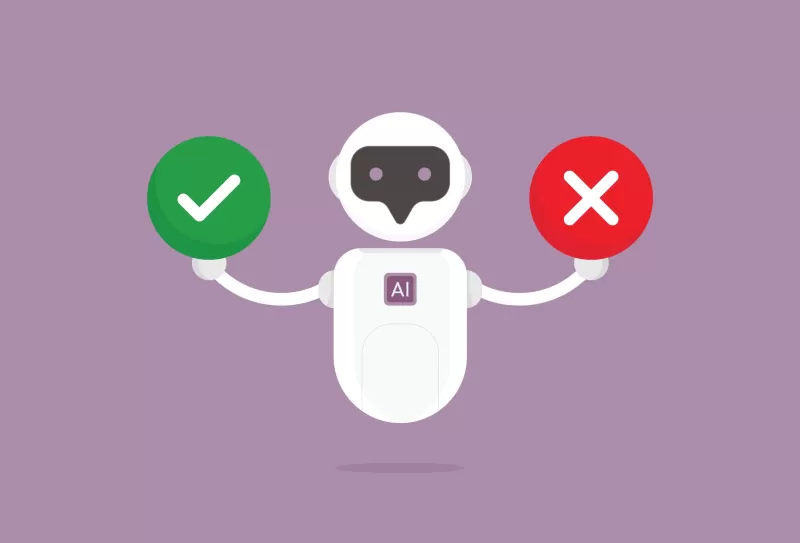
This week, Google unveiled Gemma 3, a family of open AI models that have been lauded for their efficiency. However, developers on X have expressed frustration over Gemma 3's license, which poses significant risks for commercial applications. This issue isn't isolated to Gemma 3; companies like Meta also impose custom, non-standard licensing terms on their open models, creating legal hurdles for businesses. Smaller firms, in particular, are concerned that Google and similar companies might suddenly enforce stricter clauses, disrupting their operations.
Nick Vidal, head of community at the Open Source Initiative, highlighted the problem to TechCrunch, stating, "The restrictive and inconsistent licensing of so-called 'open' AI models is creating significant uncertainty, particularly for commercial adoption. While these models are marketed as open, the actual terms impose various legal and practical hurdles that deter businesses from integrating them into their products or services."
Open model developers often opt for proprietary licenses over standard ones like Apache and MIT for specific reasons. For instance, AI startup Cohere has made it clear that it supports scientific, but not commercial, work on its models. However, the licenses for Gemma and Meta's Llama models include restrictions that limit how companies can use them without legal risks.
Meta's Llama 3 license, for example, prohibits developers from using the model's output to improve any model other than Llama 3 or its derivatives. It also bars companies with over 700 million monthly active users from deploying Llama models without a special license. Gemma's license, while less restrictive, allows Google to restrict usage if it believes there's a violation of its prohibited use policy or applicable laws.
These terms extend to models derived from Llama or Gemma, including those trained on synthetic data generated by Gemma. Florian Brand, an AI researcher at Trier University, argues that such licenses "cannot reasonably be called 'open source.'" He told TechCrunch, "Most companies have a set of approved licenses, such as Apache 2.0, so any custom license is a lot of trouble and money. Small companies without legal teams or money for lawyers will stick to models with standard licenses."
Brand also noted that while companies like Google haven't aggressively enforced these terms yet, the mere threat can deter adoption. "These restrictions have an impact on the AI ecosystem—even on AI researchers like me," he said.
Han-Chung Lee, director of machine learning at Moody's, and Eric Tramel, a staff applied scientist at AI startup Gretel, agree that custom licenses like those of Gemma and Llama make the models "not usable" in many commercial scenarios. Tramel raised concerns about the potential for "clawbacks" and the confusion over licensing for model derivatives. He warned that models could be used as a "trojan horse" to gain insight into successful business cases and then leverage legal action to enter those markets.
Despite their restrictive licenses, some models like Llama have seen widespread adoption, being downloaded millions of times and integrated into products by major corporations like Spotify. However, Yacine Jernite, head of machine learning and society at AI startup Hugging Face, believes they could be even more successful with permissive licenses. He urged providers like Google to adopt open license frameworks and collaborate more directly with users on widely accepted terms.
Jernite noted, "Given the lack of consensus on these terms and the fact that many of the underlying assumptions haven't yet been tested in courts, it all serves primarily as a declaration of intent from those actors. If certain clauses are interpreted too broadly, a lot of good work will find itself on uncertain legal ground, which is particularly scary for organizations building successful commercial products."
Vidal emphasized the need for AI models that can be freely integrated, modified, and shared without the fear of sudden license changes or legal ambiguity. He stated, "The current landscape of AI model licensing is riddled with confusion, restrictive terms, and misleading claims of openness. Instead of redefining 'open' to suit corporate interests, the AI industry should align with established open source principles to create a truly open ecosystem."
Related article
 Google Tests Remy AI Agent for Gemini as Focus Shifts to User Control
According to Business Insider, Google is testing Remy, a new AI personal agent for Gemini. This tool aims to execute tasks on behalf of users, streamlining both professional workflows and daily routines.Currently, Remy is undergoing testing in an int
How to fix Core Web Vitals for better SEO rankings
Streamline Report Card Comments with AI ToolsIntroductionAI Tools for Generating Report Card CommentsMagic SchoolAlmanac AIChat GPTUsing Magic School to Generate Report Card CommentsLogging into Magic SchoolSelecting the Report Card Comments ToolCust
Slackbot Becomes an AI Agent
Slackbot, the automated assistant embedded in Salesforce’s corporate messaging platform Slack, is evolving into an AI agent. Salesforce CTO Parker Harris envisions it achieving viral status comparable to OpenAI’s ChatGPT.The cloud software giant laun
Related Special Topic Recommendations
writing
Google Tests Remy AI Agent for Gemini as Focus Shifts to User Control
According to Business Insider, Google is testing Remy, a new AI personal agent for Gemini. This tool aims to execute tasks on behalf of users, streamlining both professional workflows and daily routines.Currently, Remy is undergoing testing in an int
How to fix Core Web Vitals for better SEO rankings
Streamline Report Card Comments with AI ToolsIntroductionAI Tools for Generating Report Card CommentsMagic SchoolAlmanac AIChat GPTUsing Magic School to Generate Report Card CommentsLogging into Magic SchoolSelecting the Report Card Comments ToolCust
Slackbot Becomes an AI Agent
Slackbot, the automated assistant embedded in Salesforce’s corporate messaging platform Slack, is evolving into an AI agent. Salesforce CTO Parker Harris envisions it achieving viral status comparable to OpenAI’s ChatGPT.The cloud software giant laun
Related Special Topic Recommendations
writing
 Best AI Outline Generators for Long-Form SEO Articles
2026 Latest Best Top-Rated AI Outline Generators for Long-Form SEO Articles, meticulously curated by XIX.AI. These powerful tools offer game-changing assistance in creating high-quality content quickly, boosting writing efficiency significantly. Get a free vs paid comparison along with real-world tests and detailed rankings to help you find the must-try option that suits your needs. Explore now to unlock your AI edge.
 8 tools
 xix.ai
Education and Learning
AI Study Tools for Homework and Exam Prep
xix.ai
Education and Learning
AI Study Tools for Homework and Exam Prep
2026 Latest Best AI Study Tools for Homework and Exam Prep! XIX.AI curates a top-rated list of powerful, game-changing tools that help students boost productivity, streamline homework completion, and ace exams through real-world tests. Get a free vs paid comparison, detailed rankings, and must-try options to unlock your AI edge. Explore now!
10 tools
xix.ai
Music composition
AI Vocal Demo Tools for Songwriters, Hooks, Toplines, and Multilingual Draft Sessions
2026 Latest Best AI Vocal Demo Tools for Songwriters, Hook Creators, and Multi-Language Content Teams! XIX.AI has curated a top-rated list of powerful game-changing tools that go through rigorous real-world tests. You’ll find detailed free vs paid comparison data, comprehensive rankings, and must-try options to help you boost writing efficiency and unlock your creative potential. Explore now to discover your perfect tool for all your content needs!
9 tools
xix.ai
Business
Best AI Competitive Research Tools for Small Businesses
2026 Latest Best Top-rated AI Competitive Research Tools for Small Businesses! XIX.AI has curated a highly powerful game-changing collection, updated weekly with rigorous real-world tests and detailed rankings. You can find a comprehensive free vs paid comparison to help you identify the must-try tools that boost your productivity and give you a competitive edge. Explore now to discover your perfect tool!
9 tools
xix.ai
Image editing
Photoshop AI Retouch Tools for Ecommerce Apparel, Skin Cleanup, and Color Consistency
2026 Latest Best Photoshop AI retouch tools for ecommerce apparel, skin cleanup, and color consistency! This top-rated curated list features powerful game-changing solutions that help you boost writing efficiency, streamline content creation, and achieve perfect visual results effortlessly. Each tool has undergone real-world tests through weekly updated rankings, complete with free vs paid comparison details. Backed by XIX.AI, it’s the must-try guide for anyone aiming to unlock your AI edge. Explore now!
10 tools
xix.ai
Prompt
Best AI Prompt Libraries for ChatGPT Workflows
2026 Latest Best Top-Rated AI Prompt Libraries for optimizing all types of ChatGPT workflows. XIX.AI has curated a powerful, game-changing collection that goes through rigorous real-world tests to ensure top performance. You can find detailed free vs paid comparisons and expert rankings to help you choose the must-try tools that boost your productivity and unlock your AI edge. Explore now!
11 tools
xix.ai

 Comments (53)
0/500
Comments (53)
0/500
![KevinMartinez]()
So "open" really just means "free to look, not to use"? Classic bait-and-switch from the big guys. 🙄 Who's actually surprised at this point?
![DanielJohnson]()
Diese Diskussion über „Open AI“ Lizenzen ist wichtiger, als viele denken. Meta hat mit Llama auch schon solche überraschenden Klauseln reingepackt. Für kleine Firmen, die auf sowas setzen, ist das echt ein Minenfeld. Man denkt, man nutzt frei verfügbare Technologie, und plötzlich lauert die nächste Rechnung oder Rechtsstreit. Da ist die Euphorie über neue Modelle schnell verflogen. Die Branche braucht hier echt mehr Transparenz und faire Spielregeln für alle, nicht nur für die Tech-Giganten. 🤔
![WillGarcía]()
これって…結局は『Open』じゃないんだね 😅 ライセンス条項の細かい所を読むと、商用利用が結構厽しめに制限されているみたい。技術的には素晴らしいと思うけど、こういう伏兵みたいな規約が増えてくると、結局自分でモデルを作った方が安上がりなんじゃないか、って思っちゃうな。
![WalterWalker]()
Gemma 3のライセンス条件をざっと見たけど、やっぱり大企業の「オープン」戦略って本当の意味でのオープンソース精神からは程遠いよね。結局は彼らのエコシステムに縛り付けるための仕組みじゃないかと疑いたくなるわ… 🤨 開発者はいつもリスクトレードオフを迫られる立場で、なんだか気の毒だな。
![WillieRodriguez]()
Gemma 3 heißt plötzlich 'open', aber die Lizenz liest sich wie eine Knebelklausel. 🤔 Komischerweise wird das Risiko für kommerzielle Anwendungen erst auffällig, wenn Entwickler drauf stoßen. Meta ist auch nicht besser. Diese großen Tech-Firmen schaffen eine eigene Art von 'Open Source' – mit unsichtbaren Zäunen. Irgendwann merkt man: frei ist nur der Code, nicht die Nutzung. Gibt's überhaupt noch echte Alternativen?
![RichardJackson]()
あれ?オープンAIモデルのはずなのに商用制限が結構あるんだ。GoogleのGemma 3もMetaも結局は自社の利益を守りたいだけ?企業向けに使うなら、ライセンス条項をしっかり確認しないと危険かも…🤔
This week, Google unveiled Gemma 3, a family of open AI models that have been lauded for their efficiency. However, developers on X have expressed frustration over Gemma 3's license, which poses significant risks for commercial applications. This issue isn't isolated to Gemma 3; companies like Meta also impose custom, non-standard licensing terms on their open models, creating legal hurdles for businesses. Smaller firms, in particular, are concerned that Google and similar companies might suddenly enforce stricter clauses, disrupting their operations.
Nick Vidal, head of community at the Open Source Initiative, highlighted the problem to TechCrunch, stating, "The restrictive and inconsistent licensing of so-called 'open' AI models is creating significant uncertainty, particularly for commercial adoption. While these models are marketed as open, the actual terms impose various legal and practical hurdles that deter businesses from integrating them into their products or services."
Open model developers often opt for proprietary licenses over standard ones like Apache and MIT for specific reasons. For instance, AI startup Cohere has made it clear that it supports scientific, but not commercial, work on its models. However, the licenses for Gemma and Meta's Llama models include restrictions that limit how companies can use them without legal risks.
Meta's Llama 3 license, for example, prohibits developers from using the model's output to improve any model other than Llama 3 or its derivatives. It also bars companies with over 700 million monthly active users from deploying Llama models without a special license. Gemma's license, while less restrictive, allows Google to restrict usage if it believes there's a violation of its prohibited use policy or applicable laws.
These terms extend to models derived from Llama or Gemma, including those trained on synthetic data generated by Gemma. Florian Brand, an AI researcher at Trier University, argues that such licenses "cannot reasonably be called 'open source.'" He told TechCrunch, "Most companies have a set of approved licenses, such as Apache 2.0, so any custom license is a lot of trouble and money. Small companies without legal teams or money for lawyers will stick to models with standard licenses."
Brand also noted that while companies like Google haven't aggressively enforced these terms yet, the mere threat can deter adoption. "These restrictions have an impact on the AI ecosystem—even on AI researchers like me," he said.
Han-Chung Lee, director of machine learning at Moody's, and Eric Tramel, a staff applied scientist at AI startup Gretel, agree that custom licenses like those of Gemma and Llama make the models "not usable" in many commercial scenarios. Tramel raised concerns about the potential for "clawbacks" and the confusion over licensing for model derivatives. He warned that models could be used as a "trojan horse" to gain insight into successful business cases and then leverage legal action to enter those markets.
Despite their restrictive licenses, some models like Llama have seen widespread adoption, being downloaded millions of times and integrated into products by major corporations like Spotify. However, Yacine Jernite, head of machine learning and society at AI startup Hugging Face, believes they could be even more successful with permissive licenses. He urged providers like Google to adopt open license frameworks and collaborate more directly with users on widely accepted terms.
Jernite noted, "Given the lack of consensus on these terms and the fact that many of the underlying assumptions haven't yet been tested in courts, it all serves primarily as a declaration of intent from those actors. If certain clauses are interpreted too broadly, a lot of good work will find itself on uncertain legal ground, which is particularly scary for organizations building successful commercial products."
Vidal emphasized the need for AI models that can be freely integrated, modified, and shared without the fear of sudden license changes or legal ambiguity. He stated, "The current landscape of AI model licensing is riddled with confusion, restrictive terms, and misleading claims of openness. Instead of redefining 'open' to suit corporate interests, the AI industry should align with established open source principles to create a truly open ecosystem."







 Google Tests Remy AI Agent for Gemini as Focus Shifts to User Control
According to Business Insider, Google is testing Remy, a new AI personal agent for Gemini. This tool aims to execute tasks on behalf of users, streamlining both professional workflows and daily routines.Currently, Remy is undergoing testing in an int
Google Tests Remy AI Agent for Gemini as Focus Shifts to User Control
According to Business Insider, Google is testing Remy, a new AI personal agent for Gemini. This tool aims to execute tasks on behalf of users, streamlining both professional workflows and daily routines.Currently, Remy is undergoing testing in an int
 How to fix Core Web Vitals for better SEO rankings
Streamline Report Card Comments with AI ToolsIntroductionAI Tools for Generating Report Card CommentsMagic SchoolAlmanac AIChat GPTUsing Magic School to Generate Report Card CommentsLogging into Magic SchoolSelecting the Report Card Comments ToolCust
How to fix Core Web Vitals for better SEO rankings
Streamline Report Card Comments with AI ToolsIntroductionAI Tools for Generating Report Card CommentsMagic SchoolAlmanac AIChat GPTUsing Magic School to Generate Report Card CommentsLogging into Magic SchoolSelecting the Report Card Comments ToolCust
 Slackbot Becomes an AI Agent
Slackbot, the automated assistant embedded in Salesforce’s corporate messaging platform Slack, is evolving into an AI agent. Salesforce CTO Parker Harris envisions it achieving viral status comparable to OpenAI’s ChatGPT.The cloud software giant laun
Slackbot Becomes an AI Agent
Slackbot, the automated assistant embedded in Salesforce’s corporate messaging platform Slack, is evolving into an AI agent. Salesforce CTO Parker Harris envisions it achieving viral status comparable to OpenAI’s ChatGPT.The cloud software giant laun

2026 Latest Best Top-Rated AI Outline Generators for Long-Form SEO Articles, meticulously curated by XIX.AI. These powerful tools offer game-changing assistance in creating high-quality content quickly, boosting writing efficiency significantly. Get a free vs paid comparison along with real-world tests and detailed rankings to help you find the must-try option that suits your needs. Explore now to unlock your AI edge.
8 tools
xix.ai

2026 Latest Best AI Study Tools for Homework and Exam Prep! XIX.AI curates a top-rated list of powerful, game-changing tools that help students boost productivity, streamline homework completion, and ace exams through real-world tests. Get a free vs paid comparison, detailed rankings, and must-try options to unlock your AI edge. Explore now!
10 tools
xix.ai

2026 Latest Best AI Vocal Demo Tools for Songwriters, Hook Creators, and Multi-Language Content Teams! XIX.AI has curated a top-rated list of powerful game-changing tools that go through rigorous real-world tests. You’ll find detailed free vs paid comparison data, comprehensive rankings, and must-try options to help you boost writing efficiency and unlock your creative potential. Explore now to discover your perfect tool for all your content needs!
9 tools
xix.ai

2026 Latest Best Top-rated AI Competitive Research Tools for Small Businesses! XIX.AI has curated a highly powerful game-changing collection, updated weekly with rigorous real-world tests and detailed rankings. You can find a comprehensive free vs paid comparison to help you identify the must-try tools that boost your productivity and give you a competitive edge. Explore now to discover your perfect tool!
9 tools
xix.ai
2026 Latest Best Photoshop AI retouch tools for ecommerce apparel, skin cleanup, and color consistency! This top-rated curated list features powerful game-changing solutions that help you boost writing efficiency, streamline content creation, and achieve perfect visual results effortlessly. Each tool has undergone real-world tests through weekly updated rankings, complete with free vs paid comparison details. Backed by XIX.AI, it’s the must-try guide for anyone aiming to unlock your AI edge. Explore now!
10 tools
xix.ai
2026 Latest Best Top-Rated AI Prompt Libraries for optimizing all types of ChatGPT workflows. XIX.AI has curated a powerful, game-changing collection that goes through rigorous real-world tests to ensure top performance. You can find detailed free vs paid comparisons and expert rankings to help you choose the must-try tools that boost your productivity and unlock your AI edge. Explore now!
11 tools
xix.ai

So "open" really just means "free to look, not to use"? Classic bait-and-switch from the big guys. 🙄 Who's actually surprised at this point?
Diese Diskussion über „Open AI“ Lizenzen ist wichtiger, als viele denken. Meta hat mit Llama auch schon solche überraschenden Klauseln reingepackt. Für kleine Firmen, die auf sowas setzen, ist das echt ein Minenfeld. Man denkt, man nutzt frei verfügbare Technologie, und plötzlich lauert die nächste Rechnung oder Rechtsstreit. Da ist die Euphorie über neue Modelle schnell verflogen. Die Branche braucht hier echt mehr Transparenz und faire Spielregeln für alle, nicht nur für die Tech-Giganten. 🤔
これって…結局は『Open』じゃないんだね 😅 ライセンス条項の細かい所を読むと、商用利用が結構厽しめに制限されているみたい。技術的には素晴らしいと思うけど、こういう伏兵みたいな規約が増えてくると、結局自分でモデルを作った方が安上がりなんじゃないか、って思っちゃうな。
Gemma 3のライセンス条件をざっと見たけど、やっぱり大企業の「オープン」戦略って本当の意味でのオープンソース精神からは程遠いよね。結局は彼らのエコシステムに縛り付けるための仕組みじゃないかと疑いたくなるわ… 🤨 開発者はいつもリスクトレードオフを迫られる立場で、なんだか気の毒だな。
Gemma 3 heißt plötzlich 'open', aber die Lizenz liest sich wie eine Knebelklausel. 🤔 Komischerweise wird das Risiko für kommerzielle Anwendungen erst auffällig, wenn Entwickler drauf stoßen. Meta ist auch nicht besser. Diese großen Tech-Firmen schaffen eine eigene Art von 'Open Source' – mit unsichtbaren Zäunen. Irgendwann merkt man: frei ist nur der Code, nicht die Nutzung. Gibt's überhaupt noch echte Alternativen?
あれ?オープンAIモデルのはずなのに商用制限が結構あるんだ。GoogleのGemma 3もMetaも結局は自社の利益を守りたいだけ?企業向けに使うなら、ライセンス条項をしっかり確認しないと危険かも…🤔












