


 Home
HomeAI Deepfakes and Political Misinformation: How to Identify Fake Content
The Deepfake Dilemma: How AI is Reshaping Truth in the Digital Age
We live in a world where seeing is no longer believing. With the rise of AI-generated deepfakes, the line between reality and digital fabrication has blurred—especially in politics. As we approach critical election cycles, these hyper-realistic forgeries are being weaponized to manipulate public opinion, often targeting vulnerable demographics.
But here’s the good news: you can fight back. By understanding how deepfakes work and learning to spot them, you can protect yourself—and others—from falling for sophisticated disinformation.
Why Deepfakes Are a Growing Threat
What Exactly Are AI Deepfakes?
Deepfakes are AI-generated images, videos, or audio clips that manipulate reality. Using advanced machine learning, scammers can make anyone appear to say or do things they never did. While the technology has legitimate uses (think movie dubbing or virtual assistants), its misuse in politics is alarming.
The 2024 Election: A Deepfake Battleground
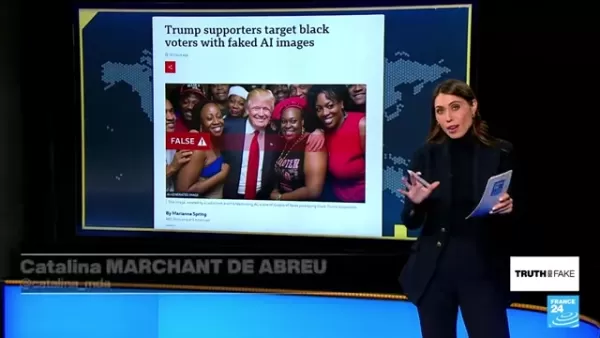
As the U.S. election heats up, deepfakes are flooding social media. One disturbing trend? Fake AI-generated images of Black voters supporting Trump.
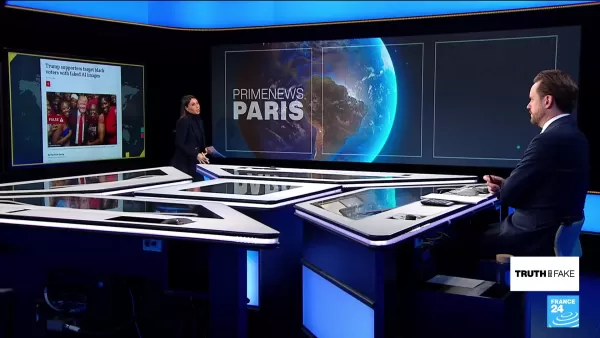
A BBC Panorama investigation uncovered dozens of these fabricated images, designed to sway Black voters. Some went viral, racking up 1.4 million views on X (formerly Twitter). One post falsely claimed Trump stopped his motorcade to take photos with young Black men—except the image was entirely AI-generated.
Why This Matters
Deepfakes don’t just spread lies—they erode trust in democracy. If voters can’t distinguish real news from AI-generated propaganda, elections could be decided by deception rather than facts.
How to Spot a Deepfake Before It Tricks You
AI isn’t perfect—yet. Most deepfakes still have subtle (or not-so-subtle) flaws. Here’s what to look for:
1. The "Hand Test"
AI struggles with hands. Look for:
- Extra or missing fingers
- Weirdly shaped hands
- Fingers merging into objects
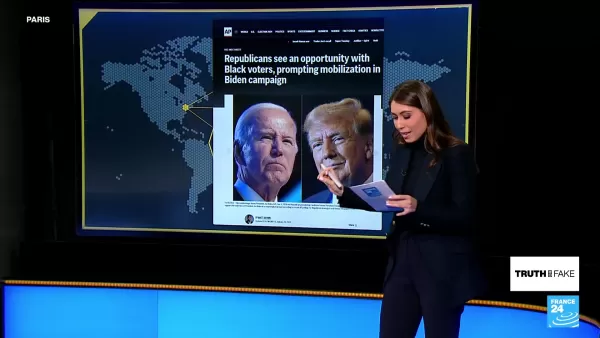
Example: In one deepfake, Trump had only three fingers.
2. Unnatural Skin & Lighting
- Overly smooth or waxy skin
- Strange shadows or reflections
- Mismatched lighting on faces vs. backgrounds
3. Digital Glitches
- Blurry edges around faces
- Pixelation in unnatural places
- Odd color shifts on skin or clothing
Fact-Check Like a Pro: Don’t Fall for Fake News
Step 1: Verify the Source
- Who posted it? Check the account’s history—is it a bot or a real person?
- Is it from a trusted news outlet? If not, be skeptical.
Step 2: Reverse Image Search
- Use Google Lens or TinEye to see if the image appears elsewhere.
- If it’s only on obscure sites, it’s probably fake.
Step 3: Cross-Check with Reliable Fact-Checkers
- BBC Reality Check
- PolitiFact
- Snopes
Step 4: Watch for Emotional Manipulation
Deepfakes often play on fear, anger, or excitement. If a post makes you feel outraged, pause—it might be designed to manipulate you.
FAQs: Your Deepfake Questions Answered
Q: Can social media stop deepfakes?
A: Platforms are trying—using AI detectors and partnering with fact-checkers—but the battle is ongoing. Your best defense? Critical thinking.
Q: How can I protect myself?
A: Slow down before sharing. Verify, verify, verify. And teach others to do the same.
Q: Should AI be banned?
A: Not necessarily—but stronger regulations and ethical AI development are crucial to prevent misuse.
The Bottom Line
Deepfakes are here to stay, but you don’t have to be fooled. Stay vigilant, fact-check everything, and don’t let AI decide what you believe.
🚨 Think before you share. The truth depends on it.
Related article
 Swedish AI Startup Lovable Eyes $13.2 Billion Valuation After Major Funding Round
As AI-driven coding tools gain traction, Swedish startup Lovable has secured a major funding round. The company aims to raise $3 billion, potentially boosting its valuation to $13.2 billion—double the $6.6 billion recorded last December. Menlo Ventur
Google Tests Remy AI Agent for Gemini as Focus Shifts to User Control
According to Business Insider, Google is testing Remy, a new AI personal agent for Gemini. This tool aims to execute tasks on behalf of users, streamlining both professional workflows and daily routines.Currently, Remy is undergoing testing in an int
How to fix Core Web Vitals for better SEO rankings
Streamline Report Card Comments with AI ToolsIntroductionAI Tools for Generating Report Card CommentsMagic SchoolAlmanac AIChat GPTUsing Magic School to Generate Report Card CommentsLogging into Magic SchoolSelecting the Report Card Comments ToolCust
Related Special Topic Recommendations
writing
Swedish AI Startup Lovable Eyes $13.2 Billion Valuation After Major Funding Round
As AI-driven coding tools gain traction, Swedish startup Lovable has secured a major funding round. The company aims to raise $3 billion, potentially boosting its valuation to $13.2 billion—double the $6.6 billion recorded last December. Menlo Ventur
Google Tests Remy AI Agent for Gemini as Focus Shifts to User Control
According to Business Insider, Google is testing Remy, a new AI personal agent for Gemini. This tool aims to execute tasks on behalf of users, streamlining both professional workflows and daily routines.Currently, Remy is undergoing testing in an int
How to fix Core Web Vitals for better SEO rankings
Streamline Report Card Comments with AI ToolsIntroductionAI Tools for Generating Report Card CommentsMagic SchoolAlmanac AIChat GPTUsing Magic School to Generate Report Card CommentsLogging into Magic SchoolSelecting the Report Card Comments ToolCust
Related Special Topic Recommendations
writing
 Best AI Outline Generators for Long-Form SEO Articles
2026 Latest Best Top-Rated AI Outline Generators for Long-Form SEO Articles, meticulously curated by XIX.AI. These powerful tools offer game-changing assistance in creating high-quality content quickly, boosting writing efficiency significantly. Get a free vs paid comparison along with real-world tests and detailed rankings to help you find the must-try option that suits your needs. Explore now to unlock your AI edge.
 8 tools
 xix.ai
Education and Learning
AI Study Tools for Homework and Exam Prep
xix.ai
Education and Learning
AI Study Tools for Homework and Exam Prep
2026 Latest Best AI Study Tools for Homework and Exam Prep! XIX.AI curates a top-rated list of powerful, game-changing tools that help students boost productivity, streamline homework completion, and ace exams through real-world tests. Get a free vs paid comparison, detailed rankings, and must-try options to unlock your AI edge. Explore now!
10 tools
xix.ai
Music composition
AI Vocal Demo Tools for Songwriters, Hooks, Toplines, and Multilingual Draft Sessions
2026 Latest Best AI Vocal Demo Tools for Songwriters, Hook Creators, and Multi-Language Content Teams! XIX.AI has curated a top-rated list of powerful game-changing tools that go through rigorous real-world tests. You’ll find detailed free vs paid comparison data, comprehensive rankings, and must-try options to help you boost writing efficiency and unlock your creative potential. Explore now to discover your perfect tool for all your content needs!
9 tools
xix.ai
Business
Best AI Competitive Research Tools for Small Businesses
2026 Latest Best Top-rated AI Competitive Research Tools for Small Businesses! XIX.AI has curated a highly powerful game-changing collection, updated weekly with rigorous real-world tests and detailed rankings. You can find a comprehensive free vs paid comparison to help you identify the must-try tools that boost your productivity and give you a competitive edge. Explore now to discover your perfect tool!
9 tools
xix.ai
Image editing
Photoshop AI Retouch Tools for Ecommerce Apparel, Skin Cleanup, and Color Consistency
2026 Latest Best Photoshop AI retouch tools for ecommerce apparel, skin cleanup, and color consistency! This top-rated curated list features powerful game-changing solutions that help you boost writing efficiency, streamline content creation, and achieve perfect visual results effortlessly. Each tool has undergone real-world tests through weekly updated rankings, complete with free vs paid comparison details. Backed by XIX.AI, it’s the must-try guide for anyone aiming to unlock your AI edge. Explore now!
10 tools
xix.ai
Prompt
Best AI Prompt Libraries for ChatGPT Workflows
2026 Latest Best Top-Rated AI Prompt Libraries for optimizing all types of ChatGPT workflows. XIX.AI has curated a powerful, game-changing collection that goes through rigorous real-world tests to ensure top performance. You can find detailed free vs paid comparisons and expert rankings to help you choose the must-try tools that boost your productivity and unlock your AI edge. Explore now!
11 tools
xix.ai

 Comments (3)
0/500
Comments (3)
0/500
![JonathanMiller]()
Also ich finds echt krass, wie schnell sich KI-Fälschungen verbreiten können - in Wahlkampfzeiten kann das ja richtig gefährlich werden. 🧐 Hab letztens ein Video gesehen und mich schon gefragt, ob das echt ist oder nicht. Wundert mich nicht, dass es extra Tools zur Erkennung gibt!
![JonathanRoberts]()
La technologie des deepfakes devient vraiment flippante, surtout à l'approche des élections 😳. J'ai vu une vidéo qui avait l'air tellement réelle, ça fait peur de penser à l'impact que ça peut avoir sur les résultats. On devrait vraiment apprendre à les repérer dès l'école, non ?
![AndrewPerez]()
政治人物現在連講話都要先證明自己是本人了嗎?😂 這些AI深偽技術真的讓選舉變成偵探遊戲了,以後投票前可能得先通過圖靈測試。
The Deepfake Dilemma: How AI is Reshaping Truth in the Digital Age
We live in a world where seeing is no longer believing. With the rise of AI-generated deepfakes, the line between reality and digital fabrication has blurred—especially in politics. As we approach critical election cycles, these hyper-realistic forgeries are being weaponized to manipulate public opinion, often targeting vulnerable demographics.
But here’s the good news: you can fight back. By understanding how deepfakes work and learning to spot them, you can protect yourself—and others—from falling for sophisticated disinformation.
Why Deepfakes Are a Growing Threat
What Exactly Are AI Deepfakes?
Deepfakes are AI-generated images, videos, or audio clips that manipulate reality. Using advanced machine learning, scammers can make anyone appear to say or do things they never did. While the technology has legitimate uses (think movie dubbing or virtual assistants), its misuse in politics is alarming.
The 2024 Election: A Deepfake Battleground
As the U.S. election heats up, deepfakes are flooding social media. One disturbing trend? Fake AI-generated images of Black voters supporting Trump.
A BBC Panorama investigation uncovered dozens of these fabricated images, designed to sway Black voters. Some went viral, racking up 1.4 million views on X (formerly Twitter). One post falsely claimed Trump stopped his motorcade to take photos with young Black men—except the image was entirely AI-generated.
Why This Matters
Deepfakes don’t just spread lies—they erode trust in democracy. If voters can’t distinguish real news from AI-generated propaganda, elections could be decided by deception rather than facts.
How to Spot a Deepfake Before It Tricks You
AI isn’t perfect—yet. Most deepfakes still have subtle (or not-so-subtle) flaws. Here’s what to look for:
1. The "Hand Test"
AI struggles with hands. Look for:
- Extra or missing fingers
- Weirdly shaped hands
- Fingers merging into objects
Example: In one deepfake, Trump had only three fingers.
2. Unnatural Skin & Lighting
- Overly smooth or waxy skin
- Strange shadows or reflections
- Mismatched lighting on faces vs. backgrounds
3. Digital Glitches
- Blurry edges around faces
- Pixelation in unnatural places
- Odd color shifts on skin or clothing
Fact-Check Like a Pro: Don’t Fall for Fake News
Step 1: Verify the Source
- Who posted it? Check the account’s history—is it a bot or a real person?
- Is it from a trusted news outlet? If not, be skeptical.
Step 2: Reverse Image Search
- Use Google Lens or TinEye to see if the image appears elsewhere.
- If it’s only on obscure sites, it’s probably fake.
Step 3: Cross-Check with Reliable Fact-Checkers
- BBC Reality Check
- PolitiFact
- Snopes
Step 4: Watch for Emotional Manipulation
Deepfakes often play on fear, anger, or excitement. If a post makes you feel outraged, pause—it might be designed to manipulate you.
FAQs: Your Deepfake Questions Answered
Q: Can social media stop deepfakes?
A: Platforms are trying—using AI detectors and partnering with fact-checkers—but the battle is ongoing. Your best defense? Critical thinking.
Q: How can I protect myself?
A: Slow down before sharing. Verify, verify, verify. And teach others to do the same.
Q: Should AI be banned?
A: Not necessarily—but stronger regulations and ethical AI development are crucial to prevent misuse.
The Bottom Line
Deepfakes are here to stay, but you don’t have to be fooled. Stay vigilant, fact-check everything, and don’t let AI decide what you believe.
🚨 Think before you share. The truth depends on it.








 Swedish AI Startup Lovable Eyes $13.2 Billion Valuation After Major Funding Round
As AI-driven coding tools gain traction, Swedish startup Lovable has secured a major funding round. The company aims to raise $3 billion, potentially boosting its valuation to $13.2 billion—double the $6.6 billion recorded last December. Menlo Ventur
Google Tests Remy AI Agent for Gemini as Focus Shifts to User Control
According to Business Insider, Google is testing Remy, a new AI personal agent for Gemini. This tool aims to execute tasks on behalf of users, streamlining both professional workflows and daily routines.Currently, Remy is undergoing testing in an int
Swedish AI Startup Lovable Eyes $13.2 Billion Valuation After Major Funding Round
As AI-driven coding tools gain traction, Swedish startup Lovable has secured a major funding round. The company aims to raise $3 billion, potentially boosting its valuation to $13.2 billion—double the $6.6 billion recorded last December. Menlo Ventur
Google Tests Remy AI Agent for Gemini as Focus Shifts to User Control
According to Business Insider, Google is testing Remy, a new AI personal agent for Gemini. This tool aims to execute tasks on behalf of users, streamlining both professional workflows and daily routines.Currently, Remy is undergoing testing in an int
 How to fix Core Web Vitals for better SEO rankings
Streamline Report Card Comments with AI ToolsIntroductionAI Tools for Generating Report Card CommentsMagic SchoolAlmanac AIChat GPTUsing Magic School to Generate Report Card CommentsLogging into Magic SchoolSelecting the Report Card Comments ToolCust
How to fix Core Web Vitals for better SEO rankings
Streamline Report Card Comments with AI ToolsIntroductionAI Tools for Generating Report Card CommentsMagic SchoolAlmanac AIChat GPTUsing Magic School to Generate Report Card CommentsLogging into Magic SchoolSelecting the Report Card Comments ToolCust

2026 Latest Best Top-Rated AI Outline Generators for Long-Form SEO Articles, meticulously curated by XIX.AI. These powerful tools offer game-changing assistance in creating high-quality content quickly, boosting writing efficiency significantly. Get a free vs paid comparison along with real-world tests and detailed rankings to help you find the must-try option that suits your needs. Explore now to unlock your AI edge.
8 tools
xix.ai

2026 Latest Best AI Study Tools for Homework and Exam Prep! XIX.AI curates a top-rated list of powerful, game-changing tools that help students boost productivity, streamline homework completion, and ace exams through real-world tests. Get a free vs paid comparison, detailed rankings, and must-try options to unlock your AI edge. Explore now!
10 tools
xix.ai

2026 Latest Best AI Vocal Demo Tools for Songwriters, Hook Creators, and Multi-Language Content Teams! XIX.AI has curated a top-rated list of powerful game-changing tools that go through rigorous real-world tests. You’ll find detailed free vs paid comparison data, comprehensive rankings, and must-try options to help you boost writing efficiency and unlock your creative potential. Explore now to discover your perfect tool for all your content needs!
9 tools
xix.ai

2026 Latest Best Top-rated AI Competitive Research Tools for Small Businesses! XIX.AI has curated a highly powerful game-changing collection, updated weekly with rigorous real-world tests and detailed rankings. You can find a comprehensive free vs paid comparison to help you identify the must-try tools that boost your productivity and give you a competitive edge. Explore now to discover your perfect tool!
9 tools
xix.ai

2026 Latest Best Photoshop AI retouch tools for ecommerce apparel, skin cleanup, and color consistency! This top-rated curated list features powerful game-changing solutions that help you boost writing efficiency, streamline content creation, and achieve perfect visual results effortlessly. Each tool has undergone real-world tests through weekly updated rankings, complete with free vs paid comparison details. Backed by XIX.AI, it’s the must-try guide for anyone aiming to unlock your AI edge. Explore now!
10 tools
xix.ai
2026 Latest Best Top-Rated AI Prompt Libraries for optimizing all types of ChatGPT workflows. XIX.AI has curated a powerful, game-changing collection that goes through rigorous real-world tests to ensure top performance. You can find detailed free vs paid comparisons and expert rankings to help you choose the must-try tools that boost your productivity and unlock your AI edge. Explore now!
11 tools
xix.ai

Also ich finds echt krass, wie schnell sich KI-Fälschungen verbreiten können - in Wahlkampfzeiten kann das ja richtig gefährlich werden. 🧐 Hab letztens ein Video gesehen und mich schon gefragt, ob das echt ist oder nicht. Wundert mich nicht, dass es extra Tools zur Erkennung gibt!
La technologie des deepfakes devient vraiment flippante, surtout à l'approche des élections 😳. J'ai vu une vidéo qui avait l'air tellement réelle, ça fait peur de penser à l'impact que ça peut avoir sur les résultats. On devrait vraiment apprendre à les repérer dès l'école, non ?
政治人物現在連講話都要先證明自己是本人了嗎?😂 這些AI深偽技術真的讓選舉變成偵探遊戲了,以後投票前可能得先通過圖靈測試。












