


 Home
HomeAI Begins to Build Itself
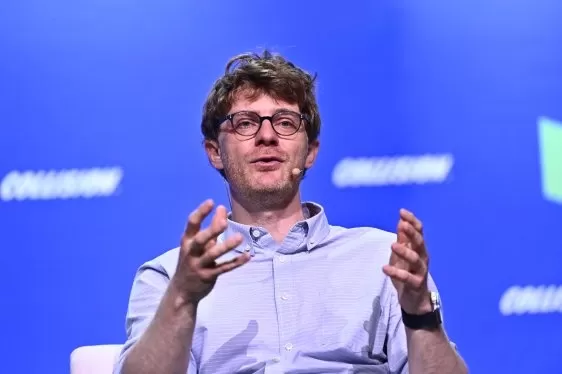
Richard Socher has long been a prominent figure in AI, widely recognized for founding the early chatbot startup You.com and, prior to that, for his work on ImageNet. Now, he is joining a new wave of research-driven AI startups with Recursive Superintelligence, a San Francisco-based company that emerged from stealth on Wednesday with $650 million in funding.
Socher is joined in this new venture by a group of notable AI researchers, including Peter Norvig and Cresta co-founder Tim Shi. Together, they aim to build a recursively self-improving AI model — one that can autonomously detect its own shortcomings and redesign itself to address them, without human intervention. This goal has long been considered a holy grail in modern AI research.
I spoke with him over Zoom after the launch, delving into Recursive's distinctive technical approach and why he doesn't consider this new project a "neolab" — an informal term for a new generation of AI startups that prioritize research over product development.
This interview has been condensed and edited for clarity.
We hear a lot about recursion these days — it seems like a widespread goal across many labs. What makes your approach unique?
Our unique approach relies on open-endedness to achieve recursive self-improvement — something no one has accomplished yet. It's an elusive goal for many. A lot of people assume it naturally happens with auto-research — you can ask an AI to improve something else, like a machine learning system or a letter you've written, and so on. But that's not recursive self-improvement; that's just improvement.
Our primary focus is building a truly recursive, self-improving superintelligence at scale — meaning the entire process of generating, implementing, and validating research ideas would be automated.
First [it would automate] AI research ideas, and eventually any kind of research ideas — including those in physical domains. But it's especially powerful when AI is working on itself, developing a new form of self-awareness regarding its own limitations.
You mentioned the term "open-ended" — does it carry a specific technical meaning?
Yes, it does. In fact, Tim Rocktäschel, one of our co-founders, led the open-endedness and self-improvement teams at Google DeepMind and worked specifically on the world model Genie 3, which is a great example of open-endedness. You can feed it any concept, any world, any agent, and it generates an interactive version.
In biological evolution, animals adapt to their environment, and others counter-adapt to those adaptations. It's a process that can continue for billions of years, with interesting developments constantly emerging. That's how we developed eyes in our [heads].
Another example is rainbow teaming, from another paper by Tim. Have you heard of red teaming?
In cybersecurity, it means—
So, red teaming also applies in the context of LLMs. Essentially, you try to get the LLM to tell you how to build a bomb, and you want to ensure it refuses to do so.
Humans can spend a long time coming up with examples of what the AI should not say. But what if you test the first AI with a second AI, and that second AI's task is to make the first AI [try to] say all possible harmful things? Then they can go back and forth for millions of iterations.
You can actually let two AIs co-evolve. One continuously attacks the other, exploring not just one angle but many different ones — hence the rainbow analogy. Then you can inoculate the first AI, making it increasingly safer. This idea came from Tim Rocktäschel, and it's now employed in all major labs.
How do you know when it's done? I suppose it's never truly finished.
Some of these things will never be completed. You can always become more intelligent, always improve at programming, math, and so on. There are theoretical limits on intelligence — I'm actually trying to formalize them right now — but they are astronomical. We are very far from those limits.
As a neolab, it seems you're expected to pursue something the major labs aren't. So the implication is that you don't think the major labs will achieve RSI [recursive self-improvement] through their current approaches. Is that a fair assessment?
I can't really comment on what they're doing, but I do think we're approaching it differently. We fully embrace the concept of open-endedness, and our team is entirely dedicated to that vision. The team has been researching and publishing in this area for the past decade, with a track record of pushing the field forward and shipping real products. Tim Shi, for instance, built Cresta into a unicorn. Josh Tobin was one of the early members at OpenAI and eventually led their Codex and deep research teams.
I actually sometimes struggle a bit with this neolab label. I feel we're not just a lab. I want us to become a truly viable company with amazing products that people love to use and that have a positive impact on humanity.
So when do you plan to release your first product?
I've thought about that a lot. The team has made so much progress that we might actually accelerate the timelines we initially assumed. But yes, there will be products — and you'll have to wait quarters, not years.
One of the ideas behind recursive self-improvement is that once we have such a system, compute becomes the only critical resource. The faster you run the system, the faster it improves, and no external human activity can truly make a difference. So the race becomes: how much processing power can we apply to it? Do you think that's the world we're heading toward?
Compute should not be underestimated. I think in the future, a key question will be: how much compute does humanity want to allocate to solving which problems? Here's this cancer, and here's that virus — which one do you want to tackle first? How much compute are you willing to assign? It eventually becomes a matter of resource allocation. It's going to be one of the most important questions in the world.
Related article
 Blacksmith’s Valuation Surges Nearly Tenfold in Under a Year
As artificial intelligence accelerates coding processes significantly, the subsequent major challenge in software development has become testing and ensuring the accuracy of all generated code. Blacksmith has recently raised another $45 million finan
U.S. Stocks Hit Historic Milestone as AI and Aerospace Giants Prepare for Trillion-Dollar Debut
Elon Musk, Sam Altman, and Dario Amodei, three titans of the technology sector, are advancing toward initial public offerings for their respective ventures. With SpaceX, OpenAI, and Anthropic—three industry behemoths nearing trillion-dollar valuation
Swedish AI Startup Lovable Eyes $13.2 Billion Valuation After Major Funding Round
As AI-driven coding tools gain traction, Swedish startup Lovable has secured a major funding round. The company aims to raise $3 billion, potentially boosting its valuation to $13.2 billion—double the $6.6 billion recorded last December. Menlo Ventur
Related Special Topic Recommendations
Data Analysis
Blacksmith’s Valuation Surges Nearly Tenfold in Under a Year
As artificial intelligence accelerates coding processes significantly, the subsequent major challenge in software development has become testing and ensuring the accuracy of all generated code. Blacksmith has recently raised another $45 million finan
U.S. Stocks Hit Historic Milestone as AI and Aerospace Giants Prepare for Trillion-Dollar Debut
Elon Musk, Sam Altman, and Dario Amodei, three titans of the technology sector, are advancing toward initial public offerings for their respective ventures. With SpaceX, OpenAI, and Anthropic—three industry behemoths nearing trillion-dollar valuation
Swedish AI Startup Lovable Eyes $13.2 Billion Valuation After Major Funding Round
As AI-driven coding tools gain traction, Swedish startup Lovable has secured a major funding round. The company aims to raise $3 billion, potentially boosting its valuation to $13.2 billion—double the $6.6 billion recorded last December. Menlo Ventur
Related Special Topic Recommendations
Data Analysis
 Best AI Anomaly Detection Tools for KPI Monitoring across SaaS and Ecommerce Teams
2026 Latest Best Top-rated AI Anomaly Detection Tools for KPI Monitoring in SaaS and Ecommerce teams! XIX.AI has curated a powerful, game-changing collection based on rigorous real-world tests and weekly updated rankings. You’ll find detailed free vs paid comparison insights to help you identify the must-try solution that boosts productivity and unlocks your AI edge. Explore now!
 10 tools
 xix.ai
writing
Best AI Outline Generators for Long-Form SEO Articles
xix.ai
writing
Best AI Outline Generators for Long-Form SEO Articles
2026 Latest Best Top-Rated AI Outline Generators for Long-Form SEO Articles, meticulously curated by XIX.AI. These powerful tools offer game-changing assistance in creating high-quality content quickly, boosting writing efficiency significantly. Get a free vs paid comparison along with real-world tests and detailed rankings to help you find the must-try option that suits your needs. Explore now to unlock your AI edge.
8 tools
xix.ai
Education and Learning
AI Study Tools for Homework and Exam Prep
2026 Latest Best AI Study Tools for Homework and Exam Prep! XIX.AI curates a top-rated list of powerful, game-changing tools that help students boost productivity, streamline homework completion, and ace exams through real-world tests. Get a free vs paid comparison, detailed rankings, and must-try options to unlock your AI edge. Explore now!
10 tools
xix.ai
Music composition
AI Vocal Demo Tools for Songwriters, Hooks, Toplines, and Multilingual Draft Sessions
2026 Latest Best AI Vocal Demo Tools for Songwriters, Hook Creators, and Multi-Language Content Teams! XIX.AI has curated a top-rated list of powerful game-changing tools that go through rigorous real-world tests. You’ll find detailed free vs paid comparison data, comprehensive rankings, and must-try options to help you boost writing efficiency and unlock your creative potential. Explore now to discover your perfect tool for all your content needs!
9 tools
xix.ai
Business
Best AI Competitive Research Tools for Small Businesses
2026 Latest Best Top-rated AI Competitive Research Tools for Small Businesses! XIX.AI has curated a highly powerful game-changing collection, updated weekly with rigorous real-world tests and detailed rankings. You can find a comprehensive free vs paid comparison to help you identify the must-try tools that boost your productivity and give you a competitive edge. Explore now to discover your perfect tool!
9 tools
xix.ai
Image editing
Photoshop AI Retouch Tools for Ecommerce Apparel, Skin Cleanup, and Color Consistency
2026 Latest Best Photoshop AI retouch tools for ecommerce apparel, skin cleanup, and color consistency! This top-rated curated list features powerful game-changing solutions that help you boost writing efficiency, streamline content creation, and achieve perfect visual results effortlessly. Each tool has undergone real-world tests through weekly updated rankings, complete with free vs paid comparison details. Backed by XIX.AI, it’s the must-try guide for anyone aiming to unlock your AI edge. Explore now!
10 tools
xix.ai

 Comments (1)
0/500
Comments (1)
0/500
![RyanAnderson]()
So AI is now building itself? Richard Socher's new venture seems like a natural progression from his work on You.com. But recursive superintelligence... sounds like we're entering the singularity zone. Let's hope it's not a Skynet scenario 🤖
Richard Socher has long been a prominent figure in AI, widely recognized for founding the early chatbot startup You.com and, prior to that, for his work on ImageNet. Now, he is joining a new wave of research-driven AI startups with Recursive Superintelligence, a San Francisco-based company that emerged from stealth on Wednesday with $650 million in funding.
Socher is joined in this new venture by a group of notable AI researchers, including Peter Norvig and Cresta co-founder Tim Shi. Together, they aim to build a recursively self-improving AI model — one that can autonomously detect its own shortcomings and redesign itself to address them, without human intervention. This goal has long been considered a holy grail in modern AI research.
I spoke with him over Zoom after the launch, delving into Recursive's distinctive technical approach and why he doesn't consider this new project a "neolab" — an informal term for a new generation of AI startups that prioritize research over product development.
This interview has been condensed and edited for clarity.
We hear a lot about recursion these days — it seems like a widespread goal across many labs. What makes your approach unique?
Our unique approach relies on open-endedness to achieve recursive self-improvement — something no one has accomplished yet. It's an elusive goal for many. A lot of people assume it naturally happens with auto-research — you can ask an AI to improve something else, like a machine learning system or a letter you've written, and so on. But that's not recursive self-improvement; that's just improvement.
Our primary focus is building a truly recursive, self-improving superintelligence at scale — meaning the entire process of generating, implementing, and validating research ideas would be automated.
First [it would automate] AI research ideas, and eventually any kind of research ideas — including those in physical domains. But it's especially powerful when AI is working on itself, developing a new form of self-awareness regarding its own limitations.
You mentioned the term "open-ended" — does it carry a specific technical meaning?
Yes, it does. In fact, Tim Rocktäschel, one of our co-founders, led the open-endedness and self-improvement teams at Google DeepMind and worked specifically on the world model Genie 3, which is a great example of open-endedness. You can feed it any concept, any world, any agent, and it generates an interactive version.
In biological evolution, animals adapt to their environment, and others counter-adapt to those adaptations. It's a process that can continue for billions of years, with interesting developments constantly emerging. That's how we developed eyes in our [heads].
Another example is rainbow teaming, from another paper by Tim. Have you heard of red teaming?
In cybersecurity, it means—
So, red teaming also applies in the context of LLMs. Essentially, you try to get the LLM to tell you how to build a bomb, and you want to ensure it refuses to do so.
Humans can spend a long time coming up with examples of what the AI should not say. But what if you test the first AI with a second AI, and that second AI's task is to make the first AI [try to] say all possible harmful things? Then they can go back and forth for millions of iterations.
You can actually let two AIs co-evolve. One continuously attacks the other, exploring not just one angle but many different ones — hence the rainbow analogy. Then you can inoculate the first AI, making it increasingly safer. This idea came from Tim Rocktäschel, and it's now employed in all major labs.
How do you know when it's done? I suppose it's never truly finished.
Some of these things will never be completed. You can always become more intelligent, always improve at programming, math, and so on. There are theoretical limits on intelligence — I'm actually trying to formalize them right now — but they are astronomical. We are very far from those limits.
As a neolab, it seems you're expected to pursue something the major labs aren't. So the implication is that you don't think the major labs will achieve RSI [recursive self-improvement] through their current approaches. Is that a fair assessment?
I can't really comment on what they're doing, but I do think we're approaching it differently. We fully embrace the concept of open-endedness, and our team is entirely dedicated to that vision. The team has been researching and publishing in this area for the past decade, with a track record of pushing the field forward and shipping real products. Tim Shi, for instance, built Cresta into a unicorn. Josh Tobin was one of the early members at OpenAI and eventually led their Codex and deep research teams.
I actually sometimes struggle a bit with this neolab label. I feel we're not just a lab. I want us to become a truly viable company with amazing products that people love to use and that have a positive impact on humanity.
So when do you plan to release your first product?
I've thought about that a lot. The team has made so much progress that we might actually accelerate the timelines we initially assumed. But yes, there will be products — and you'll have to wait quarters, not years.
One of the ideas behind recursive self-improvement is that once we have such a system, compute becomes the only critical resource. The faster you run the system, the faster it improves, and no external human activity can truly make a difference. So the race becomes: how much processing power can we apply to it? Do you think that's the world we're heading toward?
Compute should not be underestimated. I think in the future, a key question will be: how much compute does humanity want to allocate to solving which problems? Here's this cancer, and here's that virus — which one do you want to tackle first? How much compute are you willing to assign? It eventually becomes a matter of resource allocation. It's going to be one of the most important questions in the world.








 Blacksmith’s Valuation Surges Nearly Tenfold in Under a Year
As artificial intelligence accelerates coding processes significantly, the subsequent major challenge in software development has become testing and ensuring the accuracy of all generated code. Blacksmith has recently raised another $45 million finan
Blacksmith’s Valuation Surges Nearly Tenfold in Under a Year
As artificial intelligence accelerates coding processes significantly, the subsequent major challenge in software development has become testing and ensuring the accuracy of all generated code. Blacksmith has recently raised another $45 million finan
 U.S. Stocks Hit Historic Milestone as AI and Aerospace Giants Prepare for Trillion-Dollar Debut
Elon Musk, Sam Altman, and Dario Amodei, three titans of the technology sector, are advancing toward initial public offerings for their respective ventures. With SpaceX, OpenAI, and Anthropic—three industry behemoths nearing trillion-dollar valuation
U.S. Stocks Hit Historic Milestone as AI and Aerospace Giants Prepare for Trillion-Dollar Debut
Elon Musk, Sam Altman, and Dario Amodei, three titans of the technology sector, are advancing toward initial public offerings for their respective ventures. With SpaceX, OpenAI, and Anthropic—three industry behemoths nearing trillion-dollar valuation
 Swedish AI Startup Lovable Eyes $13.2 Billion Valuation After Major Funding Round
As AI-driven coding tools gain traction, Swedish startup Lovable has secured a major funding round. The company aims to raise $3 billion, potentially boosting its valuation to $13.2 billion—double the $6.6 billion recorded last December. Menlo Ventur
Swedish AI Startup Lovable Eyes $13.2 Billion Valuation After Major Funding Round
As AI-driven coding tools gain traction, Swedish startup Lovable has secured a major funding round. The company aims to raise $3 billion, potentially boosting its valuation to $13.2 billion—double the $6.6 billion recorded last December. Menlo Ventur

2026 Latest Best Top-rated AI Anomaly Detection Tools for KPI Monitoring in SaaS and Ecommerce teams! XIX.AI has curated a powerful, game-changing collection based on rigorous real-world tests and weekly updated rankings. You’ll find detailed free vs paid comparison insights to help you identify the must-try solution that boosts productivity and unlocks your AI edge. Explore now!
10 tools
xix.ai

2026 Latest Best Top-Rated AI Outline Generators for Long-Form SEO Articles, meticulously curated by XIX.AI. These powerful tools offer game-changing assistance in creating high-quality content quickly, boosting writing efficiency significantly. Get a free vs paid comparison along with real-world tests and detailed rankings to help you find the must-try option that suits your needs. Explore now to unlock your AI edge.
8 tools
xix.ai

2026 Latest Best AI Study Tools for Homework and Exam Prep! XIX.AI curates a top-rated list of powerful, game-changing tools that help students boost productivity, streamline homework completion, and ace exams through real-world tests. Get a free vs paid comparison, detailed rankings, and must-try options to unlock your AI edge. Explore now!
10 tools
xix.ai

2026 Latest Best AI Vocal Demo Tools for Songwriters, Hook Creators, and Multi-Language Content Teams! XIX.AI has curated a top-rated list of powerful game-changing tools that go through rigorous real-world tests. You’ll find detailed free vs paid comparison data, comprehensive rankings, and must-try options to help you boost writing efficiency and unlock your creative potential. Explore now to discover your perfect tool for all your content needs!
9 tools
xix.ai

2026 Latest Best Top-rated AI Competitive Research Tools for Small Businesses! XIX.AI has curated a highly powerful game-changing collection, updated weekly with rigorous real-world tests and detailed rankings. You can find a comprehensive free vs paid comparison to help you identify the must-try tools that boost your productivity and give you a competitive edge. Explore now to discover your perfect tool!
9 tools
xix.ai

2026 Latest Best Photoshop AI retouch tools for ecommerce apparel, skin cleanup, and color consistency! This top-rated curated list features powerful game-changing solutions that help you boost writing efficiency, streamline content creation, and achieve perfect visual results effortlessly. Each tool has undergone real-world tests through weekly updated rankings, complete with free vs paid comparison details. Backed by XIX.AI, it’s the must-try guide for anyone aiming to unlock your AI edge. Explore now!
10 tools
xix.ai

So AI is now building itself? Richard Socher's new venture seems like a natural progression from his work on You.com. But recursive superintelligence... sounds like we're entering the singularity zone. Let's hope it's not a Skynet scenario 🤖












