


 Home
HomeAfter spending millions on AI, Rippling launches employee ROI tool

Rippling, a leading HR software provider, has launched AI Spend Console, a tool designed to curb tokenmaxxing by helping organizations monitor and control their AI expenditures. A standout feature allows companies to track spending by individual employees, teams, and roles, determining whether higher costs correlate with genuine productivity or merely increased AI-generated noise.
According to the company’s blog post, the tool identifies “engineers with high AI spend whose peers frequently request code rewrites,” highlighting inefficiencies in development workflows.
The solution emerged after Rippling embraced tokenmaxxing early this year, mirroring industry trends, only to find employees rapidly depleting budgets. Chief Product Officer Matt MacInnis recalls a March executive meeting where CFO Adam Swiecicki revealed alarming figures that shocked the leadership team.
Rippling was projected to spend 40% of its R&D headcount budget on AI tokens, equating to spending as much on tokens as 40% of the compensation paid to employees in that department—amounting to millions of dollars. (The R&D division typically houses engineering teams at most tech firms.)
With spending growing at 80% month-over-month, continuing this trend would result in next year’s AI token costs reaching 90% of the budget allocated for high-paid R&D staff.
“We were incredulous,” MacInnis told TechCrunch.
Management immediately initiated an “urgent” project to analyze spending and assess the value derived from these expenses, he explained. The product’s launch advertisement even depicts Swiecicki sitting on a stool while employees toss bundles of cash into a paper shredder.
Upon analysis, Rippling uncovered insights such as “roughly 10–15% of our employees driving about 60% of total AI spend. One engineer was spending $50,000 a month,” according to its blog post.
Rippling did not intend to halt AI usage but rather to significantly rein it in. The company began by negotiating spending caps with its primary tools: Cursor, OpenAI, and Anthropic. This revealed a clear issue: employees defaulted to using the latest, most expensive frontier models for all tasks.
“The truth is that inference providers like Anthropic and OpenAI have absolutely no incentives to help you control your spend. They benefit from runaway expenses, which is exactly what occurs. They fail to provide robust usage insights and do not collaborate with one another,” MacInnis stated.
This was a common challenge in early 2026. Eight months into the year, enterprises have realized two key points: first, they require multiple models from various AI labs at different price points, including frontier open-weight options, potentially from Chinese providers.
Rippling founder and CEO Parker Conrad noted last month that internal benchmarks revealed SpaceX’s Grok as the overall leader, yet “GLM 5.2 is 85% cheaper but [delivered] nearly identical performance” to frontier models. (SpaceX now owns Cursor, which provides access to Grok and dozens of other models.) Z.ai’s GLM 5.2 has emerged as a preferred Chinese model for coding tasks among tech firms, with Databricks also advocating for its use.
Second, enterprises now recognize the need for an AI gateway that directs prompts to the most cost-effective model for each task. Rippling reached this conclusion and built its own AI gateway, integrated into this product. MacInnis noted that enterprises using other gateways can still utilize AI Spend Console, though those seeking spending governance features must use Rippling’s gateway.
AI Spend Console generates dashboards (formerly known as leaderboards during the tokenmaxxing era) that score metrics such as daily prompts combined with work output (lines of code/pull requests) and expenditure.
With this tool, Rippling reduced its token spend from 40% of its headcount budget to approximately 15%, without curtailing AI usage. The company peaked at 605 billion tokens in the month the CFO issued his warning, MacInnis shared. In July, internal usage reached 600 billion tokens again, yet “the cost of July’s token spend was 37% of the cost of April’s token spend,” he added.
“That’s simply because we are now routing to more effective models,” he said, joking that “we’re not allowing the sales team to perform grammar updates using Fable.”
However, Rippling emphasizes that technology alone is insufficient. The company identified employees using AI effectively and designated them as “AI captains” to assist the rest of the organization.
MacInnis noted that efforts to extend AI usage beyond engineering remain a work in progress, as software engineers have been the primary users thus far. Nevertheless, Rippling is applying this approach to customer onboarding teams to automate mailing data and reconciliation tasks. The dashboard will then measure productivity based on the number of onboarded customers.
“We must be able to link token consumption in G&A and customer-facing functions back to productivity. If we cannot do this, the availability of these tools to the broader employee base is uncertain,” MacInnis stated.
Thus, if Rippling serves as an example, tokenmaxxing may have swung so far in the opposite direction that employee AI access may no longer resemble the ubiquity of Slack or email. If productivity cannot be measured, not all employees may retain access.
Regarding the product, AI Spend Console is included for Rippling’s HR subscribers, though additional usage-based costs apply. It can also be purchased as a standalone product and integrated with other HR systems of record, MacInnis stated.
Related article
 Runlayer Accuses Rippling of Stealing Its Product Idea
Runlayer, a startup providing a secure Model Context Protocol gateway—a standard enabling AI models and agents to safely access external data and tools—has filed a lawsuit against HR software company Rippling, according to a complaint reviewed by Tec
Moonshot AI's Kimi Racks Up Over $3.5 Billion Series F, Hitting $35 Billion Valuation
Moonshot AI’s Kimi has successfully closed its Series F funding round, securing over $3.5 billion and achieving a post-money valuation of $35 billion, as reported by Sci-Tech Daily.Driven by subscription demand that surpassed targets by more than thr
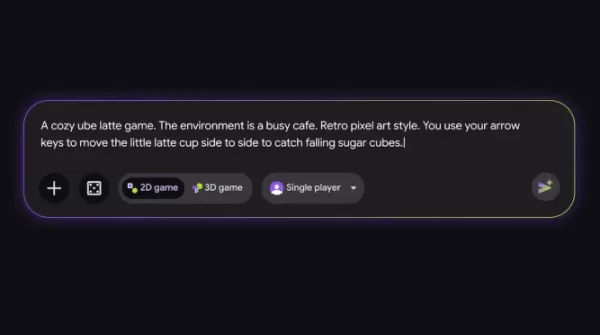
Google tests AI-driven gaming platform
Game creation barriers are falling fast as AI opens development to those without coding, design, or art backgrounds. Google Labs recently demonstrated this with a new experiment.On Wednesday, Google’s experimental platform launched Playground, an AI-
Related Special Topic Recommendations
chatbot
Runlayer Accuses Rippling of Stealing Its Product Idea
Runlayer, a startup providing a secure Model Context Protocol gateway—a standard enabling AI models and agents to safely access external data and tools—has filed a lawsuit against HR software company Rippling, according to a complaint reviewed by Tec
Moonshot AI's Kimi Racks Up Over $3.5 Billion Series F, Hitting $35 Billion Valuation
Moonshot AI’s Kimi has successfully closed its Series F funding round, securing over $3.5 billion and achieving a post-money valuation of $35 billion, as reported by Sci-Tech Daily.Driven by subscription demand that surpassed targets by more than thr
Google tests AI-driven gaming platform
Game creation barriers are falling fast as AI opens development to those without coding, design, or art backgrounds. Google Labs recently demonstrated this with a new experiment.On Wednesday, Google’s experimental platform launched Playground, an AI-
Related Special Topic Recommendations
chatbot
 AI Live Chat Routing Tools for Ecommerce Queues, VIP Buyers, and Return Requests
2026 Latest Best Top-rated AI Live Chat Routing Tools for Ecommerce Queues, VIP Buyers, and Return Requests. This curated list features powerful game-changing solutions that boost productivity dramatically through real-world tests. It includes a free vs paid comparison along with detailed rankings to help you find the perfect fit. XIX.AI stands out as a trusted provider in this space. Explore now to Unlock your AI edge!
 9 tools
 xix.ai
writing
Best AI Editing Tools for ESL Writers: Improve Tone, Grammar, and Flow
xix.ai
writing
Best AI Editing Tools for ESL Writers: Improve Tone, Grammar, and Flow
2026 Latest Best Top-Rated AI Editing Tools for ESL Writers are here on XIX.AI! This curated list features powerful game-changing tools that go through real-world tests to ensure accuracy. You can find a free vs paid comparison alongside detailed rankings to help you pick the must-try solution that boosts your writing tone, grammar, and flow perfectly. Explore now to Unlock your AI edge!
9 tools
xix.ai
Software Development
Best AI Bug Triage Tools for Engineering Teams
2026 Latest Best Top-Rated AI Bug Triage Tools for Engineering Teams! XIX.AI has curated a powerful, game-changing collection of must-try tools that go through rigorous real-world tests to deliver accurate issue analysis and efficient resolution. Get a free vs paid comparison along with detailed rankings to help you find the perfect solution that boosts your team’s productivity significantly. Explore now to unlock your AI edge!
9 tools
xix.ai
Image editing
Best AI Portrait Enhancers: Improve Lighting, Skin Tone, and Sharpness
2026 Latest Best Top-rated AI Portrait Enhancers curated for ultimate image quality. These powerful tools deliver game-changing results by boosting lighting, skin tone, and sharpness effortlessly, perfect for creators needing to enhance photos quickly. XIX.AI provides a free vs paid comparison along with real-world tests and weekly updated rankings. Discover your perfect tool to unlock your AI edge today. Explore now!
7 tools
xix.ai
writing
AI Technical Documentation Tools for API Guides, Release Notes, and Onboarding Docs
2026 Latest Best Top-rated AI Technical Documentation Tools for API Guides Release Notes and Onboarding Docs. This curated list features powerful game-changing solutions that streamline content creation boost writing efficiency and save time across all project phases. XIX.AI provides weekly updated rankings along with free vs paid comparison results from real-world tests. Explore now to Discover your perfect tool and Unlock your AI edge.
10 tools
xix.ai
design
AI Dashboard Wireframing Tools for B2B Product Teams
2026 Latest Best AI Dashboard Wireframing Tools for B2B Product Teams! XIX.AI has curated a top-rated list of powerful, game-changing tools that go through rigorous real-world tests to deliver exceptional results. You’ll find detailed free vs paid comparison insights and updated weekly rankings showing which options offer the most value for streamlining product design workflows and boosting overall productivity. Must-try choices are clearly highlighted to help you unlock your AI edge. Explore now!
11 tools
xix.ai

 Comments (0)
0/500
Comments (0)
0/500
Rippling, a leading HR software provider, has launched AI Spend Console, a tool designed to curb tokenmaxxing by helping organizations monitor and control their AI expenditures. A standout feature allows companies to track spending by individual employees, teams, and roles, determining whether higher costs correlate with genuine productivity or merely increased AI-generated noise.
According to the company’s blog post, the tool identifies “engineers with high AI spend whose peers frequently request code rewrites,” highlighting inefficiencies in development workflows.
The solution emerged after Rippling embraced tokenmaxxing early this year, mirroring industry trends, only to find employees rapidly depleting budgets. Chief Product Officer Matt MacInnis recalls a March executive meeting where CFO Adam Swiecicki revealed alarming figures that shocked the leadership team.
Rippling was projected to spend 40% of its R&D headcount budget on AI tokens, equating to spending as much on tokens as 40% of the compensation paid to employees in that department—amounting to millions of dollars. (The R&D division typically houses engineering teams at most tech firms.)
With spending growing at 80% month-over-month, continuing this trend would result in next year’s AI token costs reaching 90% of the budget allocated for high-paid R&D staff.
“We were incredulous,” MacInnis told TechCrunch.
Management immediately initiated an “urgent” project to analyze spending and assess the value derived from these expenses, he explained. The product’s launch advertisement even depicts Swiecicki sitting on a stool while employees toss bundles of cash into a paper shredder.
Upon analysis, Rippling uncovered insights such as “roughly 10–15% of our employees driving about 60% of total AI spend. One engineer was spending $50,000 a month,” according to its blog post.
Rippling did not intend to halt AI usage but rather to significantly rein it in. The company began by negotiating spending caps with its primary tools: Cursor, OpenAI, and Anthropic. This revealed a clear issue: employees defaulted to using the latest, most expensive frontier models for all tasks.
“The truth is that inference providers like Anthropic and OpenAI have absolutely no incentives to help you control your spend. They benefit from runaway expenses, which is exactly what occurs. They fail to provide robust usage insights and do not collaborate with one another,” MacInnis stated.
This was a common challenge in early 2026. Eight months into the year, enterprises have realized two key points: first, they require multiple models from various AI labs at different price points, including frontier open-weight options, potentially from Chinese providers.
Rippling founder and CEO Parker Conrad noted last month that internal benchmarks revealed SpaceX’s Grok as the overall leader, yet “GLM 5.2 is 85% cheaper but [delivered] nearly identical performance” to frontier models. (SpaceX now owns Cursor, which provides access to Grok and dozens of other models.) Z.ai’s GLM 5.2 has emerged as a preferred Chinese model for coding tasks among tech firms, with Databricks also advocating for its use.
Second, enterprises now recognize the need for an AI gateway that directs prompts to the most cost-effective model for each task. Rippling reached this conclusion and built its own AI gateway, integrated into this product. MacInnis noted that enterprises using other gateways can still utilize AI Spend Console, though those seeking spending governance features must use Rippling’s gateway.
AI Spend Console generates dashboards (formerly known as leaderboards during the tokenmaxxing era) that score metrics such as daily prompts combined with work output (lines of code/pull requests) and expenditure.
With this tool, Rippling reduced its token spend from 40% of its headcount budget to approximately 15%, without curtailing AI usage. The company peaked at 605 billion tokens in the month the CFO issued his warning, MacInnis shared. In July, internal usage reached 600 billion tokens again, yet “the cost of July’s token spend was 37% of the cost of April’s token spend,” he added.
“That’s simply because we are now routing to more effective models,” he said, joking that “we’re not allowing the sales team to perform grammar updates using Fable.”
However, Rippling emphasizes that technology alone is insufficient. The company identified employees using AI effectively and designated them as “AI captains” to assist the rest of the organization.
MacInnis noted that efforts to extend AI usage beyond engineering remain a work in progress, as software engineers have been the primary users thus far. Nevertheless, Rippling is applying this approach to customer onboarding teams to automate mailing data and reconciliation tasks. The dashboard will then measure productivity based on the number of onboarded customers.
“We must be able to link token consumption in G&A and customer-facing functions back to productivity. If we cannot do this, the availability of these tools to the broader employee base is uncertain,” MacInnis stated.
Thus, if Rippling serves as an example, tokenmaxxing may have swung so far in the opposite direction that employee AI access may no longer resemble the ubiquity of Slack or email. If productivity cannot be measured, not all employees may retain access.
Regarding the product, AI Spend Console is included for Rippling’s HR subscribers, though additional usage-based costs apply. It can also be purchased as a standalone product and integrated with other HR systems of record, MacInnis stated.








 Runlayer Accuses Rippling of Stealing Its Product Idea
Runlayer, a startup providing a secure Model Context Protocol gateway—a standard enabling AI models and agents to safely access external data and tools—has filed a lawsuit against HR software company Rippling, according to a complaint reviewed by Tec
Runlayer Accuses Rippling of Stealing Its Product Idea
Runlayer, a startup providing a secure Model Context Protocol gateway—a standard enabling AI models and agents to safely access external data and tools—has filed a lawsuit against HR software company Rippling, according to a complaint reviewed by Tec
 Moonshot AI's Kimi Racks Up Over $3.5 Billion Series F, Hitting $35 Billion Valuation
Moonshot AI’s Kimi has successfully closed its Series F funding round, securing over $3.5 billion and achieving a post-money valuation of $35 billion, as reported by Sci-Tech Daily.Driven by subscription demand that surpassed targets by more than thr
Moonshot AI's Kimi Racks Up Over $3.5 Billion Series F, Hitting $35 Billion Valuation
Moonshot AI’s Kimi has successfully closed its Series F funding round, securing over $3.5 billion and achieving a post-money valuation of $35 billion, as reported by Sci-Tech Daily.Driven by subscription demand that surpassed targets by more than thr
 Google tests AI-driven gaming platform
Game creation barriers are falling fast as AI opens development to those without coding, design, or art backgrounds. Google Labs recently demonstrated this with a new experiment.On Wednesday, Google’s experimental platform launched Playground, an AI-
Google tests AI-driven gaming platform
Game creation barriers are falling fast as AI opens development to those without coding, design, or art backgrounds. Google Labs recently demonstrated this with a new experiment.On Wednesday, Google’s experimental platform launched Playground, an AI-

2026 Latest Best Top-rated AI Live Chat Routing Tools for Ecommerce Queues, VIP Buyers, and Return Requests. This curated list features powerful game-changing solutions that boost productivity dramatically through real-world tests. It includes a free vs paid comparison along with detailed rankings to help you find the perfect fit. XIX.AI stands out as a trusted provider in this space. Explore now to Unlock your AI edge!
9 tools
xix.ai

2026 Latest Best Top-Rated AI Editing Tools for ESL Writers are here on XIX.AI! This curated list features powerful game-changing tools that go through real-world tests to ensure accuracy. You can find a free vs paid comparison alongside detailed rankings to help you pick the must-try solution that boosts your writing tone, grammar, and flow perfectly. Explore now to Unlock your AI edge!
9 tools
xix.ai

2026 Latest Best Top-Rated AI Bug Triage Tools for Engineering Teams! XIX.AI has curated a powerful, game-changing collection of must-try tools that go through rigorous real-world tests to deliver accurate issue analysis and efficient resolution. Get a free vs paid comparison along with detailed rankings to help you find the perfect solution that boosts your team’s productivity significantly. Explore now to unlock your AI edge!
9 tools
xix.ai

2026 Latest Best Top-rated AI Portrait Enhancers curated for ultimate image quality. These powerful tools deliver game-changing results by boosting lighting, skin tone, and sharpness effortlessly, perfect for creators needing to enhance photos quickly. XIX.AI provides a free vs paid comparison along with real-world tests and weekly updated rankings. Discover your perfect tool to unlock your AI edge today. Explore now!
7 tools
xix.ai
2026 Latest Best Top-rated AI Technical Documentation Tools for API Guides Release Notes and Onboarding Docs. This curated list features powerful game-changing solutions that streamline content creation boost writing efficiency and save time across all project phases. XIX.AI provides weekly updated rankings along with free vs paid comparison results from real-world tests. Explore now to Discover your perfect tool and Unlock your AI edge.
10 tools
xix.ai
2026 Latest Best AI Dashboard Wireframing Tools for B2B Product Teams! XIX.AI has curated a top-rated list of powerful, game-changing tools that go through rigorous real-world tests to deliver exceptional results. You’ll find detailed free vs paid comparison insights and updated weekly rankings showing which options offer the most value for streamlining product design workflows and boosting overall productivity. Must-try choices are clearly highlighted to help you unlock your AI edge. Explore now!
11 tools
xix.ai












