


 Home
Home8 Strategies for Intel's Recovery Post-CEO Departure
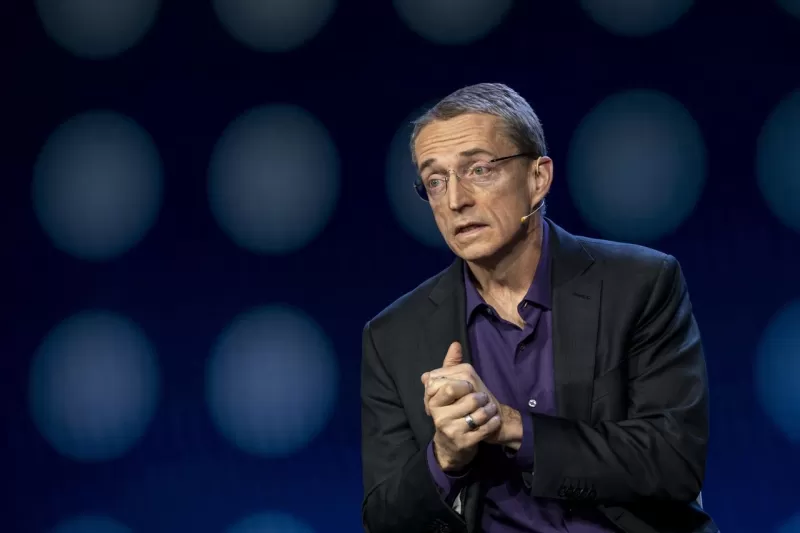
When Pat Gelsinger returned to Intel as CEO in 2021, it was seen as the beginning of a comeback story. With over three decades at the company and a stint as CTO during its heyday, Gelsinger was thought to be the perfect person to navigate Intel through its challenges. His goal was clear: bring Intel back to its prime as a leader in chip manufacturing.
However, less than four years into his tenure, Gelsinger's journey with Intel has come to an abrupt end. According to Bloomberg, he was forced out, leaving many in the industry shocked. This unexpected departure raises critical questions: Why couldn't Gelsinger, who seemed destined for this role, turn things around? If he couldn't do it, what chance does Intel have against giants like Nvidia, Qualcomm, and TSMC?
Gelsinger's exit isn't just about one person; it's a sign of deeper issues within Intel. It's a call to action for the company to address its cultural stagnation, break free from legacy dependencies, and adapt to the rapidly changing tech landscape. Without bold moves, Intel risks becoming a mere shadow of its former glory.
Gelsinger's exit highlights Intel's cultural stagnation
Gelsinger came back with a strong vision and credibility, but he couldn't shake the company's cultural inertia. Intel's internal dynamics have become a significant obstacle. The company is bogged down by bureaucracy, a fear of taking risks, and a reliance on outdated systems, all of which stifle innovation.
Engineers I've talked to feel that Intel discourages risk-taking and often meets new ideas with skepticism. Meanwhile, companies like Nvidia, Qualcomm, and Apple thrive on experimentation and quick innovation. Gelsinger's technical prowess wasn't enough to overcome these systemic challenges.
The next CEO needs to focus on transforming the company culture. This means empowering engineers, cutting through red tape, and instilling a sense of urgency. Look at what Satya Nadella did at Microsoft—turning a slow giant into an agile, innovative powerhouse. Intel needs a similar cultural overhaul to reach its full potential.
x86 dependency: Both strength and weakness
x86 has been Intel's bread and butter for years, powering everything from PCs to servers. But as the industry moves towards AI, cloud computing, and energy-efficient designs, x86 is starting to look old-fashioned. Arm-based processors are taking over in smartphones, cloud servers, and even Apple's M-series chips have shown they can outperform x86 in efficiency and performance.
That said, x86 isn't dead yet. Many legacy applications in enterprises still depend on it, and gamers love it for its high frame rates. But these markets are shrinking. Meanwhile, competitors like Ampere are showing that Arm servers can handle data center workloads more efficiently, and Nvidia is pushing the boundaries of high-performance computing.
Intel's challenge is clear: it must protect its x86 base while aggressively moving into new architectures. If it doesn't adapt, x86 could become a niche product, leaving Intel behind in an industry that values scalability, efficiency, and flexibility.
Foundry services: Intel's best bet - or biggest gamble
Intel's push into contract chip manufacturing through Intel Foundry Services (IFS) is one of its boldest moves in recent years. The industry desperately needs alternatives to TSMC and Samsung, especially with geopolitical tensions making reliance on Asia risky. Intel seems well-positioned to fill this gap.
However, becoming a top foundry is no easy feat. Intel's advanced manufacturing processes, like the 18A node, have faced delays, and winning over customers is a tough task. TSMC is not only technologically ahead but also a trusted partner for companies like Apple, AMD, and Nvidia.
For IFS to succeed, Intel must prove it can deliver on time, offer competitive pricing, and build strong relationships with key clients. The CHIPS Act funding gives Intel a leg up, but it's a high-stakes gamble. If IFS fails, it could be another blow to Intel.
AI hardware: Intel's missed opportunity
The future of computing is all about artificial intelligence, and Nvidia is leading the charge. Their GPUs dominate AI training and inference, and the Grace Hopper platform is designed to handle the complex, parallel tasks AI demands. Apple is also making big strides in AI with its custom silicon.
Meanwhile, Intel has struggled to make its mark in this space. The 2019 acquisition of Habana Labs for $2B was a step in the right direction, but the results have been underwhelming. Qualcomm is pushing forward with AI-powered PCs via its Snapdragon X series, and AMD is collaborating with Microsoft on custom AI chips.
For Intel to stay relevant, it needs a bold and clear AI strategy. This could mean developing memory-safe architectures like CHERI or focusing on edge computing. The company must move quickly to keep up with this fast-evolving landscape.
Betting boldly on Arm and RISC-V
Selling its xScale Arm business in 2006 was a major strategic blunder for Intel, especially since the iPhone and Android devices soon followed. Arm-based architectures now dominate everything from smartphones to cloud servers, and companies like Apple and Qualcomm have shown that Arm can scale for high-performance computing. RISC-V is also gaining ground as an open-source alternative, especially in IoT and edge computing.
Intel has dabbled in RISC-V through partnerships with SiFive but hasn't fully committed to either Arm or RISC-V. This hesitation could be costly. To compete with Qualcomm and Apple, Intel must embrace a multi-architecture future.
This could mean acquiring Arm startups, developing its own Arm-based products, or investing more heavily in RISC-V. Intel can't afford to rely solely on x86 anymore. The industry is moving forward, and Intel needs to lead the way—or risk falling behind.
Leveraging geopolitics for strategic advantage
Geopolitical tensions have made semiconductors a national security issue, and Intel is in a prime position to benefit. The CHIPS Act provides billions in funding for domestic manufacturing, giving Intel a chance to lead in this area.
But building fabs isn't enough. Intel must also develop advanced manufacturing processes that can compete with TSMC and Samsung on price and performance. Expanding into regions like Europe and India could help diversify Intel's supply chain, reducing geopolitical risks and opening new markets.
If Intel can navigate these challenges successfully, it could become a crucial player in the global semiconductor ecosystem. But the room for error is slim.
Leadership: The key to Intel's survival
With Gelsinger out, Intel faces a leadership vacuum at a critical time. The company needs a CEO who can inspire confidence, tackle complex challenges, and execute ambitious plans effectively.
This goes beyond technical expertise; it's about vision. The right leader must address Intel's cultural stagnation, speed up its transition to AI and Arm technologies, and rebuild trust with customers and investors. Without strong leadership, even the best strategies will falter.
The unthinkable solution: Selling Intel to ensure its legacy
It might sound extreme, but what if Intel's best option is to sell? Qualcomm, for instance, could benefit from Intel's manufacturing capabilities to scale its Arm-based products and compete with Nvidia in AI and data centers. Intel's fabs would give Qualcomm the infrastructure it needs to move faster and more efficiently.
However, selling Intel wouldn't be simple. Regulators would closely examine the deal, and Intel's role as a national security asset complicates things. Still, in a world where speed and focus are critical, selling to a more agile player might be the only way to preserve Intel's legacy.
Sic transit Gelsinger
Pat Gelsinger's departure marks a turning point for Intel. The challenges ahead are formidable, but they're not impossible to overcome. Whether through cultural transformation, bold shifts to new architectures, or even a strategic sale, Intel must act decisively—and soon.
The semiconductor industry isn't waiting for anyone. Intel has a choice: adapt and lead, or fade into irrelevance.
Related article
 ByteDance’s Seed launches global campus drive, offering virtual shares to win top large model talent
In the competitive landscape of large language models, securing top-tier talent remains the most critical strategic asset.On April 1st, ByteDance announced the launch of its Seed global campus recruitment initiative, part of its large model talent de
Suno to Watermark Songs Amid Legal Battles
Suno, the platform enabling users to generate AI-created music, has unveiled new features to label platform-produced tracks, restrict downloads, and update community standards to curb unauthorized replicas. These updates arrive as Suno confronts mult
Musk Admits Grok Build Leaked User Code, Promises to Erase All Historical Data
Elon Musk directly addressed the privacy controversy surrounding Grok Build, beginning with a simple "True" to confirm the incident's validity. He pledged that all user data previously uploaded to SpaceXAI would be permanently erased, stating, "not a
Related Special Topic Recommendations
Design & Art
ByteDance’s Seed launches global campus drive, offering virtual shares to win top large model talent
In the competitive landscape of large language models, securing top-tier talent remains the most critical strategic asset.On April 1st, ByteDance announced the launch of its Seed global campus recruitment initiative, part of its large model talent de
Suno to Watermark Songs Amid Legal Battles
Suno, the platform enabling users to generate AI-created music, has unveiled new features to label platform-produced tracks, restrict downloads, and update community standards to curb unauthorized replicas. These updates arrive as Suno confronts mult
Musk Admits Grok Build Leaked User Code, Promises to Erase All Historical Data
Elon Musk directly addressed the privacy controversy surrounding Grok Build, beginning with a simple "True" to confirm the incident's validity. He pledged that all user data previously uploaded to SpaceXAI would be permanently erased, stating, "not a
Related Special Topic Recommendations
Design & Art
 AI Visual Style Reference Tools for Character Sheets, Moodboards, and Pitch Decks
2026 Latest Best AI Visual Style Reference Tools for Character Sheets, Moodboards, and Pitch Decks are here on XIX.AI! This curated top-rated list features powerful game-changing tools that go through rigorous real-world tests. You’ll find a free vs paid comparison, detailed rankings, and must-try options to help you boost creativity and streamline your workflow. Explore now to discover your perfect tool for boosting productivity!
 11 tools
 xix.ai
SEO
Best AI SERP Analysis Tools for Search Strategy
xix.ai
SEO
Best AI SERP Analysis Tools for Search Strategy
2026 Latest Best Top-rated AI SERP Analysis Tools for Search Strategy are curated by XIX.AI through rigorous real-world tests and weekly updated rankings. These powerful tools help you unlock hidden optimization opportunities, boost content performance, and gain a competitive edge in search. Discover your perfect tool to elevate your search strategy today. Explore now!
13 tools
xix.ai
Data Analysis
Best AI Anomaly Detection Tools for KPI Monitoring across SaaS and Ecommerce Teams
2026 Latest Best Top-rated AI Anomaly Detection Tools for KPI Monitoring in SaaS and Ecommerce teams! XIX.AI has curated a powerful, game-changing collection based on rigorous real-world tests and weekly updated rankings. You’ll find detailed free vs paid comparison insights to help you identify the must-try solution that boosts productivity and unlocks your AI edge. Explore now!
10 tools
xix.ai
writing
Best AI Outline Generators for Long-Form SEO Articles
2026 Latest Best Top-Rated AI Outline Generators for Long-Form SEO Articles, meticulously curated by XIX.AI. These powerful tools offer game-changing assistance in creating high-quality content quickly, boosting writing efficiency significantly. Get a free vs paid comparison along with real-world tests and detailed rankings to help you find the must-try option that suits your needs. Explore now to unlock your AI edge.
8 tools
xix.ai
Education and Learning
AI Study Tools for Homework and Exam Prep
2026 Latest Best AI Study Tools for Homework and Exam Prep! XIX.AI curates a top-rated list of powerful, game-changing tools that help students boost productivity, streamline homework completion, and ace exams through real-world tests. Get a free vs paid comparison, detailed rankings, and must-try options to unlock your AI edge. Explore now!
10 tools
xix.ai
Music composition
AI Vocal Demo Tools for Songwriters, Hooks, Toplines, and Multilingual Draft Sessions
2026 Latest Best AI Vocal Demo Tools for Songwriters, Hook Creators, and Multi-Language Content Teams! XIX.AI has curated a top-rated list of powerful game-changing tools that go through rigorous real-world tests. You’ll find detailed free vs paid comparison data, comprehensive rankings, and must-try options to help you boost writing efficiency and unlock your creative potential. Explore now to discover your perfect tool for all your content needs!
9 tools
xix.ai

 Comments (25)
0/500
Comments (25)
0/500
![PaulGonzalez]()
Honestly, I'm a bit skeptical about these 'comeback' narratives. Gelsinger's return felt like a nostalgic move, but can one person really turn around a giant that's been struggling with execution for years? The real test is whether they can actually deliver on their process roadmap and fend off AMD/ARM. The strategy list is nice, but execution is everything. 🤔
![RalphSanchez]()
아니, 인텔 CEO 퇴진 이후의 복구 전략이라니... 갑자기 삼성과의 경쟁이 떠올라요. 한국에서는 요즘 반도체 전쟁이 정말 치열한데, 인텔이 이 좁은 시장에서 어떻게 살아남을지 궁금하네요. 🤔 설마 아직도 10nm 공정 문제를 해결 못 한 건 아니겠죠?
![PaulHill]()
Intel's CEO shakeup is wild! Gelsinger seemed like the golden ticket, but recovery’s tough. Curious if these 8 strategies will spark a comeback or just fizzle out. 🧐 Any bets on their next big move?
![EricScott]()
Intel’s CEO shakeup sounds intense! Gelsinger seemed like a solid pick, but navigating those chip wars is no joke. Curious to see which of these 8 strategies actually sticks—any bets on a bold pivot to AI chips? 🤔
![RogerRodriguez]()
Intel's CEO shakeup sounds intense! Gelsinger had big shoes to fill, and these 8 strategies seem like a solid playbook to get Intel back on track. Curious how they'll compete with AMD now. 🧑💻
![MiaDavis]()
게르싱거 CEO 퇴임 후 인텔의 회복 전략, 아이디어는 좋지만 너무 이상적이야. 몇 가지 핵심 영역에 집중하는 게 낫지 않을까? 🤔 그래도 읽어보는 재미는 있었어!
When Pat Gelsinger returned to Intel as CEO in 2021, it was seen as the beginning of a comeback story. With over three decades at the company and a stint as CTO during its heyday, Gelsinger was thought to be the perfect person to navigate Intel through its challenges. His goal was clear: bring Intel back to its prime as a leader in chip manufacturing.
However, less than four years into his tenure, Gelsinger's journey with Intel has come to an abrupt end. According to Bloomberg, he was forced out, leaving many in the industry shocked. This unexpected departure raises critical questions: Why couldn't Gelsinger, who seemed destined for this role, turn things around? If he couldn't do it, what chance does Intel have against giants like Nvidia, Qualcomm, and TSMC?
Gelsinger's exit isn't just about one person; it's a sign of deeper issues within Intel. It's a call to action for the company to address its cultural stagnation, break free from legacy dependencies, and adapt to the rapidly changing tech landscape. Without bold moves, Intel risks becoming a mere shadow of its former glory.
Gelsinger's exit highlights Intel's cultural stagnation
Gelsinger came back with a strong vision and credibility, but he couldn't shake the company's cultural inertia. Intel's internal dynamics have become a significant obstacle. The company is bogged down by bureaucracy, a fear of taking risks, and a reliance on outdated systems, all of which stifle innovation.
Engineers I've talked to feel that Intel discourages risk-taking and often meets new ideas with skepticism. Meanwhile, companies like Nvidia, Qualcomm, and Apple thrive on experimentation and quick innovation. Gelsinger's technical prowess wasn't enough to overcome these systemic challenges.
The next CEO needs to focus on transforming the company culture. This means empowering engineers, cutting through red tape, and instilling a sense of urgency. Look at what Satya Nadella did at Microsoft—turning a slow giant into an agile, innovative powerhouse. Intel needs a similar cultural overhaul to reach its full potential.
x86 dependency: Both strength and weakness
x86 has been Intel's bread and butter for years, powering everything from PCs to servers. But as the industry moves towards AI, cloud computing, and energy-efficient designs, x86 is starting to look old-fashioned. Arm-based processors are taking over in smartphones, cloud servers, and even Apple's M-series chips have shown they can outperform x86 in efficiency and performance.
That said, x86 isn't dead yet. Many legacy applications in enterprises still depend on it, and gamers love it for its high frame rates. But these markets are shrinking. Meanwhile, competitors like Ampere are showing that Arm servers can handle data center workloads more efficiently, and Nvidia is pushing the boundaries of high-performance computing.
Intel's challenge is clear: it must protect its x86 base while aggressively moving into new architectures. If it doesn't adapt, x86 could become a niche product, leaving Intel behind in an industry that values scalability, efficiency, and flexibility.
Foundry services: Intel's best bet - or biggest gamble
Intel's push into contract chip manufacturing through Intel Foundry Services (IFS) is one of its boldest moves in recent years. The industry desperately needs alternatives to TSMC and Samsung, especially with geopolitical tensions making reliance on Asia risky. Intel seems well-positioned to fill this gap.
However, becoming a top foundry is no easy feat. Intel's advanced manufacturing processes, like the 18A node, have faced delays, and winning over customers is a tough task. TSMC is not only technologically ahead but also a trusted partner for companies like Apple, AMD, and Nvidia.
For IFS to succeed, Intel must prove it can deliver on time, offer competitive pricing, and build strong relationships with key clients. The CHIPS Act funding gives Intel a leg up, but it's a high-stakes gamble. If IFS fails, it could be another blow to Intel.
AI hardware: Intel's missed opportunity
The future of computing is all about artificial intelligence, and Nvidia is leading the charge. Their GPUs dominate AI training and inference, and the Grace Hopper platform is designed to handle the complex, parallel tasks AI demands. Apple is also making big strides in AI with its custom silicon.
Meanwhile, Intel has struggled to make its mark in this space. The 2019 acquisition of Habana Labs for $2B was a step in the right direction, but the results have been underwhelming. Qualcomm is pushing forward with AI-powered PCs via its Snapdragon X series, and AMD is collaborating with Microsoft on custom AI chips.
For Intel to stay relevant, it needs a bold and clear AI strategy. This could mean developing memory-safe architectures like CHERI or focusing on edge computing. The company must move quickly to keep up with this fast-evolving landscape.
Betting boldly on Arm and RISC-V
Selling its xScale Arm business in 2006 was a major strategic blunder for Intel, especially since the iPhone and Android devices soon followed. Arm-based architectures now dominate everything from smartphones to cloud servers, and companies like Apple and Qualcomm have shown that Arm can scale for high-performance computing. RISC-V is also gaining ground as an open-source alternative, especially in IoT and edge computing.
Intel has dabbled in RISC-V through partnerships with SiFive but hasn't fully committed to either Arm or RISC-V. This hesitation could be costly. To compete with Qualcomm and Apple, Intel must embrace a multi-architecture future.
This could mean acquiring Arm startups, developing its own Arm-based products, or investing more heavily in RISC-V. Intel can't afford to rely solely on x86 anymore. The industry is moving forward, and Intel needs to lead the way—or risk falling behind.
Leveraging geopolitics for strategic advantage
Geopolitical tensions have made semiconductors a national security issue, and Intel is in a prime position to benefit. The CHIPS Act provides billions in funding for domestic manufacturing, giving Intel a chance to lead in this area.
But building fabs isn't enough. Intel must also develop advanced manufacturing processes that can compete with TSMC and Samsung on price and performance. Expanding into regions like Europe and India could help diversify Intel's supply chain, reducing geopolitical risks and opening new markets.
If Intel can navigate these challenges successfully, it could become a crucial player in the global semiconductor ecosystem. But the room for error is slim.
Leadership: The key to Intel's survival
With Gelsinger out, Intel faces a leadership vacuum at a critical time. The company needs a CEO who can inspire confidence, tackle complex challenges, and execute ambitious plans effectively.
This goes beyond technical expertise; it's about vision. The right leader must address Intel's cultural stagnation, speed up its transition to AI and Arm technologies, and rebuild trust with customers and investors. Without strong leadership, even the best strategies will falter.
The unthinkable solution: Selling Intel to ensure its legacy
It might sound extreme, but what if Intel's best option is to sell? Qualcomm, for instance, could benefit from Intel's manufacturing capabilities to scale its Arm-based products and compete with Nvidia in AI and data centers. Intel's fabs would give Qualcomm the infrastructure it needs to move faster and more efficiently.
However, selling Intel wouldn't be simple. Regulators would closely examine the deal, and Intel's role as a national security asset complicates things. Still, in a world where speed and focus are critical, selling to a more agile player might be the only way to preserve Intel's legacy.
Sic transit Gelsinger
Pat Gelsinger's departure marks a turning point for Intel. The challenges ahead are formidable, but they're not impossible to overcome. Whether through cultural transformation, bold shifts to new architectures, or even a strategic sale, Intel must act decisively—and soon.
The semiconductor industry isn't waiting for anyone. Intel has a choice: adapt and lead, or fade into irrelevance.








 ByteDance’s Seed launches global campus drive, offering virtual shares to win top large model talent
In the competitive landscape of large language models, securing top-tier talent remains the most critical strategic asset.On April 1st, ByteDance announced the launch of its Seed global campus recruitment initiative, part of its large model talent de
ByteDance’s Seed launches global campus drive, offering virtual shares to win top large model talent
In the competitive landscape of large language models, securing top-tier talent remains the most critical strategic asset.On April 1st, ByteDance announced the launch of its Seed global campus recruitment initiative, part of its large model talent de
 Suno to Watermark Songs Amid Legal Battles
Suno, the platform enabling users to generate AI-created music, has unveiled new features to label platform-produced tracks, restrict downloads, and update community standards to curb unauthorized replicas. These updates arrive as Suno confronts mult
Suno to Watermark Songs Amid Legal Battles
Suno, the platform enabling users to generate AI-created music, has unveiled new features to label platform-produced tracks, restrict downloads, and update community standards to curb unauthorized replicas. These updates arrive as Suno confronts mult
 Musk Admits Grok Build Leaked User Code, Promises to Erase All Historical Data
Elon Musk directly addressed the privacy controversy surrounding Grok Build, beginning with a simple "True" to confirm the incident's validity. He pledged that all user data previously uploaded to SpaceXAI would be permanently erased, stating, "not a
Musk Admits Grok Build Leaked User Code, Promises to Erase All Historical Data
Elon Musk directly addressed the privacy controversy surrounding Grok Build, beginning with a simple "True" to confirm the incident's validity. He pledged that all user data previously uploaded to SpaceXAI would be permanently erased, stating, "not a

2026 Latest Best AI Visual Style Reference Tools for Character Sheets, Moodboards, and Pitch Decks are here on XIX.AI! This curated top-rated list features powerful game-changing tools that go through rigorous real-world tests. You’ll find a free vs paid comparison, detailed rankings, and must-try options to help you boost creativity and streamline your workflow. Explore now to discover your perfect tool for boosting productivity!
11 tools
xix.ai

2026 Latest Best Top-rated AI SERP Analysis Tools for Search Strategy are curated by XIX.AI through rigorous real-world tests and weekly updated rankings. These powerful tools help you unlock hidden optimization opportunities, boost content performance, and gain a competitive edge in search. Discover your perfect tool to elevate your search strategy today. Explore now!
13 tools
xix.ai
2026 Latest Best Top-rated AI Anomaly Detection Tools for KPI Monitoring in SaaS and Ecommerce teams! XIX.AI has curated a powerful, game-changing collection based on rigorous real-world tests and weekly updated rankings. You’ll find detailed free vs paid comparison insights to help you identify the must-try solution that boosts productivity and unlocks your AI edge. Explore now!
10 tools
xix.ai

2026 Latest Best Top-Rated AI Outline Generators for Long-Form SEO Articles, meticulously curated by XIX.AI. These powerful tools offer game-changing assistance in creating high-quality content quickly, boosting writing efficiency significantly. Get a free vs paid comparison along with real-world tests and detailed rankings to help you find the must-try option that suits your needs. Explore now to unlock your AI edge.
8 tools
xix.ai

2026 Latest Best AI Study Tools for Homework and Exam Prep! XIX.AI curates a top-rated list of powerful, game-changing tools that help students boost productivity, streamline homework completion, and ace exams through real-world tests. Get a free vs paid comparison, detailed rankings, and must-try options to unlock your AI edge. Explore now!
10 tools
xix.ai

2026 Latest Best AI Vocal Demo Tools for Songwriters, Hook Creators, and Multi-Language Content Teams! XIX.AI has curated a top-rated list of powerful game-changing tools that go through rigorous real-world tests. You’ll find detailed free vs paid comparison data, comprehensive rankings, and must-try options to help you boost writing efficiency and unlock your creative potential. Explore now to discover your perfect tool for all your content needs!
9 tools
xix.ai

Honestly, I'm a bit skeptical about these 'comeback' narratives. Gelsinger's return felt like a nostalgic move, but can one person really turn around a giant that's been struggling with execution for years? The real test is whether they can actually deliver on their process roadmap and fend off AMD/ARM. The strategy list is nice, but execution is everything. 🤔
아니, 인텔 CEO 퇴진 이후의 복구 전략이라니... 갑자기 삼성과의 경쟁이 떠올라요. 한국에서는 요즘 반도체 전쟁이 정말 치열한데, 인텔이 이 좁은 시장에서 어떻게 살아남을지 궁금하네요. 🤔 설마 아직도 10nm 공정 문제를 해결 못 한 건 아니겠죠?
Intel's CEO shakeup is wild! Gelsinger seemed like the golden ticket, but recovery’s tough. Curious if these 8 strategies will spark a comeback or just fizzle out. 🧐 Any bets on their next big move?
Intel’s CEO shakeup sounds intense! Gelsinger seemed like a solid pick, but navigating those chip wars is no joke. Curious to see which of these 8 strategies actually sticks—any bets on a bold pivot to AI chips? 🤔
Intel's CEO shakeup sounds intense! Gelsinger had big shoes to fill, and these 8 strategies seem like a solid playbook to get Intel back on track. Curious how they'll compete with AMD now. 🧑💻
게르싱거 CEO 퇴임 후 인텔의 회복 전략, 아이디어는 좋지만 너무 이상적이야. 몇 가지 핵심 영역에 집중하는 게 낫지 않을까? 🤔 그래도 읽어보는 재미는 있었어!












