


 Home
HomeYour Newbie Guide to MakerWorld AI 3D Scanner
Turning real-world objects into digital 3D models is more accessible than ever. Whether you're an artist digitizing a sculpture, an engineer needing to reverse-engineer a component, or a hobbyist exploring lost-PLA casting, 3D scanning is an invaluable tool. While traditional methods can be complex and costly, the MakerWorld AI Scanner offers a simple alternative. This guide explains how to create 3D models from everyday objects using basic video capture. Discover simple steps to convert physical items into editable digital files for your creative or technical projects.
Key Points
With MakerWorld AI Scanner, you can create 3D models directly from video.
It works well for scanning a range of items, from art pieces to engineering components.
You can use scanned models to enhance, duplicate, or cast an object.
The process includes capturing video from different viewpoints and uploading it to the platform.
Following filming best practices helps ensure high-quality results.
Introduction to MakerWorld AI Scanner
What is MakerWorld AI Scanner?
MakerWorld AI Scanner is an advanced tool that uses artificial intelligence to create 3D models from video. It makes professional-quality 3D scanning accessible to users without expensive equipment. Instead of complicated hardware, you just record a video of your object from multiple angles. The AI analyzes the footage, reconstructing the object's shape to produce a 3D model. This approach supports many uses, from preserving historical items to customizing parts. Whether you're an expert or new to 3D scanning, MakerWorld AI Scanner offers a user-friendly way to digitize objects for modification in CAD software or 3D printing applications.
Why Use MakerWorld AI Scanner for 3D Scanning?
The appeal of MakerWorld AI Scanner lies in its simplicity, affordability, and ease of use. High-end 3D scanners are often costly and require training. MakerWorld removes these obstacles, enabling anyone with a smartphone or camera to create 3D models. It’s particularly useful for reverse-engineering parts without creating them from scratch in CAD, or for improving or casting existing designs. For example, you can scan a sculpture for a lost-PLA casting project. This accessibility empowers makers, engineers, and artists to experiment with 3D modeling without major investment. The AI-powered workflow also reduces the technical learning curve, letting users concentrate on their project goals. Educators can use it to introduce students to 3D scanning and digital fabrication in a practical, engaging way.
Tips for High-Quality 3D Scans with MakerWorld AI Scanner
Optimizing Lighting and Background
Good lighting and a neutral background greatly improve scan quality. Avoid intense shadows and bright spots that can mislead the AI algorithms. Consistent, even lighting across your object ensures precise data capture. A simple, non-reflective background offers clear contrast and prevents unwanted details from appearing in the scan. Test various lighting arrangements and backdrops to find what works best for your specific object. If required, use a diffuser to soften strong light or a plain backdrop.
Camera Stability and Movement Techniques
A steady camera is essential for accurate 3D scans. Whenever possible, use a tripod or rest your camera on a stable surface to reduce shake, especially for longer recordings. Move around the object smoothly and steadily to capture its full shape. Practice even panning and tilting for complete coverage. Sudden, jerky movements can cause errors and imperfections in the final model. Good camera control leads to better video, which in turn produces more reliable 3D models.
Troubleshooting Common Scanning Issues
Even with careful setup, you might encounter scanning problems. If your model has distortions, missing parts, or other flaws, try the following: Check that lighting is uniform and no shadows are hiding parts of the object. Re-shoot the video with improved stability and smoother motion. Make sure the object itself wasn’t moving during filming. If issues persist, review the processing settings. A methodical approach to troubleshooting will help you improve your technique and produce cleaner 3D models.
Step-by-Step Guide to Using MakerWorld AI Scanner
Step 1: Recording the Video
Successful 3D scanning begins with a high-quality video. Before filming, place your object in a well-lit area on a stable surface.
Circle the object three times, covering these perspectives:
Top View: Record from directly above, moving around the object to document all top-side details.

Eye-Level View: Position the camera at the object's mid-height and move around it to capture a straight-on view.
View From Below: Lower the camera below the object and circle it to record underside details.
Hold the camera steadily—avoid sudden movements to prevent distortion. It’s best to record in an uncompressed format if possible. Keep the background static. Select General Mode when you upload your video.
Step 2: Uploading the Video
After recording, upload your video to the MakerWorld AI Scanner platform. Go to the MakerWorld AI Scanner webpage.

Find the upload section, typically marked by an upload icon or button. Choose your video file and start the upload. Be patient, as larger files will take longer. A reliable internet connection is important to avoid interruptions. Once uploaded, the AI will automatically begin analyzing the video.
Step 3: Creating the Model
Once the video is uploaded, the MakerWorld AI Scanner processes it to build a 3D model. This involves examining each frame to map the object’s structure and surface. The AI compiles this data into a unified 3D representation. Processing time depends on video length and detail, so allow the system enough time to finish. While the model generates, you can preview the result and use options like adding a mask, removing a mask, or resetting.

Step 4: Downloading the STL File
When your 3D model is ready, download it as an STL file. This format is standard for 3D printing, CAD, and other digital tools. Find the download option on the MakerWorld interface and choose STL format. Save the file to your device in an easy-to-find location. You can then import the STL into your preferred software for editing, refining, or 3D printing.
Pros and Cons of MakerWorld AI Scanner
Pros
Accessibility: Simple to operate using just a smartphone or camera.
Cost-Effective: No need for pricey dedicated 3D scanners.
AI-Driven: Automates model creation for a simplified workflow.
Versatility: Effective for scanning various kinds of objects.
Convenience: Perform 3D scans almost anywhere.
Cons
Limited Accuracy: May not match the precision of industrial-grade scanners.
Video Quality Dependence: Final output is highly dependent on filming conditions and video clarity.
Processing Time: Generating the model can be time-consuming for long or complex videos.
Internet Dependency: Requires a stable connection for uploading and processing.
Potential Artifacts: Can sometimes produce small errors or distortions.
Frequently Asked Questions about MakerWorld AI Scanner
What types of objects are best suited for scanning with MakerWorld AI Scanner?
MakerWorld AI Scanner is flexible, but it works best on objects with clear shapes and surface textures. Sculptures, mechanical parts, and unique everyday items are ideal. Reflective, shiny, or transparent surfaces can be problematic because of light distortion. Objects with extremely fine, deep details might not scan perfectly. Try scanning different objects to learn the tool’s capabilities and limits.
Can I use MakerWorld AI Scanner for commercial purposes?
Yes, you can generally use MakerWorld AI Scanner for commercial projects. Be sure to consult the platform's terms of service for specific guidelines and any usage restrictions related to commercial activities.
Are there any limitations on the size or complexity of the objects I can scan?
MakerWorld AI Scanner is powerful but does have constraints. Very large objects may be difficult to capture fully in one video. Extremely detailed items with many complex features can also challenge the AI. For oversized objects, consider scanning them in sections and merging the resulting models in CAD software.
Related Questions
What is lost PLA casting, and how does 3D scanning fit into the process?
Lost PLA casting is an innovative method that merges 3D printing with traditional metal casting. It starts with a 3D-printed model made from PLA plastic. This model is then embedded in a mold material like plaster. After the mold hardens, the PLA is melted away, leaving a cavity in the shape of the printed object. Molten metal is poured into this cavity, producing a metal copy. 3D scanning is essential here because it allows you to create a precise digital model of an existing object, which you can then 3D print in PLA and use for casting. This technique lets you replicate or customize metal parts that would be hard to make with standard machining. Lost PLA casting is a powerful application for 3D scanning technology.
What are some popular alternatives to MakerWorld AI Scanner for 3D scanning?
Although MakerWorld AI Scanner provides a convenient AI-based solution, other 3D scanning options are available, each with different benefits. Structure Sensor: A handheld 3D scanner that works with mobile devices. Revopoint POP Series: Noted for high detail capture and user-friendly design. Your choice should depend on your required accuracy, budget, and project scope.
How can I improve the accuracy of my 3D scans?
To get more accurate 3D scans, focus on your setup and technique. Use proper lighting and a plain background. Keep the camera stable and move it smoothly. Test various video resolutions and settings. In some cases, using alignment markers can help the software with reconstruction. After scanning, use editing software to clean up any imperfections. Combining careful filming with post-processing will help you achieve detailed and precise 3D scans.
Related article
 Slackbot Becomes an AI Agent
Slackbot, the automated assistant embedded in Salesforce’s corporate messaging platform Slack, is evolving into an AI agent. Salesforce CTO Parker Harris envisions it achieving viral status comparable to OpenAI’s ChatGPT.The cloud software giant laun
ByteDance Boosts Core AI Incentives as Doubao Surges 14.6%
ByteDance recently convened a DouBao equity briefing to unveil fresh incentive policies for staff involved in the DouBao division. The strike price for DouBao shares has been lifted from $14.85 in June 2026 to $17.02, marking an approximate 14.6% inc
MiniMax Unveils 10x Team Program to Incentivize Global AI Experts
MiniMax (Xiyu Technology), the General Artificial Intelligence Lab, has officially launched "10x Team," a global talent collaboration initiative. This program aims to recruit top experts across industries to explore the deep application of large mode
Related Special Topic Recommendations
Education and Learning
Slackbot Becomes an AI Agent
Slackbot, the automated assistant embedded in Salesforce’s corporate messaging platform Slack, is evolving into an AI agent. Salesforce CTO Parker Harris envisions it achieving viral status comparable to OpenAI’s ChatGPT.The cloud software giant laun
ByteDance Boosts Core AI Incentives as Doubao Surges 14.6%
ByteDance recently convened a DouBao equity briefing to unveil fresh incentive policies for staff involved in the DouBao division. The strike price for DouBao shares has been lifted from $14.85 in June 2026 to $17.02, marking an approximate 14.6% inc
MiniMax Unveils 10x Team Program to Incentivize Global AI Experts
MiniMax (Xiyu Technology), the General Artificial Intelligence Lab, has officially launched "10x Team," a global talent collaboration initiative. This program aims to recruit top experts across industries to explore the deep application of large mode
Related Special Topic Recommendations
Education and Learning
 AI Study Tools for Homework and Exam Prep
2026 Latest Best AI Study Tools for Homework and Exam Prep! XIX.AI curates a top-rated list of powerful, game-changing tools that help students boost productivity, streamline homework completion, and ace exams through real-world tests. Get a free vs paid comparison, detailed rankings, and must-try options to unlock your AI edge. Explore now!
 10 tools
 xix.ai
Music composition
AI Vocal Demo Tools for Songwriters, Hooks, Toplines, and Multilingual Draft Sessions
xix.ai
Music composition
AI Vocal Demo Tools for Songwriters, Hooks, Toplines, and Multilingual Draft Sessions
2026 Latest Best AI Vocal Demo Tools for Songwriters, Hook Creators, and Multi-Language Content Teams! XIX.AI has curated a top-rated list of powerful game-changing tools that go through rigorous real-world tests. You’ll find detailed free vs paid comparison data, comprehensive rankings, and must-try options to help you boost writing efficiency and unlock your creative potential. Explore now to discover your perfect tool for all your content needs!
9 tools
xix.ai
Business
Best AI Competitive Research Tools for Small Businesses
2026 Latest Best Top-rated AI Competitive Research Tools for Small Businesses! XIX.AI has curated a highly powerful game-changing collection, updated weekly with rigorous real-world tests and detailed rankings. You can find a comprehensive free vs paid comparison to help you identify the must-try tools that boost your productivity and give you a competitive edge. Explore now to discover your perfect tool!
9 tools
xix.ai
Image editing
Photoshop AI Retouch Tools for Ecommerce Apparel, Skin Cleanup, and Color Consistency
2026 Latest Best Photoshop AI retouch tools for ecommerce apparel, skin cleanup, and color consistency! This top-rated curated list features powerful game-changing solutions that help you boost writing efficiency, streamline content creation, and achieve perfect visual results effortlessly. Each tool has undergone real-world tests through weekly updated rankings, complete with free vs paid comparison details. Backed by XIX.AI, it’s the must-try guide for anyone aiming to unlock your AI edge. Explore now!
10 tools
xix.ai
Prompt
Best AI Prompt Libraries for ChatGPT Workflows
2026 Latest Best Top-Rated AI Prompt Libraries for optimizing all types of ChatGPT workflows. XIX.AI has curated a powerful, game-changing collection that goes through rigorous real-world tests to ensure top performance. You can find detailed free vs paid comparisons and expert rankings to help you choose the must-try tools that boost your productivity and unlock your AI edge. Explore now!
11 tools
xix.ai
Education and Learning
AI Quiz Builder Platforms for Teachers, Tutors, and Cohort-Based Learning Programs
2026 Latest Best AI Quiz Builder Platforms for Teachers, Tutors, and Cohort-Based Learning Programs! XIX.AI has curated a top-rated list of powerful game-changing tools that go through real-world tests to deliver accurate rankings. These must-try platforms help boost writing efficiency, streamline content creation, and simplify quiz design across all learning scenarios. Explore now to discover your perfect tool for unlocking your AI edge in teaching!
13 tools
xix.ai

 Comments (0)
0/500
Comments (0)
0/500
Turning real-world objects into digital 3D models is more accessible than ever. Whether you're an artist digitizing a sculpture, an engineer needing to reverse-engineer a component, or a hobbyist exploring lost-PLA casting, 3D scanning is an invaluable tool. While traditional methods can be complex and costly, the MakerWorld AI Scanner offers a simple alternative. This guide explains how to create 3D models from everyday objects using basic video capture. Discover simple steps to convert physical items into editable digital files for your creative or technical projects.
Key Points
With MakerWorld AI Scanner, you can create 3D models directly from video.
It works well for scanning a range of items, from art pieces to engineering components.
You can use scanned models to enhance, duplicate, or cast an object.
The process includes capturing video from different viewpoints and uploading it to the platform.
Following filming best practices helps ensure high-quality results.
Introduction to MakerWorld AI Scanner
What is MakerWorld AI Scanner?
MakerWorld AI Scanner is an advanced tool that uses artificial intelligence to create 3D models from video. It makes professional-quality 3D scanning accessible to users without expensive equipment. Instead of complicated hardware, you just record a video of your object from multiple angles. The AI analyzes the footage, reconstructing the object's shape to produce a 3D model. This approach supports many uses, from preserving historical items to customizing parts. Whether you're an expert or new to 3D scanning, MakerWorld AI Scanner offers a user-friendly way to digitize objects for modification in CAD software or 3D printing applications.
Why Use MakerWorld AI Scanner for 3D Scanning?
The appeal of MakerWorld AI Scanner lies in its simplicity, affordability, and ease of use. High-end 3D scanners are often costly and require training. MakerWorld removes these obstacles, enabling anyone with a smartphone or camera to create 3D models. It’s particularly useful for reverse-engineering parts without creating them from scratch in CAD, or for improving or casting existing designs. For example, you can scan a sculpture for a lost-PLA casting project. This accessibility empowers makers, engineers, and artists to experiment with 3D modeling without major investment. The AI-powered workflow also reduces the technical learning curve, letting users concentrate on their project goals. Educators can use it to introduce students to 3D scanning and digital fabrication in a practical, engaging way.
Tips for High-Quality 3D Scans with MakerWorld AI Scanner
Optimizing Lighting and Background
Good lighting and a neutral background greatly improve scan quality. Avoid intense shadows and bright spots that can mislead the AI algorithms. Consistent, even lighting across your object ensures precise data capture. A simple, non-reflective background offers clear contrast and prevents unwanted details from appearing in the scan. Test various lighting arrangements and backdrops to find what works best for your specific object. If required, use a diffuser to soften strong light or a plain backdrop.
Camera Stability and Movement Techniques
A steady camera is essential for accurate 3D scans. Whenever possible, use a tripod or rest your camera on a stable surface to reduce shake, especially for longer recordings. Move around the object smoothly and steadily to capture its full shape. Practice even panning and tilting for complete coverage. Sudden, jerky movements can cause errors and imperfections in the final model. Good camera control leads to better video, which in turn produces more reliable 3D models.
Troubleshooting Common Scanning Issues
Even with careful setup, you might encounter scanning problems. If your model has distortions, missing parts, or other flaws, try the following: Check that lighting is uniform and no shadows are hiding parts of the object. Re-shoot the video with improved stability and smoother motion. Make sure the object itself wasn’t moving during filming. If issues persist, review the processing settings. A methodical approach to troubleshooting will help you improve your technique and produce cleaner 3D models.
Step-by-Step Guide to Using MakerWorld AI Scanner
Step 1: Recording the Video
Successful 3D scanning begins with a high-quality video. Before filming, place your object in a well-lit area on a stable surface.
Circle the object three times, covering these perspectives:
Top View: Record from directly above, moving around the object to document all top-side details.
Eye-Level View: Position the camera at the object's mid-height and move around it to capture a straight-on view.
View From Below: Lower the camera below the object and circle it to record underside details.
Hold the camera steadily—avoid sudden movements to prevent distortion. It’s best to record in an uncompressed format if possible. Keep the background static. Select General Mode when you upload your video.
Step 2: Uploading the Video
After recording, upload your video to the MakerWorld AI Scanner platform. Go to the MakerWorld AI Scanner webpage.
Find the upload section, typically marked by an upload icon or button. Choose your video file and start the upload. Be patient, as larger files will take longer. A reliable internet connection is important to avoid interruptions. Once uploaded, the AI will automatically begin analyzing the video.
Step 3: Creating the Model
Once the video is uploaded, the MakerWorld AI Scanner processes it to build a 3D model. This involves examining each frame to map the object’s structure and surface. The AI compiles this data into a unified 3D representation. Processing time depends on video length and detail, so allow the system enough time to finish. While the model generates, you can preview the result and use options like adding a mask, removing a mask, or resetting.
Step 4: Downloading the STL File
When your 3D model is ready, download it as an STL file. This format is standard for 3D printing, CAD, and other digital tools. Find the download option on the MakerWorld interface and choose STL format. Save the file to your device in an easy-to-find location. You can then import the STL into your preferred software for editing, refining, or 3D printing.
Pros and Cons of MakerWorld AI Scanner
Pros
Accessibility: Simple to operate using just a smartphone or camera.
Cost-Effective: No need for pricey dedicated 3D scanners.
AI-Driven: Automates model creation for a simplified workflow.
Versatility: Effective for scanning various kinds of objects.
Convenience: Perform 3D scans almost anywhere.
Cons
Limited Accuracy: May not match the precision of industrial-grade scanners.
Video Quality Dependence: Final output is highly dependent on filming conditions and video clarity.
Processing Time: Generating the model can be time-consuming for long or complex videos.
Internet Dependency: Requires a stable connection for uploading and processing.
Potential Artifacts: Can sometimes produce small errors or distortions.
Frequently Asked Questions about MakerWorld AI Scanner
What types of objects are best suited for scanning with MakerWorld AI Scanner?
MakerWorld AI Scanner is flexible, but it works best on objects with clear shapes and surface textures. Sculptures, mechanical parts, and unique everyday items are ideal. Reflective, shiny, or transparent surfaces can be problematic because of light distortion. Objects with extremely fine, deep details might not scan perfectly. Try scanning different objects to learn the tool’s capabilities and limits.
Can I use MakerWorld AI Scanner for commercial purposes?
Yes, you can generally use MakerWorld AI Scanner for commercial projects. Be sure to consult the platform's terms of service for specific guidelines and any usage restrictions related to commercial activities.
Are there any limitations on the size or complexity of the objects I can scan?
MakerWorld AI Scanner is powerful but does have constraints. Very large objects may be difficult to capture fully in one video. Extremely detailed items with many complex features can also challenge the AI. For oversized objects, consider scanning them in sections and merging the resulting models in CAD software.
Related Questions
What is lost PLA casting, and how does 3D scanning fit into the process?
Lost PLA casting is an innovative method that merges 3D printing with traditional metal casting. It starts with a 3D-printed model made from PLA plastic. This model is then embedded in a mold material like plaster. After the mold hardens, the PLA is melted away, leaving a cavity in the shape of the printed object. Molten metal is poured into this cavity, producing a metal copy. 3D scanning is essential here because it allows you to create a precise digital model of an existing object, which you can then 3D print in PLA and use for casting. This technique lets you replicate or customize metal parts that would be hard to make with standard machining. Lost PLA casting is a powerful application for 3D scanning technology.
What are some popular alternatives to MakerWorld AI Scanner for 3D scanning?
Although MakerWorld AI Scanner provides a convenient AI-based solution, other 3D scanning options are available, each with different benefits. Structure Sensor: A handheld 3D scanner that works with mobile devices. Revopoint POP Series: Noted for high detail capture and user-friendly design. Your choice should depend on your required accuracy, budget, and project scope.
How can I improve the accuracy of my 3D scans?
To get more accurate 3D scans, focus on your setup and technique. Use proper lighting and a plain background. Keep the camera stable and move it smoothly. Test various video resolutions and settings. In some cases, using alignment markers can help the software with reconstruction. After scanning, use editing software to clean up any imperfections. Combining careful filming with post-processing will help you achieve detailed and precise 3D scans.








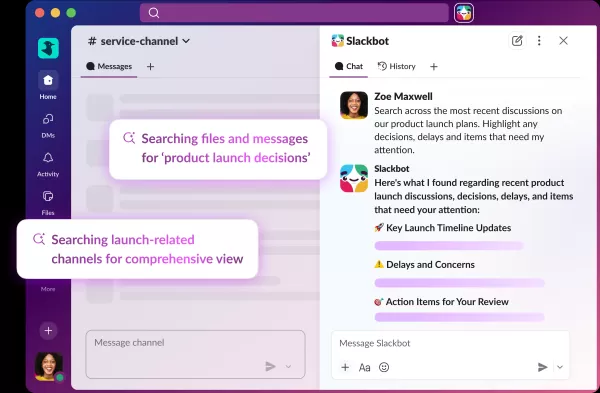 Slackbot Becomes an AI Agent
Slackbot, the automated assistant embedded in Salesforce’s corporate messaging platform Slack, is evolving into an AI agent. Salesforce CTO Parker Harris envisions it achieving viral status comparable to OpenAI’s ChatGPT.The cloud software giant laun
Slackbot Becomes an AI Agent
Slackbot, the automated assistant embedded in Salesforce’s corporate messaging platform Slack, is evolving into an AI agent. Salesforce CTO Parker Harris envisions it achieving viral status comparable to OpenAI’s ChatGPT.The cloud software giant laun
 ByteDance Boosts Core AI Incentives as Doubao Surges 14.6%
ByteDance recently convened a DouBao equity briefing to unveil fresh incentive policies for staff involved in the DouBao division. The strike price for DouBao shares has been lifted from $14.85 in June 2026 to $17.02, marking an approximate 14.6% inc
ByteDance Boosts Core AI Incentives as Doubao Surges 14.6%
ByteDance recently convened a DouBao equity briefing to unveil fresh incentive policies for staff involved in the DouBao division. The strike price for DouBao shares has been lifted from $14.85 in June 2026 to $17.02, marking an approximate 14.6% inc
 MiniMax Unveils 10x Team Program to Incentivize Global AI Experts
MiniMax (Xiyu Technology), the General Artificial Intelligence Lab, has officially launched "10x Team," a global talent collaboration initiative. This program aims to recruit top experts across industries to explore the deep application of large mode
MiniMax Unveils 10x Team Program to Incentivize Global AI Experts
MiniMax (Xiyu Technology), the General Artificial Intelligence Lab, has officially launched "10x Team," a global talent collaboration initiative. This program aims to recruit top experts across industries to explore the deep application of large mode

2026 Latest Best AI Study Tools for Homework and Exam Prep! XIX.AI curates a top-rated list of powerful, game-changing tools that help students boost productivity, streamline homework completion, and ace exams through real-world tests. Get a free vs paid comparison, detailed rankings, and must-try options to unlock your AI edge. Explore now!
10 tools
xix.ai

2026 Latest Best AI Vocal Demo Tools for Songwriters, Hook Creators, and Multi-Language Content Teams! XIX.AI has curated a top-rated list of powerful game-changing tools that go through rigorous real-world tests. You’ll find detailed free vs paid comparison data, comprehensive rankings, and must-try options to help you boost writing efficiency and unlock your creative potential. Explore now to discover your perfect tool for all your content needs!
9 tools
xix.ai

2026 Latest Best Top-rated AI Competitive Research Tools for Small Businesses! XIX.AI has curated a highly powerful game-changing collection, updated weekly with rigorous real-world tests and detailed rankings. You can find a comprehensive free vs paid comparison to help you identify the must-try tools that boost your productivity and give you a competitive edge. Explore now to discover your perfect tool!
9 tools
xix.ai

2026 Latest Best Photoshop AI retouch tools for ecommerce apparel, skin cleanup, and color consistency! This top-rated curated list features powerful game-changing solutions that help you boost writing efficiency, streamline content creation, and achieve perfect visual results effortlessly. Each tool has undergone real-world tests through weekly updated rankings, complete with free vs paid comparison details. Backed by XIX.AI, it’s the must-try guide for anyone aiming to unlock your AI edge. Explore now!
10 tools
xix.ai

2026 Latest Best Top-Rated AI Prompt Libraries for optimizing all types of ChatGPT workflows. XIX.AI has curated a powerful, game-changing collection that goes through rigorous real-world tests to ensure top performance. You can find detailed free vs paid comparisons and expert rankings to help you choose the must-try tools that boost your productivity and unlock your AI edge. Explore now!
11 tools
xix.ai

2026 Latest Best AI Quiz Builder Platforms for Teachers, Tutors, and Cohort-Based Learning Programs! XIX.AI has curated a top-rated list of powerful game-changing tools that go through real-world tests to deliver accurate rankings. These must-try platforms help boost writing efficiency, streamline content creation, and simplify quiz design across all learning scenarios. Explore now to discover your perfect tool for unlocking your AI edge in teaching!
13 tools
xix.ai












