


 Home
HomeUnitMesh Framework



Helps TikTok sellers, brands, MCNs, and TAPs discover winning products and find creators.
HelpLook is an AI-powered all-in-one knowledge base tool that helps businesses quickly build knowledge bases, help centers, and...

Your AI Workspace

302.AI is an enterprise-grade AI resource platform with pay-as-you-go pricing, API access to a full range of AI models, and ready-to-use online applications.

剧火AI — AI Screenwriter + Director, a One-Person Short Drama Studio In one sentence, what is it?
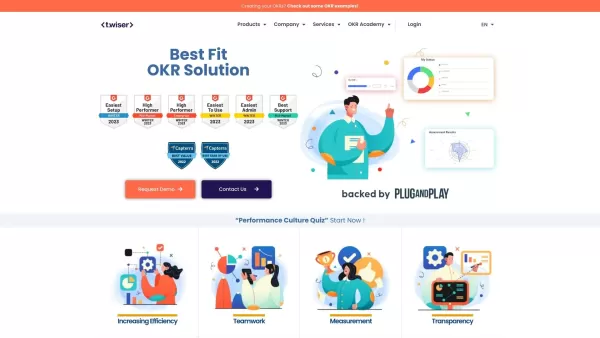
What is Twiser?Twiser is an all-in-one Talent Management Platform. It helps organizations by combining essential tools like OKRs, a robust Learning Management System (LMS), and Succession Planning into a single, unified system. Designed to align and
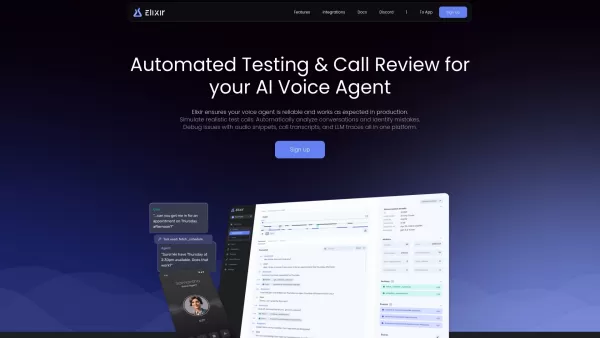
Elixir is more than just a tool; it's a game-changer for anyone working with AI voice agents. Imagine having a platform that not only automates testing but also dives deep into call reviews to ensure your voice agents are top-notch. Elixir does just that,
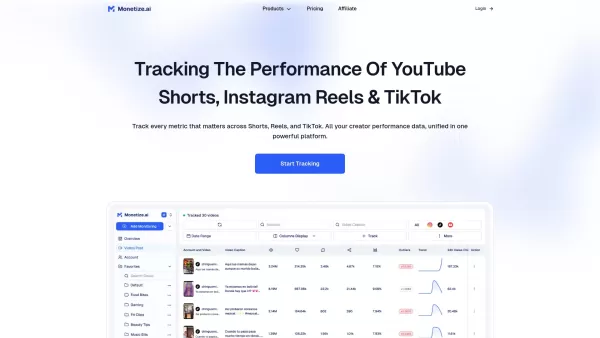
What is Monetize.ai? Monetize.ai is an AI-driven social media intelligence platform designed to seamlessly track and analyze the performance of short and long-form videos on TikTok, Instagram Reels, and YouTube Shorts. It delivers comprehensive, AI-p
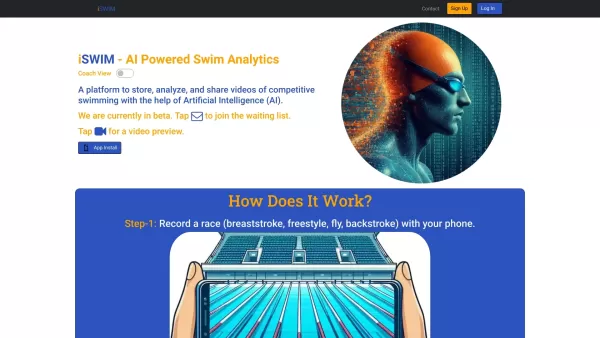
What is iSWIM?iSWIM is a cutting-edge, AI-driven platform that uses video analysis to monitor and enhance swimming performance. Swimmers and coaches can easily record races—including breaststroke, butterfly, backstroke, and freestyle—using their smar
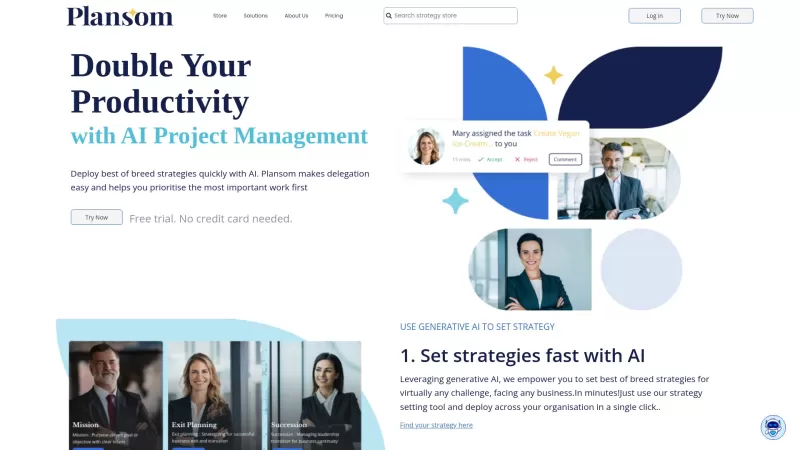
Ever felt overwhelmed by the sheer volume of planning that goes into running a business or managing your personal projects? Enter Plansom, the SaaS platform that's like having a super-smart assistant at your fingertips. Imagine generating fully optimized,
UnitMesh Framework Product Information
What is UnitMesh Framework?
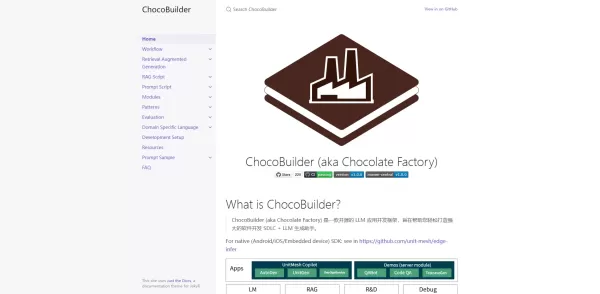
The UnitMesh Framework is a flexible and modular platform for defining, managing, and executing AI agent workflows. It offers seamless integration with OpenAI, Anthropic, and custom models, supports Python and Node.js SDKs, and includes built-in memory stores, tool connectors, and a plugin architecture. Developers can orchestrate parallel or sequential agent chains, monitor execution logs, and enhance functionality with custom modules. Its event-driven design ensures high performance and scalability for both cloud and on-premise deployments.
Who will use UnitMesh Framework?
- AI Developers
- Data Scientists
- Software Engineers
- Research Teams
- Enterprise Architects
How to use the UnitMesh Framework?
- Step 1: Install the SDK via pip or npm (pip install unitmesh or npm install @unitmesh/framework).
- Step 2: Initialize a new project and configure your API keys in the settings file.
- Step 3: Define agents along with their prompt templates or functions in your code.
- Step 4: Set up memory stores and connect to external tools or APIs.
- Step 5: Create workflows by chaining agents using the framework's orchestration API.
- Step 6: Run the orchestration engine and monitor execution via logs or the dashboard.
Platform
- Web
- macOS
- Windows
- Linux
UnitMesh Framework's Core Features & Benefits
The Core Features
- Multi-Agent Orchestration
- Multi-LLM Integration (OpenAI, Anthropic, Custom)
- Memory Management and State Persistence
- Dynamic Tool and API Connectors
- Workflow Automation and Chaining
- Real-Time Logging and Observability
- Plugin-Based Extensibility
- Python and Node.js SDKs
The Benefits
- Accelerates AI Application Development
- Reusable Agent Components
- Scalable, Event-Driven Architecture
- Enhanced Observability and Debugging
- Open-Source with Community Contributions
- Flexible Integration with External Services
UnitMesh Framework's Main Use Cases & Applications
- Automated Customer Support Chatbots with Multi-Agent Fallback
- Document Analysis and Summarization Pipelines
- Data Enrichment Workflows Integrating External APIs
- Personalized Recommendation Engines Using Agent Collaboration
- Research Assistants that Chain Specialized LLM Agents
UnitMesh Framework's Pros & Cons
The Pros
Open-source with an active GitHub repository and CI pipeline.
Designed for straightforward integration with native Android, iOS, and embedded SDKs.
Built on domain-driven design principles for clear separation of problems and solutions.
Supports various deployment methods, including local and script-based setups.
Modular architecture enabling extensibility and integration with popular tools like Pinecone and Elasticsearch.
The Cons
No explicit pricing information is available.
No direct links to dedicated mobile or web app storefronts.
Documentation and examples may require familiarity with JVM and domain-driven design concepts.
FAQs of UnitMesh Framework
What is UnitMesh Framework?
The UnitMesh Framework is an open-source platform for orchestrating and managing AI agent workflows across multiple large language models.
Which programming languages are supported?
The framework provides official SDKs for Python and Node.js.
How do I integrate external tools?
Configure tool connectors using built-in adapters or create custom connectors via the plugin API.
Can I use my own LLM models?
Yes, you can integrate custom models with a compatible API by developing a custom adapter.
How is state handled between agents?
UnitMesh provides in-memory and persistent storage options to share context and conversation history among agents.
Is there a user interface for monitoring?
You can monitor real-time logs and metrics through integrated dashboards or export logs to external systems.
How scalable is the framework?
The event-driven architecture and Docker support enable horizontal scaling across cloud or on-premise clusters.
Where can I find documentation?
Complete documentation is available at https://framework.unitmesh.cc/, featuring guides, API references, and examples.
Is UnitMesh free to use?
Yes, it is released under an open-source license and welcomes community contributions.
How do I contribute to the project?
You can submit issues or pull requests on the GitHub repository linked from the official documentation.
UnitMesh Framework Company Information
UnitMesh Framework Screenshot

2026 Latest Best Top-rated AI Text to Speech Tools for Online Courses are curated by XIX.AI based on rigorous real-world tests and weekly updated rankings. These powerful tools help creators deliver crystal-clear audio content effortlessly, boosting writing efficiency and streamlining course production. Check out the free vs paid comparison to find your perfect fit. Explore now to unlock your AI edge in online education.
 10 tools
 xix.ai

2026 Latest Best Top-Rated AI Blog Title Tools for Higher Click Through Rates! XIX.AI has carefully curated a powerful, game-changing collection of top tools that go through rigorous real-world tests. You’ll find a free vs paid comparison, weekly updated rankings, and detailed insights to help you boost your blog’s traffic efficiently. Must-try options are highlighted to help you unlock your AI edge. Explore now!
10 tools
xix.ai
2026 Latest Best Top-rated AI Task Routing Tools for Support Workflows! XIX.AI has curated a highly powerful game-changing collection of must-try solutions, all undergoing rigorous real-world tests and updated weekly. These tools streamline workflows, boost productivity, and help teams deliver faster, more efficient support. Explore now to discover your perfect tool and unlock your AI edge!
17 tools
xix.ai
2026 Latest Best Top-Rated AI Citation and Paper Summary Tools Curated by XIX.AI. Get powerful game-changing solutions for quick content creation, improved writing efficiency, and boosting productivity. We offer a free vs paid comparison along with real-world tests and weekly updated rankings to help you find the must-try tool that fits your needs perfectly. Explore now to Unlock your AI edge.
10 tools
xix.ai

2026 Latest Best Top-Rated AI Productivity Tools for Daily Work! XIX.AI has curated a powerful, game-changing selection based on rigorous weekly updated rankings and real-world tests. You’ll find must-try options that boost writing efficiency, streamline content creation, and help you overcome daily work challenges. Get a free vs paid comparison to find the perfect fit for your needs. Explore now to unlock your AI edge!
9 tools
xix.ai
2026 Latest Best Top-Rated AI Systematic Review Tools for Research Screening are here on XIX.AI! This curated collection includes powerful, game-changing solutions that go through rigorous real-world tests to deliver accurate results. We also offer a free vs paid comparison along with weekly updated rankings to help you find the must-try option that boosts your research efficiency significantly. Explore now to unlock your AI edge in academic work!
11 tools
xix.ai


