


 Home
HomeMagi MDA
Magi MDA: Modular AI Agent Framework for Multi-LLM Workflows



Helps TikTok sellers, brands, MCNs, and TAPs discover winning products and find creators.
HelpLook is an AI-powered all-in-one knowledge base tool that helps businesses quickly build knowledge bases, help centers, and...

Your AI Workspace

302.AI is an enterprise-grade AI resource platform with pay-as-you-go pricing, API access to a full range of AI models, and ready-to-use online applications.

剧火AI — AI Screenwriter + Director, a One-Person Short Drama Studio In one sentence, what is it?
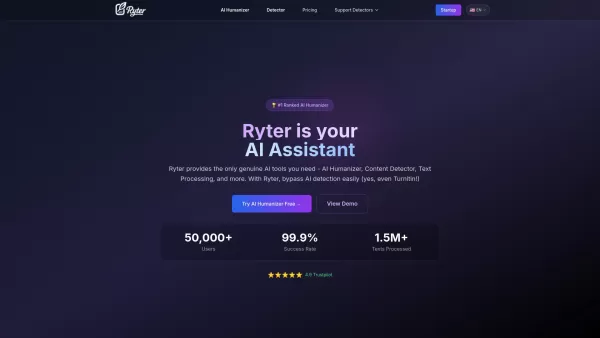
What is Ryter Pro? Ryter Pro is an AI Humanizer tool that transforms AI-generated text from platforms like ChatGPT and GPT-4 into natural, human-like content. This makes it undetectable by major AI detectors including Turnitin, GPTZero, Originality.a
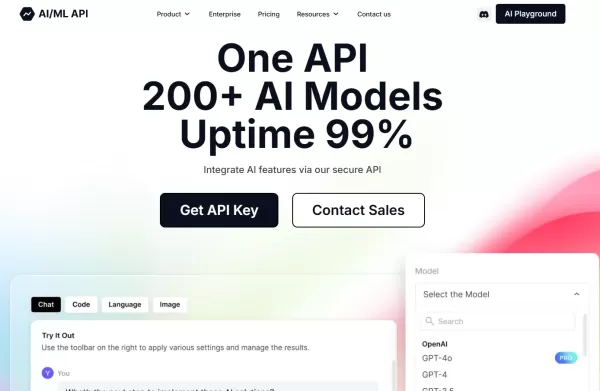
What is the AIML API?AIMLAPI delivers access to more than 200 AI models through a single, unified API, designed for low latency and effortless scaling. It's an ideal tool for developers and businesses aiming to add sophisticated AI features to their
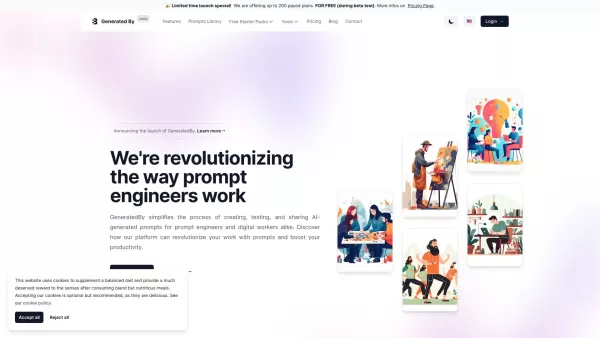
Ever wondered how to streamline your work as a prompt engineer or digital worker? Enter GeneratedBy, a game-changing platform designed to revolutionize how you create, test, and share AI-generated prompts. It's like having a personal assistant for your AI needs, making the whole process not just eas

ENIX isn't just another AI assistant; it's a game-changer for businesses looking to boost their marketing, analytics, and creative output. Think of it as your personal toolkit, where you can craft and tailor AI agents to meet your specific needs. It's all
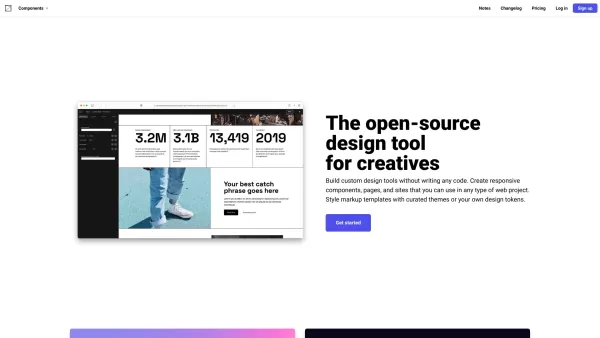
What is Components AI?Components AI is a suite of generative and parametric design tools that help you customize, organize, and publish designs. It enables the creation of responsive components, pages, and websites with no coding required. The platfo
Magi MDA Product Information
What is Magi MDA?
Magi MDA is an intuitive, developer-driven AI agent framework that streamlines the process of building and launching autonomous agents. It offers a collection of modular building blocks—such as planners, executors, interpreters, and memories—that can be seamlessly connected to form custom workflows. Users can easily integrate leading LLM providers for text generation, incorporate retrieval components to enhance knowledge access, and connect third-party tools or APIs to handle specialized operations. The framework automates complex processes like step-by-step reasoning, intelligent tool routing, and contextual memory management, enabling developers to concentrate on business logic instead of infrastructure setup.
Who is Magi MDA designed for?
- AI developers
- Data scientists
- NLP engineers
- Product managers
- Technical architects
Getting Started with Magi MDA
- Step 1: Install Magi MDA via pip or clone the repository from GitHub.
- Step 2: Specify your agent architecture—choose its planner, executor, and memory components using either YAML or Python configuration.
- Step 3: Configure credentials for your preferred LLM provider and set up any required external tools or API integrations.
- Step 4: Assemble your agent pipeline by registering each component and defining routing policies.
- Step 5: Launch the agent via its built-in server or execute batch jobs using the CLI or Python SDK.
Platform
- mac
- windows
- linux
Magi MDA's Core Features & Benefits
The Core Features
- Modular planner-executor architecture
- Retrieval-augmented generation
- Plug-in based tool integration
- Contextual memory management
- CLI and SDK interfaces
The Benefits
- Accelerated agent prototyping
- Highly adaptable workflow design
- Smooth LLM and API orchestration
- Production-ready scalability
- Open-source and developer-extensible
Magi MDA's Main Use Cases & Applications
- Customer service virtual agents
- Automated document summarization
- Intelligent semantic search assistants
- E-commerce recommendation engines
- Workflow automation bots
Magi MDA's Pros & Cons
The Pros
Offers a clean, AI-friendly Markdown structure that remains easy for humans to read and edit.
Allows AI instructions to be embedded directly within content for adaptable processing and execution.
Supports explicit relationships and metadata for richer AI context and knowledge graph development.
Reduces development effort by removing the need for complex custom preprocessing workflows.
Simplifies multi-agent coordination with built-in instructions optimized for AI-driven processes.
The Cons
Primarily suited for Markdown-based content; other formats may require conversion.
Adoption depends on using the specialised MAGI format, which may limit immediate interoperability.
Pricing details are not currently available, which may affect enterprise adoption decisions.
FAQs of Magi MDA
What is Magi MDA?
Magi MDA is an open-source framework for constructing modular, reasoning-based AI agent workflows.
Which LLM providers does it support?
It is compatible with virtually any provider offering a REST API or Python SDK, such as OpenAI, Cohere, and Hugging Face.
How do I add custom tools?
Simply implement the tool interface in Python and register it via the agent’s configuration or plugin system.
Is there a GUI for designing pipelines?
Not currently; pipeline design is handled through YAML or Python configuration files.
How do I manage conversation context?
The framework’s memory module automatically retains and retrieves relevant context across agent interactions.
Can I deploy agents to production?
Yes, agents can be containerised using Docker or Kubernetes with ready-to-use deployment templates.
Is Magi MDA open-source?
Yes, the project is licensed under Apache 2.0 and available on GitHub.
Does it support streaming responses?
Yes, the executor supports real-time streaming from compatible LLM providers.
Where can I find tutorials?
Visit the official documentation site at docs.magi-mda.org for starter guides, examples, and tutorials.
How do I get community support?
Join the GitHub Discussions forum or the Slack workspace linked on the project documentation site.
Magi MDA Company Information
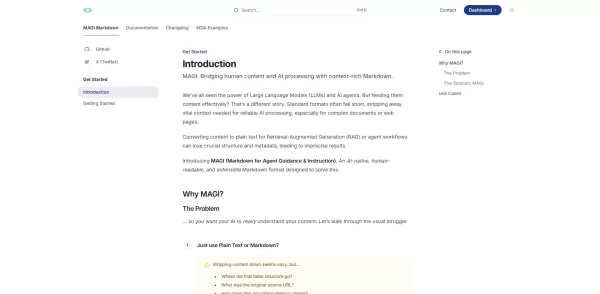
Magi MDA Screenshot

Discover the 2026 latest top-rated AI tools for multi-agent prompting. Our curated list features powerful solutions for designing complex task orchestration and automated loops. Compare free vs paid options with real-world tests and weekly updated rankings. Unlock your AI edge today at XIX.AI.
 10 tools
 xix.ai


