


 Home
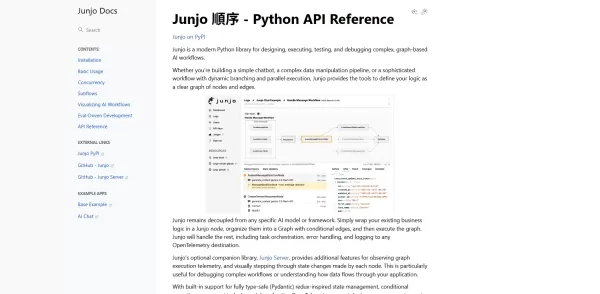
HomeJunjo Python API
Python AI Agent SDK: Streaming, Memory, Plugins



Helps TikTok sellers, brands, MCNs, and TAPs discover winning products and find creators.

HelpLook is an AI-powered all-in-one knowledge base tool that helps businesses quickly build knowledge bases, help centers, and...

Your AI Workspace

302.AI is an enterprise-grade AI resource platform with pay-as-you-go pricing, API access to a full range of AI models, and ready-to-use online applications.

剧火AI — AI Screenwriter + Director, a One-Person Short Drama Studio In one sentence, what is it?

Ever wondered what Rize Capital is all about? Let me break it down for you. Rize Capital isn't your run-of-the-mill investment tool; it's an AI-powered chatbot designed to give you the scoop on stocks, ETFs, cryptocurrencies, and more. It's like having a
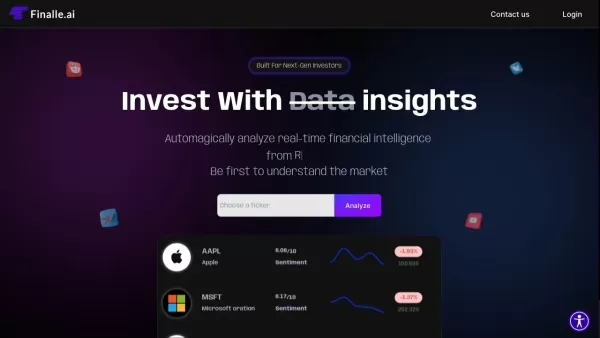
What is Finalle?Finalle.ai is a next-generation financial intelligence platform built for modern investors. It leverages advanced New-Media data and Generative AI to deliver a complete, real-time view of the markets by gathering and interpreting vast

What is CoinScreener?CoinScreener is an AI-driven cryptocurrency trading platform that empowers traders with real-time market data, actionable trading signals, and sophisticated technical analysis. It leverages AI algorithms and big data to deliver p
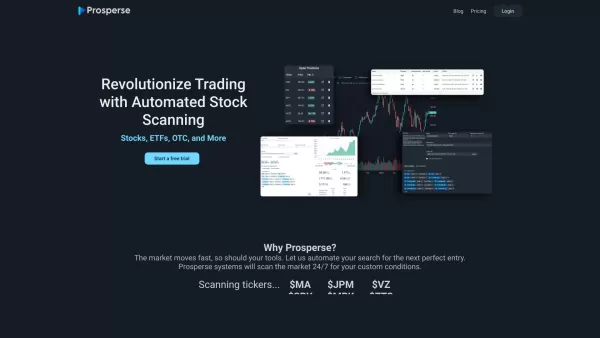
What is Prosperse - Automated Stock Scanner?Prosperse delivers a powerful toolkit for automated stock screening, real-time chart visualization, and strategic backtesting. Powered by advanced AI, it scans markets around the clock according to your cus

Ever wondered how apps can feel so tailored to your needs? That's where Crosshatch comes into play. It's like a magic wand for developers, providing APIs and SDKs that let them weave hyper-personalized experiences into their apps. By harnessing real-time, user-permissioned data, Crosshatch helps cre
Junjo Python API Product Information
What is Junjo Python API?
The Junjo Python API is an SDK that enables developers to incorporate AI agents into their Python applications. It offers a unified interface for agent definition, connection to LLMs, orchestration of tools such as web search, databases, or custom functions, and management of conversational memory. Developers can construct task chains with conditional logic, stream responses to clients, and manage errors effectively. Supporting plugin extensions, multilingual processing, and real-time data retrieval, the API facilitates use cases ranging from automated customer support to data analysis bots. With thorough documentation, code examples, and a Pythonic design, the Junjo Python API accelerates deployment and reduces the operational complexity of intelligent, agent-based solutions.
Who will use Junjo Python API?
- Python Developers
- AI Researchers
- Startups
- Enterprises
- Data Scientists
How to use the Junjo Python API?
- Step 1: Install the SDK using 'pip install junjo'
- Step 2: Import JunjoClient and initialize it with your API key
- Step 3: Define custom tools or utilize built-in integrations
- Step 4: Configure agent parameters, memory, and task chains
- Step 5: Execute the agent to stream or fetch responses
- Step 6: Process results and integrate the outputs into your application
Platform
- Web
- macOS
- Windows
- Linux
Junjo Python API's Core Features & Benefits
The Core Features
- Agent orchestration and chaining
- Tool integration (web search, database, custom functions)
- Conversational memory management
- Streaming responses
- Error handling and retries
- Plugin extension support
The Benefits
- Rapid prototyping of intelligent agents
- Scalable, production-ready architecture
- Seamless integration with existing Python code
- Reduced infrastructure overhead
- Extensible and customizable workflows
Junjo Python API's Main Use Cases & Applications
- Automated customer support chatbots
- Data retrieval and analysis agents
- Personalized recommendation bots
- Marketing content generation workflows
- Internal knowledge base assistants
Junjo Python API's Pros & Cons
The Pros
Enables sophisticated, graph-based AI workflow design for diverse applications.
Model-agnostic design allows flexible integration with any AI model.
Includes advanced capabilities like error handling, concurrency, and telemetry logging.
Offers a companion server library for workflow visualization and debugging.
Features built-in, type-safe state management with Pydantic support.
The Cons
No clear pricing model is published, which may obscure commercial planning.
Lacks a dedicated presence on major mobile or web app stores.
Requires some knowledge of Python and graph concepts, creating a learning curve.
FAQs of Junjo Python API
Where can I find code samples?
Visit the official GitHub repository and documentation site for extensive examples and tutorials.
How do I obtain an API key?
Register on Junjo AI, go to your dashboard, and create a new API key in the API section.
Which LLMs are supported?
The Junjo Python API supports the OpenAI GPT series, Azure OpenAI, and other compatible providers via adapters.
How can I integrate custom tools?
Create a Python class following the Tool interface and register it during agent instantiation.
Does it support streaming responses?
Yes, you can enable streaming to receive partial outputs in real time by setting the appropriate flag.
How is data privacy handled?
All API communication is encrypted via HTTPS, and temporary memory storage is volatile unless explicitly persisted.
Can I maintain conversational context?
Use the integrated memory modules to store, retrieve, and manage context across multiple conversation turns.
What error handling features exist?
The API provides automatic retries, exception callbacks, and configurable timeouts to help manage API and tool errors.
Is there a rate limit?
The free tier allows up to 100 requests per minute; paid plans offer higher limits—refer to the pricing documentation.
How do I upgrade plans?
Access the account billing section in your Junjo AI dashboard to review and upgrade your subscription plan.
Junjo Python API Company Information
Junjo Python API Screenshot



2026 Latest Best Top-rated AI Object Removal Editors for portraits travel product shots! XIX.AI curates a powerful game-changing collection regularly updated with weekly rankings. These tools offer real-world tests to help you quickly remove unwanted elements, boost content quality, and save tons of time without compromising results. Must-try for anyone aiming to unlock their AI creation edge. Explore now!
 10 tools
 xix.ai

2026 Latest Best Top-rated AI Text to Speech Tools for Online Courses are curated by XIX.AI based on rigorous real-world tests and weekly updated rankings. These powerful tools help creators deliver crystal-clear audio content effortlessly, boosting writing efficiency and streamlining course production. Check out the free vs paid comparison to find your perfect fit. Explore now to unlock your AI edge in online education.
10 tools
xix.ai

2026 Latest Best Top-Rated AI Blog Title Tools for Higher Click Through Rates! XIX.AI has carefully curated a powerful, game-changing collection of top tools that go through rigorous real-world tests. You’ll find a free vs paid comparison, weekly updated rankings, and detailed insights to help you boost your blog’s traffic efficiently. Must-try options are highlighted to help you unlock your AI edge. Explore now!
10 tools
xix.ai

2026 Latest Best Top-rated AI Task Routing Tools for Support Workflows! XIX.AI has curated a highly powerful game-changing collection of must-try solutions, all undergoing rigorous real-world tests and updated weekly. These tools streamline workflows, boost productivity, and help teams deliver faster, more efficient support. Explore now to discover your perfect tool and unlock your AI edge!
17 tools
xix.ai
2026 Latest Best Top-Rated AI Citation and Paper Summary Tools Curated by XIX.AI. Get powerful game-changing solutions for quick content creation, improved writing efficiency, and boosting productivity. We offer a free vs paid comparison along with real-world tests and weekly updated rankings to help you find the must-try tool that fits your needs perfectly. Explore now to Unlock your AI edge.
10 tools
xix.ai

2026 Latest Best Top-Rated AI Productivity Tools for Daily Work! XIX.AI has curated a powerful, game-changing selection based on rigorous weekly updated rankings and real-world tests. You’ll find must-try options that boost writing efficiency, streamline content creation, and help you overcome daily work challenges. Get a free vs paid comparison to find the perfect fit for your needs. Explore now to unlock your AI edge!
9 tools
xix.ai


