


 Home
HomeFastGPT
FastGPT: Open-Source AI Platform for Applications



Helps TikTok sellers, brands, MCNs, and TAPs discover winning products and find creators.

HelpLook is an AI-powered all-in-one knowledge base tool that helps businesses quickly build knowledge bases, help centers, and...

Your AI Workspace

302.AI is an enterprise-grade AI resource platform with pay-as-you-go pricing, API access to a full range of AI models, and ready-to-use online applications.

剧火AI — AI Screenwriter + Director, a One-Person Short Drama Studio In one sentence, what is it?

Ever wondered how to make the most out of large language models (LLMs)? That's where Vellum comes into play. It's not just a platform; it's a game-changer for anyone diving into the world of LLM apps. With Vellum, you get a suite of tools designed to
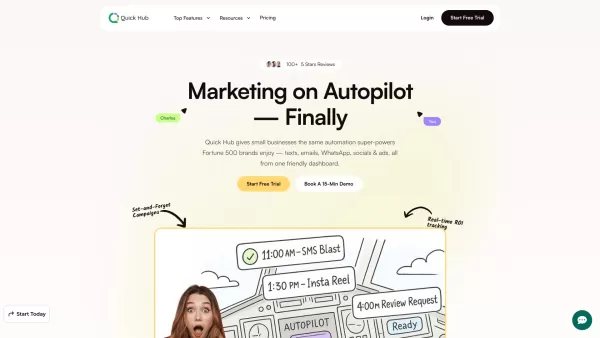
What is Quick Hub? Quick Hub empowers small business owners and marketing teams by automating their marketing with AI-driven social media, customer engagement, and promotional workflows. It provides small businesses with the same advanced automation
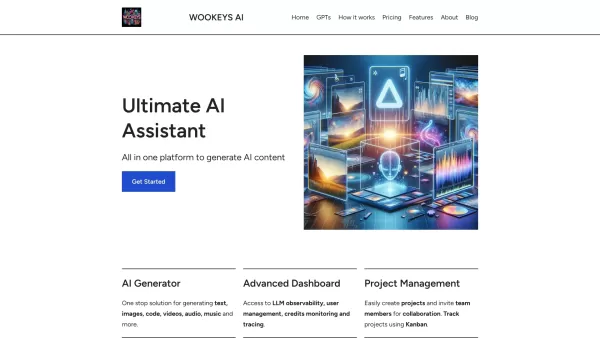
Ever wondered what the buzz around Ultimate AI Assistant is all about? Well, let me introduce you to WooKeys AI, a powerhouse platform designed to revolutionize your content creation game. It's not just another tool; it's your new best friend in the

Ever wondered what AI Search is all about? Well, let me break it down for you. AI Search is like your personal assistant in the world of AI—it helps you sift through the digital haystack to find the best AI tools, plugins, prompts, and services that can g
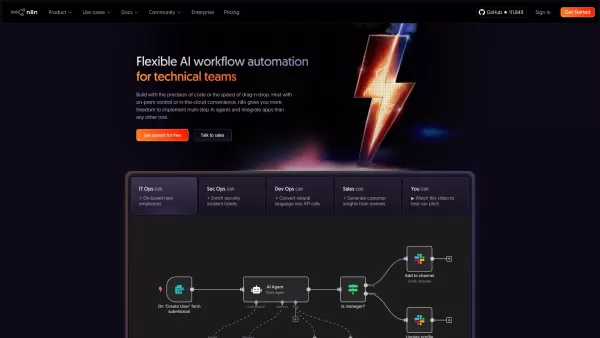
What is n8n? n8n is a powerful workflow automation platform that blends AI with process automation. It offers developers the control of code alongside the simplicity of a visual editor, empowering them to create sophisticated AI agents and connect to
FastGPT Product Information
What is FastGPT?
FastGPT is a complete AI agent framework for building and deploying smart, knowledge-based applications. It offers data connectors to pull in documents, databases, and APIs, handles preprocessing and embedding, and connects to local or cloud AI models for inference. A built-in RAG engine fetches relevant knowledge on the fly, and a visual drag-and-drop flow editor allows you to create multi-step workflows with conditional logic. Users can customize prompts, adjust model parameters, and extend features via plugins. Deploy your agents as web services, chatbots, or API endpoints, with monitoring dashboards and scaling capabilities included.
Who will use FastGPT?
- AI Developers
- Data Scientists
- Enterprise Solution Architects
- Startups building AI-powered apps
- Product Managers
- IT Teams
How to use FastGPT?
- Step 1: Sign up or install FastGPT and access the dashboard
- Step 2: Connect and load your data sources (documents, databases, APIs)
- Step 3: Set up embeddings and retrieval options using RAG
- Step 4: Choose or integrate AI models for inference
- Step 5: Use the visual flow editor to design multi-step AI workflows
- Step 6: Test and troubleshoot your agent in a sandbox environment
- Step 7: Deploy your agent as a web service or API endpoint
- Step 8: Monitor performance using built-in dashboards and refine as needed
Platform
- Web
- macOS
- Windows
- Linux
FastGPT's Core Features & Benefits
The Core Features
- Data Ingestion Connectors
- Preprocessing and Embedding Tools
- Model Invocation Engine
- RAG-Based Knowledge Retrieval
- Visual Workflow Builder
- Conditional Branching
- Custom Prompt Management
- Plugin Integration Interface
- Monitoring Dashboards
- One-Click Deployment
The Benefits
- Rapid AI Agent Prototyping
- No-Code Visual Workflow Design
- Scalable for Production Use
- Open Source Customizations
- Unified End-to-End Workflow
- Faster Development Cycles
- Multiple Deployment Options
- Community-Driven Enhancements
FastGPT's Main Use Cases & Applications
- Document Q&A Assistants
- Knowledge Base Chatbots
- Customer Support Automation
- Automated Report Generation
- AI-Powered Workflow Automation
- Code Assistant Tools
FastGPT's Pros & Cons
The Pros
Open-source framework ensuring security and dependability
Enables creation of specialized AI assistants for specific domains
Automates data preparation, saving time and boosting efficiency
Drag-and-drop visual workflow design
Smooth integration with popular messaging platforms via APIs
Compatibility with multiple large language models
Comprehensive debugging and testing utilities
Optimized to deliver high question-answering accuracy
The Cons
Direct pricing information is not available
No dedicated mobile or browser application links are provided
Commercial use requires contacting the authors for SaaS licensing or brand customization
FAQs of FastGPT
What is FastGPT?
FastGPT is an open-source AI agent framework designed for building knowledge-based applications using RAG, data processing, and visual workflows.
Is FastGPT free to use?
Yes, FastGPT is free under the MIT open-source license.
Which programming languages does FastGPT support?
FastGPT comes with a Python SDK and REST APIs, making it accessible across different programming environments.
How do I deploy FastGPT?
You can deploy FastGPT on-premises using Docker or via cloud services, and expose your agent through a web API.
Can I use custom LLMs with FastGPT?
Yes, you can integrate custom local or cloud-based models using its plugin system.
What data sources are supported?
FastGPT supports document uploads, databases, external APIs, and vector data stores.
How is security handled?
FastGPT includes authentication, role-based access controls, and secure data encryption features.
Does FastGPT provide monitoring tools?
Yes, it comes with dashboards to monitor usage, performance metrics, and log activity.
How do I extend FastGPT functionality?
Use the plugin architecture to add custom connectors, models, or user interface components.
Where can I get support?
Check the FastGPT GitHub repository or join the community Slack channel for help and discussions.
FastGPT Company Information
FastGPT Screenshot


2026 Latest Best Top-rated AI Object Removal Editors for portraits travel product shots! XIX.AI curates a powerful game-changing collection regularly updated with weekly rankings. These tools offer real-world tests to help you quickly remove unwanted elements, boost content quality, and save tons of time without compromising results. Must-try for anyone aiming to unlock their AI creation edge. Explore now!
 10 tools
 xix.ai
2026 Latest Best Top-rated AI Text to Speech Tools for Online Courses are curated by XIX.AI based on rigorous real-world tests and weekly updated rankings. These powerful tools help creators deliver crystal-clear audio content effortlessly, boosting writing efficiency and streamlining course production. Check out the free vs paid comparison to find your perfect fit. Explore now to unlock your AI edge in online education.
10 tools
xix.ai
2026 Latest Best Top-Rated AI Blog Title Tools for Higher Click Through Rates! XIX.AI has carefully curated a powerful, game-changing collection of top tools that go through rigorous real-world tests. You’ll find a free vs paid comparison, weekly updated rankings, and detailed insights to help you boost your blog’s traffic efficiently. Must-try options are highlighted to help you unlock your AI edge. Explore now!
10 tools
xix.ai
2026 Latest Best Top-rated AI Task Routing Tools for Support Workflows! XIX.AI has curated a highly powerful game-changing collection of must-try solutions, all undergoing rigorous real-world tests and updated weekly. These tools streamline workflows, boost productivity, and help teams deliver faster, more efficient support. Explore now to discover your perfect tool and unlock your AI edge!
17 tools
xix.ai
2026 Latest Best Top-Rated AI Citation and Paper Summary Tools Curated by XIX.AI. Get powerful game-changing solutions for quick content creation, improved writing efficiency, and boosting productivity. We offer a free vs paid comparison along with real-world tests and weekly updated rankings to help you find the must-try tool that fits your needs perfectly. Explore now to Unlock your AI edge.
10 tools
xix.ai

2026 Latest Best Top-Rated AI Productivity Tools for Daily Work! XIX.AI has curated a powerful, game-changing selection based on rigorous weekly updated rankings and real-world tests. You’ll find must-try options that boost writing efficiency, streamline content creation, and help you overcome daily work challenges. Get a free vs paid comparison to find the perfect fit for your needs. Explore now to unlock your AI edge!
9 tools
xix.ai


FastGPT is a lifesaver for my workflow! I hooked up my Notion docs and SQL database in minutes, and the AI agent actually understands context. Only gripe is the embedding step can be slow with huge datasets, but overall a solid tool. 🤖⚡


