


 Дом
Дом
Anthropic внедряет невидимые водяные знаки в выходные данные Claude по всему миру: эра отслеживаемости контента от ИИ официально началась

Anthropic has committed to the EU AI Act Code of Practice, confirming that all newly released Claude models will embed global content identifiers starting in August 2026. This mandate extends beyond the EU, covering every Claude product line, including the API, Claude, Claude Code, Claude Cowork, and Claude Tag. While existing models are granted a legal transition period, Anthropic is already implementing retroactive watermarking for current users.
Anthropic employs two distinct identification methods: text outputs will feature an invisible watermark that preserves readability and meaning, remaining intact even after copy-pasting and partial editing. For file formats like images, the company adds digital signature traceability metadata based on the C2PA open standard, allowing users to verify if a file was processed by Claude and detect subsequent tampering. Text watermarks will also be enforced through cloud partners such as AWS, Google Cloud, and Microsoft Foundry, though these platforms may not support signature metadata. Anthropic plans to launch verification tools soon, enabling users and third parties to detect these identifiers.
Watermark detection has inherent limitations
Anthropic openly acknowledges the constraints of watermark technology: detecting a watermark does not prove that Claude generated the entire content. Users frequently employ Claude for proofreading, translation, or summarization, meaning the output may carry a watermark while the core ideas originate from humans. Conversely, the absence of a watermark does not rule out AI involvement; the text might have been generated before the feature launched, heavily edited, translated, or too short for reliable detection. Metadata may also be stripped during format conversions or screenshots. The true value of this technology hinges on whether watermarks survive editing, reformatting, and translation.
AI text detection carries significant weight in sensitive sectors like education. Research indicates that over-reliance on AI tools can erode critical thinking and writing skills, with incidents of scammers using AI to create fake student identities for scholarships. However, unreliable detectors pose their own risks, potentially leading to false accusations of cheating. If Anthropic’s watermark solution proves more reliable than existing third-party tools, it could provide a viable path out of this dilemma.
Industry Landscape: Diverging Attitudes Among Companies
Anthropic is not alone in exploring watermark technology. Google DeepMind has open-sourced its SynthID system, integrating it into Gemini models to achieve lossless watermarking by fine-tuning token prediction probabilities. While supporting multiple languages, it faces similar challenges regarding detection after editing. In contrast, OpenAI possesses a text detector with a reported 99.9% accuracy rate but has delayed its release for two years. Reasons cited include the ease with which users can bypass detection through translation or rewriting, the risk of stigmatizing specific groups, and the potential harm to its commercial interests from public detectors.
Anthropic’s decision may also entail commercial risks. Claude is particularly popular among students in knowledge-intensive fields, and more robust detection capabilities could diminish its appeal to this demographic. Nevertheless, as AI-generated content proliferates and deepfake risks escalate, content tracing has shifted from an optional feature to a necessity. Vendors that establish a trusted identification system first will secure a first-mover advantage in an increasingly regulated environment.
Связанная статья
 Стартап Relay по производству искусственного интеллекта прекращает существование, так как его сотрудники присоединяются к команде Google Chrome
Реле, платформа автоматизации рабочих процессов на базе искусственного интеллекта, запущенная в 2021 году с целью конкурировать с Zapier, прекращает свою деятельность, а ключевые члены команды, включая генерального директора, переходят в подразделени
Doubao представляет тарифные планы платной подписки, конкурируя с мировыми гигантами по соотношению цены и качества
Коммерциализация сервисов на базе крупных моделей искусственного интеллекта достигла важной вехи. 24 июня Douyin официально представил три уровня платной подписки: «Стандартный» (68 юаней в месяц), «Р
Changlong получает 20 000-й робот Zhiyuan Yuzheng A3 Ultra, поскольку гуманоидные роботы впервые регулярно появляются в тематических парках
Zhiyuan достигла важной вехи в расширении масштабов производства воплощенного интеллекта. 24 сентября с конвейера паркового комплекса «Космическая лодка» Хэнцзинь Чимелонь сошел двадцатитысячный универсальный робот Yanzheng A3Ultra, который был перед
Рекомендации по связанным специальным темам
Дизайн и искусство
Стартап Relay по производству искусственного интеллекта прекращает существование, так как его сотрудники присоединяются к команде Google Chrome
Реле, платформа автоматизации рабочих процессов на базе искусственного интеллекта, запущенная в 2021 году с целью конкурировать с Zapier, прекращает свою деятельность, а ключевые члены команды, включая генерального директора, переходят в подразделени
Doubao представляет тарифные планы платной подписки, конкурируя с мировыми гигантами по соотношению цены и качества
Коммерциализация сервисов на базе крупных моделей искусственного интеллекта достигла важной вехи. 24 июня Douyin официально представил три уровня платной подписки: «Стандартный» (68 юаней в месяц), «Р
Changlong получает 20 000-й робот Zhiyuan Yuzheng A3 Ultra, поскольку гуманоидные роботы впервые регулярно появляются в тематических парках
Zhiyuan достигла важной вехи в расширении масштабов производства воплощенного интеллекта. 24 сентября с конвейера паркового комплекса «Космическая лодка» Хэнцзинь Чимелонь сошел двадцатитысячный универсальный робот Yanzheng A3Ultra, который был перед
Рекомендации по связанным специальным темам
Дизайн и искусство
 Лучшие инструменты для создания иллюстраций с помощью ИИ: быстрее создавайте редакционные сцены и обложки
2026: Новейшие и самые популярные инструменты для создания иллюстраций с помощью ИИ: в нашем тщательно подобранном списке представлены лучшие инструменты с мощными функциональными возможностями, позволяющие быстро создавать потрясающие редакционные сцены и привлекательные обложки. Каждый вариант прошел тщательные практические испытания; мы предлагаем сравнение бесплатных и платных версий, чтобы помочь вам найти идеальный вариант для вашего рабочего процесса. Попробуйте эти незаменимые решения уже сегодня, чтобы раскрыть потенциал искусственного интеллекта и повысить свою творческую продуктивность. Узнайте больше на сайте XIX.AI.
 10 инструментов
 xix.ai
Образование и обучение
Лучшие репетиторы по искусственному интеллекту для подготовки к экзаменам: практикуйтесь по математике, естественным наукам и английскому языку
xix.ai
Образование и обучение
Лучшие репетиторы по искусственному интеллекту для подготовки к экзаменам: практикуйтесь по математике, естественным наукам и английскому языку
2026 года: лучшие и самые популярные ИИ-репетиторы для подготовки к экзаменам представлены на XIX.AI! В нашем тщательно подобранном списке представлены мощные инструменты, которые кардинально изменят ваш подход к обучению: здесь вы найдете сравнение бесплатных и платных версий, тесты на практике и еженедельно обновляемые рейтинги. Они помогут повысить эффективность вашего письма, упростить изучение сложных тем и раскрыть ваш академический потенциал. Ознакомьтесь с ними прямо сейчас, чтобы найти идеальный инструмент для подготовки к экзаменам, и начните творить уже сегодня, чтобы раскрыть свои преимущества благодаря ИИ!
10 инструментов
xix.ai
Финансы
Инструменты планирования бюджета на основе ИИ для управления личными финансами
В 2026 году на XIX.AI представлены новейшие, лучшие и наиболее рейтинговые инструменты ИИ для бюджетного планирования по личным финансам! Эта тщательно отобранная коллекция включает мощные, революционные решения, которые помогают проводить реальные тесты, понимать привычки расходов и создавать персонализированные планы для повышения продуктивности. Наслаждайтесь бесплатным сравнением с платными версиями вместе с подробными рейтингами. Инструменты, которые обязательно стоит попробовать, разработаны для упрощения управления деньгами и раскрытия вашего преимущества ИИ. Исследуйте сейчас!
11 инструментов
xix.ai
Здоровье и благополучие
Помощники для отслеживания сна с ИИ: улучшите восстановление за счёт более правильных привычек перед сном
2026 год: лучшие и наиболее высоко оценённые помощники для отслеживания сна на основе ИИ, отобранные для максимального восстановления организма. В этом полностью обновлённом еженедельном руководстве представлены мощные инструменты с результатами реальных тестов, сравнением бесплатных и платных версий, а также подробными рейтингами, которые помогут вам найти оптимальное решение для улучшения качества сна и формирования лучших привычек перед сном. Ознакомьтесь с ним прямо сейчас на сайте XIX.AI, чтобы раскрыть потенциал ИИ в вашей жизни.
10 инструментов
xix.ai
Анализ данных
AI-копилоты SQL для аналитики продуктов и выручки
2026: лучшие и самые популярные ИИ-помощники для работы с SQL в сфере аналитики продуктов и доходов! XIX.AI подготовила мощную, революционную подборку инструментов, которые обязательно стоит попробовать. Они проходят проверку в реальных условиях и включаются в еженедельно обновляемый рейтинг. Эти инструменты помогают пользователям значительно повысить продуктивность за счет ускорения анализа данных, оптимизации сложных запросов и получения точных аналитических выводов, которые позволяют принимать более обоснованные бизнес-решения. Ознакомьтесь с ними прямо сейчас, чтобы найти идеальный инструмент, который поможет вам раскрыть весь потенциал искусственного интеллекта!
14 инструментов
xix.ai
Образование и обучение
Лучшие помощники по домашним заданиям с ИИ, которые учат: изучайте концепции, а не просто ответы
2026: лучшие и самые популярные помощники по домашним заданиям с ИИ, которые обучают основным концепциям, а не просто дают готовые ответы. Мощные инструменты для студентов. Обязательный к пробованию тщательно отобранный список. Еженедельное обновление. Сравнение бесплатных и платных версий. Тестирование в реальных условиях. Точные рейтинги, которые помогут вам раскрыть весь свой учебный потенциал. Исследуйте сейчас, чтобы найти идеальный инструмент для более эффективного обучения.
10 инструментов
xix.ai

 Комментарии (0)
Anthropic has committed to the EU AI Act Code of Practice, confirming that all newly released Claude models will embed global content identifiers starting in August 2026. This mandate extends beyond the EU, covering every Claude product line, including the API, Claude, Claude Code, Claude Cowork, and Claude Tag. While existing models are granted a legal transition period, Anthropic is already implementing retroactive watermarking for current users.
Anthropic employs two distinct identification methods: text outputs will feature an invisible watermark that preserves readability and meaning, remaining intact even after copy-pasting and partial editing. For file formats like images, the company adds digital signature traceability metadata based on the C2PA open standard, allowing users to verify if a file was processed by Claude and detect subsequent tampering. Text watermarks will also be enforced through cloud partners such as AWS, Google Cloud, and Microsoft Foundry, though these platforms may not support signature metadata. Anthropic plans to launch verification tools soon, enabling users and third parties to detect these identifiers.
Watermark detection has inherent limitations
Anthropic openly acknowledges the constraints of watermark technology: detecting a watermark does not prove that Claude generated the entire content. Users frequently employ Claude for proofreading, translation, or summarization, meaning the output may carry a watermark while the core ideas originate from humans. Conversely, the absence of a watermark does not rule out AI involvement; the text might have been generated before the feature launched, heavily edited, translated, or too short for reliable detection. Metadata may also be stripped during format conversions or screenshots. The true value of this technology hinges on whether watermarks survive editing, reformatting, and translation.
AI text detection carries significant weight in sensitive sectors like education. Research indicates that over-reliance on AI tools can erode critical thinking and writing skills, with incidents of scammers using AI to create fake student identities for scholarships. However, unreliable detectors pose their own risks, potentially leading to false accusations of cheating. If Anthropic’s watermark solution proves more reliable than existing third-party tools, it could provide a viable path out of this dilemma.
Industry Landscape: Diverging Attitudes Among Companies
Anthropic is not alone in exploring watermark technology. Google DeepMind has open-sourced its SynthID system, integrating it into Gemini models to achieve lossless watermarking by fine-tuning token prediction probabilities. While supporting multiple languages, it faces similar challenges regarding detection after editing. In contrast, OpenAI possesses a text detector with a reported 99.9% accuracy rate but has delayed its release for two years. Reasons cited include the ease with which users can bypass detection through translation or rewriting, the risk of stigmatizing specific groups, and the potential harm to its commercial interests from public detectors.
Anthropic’s decision may also entail commercial risks. Claude is particularly popular among students in knowledge-intensive fields, and more robust detection capabilities could diminish its appeal to this demographic. Nevertheless, as AI-generated content proliferates and deepfake risks escalate, content tracing has shifted from an optional feature to a necessity. Vendors that establish a trusted identification system first will secure a first-mover advantage in an increasingly regulated environment.








 Стартап Relay по производству искусственного интеллекта прекращает существование, так как его сотрудники присоединяются к команде Google Chrome
Реле, платформа автоматизации рабочих процессов на базе искусственного интеллекта, запущенная в 2021 году с целью конкурировать с Zapier, прекращает свою деятельность, а ключевые члены команды, включая генерального директора, переходят в подразделени
Стартап Relay по производству искусственного интеллекта прекращает существование, так как его сотрудники присоединяются к команде Google Chrome
Реле, платформа автоматизации рабочих процессов на базе искусственного интеллекта, запущенная в 2021 году с целью конкурировать с Zapier, прекращает свою деятельность, а ключевые члены команды, включая генерального директора, переходят в подразделени
 Doubao представляет тарифные планы платной подписки, конкурируя с мировыми гигантами по соотношению цены и качества
Коммерциализация сервисов на базе крупных моделей искусственного интеллекта достигла важной вехи. 24 июня Douyin официально представил три уровня платной подписки: «Стандартный» (68 юаней в месяц), «Р
Doubao представляет тарифные планы платной подписки, конкурируя с мировыми гигантами по соотношению цены и качества
Коммерциализация сервисов на базе крупных моделей искусственного интеллекта достигла важной вехи. 24 июня Douyin официально представил три уровня платной подписки: «Стандартный» (68 юаней в месяц), «Р
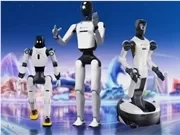 Changlong получает 20 000-й робот Zhiyuan Yuzheng A3 Ultra, поскольку гуманоидные роботы впервые регулярно появляются в тематических парках
Zhiyuan достигла важной вехи в расширении масштабов производства воплощенного интеллекта. 24 сентября с конвейера паркового комплекса «Космическая лодка» Хэнцзинь Чимелонь сошел двадцатитысячный универсальный робот Yanzheng A3Ultra, который был перед
Changlong получает 20 000-й робот Zhiyuan Yuzheng A3 Ultra, поскольку гуманоидные роботы впервые регулярно появляются в тематических парках
Zhiyuan достигла важной вехи в расширении масштабов производства воплощенного интеллекта. 24 сентября с конвейера паркового комплекса «Космическая лодка» Хэнцзинь Чимелонь сошел двадцатитысячный универсальный робот Yanzheng A3Ultra, который был перед

2026: Новейшие и самые популярные инструменты для создания иллюстраций с помощью ИИ: в нашем тщательно подобранном списке представлены лучшие инструменты с мощными функциональными возможностями, позволяющие быстро создавать потрясающие редакционные сцены и привлекательные обложки. Каждый вариант прошел тщательные практические испытания; мы предлагаем сравнение бесплатных и платных версий, чтобы помочь вам найти идеальный вариант для вашего рабочего процесса. Попробуйте эти незаменимые решения уже сегодня, чтобы раскрыть потенциал искусственного интеллекта и повысить свою творческую продуктивность. Узнайте больше на сайте XIX.AI.
10 инструментов
xix.ai

2026 года: лучшие и самые популярные ИИ-репетиторы для подготовки к экзаменам представлены на XIX.AI! В нашем тщательно подобранном списке представлены мощные инструменты, которые кардинально изменят ваш подход к обучению: здесь вы найдете сравнение бесплатных и платных версий, тесты на практике и еженедельно обновляемые рейтинги. Они помогут повысить эффективность вашего письма, упростить изучение сложных тем и раскрыть ваш академический потенциал. Ознакомьтесь с ними прямо сейчас, чтобы найти идеальный инструмент для подготовки к экзаменам, и начните творить уже сегодня, чтобы раскрыть свои преимущества благодаря ИИ!
10 инструментов
xix.ai

В 2026 году на XIX.AI представлены новейшие, лучшие и наиболее рейтинговые инструменты ИИ для бюджетного планирования по личным финансам! Эта тщательно отобранная коллекция включает мощные, революционные решения, которые помогают проводить реальные тесты, понимать привычки расходов и создавать персонализированные планы для повышения продуктивности. Наслаждайтесь бесплатным сравнением с платными версиями вместе с подробными рейтингами. Инструменты, которые обязательно стоит попробовать, разработаны для упрощения управления деньгами и раскрытия вашего преимущества ИИ. Исследуйте сейчас!
11 инструментов
xix.ai

2026 год: лучшие и наиболее высоко оценённые помощники для отслеживания сна на основе ИИ, отобранные для максимального восстановления организма. В этом полностью обновлённом еженедельном руководстве представлены мощные инструменты с результатами реальных тестов, сравнением бесплатных и платных версий, а также подробными рейтингами, которые помогут вам найти оптимальное решение для улучшения качества сна и формирования лучших привычек перед сном. Ознакомьтесь с ним прямо сейчас на сайте XIX.AI, чтобы раскрыть потенциал ИИ в вашей жизни.
10 инструментов
xix.ai

2026: лучшие и самые популярные ИИ-помощники для работы с SQL в сфере аналитики продуктов и доходов! XIX.AI подготовила мощную, революционную подборку инструментов, которые обязательно стоит попробовать. Они проходят проверку в реальных условиях и включаются в еженедельно обновляемый рейтинг. Эти инструменты помогают пользователям значительно повысить продуктивность за счет ускорения анализа данных, оптимизации сложных запросов и получения точных аналитических выводов, которые позволяют принимать более обоснованные бизнес-решения. Ознакомьтесь с ними прямо сейчас, чтобы найти идеальный инструмент, который поможет вам раскрыть весь потенциал искусственного интеллекта!
14 инструментов
xix.ai

2026: лучшие и самые популярные помощники по домашним заданиям с ИИ, которые обучают основным концепциям, а не просто дают готовые ответы. Мощные инструменты для студентов. Обязательный к пробованию тщательно отобранный список. Еженедельное обновление. Сравнение бесплатных и платных версий. Тестирование в реальных условиях. Точные рейтинги, которые помогут вам раскрыть весь свой учебный потенциал. Исследуйте сейчас, чтобы найти идеальный инструмент для более эффективного обучения.
10 инструментов
xix.ai












